Floor plan

Artist galleriesViller's contemporaries
Viller's contemporaries
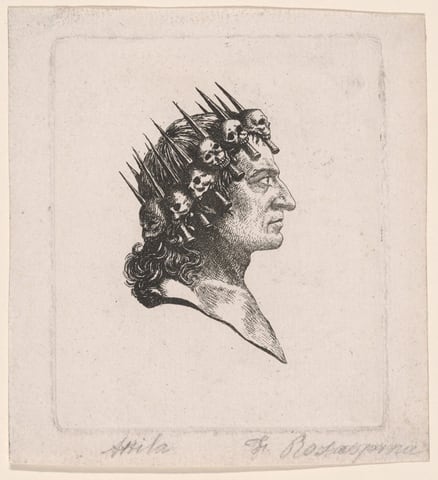
A work made of etching in black on ivory laid paper.
A work made of oil on canvas.
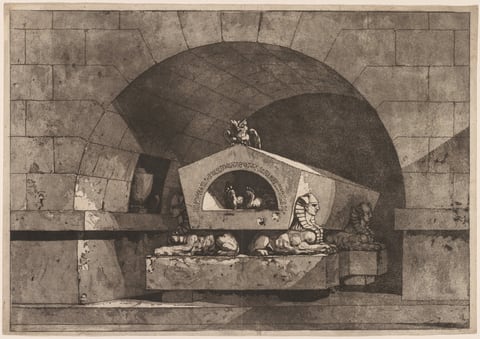
Tomb with Sphinxes and an Owl, by Louis Jean Desprez, c. 1779–84
A work made of oil on canvas.
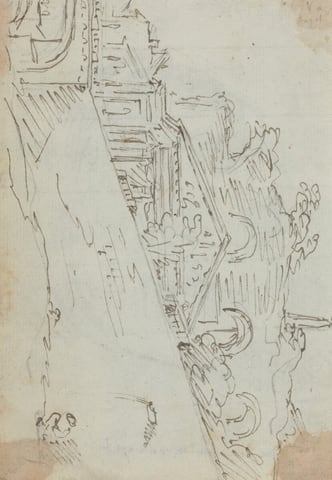
The image shows a sketch of an architectural scene with structures lining a road or pathway. The horizon is not clearly defined, and the sketch focuses on architectural details. The drawing features loose, freehand lines outlining buildings and trees, with classical elements like columns and entablatures. The color palette is monochromatic, with light parchment and dark ink strokes creating contrast. Close-up details are lightly shaded for depth, while distant details are less defined. The composition is open and airy, emphasizing architectural features over precision.
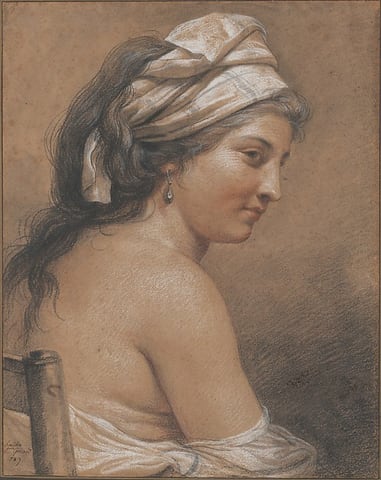
Study of a Seated Woman Seen from Behind (Marie-Gabrielle Capet), by Adélaïde Labille-Guiard, 1789

The works in this room are listed below.

Works in this room

A few works by Viller, then their contemporaries: makers of the same nationality born within 25 years of them, then works from the same century and place.

With their contemporaries

  1. A work made of etching in black on ivory laid paper.
    Portrait of Le Roi MaratViller, c. 1795Courtesy of the Art Institute of Chicago
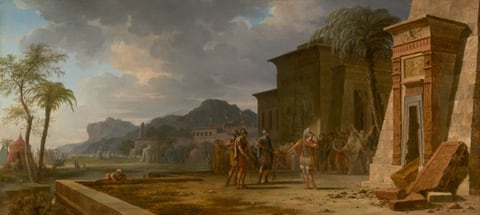
  2. A work made of oil on canvas.
    Alexander at the Tomb of Cyrus the GreatPierre Henri de Valenciennes, 1796Courtesy of the Art Institute of Chicago
  3. Tomb with Sphinxes and an Owl, by Louis Jean Desprez, c. 1779–84
    Tomb with Sphinxes and an OwlLouis Jean Desprez, c. 1779–84Courtesy of the Cleveland Museum of Art

Their contemporaries

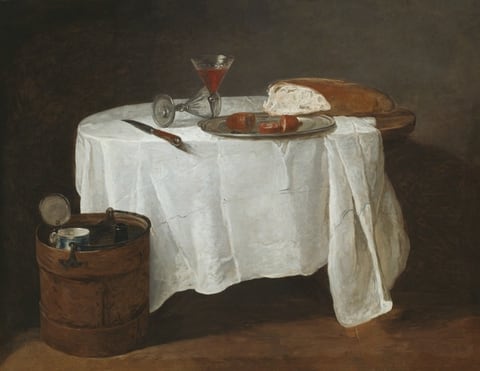
  1. A work made of oil on canvas.
    The White TableclothJean Siméon Chardin, c. 1731–32Courtesy of the Art Institute of Chicago
  2. The image shows a sketch of an architectural scene with structures lining a road or pathway. The horizon is not clearly defined, and the sketch focuses on architectural details. The drawing features loose, freehand lines outlining buildings and trees, with classical elements like columns and entablatures. The color palette is monochromatic, with light parchment and dark ink strokes creating contrast. Close-up details are lightly shaded for depth, while distant details are less defined. The composition is open and airy, emphasizing architectural features over precision.
    Ancient Ruins on the Bank of the TiberAugustin Pajou, 1752/1756Courtesy National Gallery of Art, Washington
  3. Study of a Seated Woman Seen from Behind (Marie-Gabrielle Capet), by Adélaïde Labille-Guiard, 1789
    Study of a Seated Woman Seen from Behind (Marie-Gabrielle Capet)Adélaïde Labille-Guiard, 1789Courtesy of The Metropolitan Museum of Art

Their contemporaries, second
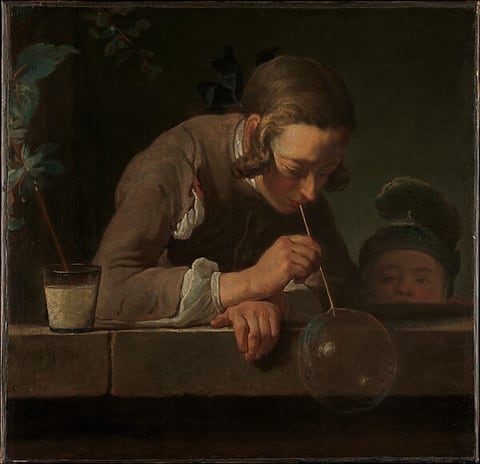
  1. Soap Bubbles, by Jean Siméon Chardin, ca. 1733–34
    Soap BubblesJean Siméon Chardin, ca. 1733–34Courtesy of The Metropolitan Museum of Art
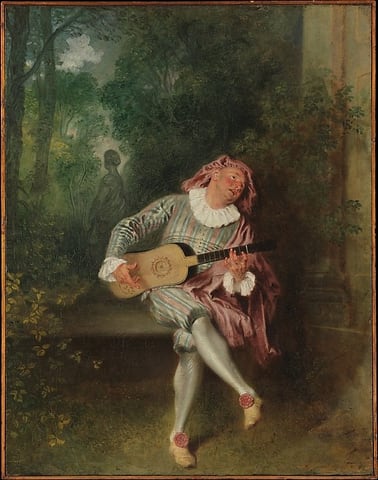
  2. Mezzetin, by Antoine Watteau, ca. 1718–20
    MezzetinAntoine Watteau, ca. 1718–20Courtesy of The Metropolitan Museum of Art