Floor plan

Artist galleriesJacob Matham's contemporaries
Jacob Matham's contemporaries
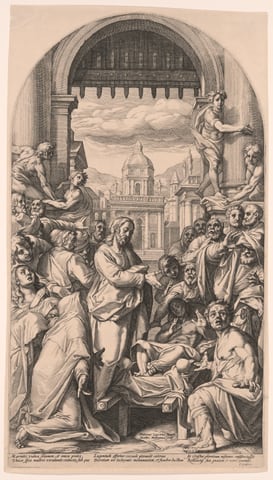
A work made of engraving in black on cream laid paper.
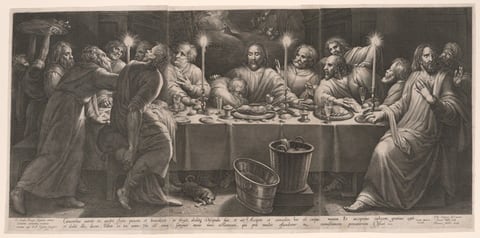
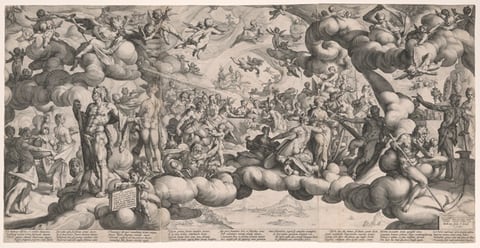
A work made of engraving on three joined sheets of ivory laid paper.
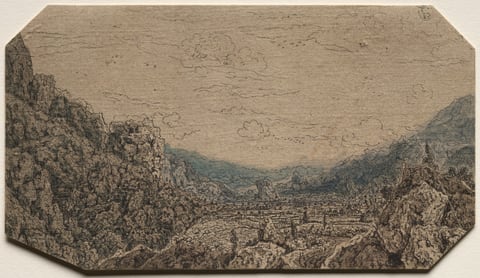
Enclosed Valley, by Hercules Seghers, c. 1623–30
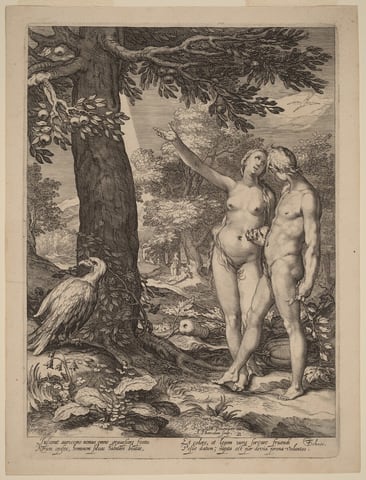
This is a drawing of two nude figures standing beneath a fruit-bearing tree surrounded by elements of nature. The drawing depicts a scene in a lush outdoor setting, featuring intricately detailed branches and leaves of the large tree as well as an eagle-like bird perched nearby. In the background are additional trees extending into a forested area, and a winding path leading into the distance. The foreground includes various plants and the ground is littered with their leaves. The figures are positioned at the center, engaged in a gesture of pointing towards the fruit in the tree. The scene is rendered in fine details with attention to the texture and flow of the natural elements surrounding the figures.
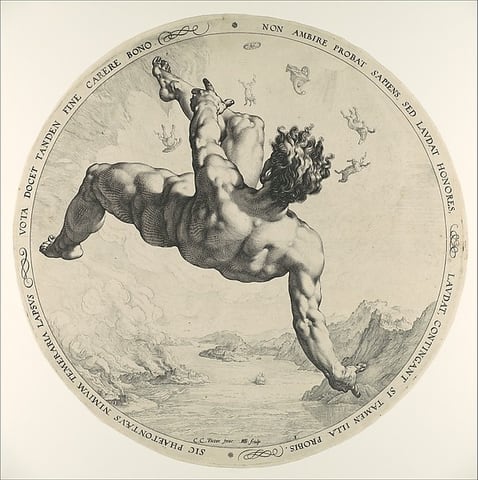
Phaeton, from "The Four Disgracers", by Hendrick Goltzius, 1588
A work made of engraving on three joined sheets of laid paper.

The works in this room are listed below.

Works in this room

A few works by Jacob Matham, then their contemporaries: makers of the same nationality born within 25 years of them, then works from the same century and place.

With their contemporaries

  1. A work made of engraving in black on cream laid paper.
    Christ Raises the Dead Son of the Widow of NainJacob Matham, 1593/94Courtesy of the Art Institute of Chicago
  2. A work made of engraving on three joined sheets of ivory laid paper.
    The Wedding of Cupid and PsycheHendrick Goltzius, 1587Courtesy of the Art Institute of Chicago
  3. Enclosed Valley, by Hercules Seghers, c. 1623–30
    Enclosed ValleyHercules Seghers, c. 1623–30Courtesy of the Cleveland Museum of Art
  4. This is a drawing of two nude figures standing beneath a fruit-bearing tree surrounded by elements of nature. The drawing depicts a scene in a lush outdoor setting, featuring intricately detailed branches and leaves of the large tree as well as an eagle-like bird perched nearby. In the background are additional trees extending into a forested area, and a winding path leading into the distance. The foreground includes various plants and the ground is littered with their leaves. The figures are positioned at the center, engaged in a gesture of pointing towards the fruit in the tree. The scene is rendered in fine details with attention to the texture and flow of the natural elements surrounding the figures.
    Adam and Eve before the Tree of KnowledgeJan Saenredam, 1604Courtesy National Gallery of Art, Washington

Their contemporaries

  1. Phaeton, from "The Four Disgracers", by Hendrick Goltzius, 1588
    Phaeton, from "The Four Disgracers"Hendrick Goltzius, 1588Courtesy of The Metropolitan Museum of Art
  2. A work made of engraving on three joined sheets of laid paper.
    The Last SupperJan Harmensz. Muller, 1594Courtesy of the Art Institute of Chicago

Their contemporaries, second
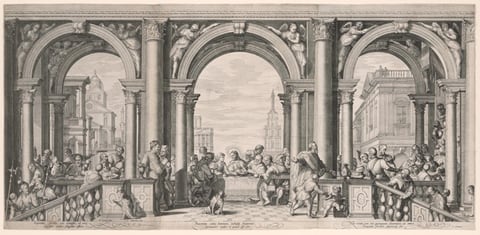
  1. A work made of engraving on three joined sheets of ivory laid paper.
    Christ at the Feast of SimonJan Saenredam, c. 1590-1600Courtesy of the Art Institute of Chicago
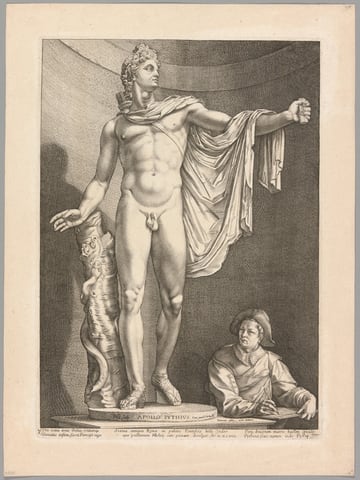
  2. A work made of engraving in black on cream laid paper.
    The Apollo Belvedere, plate 3 from Three Famous Antique SculpturesHendrick Goltzius, c. 1592, printed c. 1617Courtesy of the Art Institute of Chicago