Floor plan

The RotundaThe Rotunda

The Rotunda

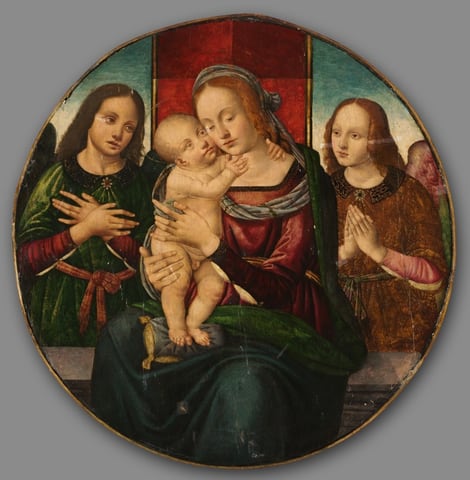
Virgin and Child with Angels, by Master of the Holden Tondo, early 1500s
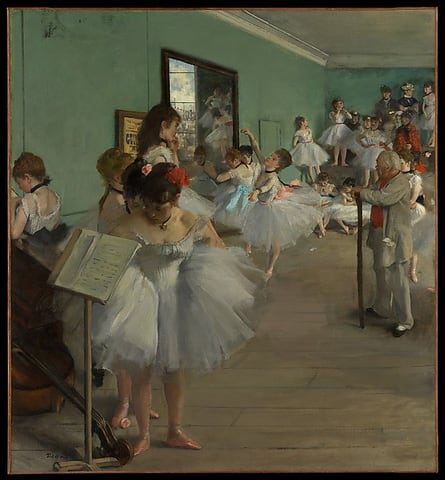
The Dance Class, by Edgar Degas, 1874
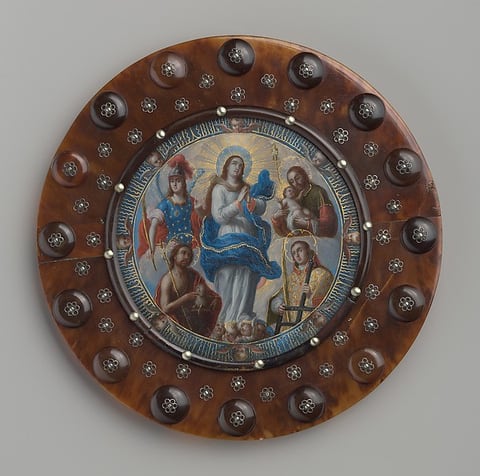
Nun’s Badge with the Virgin of the Immaculate Conception, by Nicolás Rodríguez Juárez, ca. 1710
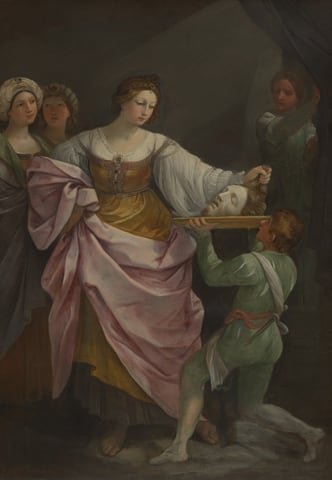
Large painting of woman, in gold and pink dress, placing severed head on platter.

The works in this room are listed below.

Works in this room

The entrance hall. Its bays hold the works that show each museum at its fullest: large paintings first, a few from each collection, rehung every day.

Bay 1

  1. Virgin and Child with Angels, by Master of the Holden Tondo, early 1500s
    Virgin and Child with AngelsMaster of the Holden Tondo, early 1500sCourtesy of the Cleveland Museum of Art
  2. The Dance Class, by Edgar Degas, 1874
    The Dance ClassEdgar Degas, 1874Courtesy of The Metropolitan Museum of Art

Bay 2

  1. Nun’s Badge with the Virgin of the Immaculate Conception, by Nicolás Rodríguez Juárez, ca. 1710
    Nun’s Badge with the Virgin of the Immaculate ConceptionNicolás Rodríguez Juárez, ca. 1710Courtesy of The Metropolitan Museum of Art
  2. Large painting of woman, in gold and pink dress, placing severed head on platter.
    Salome with the Head of Saint John the BaptistGuido Reni, c. 1639–42Courtesy of the Art Institute of Chicago

Bay 3
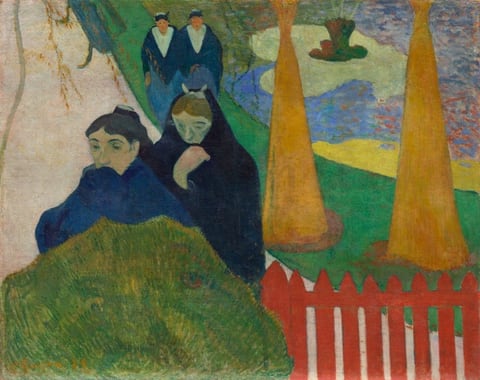
  1. Painting of four women with blue shawls walking near red fence.
    Arlésiennes (Mistral)Paul Gauguin, 1888Courtesy of the Art Institute of Chicago
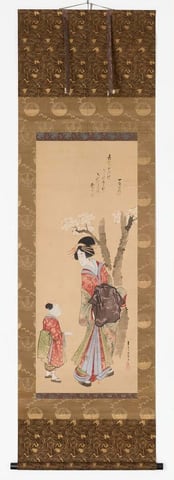
  2. Hanging scroll
    A courtesan and her attendant under a cherry treeTawaraya Sori III, late 18th-early 19th centuryCourtesy of the National Museum of Asian Art, Smithsonian Institution

Bay 4
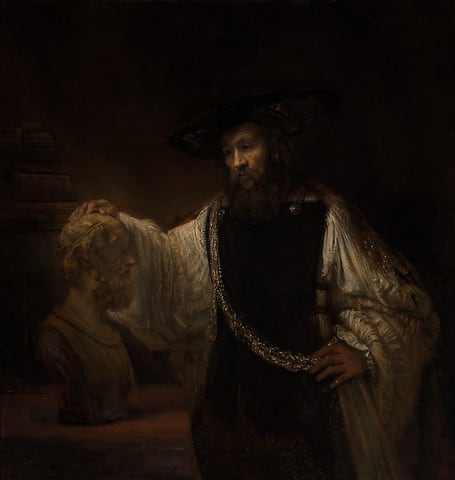
  1. Aristotle with a Bust of Homer, by Rembrandt van Rijn, 1653
    Aristotle with a Bust of HomerRembrandt van Rijn, 1653Courtesy of The Metropolitan Museum of Art
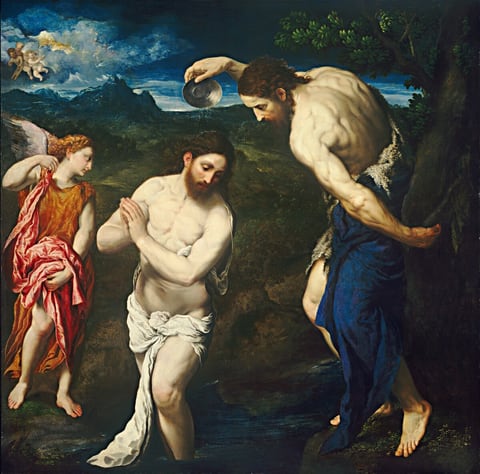
  2. Bright light from the upper left illuminates two muscular men and a winged angel against a dim landscape in this square painting. They all have pale skin, and the two men have dark brown hair and beards. One man, Jesus, stands ankle-deep in a rippling dark blue stream in the center of the composition facing us with downcast eyes. He is nude except for a white cloth that drapes over one shoulder and is tied around his hips. The other end of the cloth drops into the water. Jesus’s hands are pressed together in prayer at chest-height closer to his right shoulder, to our left. He leans his torso in the other direction and looks down at the water. The second man stands on the riverbank to our right. His body faces our left but his left shoulder, closer to us, dips down so his broad back is angled toward us. His lower body is wrapped in a cobalt-blue garment bordered with what looks like sheepskin. His near hand swings back to clutch the trunk of a tree growing immediately behind him. In his other hand, he holds up a pewter-grey dish that dribbles water onto Jesus’s head. On the left riverbank, the copper-haired angel looks on, facing our right in profile but the body faces us. The angel wears a sleeveless, pumpkin-orange robe with a shimmering salmon-pink mantle draped over the right shoulder, to our left. Petal-pink and dark grey wings extend from the shoulders, and the lower legs and feet are bare. The shadowy landscape has a dark green field stretching back to jagged, sapphire-blue mountains along the horizon, which comes four-fifths of the way up this composition. Pale blue clouds skim across the vivid blue sky, where three chubby, winged babies float. One holds a triangle and a rod with which to strike it, and another might hold a rectangular musical instrument. Blue clouds split nearby to show a sliver of golden yellow light, and possibly more angels.
    The Baptism of ChristParis Bordone, c. 1535/1540Courtesy National Gallery of Art, Washington