The Floating World
Works in this room
Japanese woodblock prints of the floating world: actors, courtesans, landscapes and the sea.
Section 1, north wall
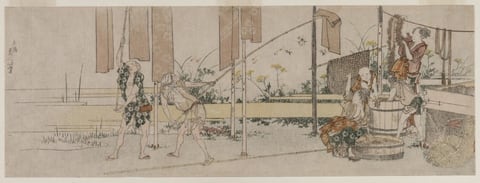
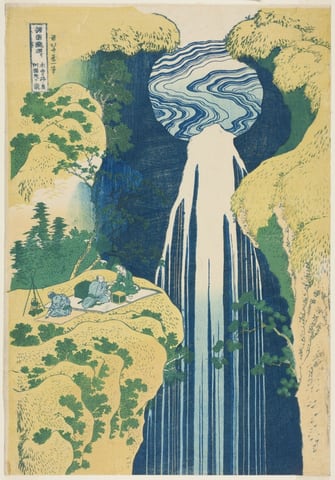
Dyers at WorkKatsushika Hokusai, c. 1800Courtesy of the Cleveland Museum of Art Amida Falls in the Far Reaches of the Kisokaido (Kisoji no oku Amidagataki), from the series "A Tour of Waterfalls in Various Provinces (Shokoku taki meguri)"Katsushika Hokusai, About 1833Courtesy of the Art Institute of Chicago
Section 1, south wall
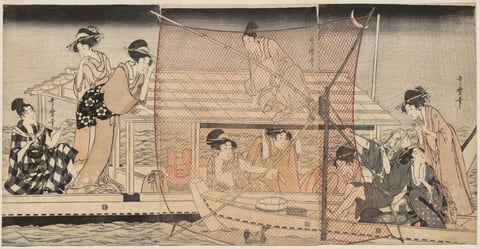
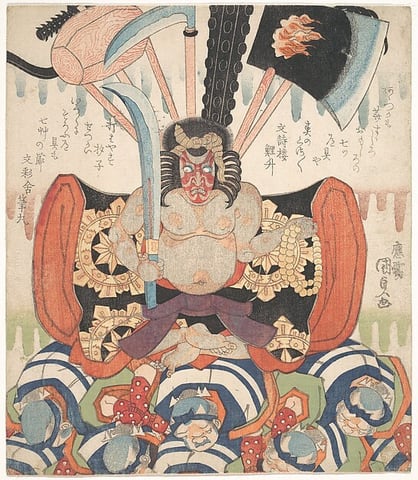
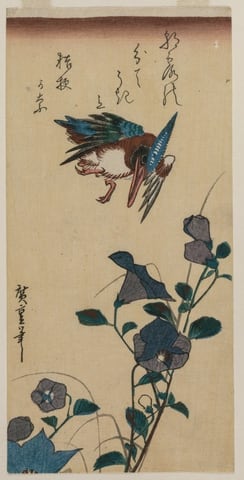
Net Fishing at Night on the Sumida RiverKitagawa Utamaro, c. 1800Courtesy of the Cleveland Museum of Art Danjūrō VII's Benkei as Fudō MyōōUtagawa Kunisada, ca. 1824Courtesy of The Metropolitan Museum of Art Kingfisher and Chinese BellflowersUtagawa Hiroshige, early or mid-1830sCourtesy of the Cleveland Museum of Art
Section 2, south wall
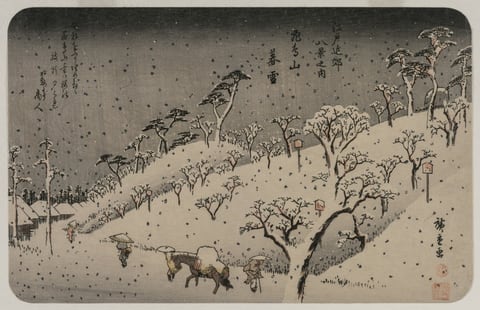
Evening Snow at Asuka Hill, from the series Eight Views of the Environs of EdoUtagawa Hiroshige, c. 1837–38Courtesy of the Cleveland Museum of Art 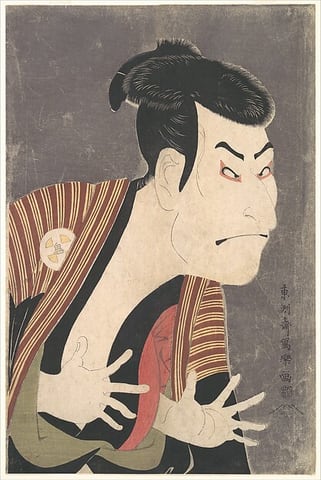
Kabuki Actor Ōtani Oniji III as Yakko EdobeiTōshūsai Sharaku, 1794Courtesy of The Metropolitan Museum of Art 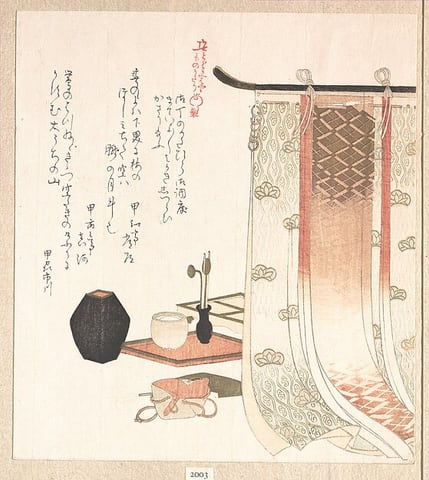
Screen and Utensils for the Incense CeremonyKubo Shunman, 19th centuryCourtesy of The Metropolitan Museum of Art
Section 2, north wall
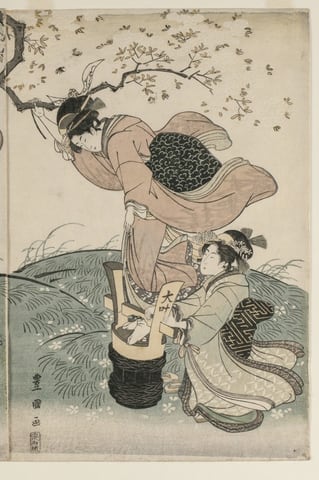
Cherry Blossoms in the WindUtagawa Toyokuni, late 1790sCourtesy of the Cleveland Museum of Art 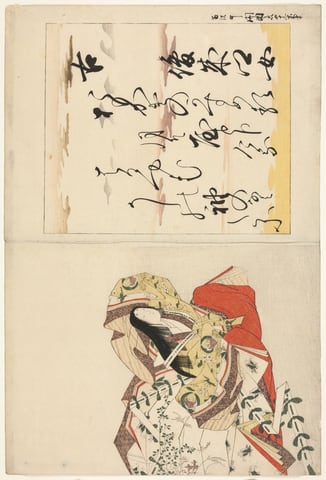
The Poetess Shunzei no Musume, from the series The Thirty-six Immortal Women Poets (Nishikizuri onna sanjurokkasen)Chôbunsai Eishi, Edo period (1615–1868), 1801Courtesy of the Art Institute of Chicago 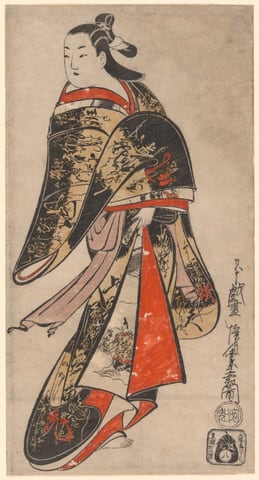
Courtesan WalkingKaigetsudo Anchi, c. 1714Courtesy of the Art Institute of Chicago
Section 3, north wall
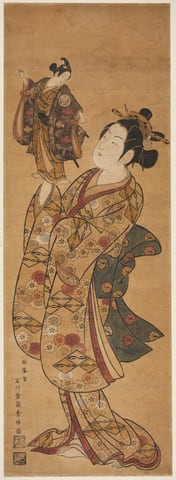
The Actor Onoe Kikugoro I holding a puppet of the Actor Sanogawa Ichimatsu IIshikawa Toyonobu, c. 1740sCourtesy of the Art Institute of Chicago 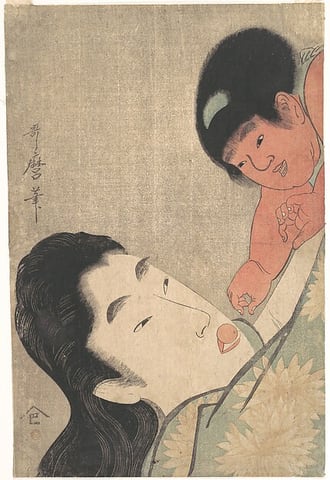
Yamauba and Kintarō Playing with a CherryKitagawa Utamaro, ca. 1795Courtesy of The Metropolitan Museum of Art 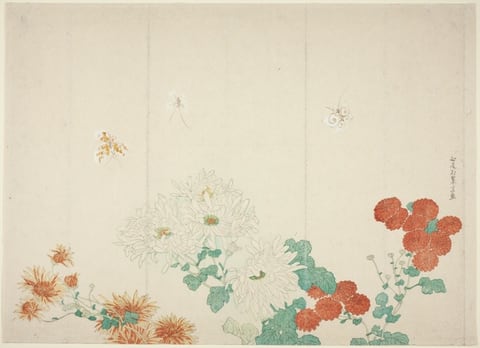
Three Types of ChrysanthemumsKitao Shigemasa, c. 1790Courtesy of the Art Institute of Chicago
Section 3, south wall
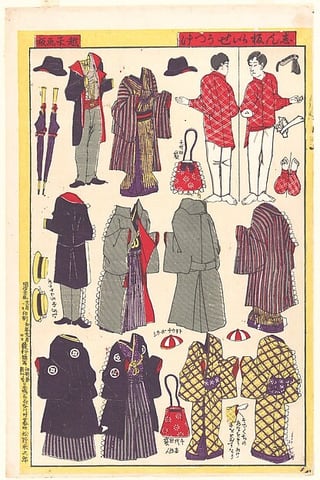
Paper Doll ClothingUnrecorded Japanese maker, 1897–98Courtesy of The Metropolitan Museum of Art 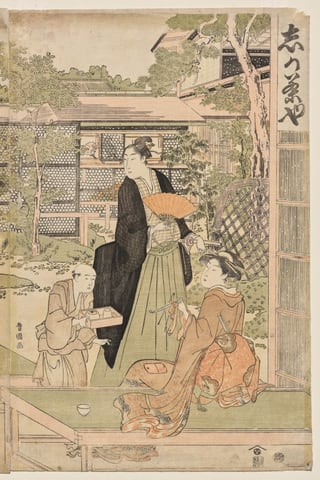
The Shika TeahouseUtagawa Toyokuni, early 1790sCourtesy of the Cleveland Museum of Art