Watercolours of the 19th century
Works in this room
Watercolours made in the 19th century, from every museum.
Section 1, north wall
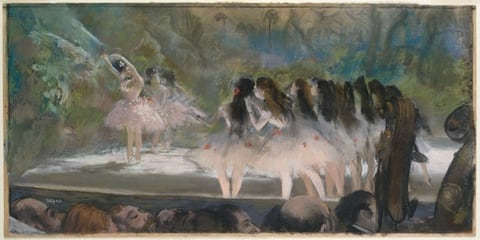
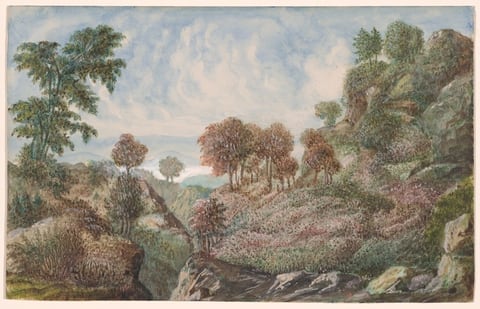
Ballet at the Paris OpéraEdgar Degas, 1877Courtesy of the Art Institute of Chicago Landscape with River GorgeGeorge Sand, 1860/69Courtesy of the Art Institute of Chicago
Section 1, south wall
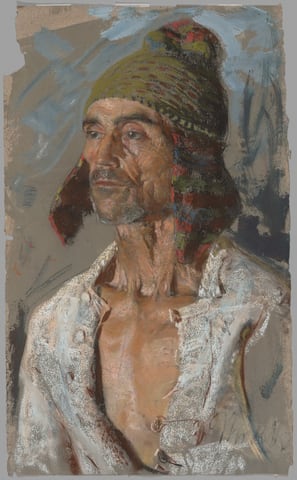
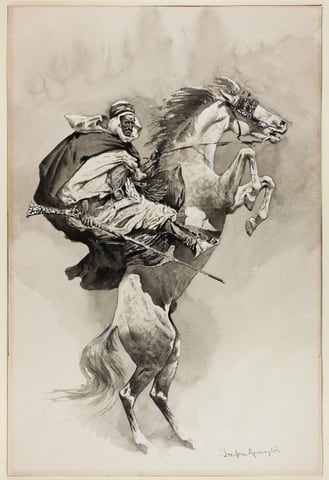
A Shepherd (Study for “Il Voto”) (recto); Woman Holding a Baby (Study for “Il Voto”) (verso)Francesco Paolo Michetti, c. 1883Courtesy of the Art Institute of Chicago "As They Threw their Animals Back upon their Haunches," illustration for An Arabian Day and Night, in Harper's New Monthly MagazineFrederic Remington, n.d.Courtesy of the Art Institute of Chicago
Section 2, south wall
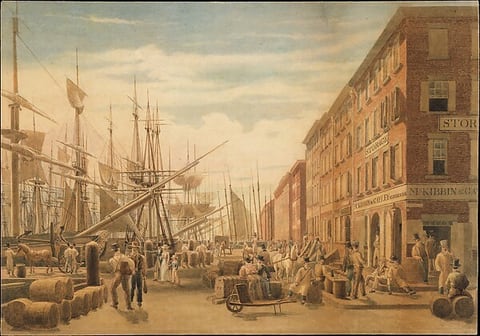
View of South Street, from Maiden Lane, New York CityWilliam James Bennett, ca. 1827Courtesy of The Metropolitan Museum of Art 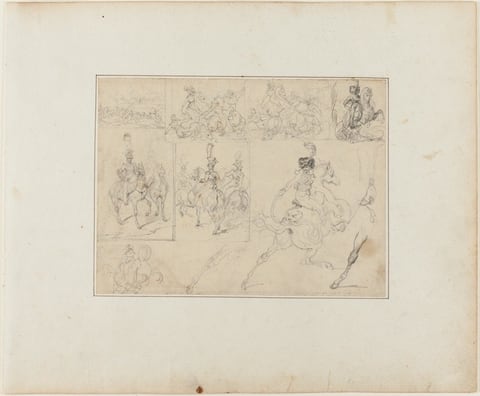
Sheet of Sketches: Cavalry Battles and Mounted SoldiersJean Louis André Théodore Géricault, 1813/14Courtesy of the Art Institute of Chicago 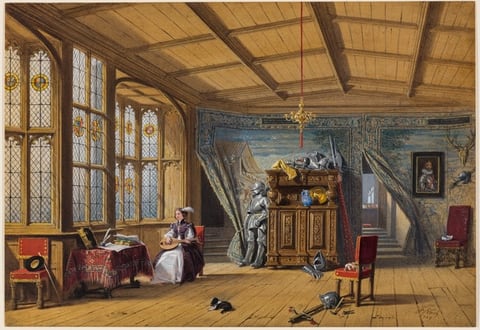
Room Leading to the Chapel, Knowle, KentJoseph Nash, 1869Courtesy of the Art Institute of Chicago
Section 2, north wall
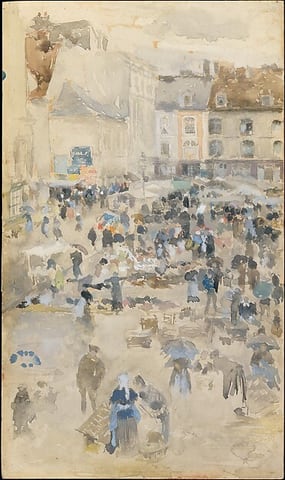
Variations in Violet and Grey—Market Place, DieppeJames McNeill Whistler, 1885Courtesy of The Metropolitan Museum of Art 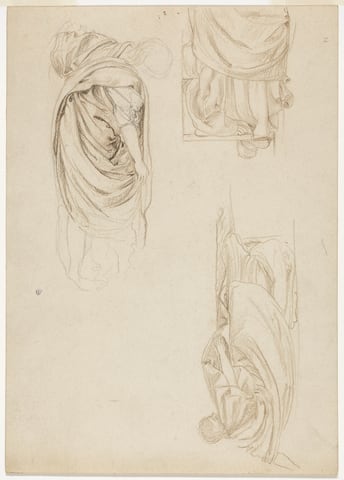
Study for FestivalSir John Edward Poynter, c. 1875Courtesy of the Art Institute of Chicago 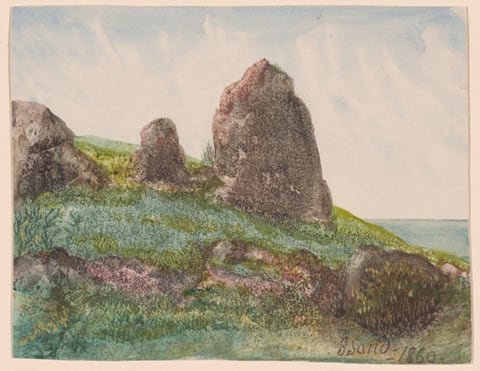
Landscape with RocksGeorge Sand, c. 1868/76Courtesy of the Art Institute of Chicago
Section 3, north wall
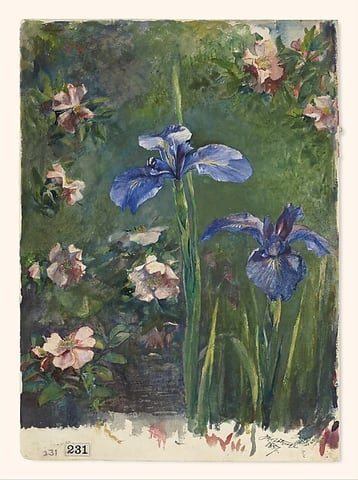
Wild Roses and IrisesJohn La Farge, 1887Courtesy of The Metropolitan Museum of Art 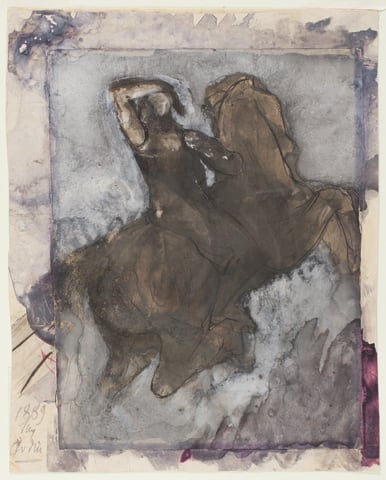
Horseman (recto); Horse and Rider (verso)Auguste Rodin, 1889Courtesy of the Art Institute of Chicago 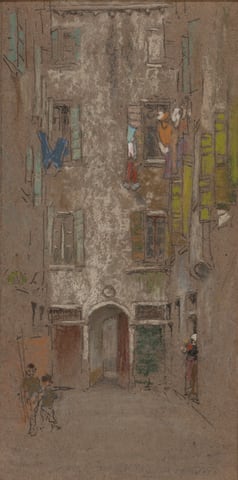
Corte del ParadisoJames McNeill Whistler, 1880Courtesy of the Art Institute of Chicago
Section 3, south wall
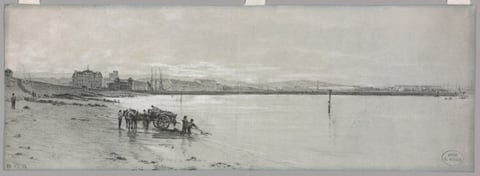
SeasideCharles François Eustache, 1866Courtesy of the Art Institute of Chicago 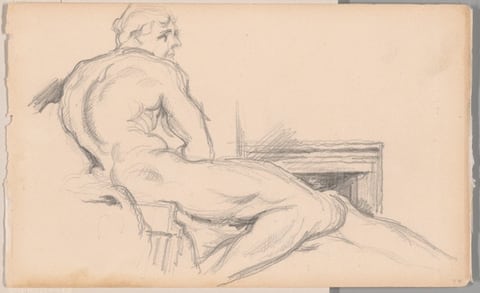
Hercules RestingPaul Cézanne, 1897Courtesy of the Art Institute of Chicago 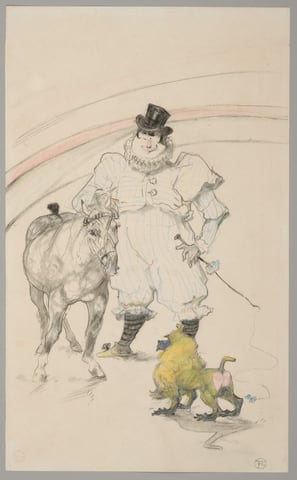
At the Circus: Trained Pony and BaboonHenri de Toulouse-Lautrec, 1899Courtesy of the Art Institute of Chicago