Ukiyo-e
Works in this room
Japanese woodblock prints of the floating world: actors, courtesans, landscapes and the sea.
Section 1, north wall
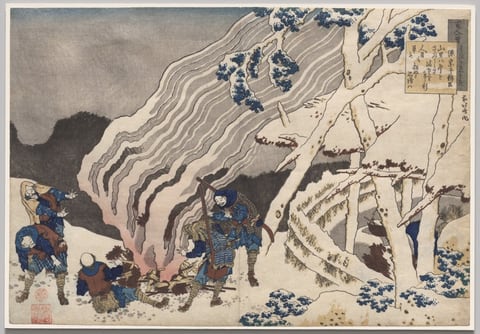
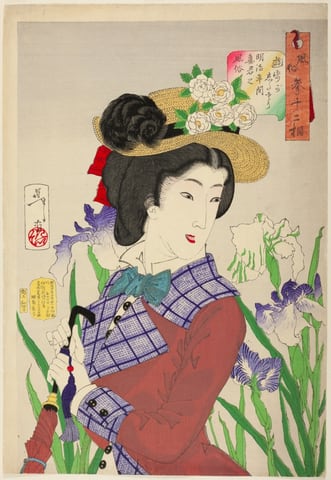
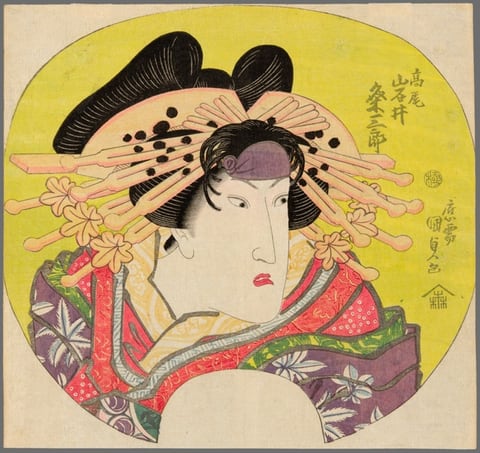
Poem by Minamoto no Muneyuki from the series One Hundred Poems by One Hundred Poets Explained by the NurseKatsushika Hokusai, 1835–36Courtesy of the Cleveland Museum of Art In The Mood for a Walk (Yuho ga shitaso), from the series "Thirty-two Aspects of Women (Fuzoku sanjuniso)"Tsukioka Yoshitoshi, 1888Courtesy of the Art Institute of Chicago Iwai Kumesaburo II as the Courtesan Takao in Banzei Okuni KabukiUtagawa Kunisada, c. 1827Courtesy of the Art Institute of Chicago
Section 1, south wall
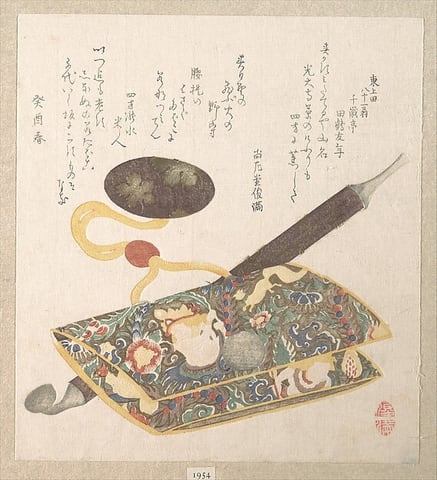
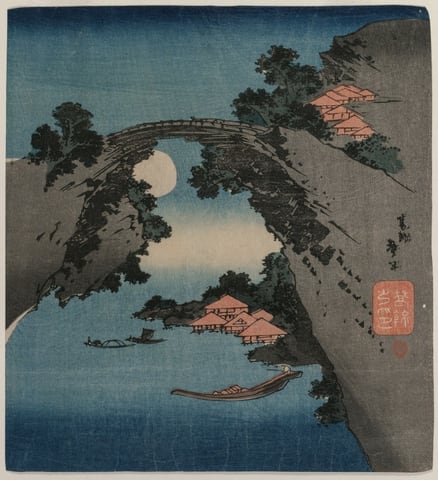
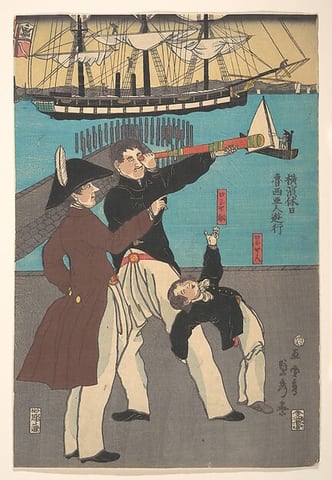
Tobacco Pouch and PipeKubo Shunman, 1813Courtesy of The Metropolitan Museum of Art The Monkey BridgeKatsushika Taito II, early 1830sCourtesy of the Cleveland Museum of Art Russians Enjoying a Holiday in Yokohama (Yokohama kyūjitsu Roshiajin yūkō)Utagawa (Gountei) Sadahide, 1861Courtesy of The Metropolitan Museum of Art
Section 2, south wall
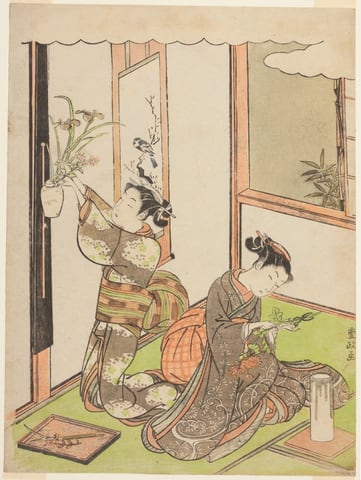
Flower ArrangingKitao Shigemasa, c. 1769Courtesy of the Art Institute of Chicago 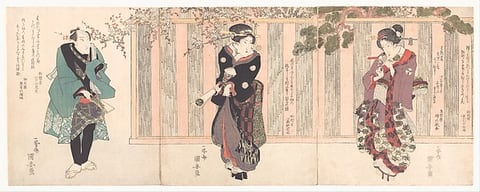
Three Kabuki Actors Playing HanetsukiUtagawa Kuniyasu, ca. 1823Courtesy of The Metropolitan Museum of Art 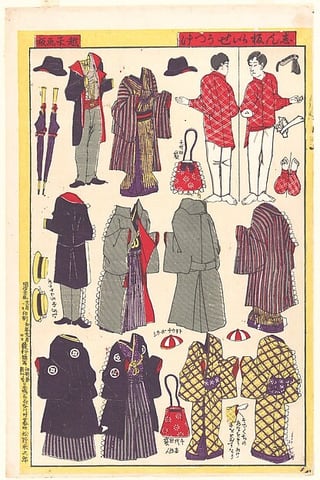
Paper Doll ClothingUnrecorded Japanese maker, 1897–98Courtesy of The Metropolitan Museum of Art
Section 2, north wall
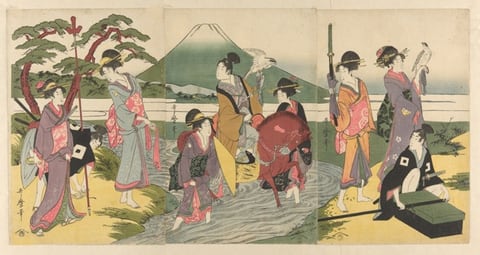
Young man and his party crossing a stream before Mt. FujiKitagawa Utamaro, c. 1798/1800Courtesy of the Art Institute of Chicago 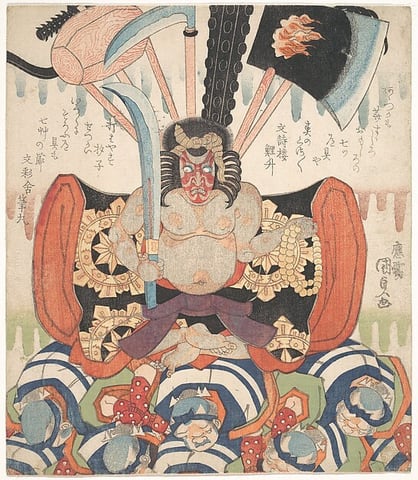
Danjūrō VII's Benkei as Fudō MyōōUtagawa Kunisada, ca. 1824Courtesy of The Metropolitan Museum of Art
Section 3, north wall
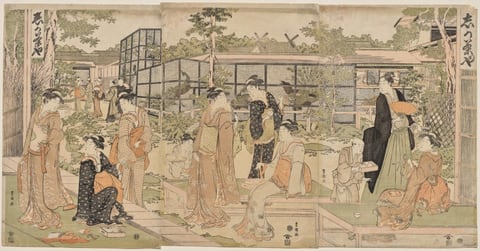
The Shika TeahouseUtagawa Toyokuni, early 1790sCourtesy of the Cleveland Museum of Art 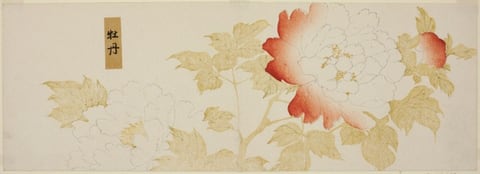
PeoniesKitagawa Utamaro, n.d.Courtesy of the Art Institute of Chicago 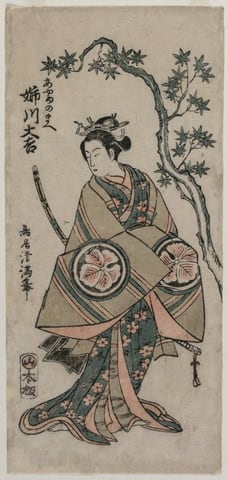
Anekawa Daisuke as Ayame-no-maeTorii Kiyomitsu, 1760Courtesy of the Cleveland Museum of Art
Section 3, south wall
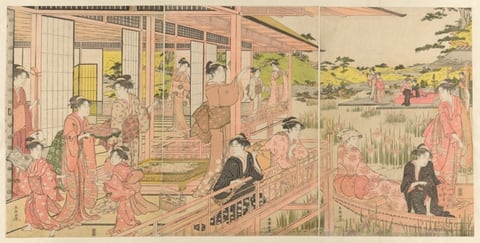
Iris GardenKatsukawa Shunchô, c. 1781/89Courtesy of the Art Institute of Chicago 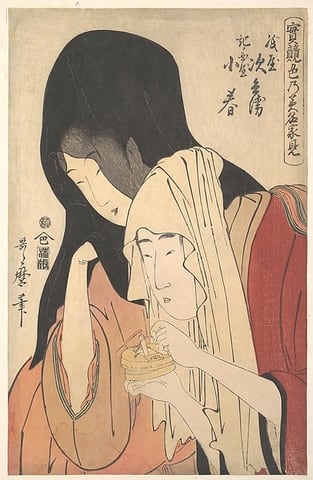
Jihei of Kamiya Eloping with the Geisha Koharu of Kinokuniya, from the series “True Feelings Compared: The Founts of Love” (Jitsu kurabe iro no Minakami)Kitagawa Utamaro, ca. 1798–99Courtesy of The Metropolitan Museum of Art