Ukiyo-e
Works in this room
Japanese woodblock prints of the floating world: actors, courtesans, landscapes and the sea.
Section 1, north wall
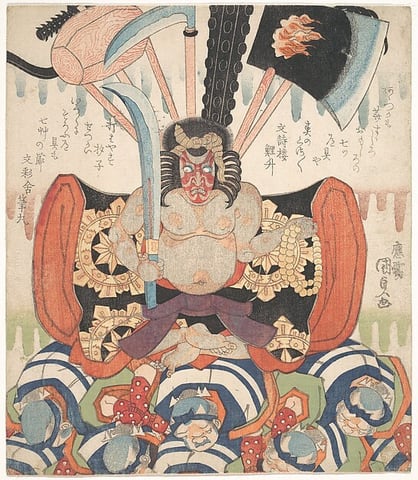
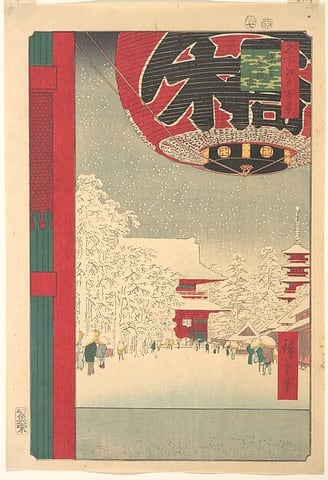
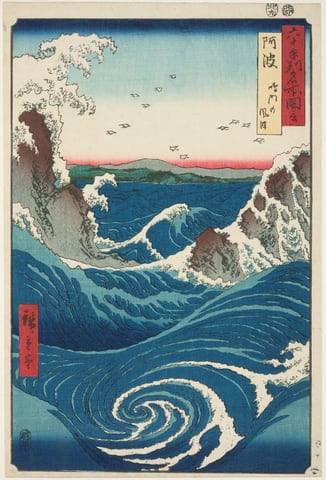
Danjūrō VII's Benkei as Fudō MyōōUtagawa Kunisada, ca. 1824Courtesy of The Metropolitan Museum of Art Kinryūsan Temple at Asakusa, from the series "One Hundred Famous Views of Edo"Utagawa Hiroshige, 1856Courtesy of The Metropolitan Museum of Art Awa Province: Naruto Whirlpools (Awa, Naruto no fūha), from the series Famous Places in the Sixty-Odd Provinces (Rokujūyoshmeisho zue)Utagawa Hiroshige, 1855Courtesy of the Art Institute of Chicago
Section 1, south wall
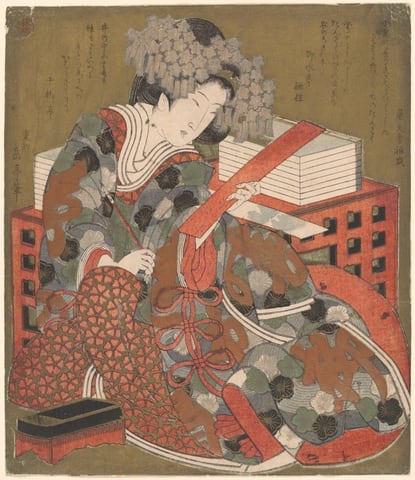
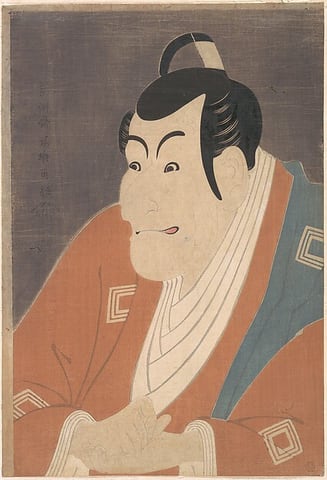
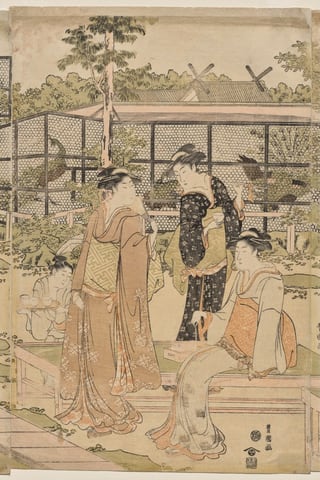
Woman About to Write a PoemYashima Gakutei, c. 1824Courtesy of the Art Institute of Chicago Ichikawa Ebizo IV in the role of Takemura SadanoshinTōshūsai Sharaku, Probably late 1880s or early 1890sCourtesy of The Metropolitan Museum of Art The Shika TeahouseUtagawa Toyokuni, early 1790sCourtesy of the Cleveland Museum of Art
Section 2, south wall
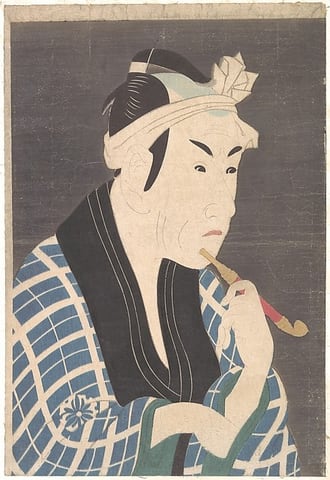
Matsumoto Koshiro IV as the Fish Peddler GorobeiTōshūsai Sharaku, Probably late 1880s or early 1890sCourtesy of The Metropolitan Museum of Art 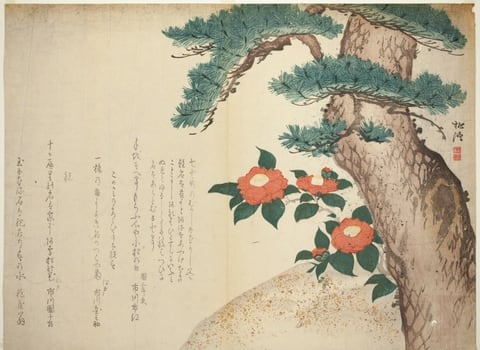
A Pine Tree and CamelliasNiwa Tokei, 1840Courtesy of the Art Institute of Chicago
Section 2, north wall
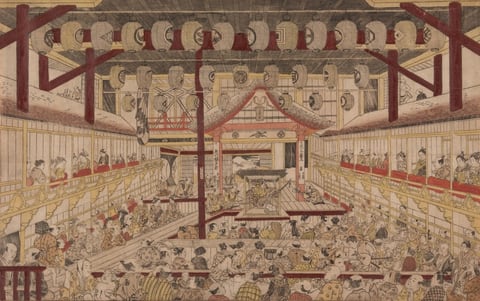
Perspective View of the Interior of the Nakamura Theater with Ichikawa Ebizo II as Yanone GoroOkumura Masanobu, 1740Courtesy of the Cleveland Museum of Art 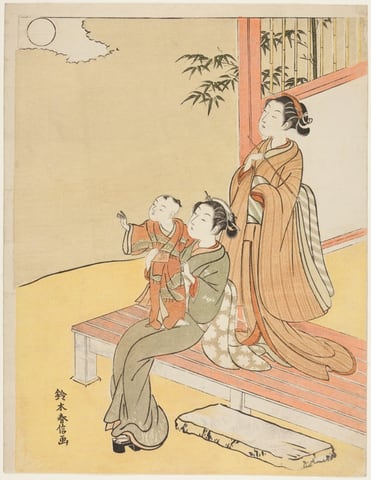
Viewing the MoonSuzuki Harunobu, c. 1767/68Courtesy of the Art Institute of Chicago
Section 3, north wall
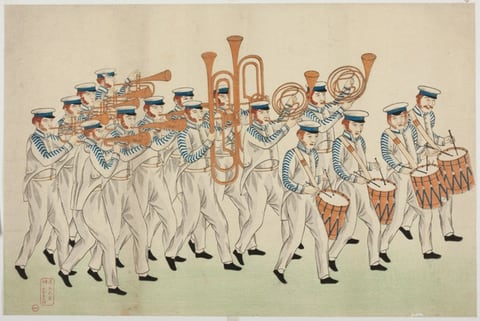
Procession of Russian Marching Band, from the Album of seven prints of Russian Army and Warship (Roshia seigi shashin kan), 1853Keiga, 1853Courtesy of the Art Institute of Chicago 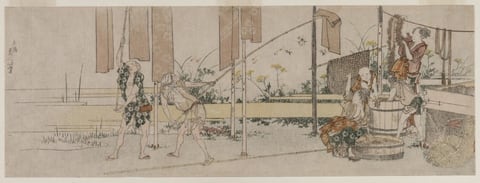
Dyers at WorkKatsushika Hokusai, c. 1800Courtesy of the Cleveland Museum of Art
Section 3, south wall
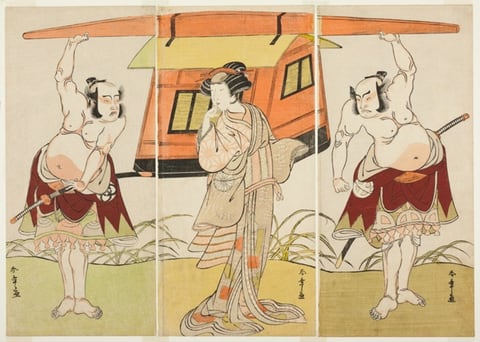
The Actors Otani Hiroji III as Yokambei (right), Nakamura Tomijuro I as Kuzunoha (center), and Bando Mitsugoro I as Yakambei (left), in the Last Scene from the Play Shinodazuma (The Wife from Shinoda Forest), Performed as a Supplement to the Play Kikyo-zome Onna Urakata (Female Diviner in Deep Violet), at the Morita Theater from the Ninth Day of the Ninth Month, 1776Katsukawa Shunshō, c. 1776Courtesy of the Art Institute of Chicago 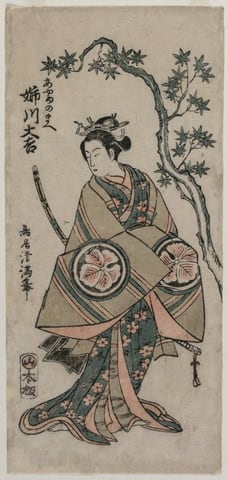
Anekawa Daisuke as Ayame-no-maeTorii Kiyomitsu, 1760Courtesy of the Cleveland Museum of Art
Section 4, south wall
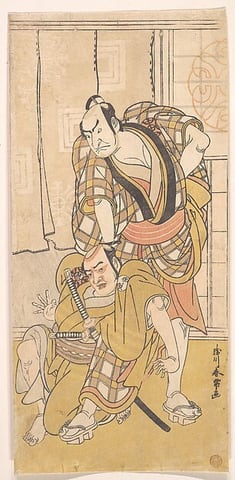
Scene from a PlayKatsukawa Shunjō, ca. 1780Courtesy of The Metropolitan Museum of Art 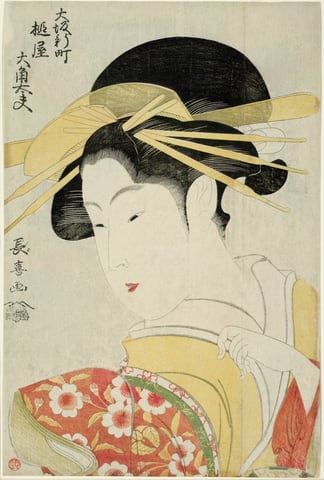
Osumi, a Tayu of the Tsuchiya in the Shinmachi Quarter in OsakaEishosai Choki, c. 1796/97Courtesy of the Art Institute of Chicago