Ukiyo-e
Works in this room
Japanese woodblock prints of the floating world: actors, courtesans, landscapes and the sea.
Section 1, north wall
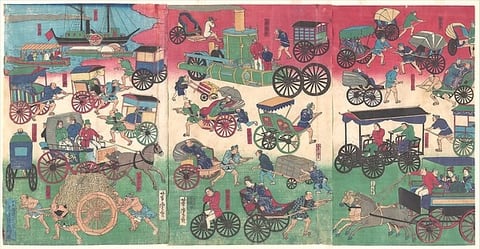
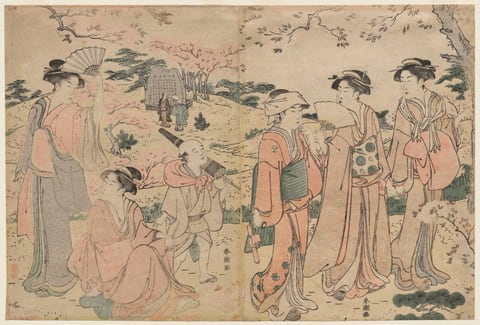
Vehicles on the Streets of TokyoUtagawa Yoshitora, 1870Courtesy of The Metropolitan Museum of Art Women Viewing Cherry Blossoms at AsukayamaKatsukawa Shunchô, 1780sCourtesy of the Cleveland Museum of Art
Section 1, south wall
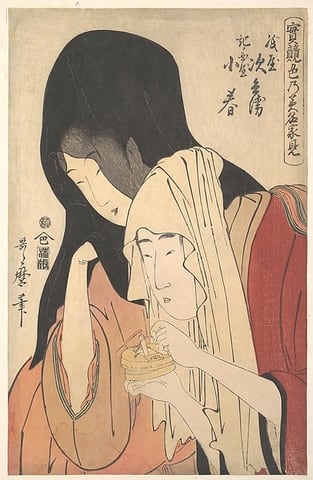
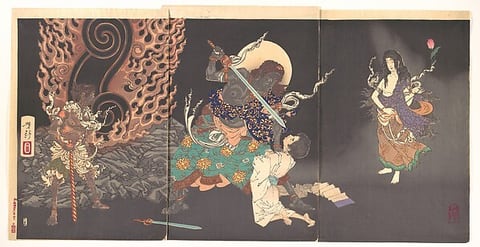
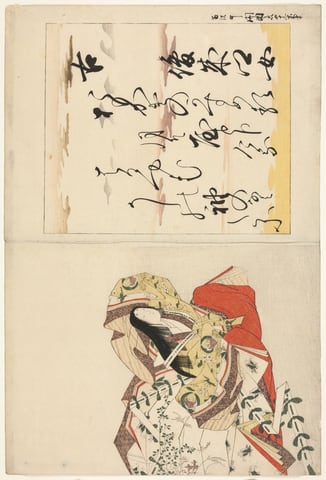
Jihei of Kamiya Eloping with the Geisha Koharu of Kinokuniya, from the series “True Feelings Compared: The Founts of Love” (Jitsu kurabe iro no Minakami)Kitagawa Utamaro, ca. 1798–99Courtesy of The Metropolitan Museum of Art Fudō Myōō Threatening a NoviceTsukioka Yoshitoshi, 1885Courtesy of The Metropolitan Museum of Art The Poetess Shunzei no Musume, from the series The Thirty-six Immortal Women Poets (Nishikizuri onna sanjurokkasen)Chôbunsai Eishi, Edo period (1615–1868), 1801Courtesy of the Art Institute of Chicago
Section 2, south wall
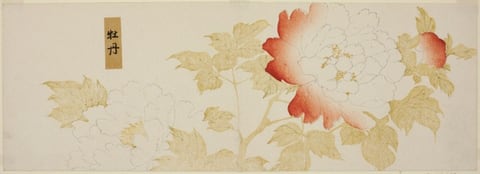
PeoniesKitagawa Utamaro, n.d.Courtesy of the Art Institute of Chicago 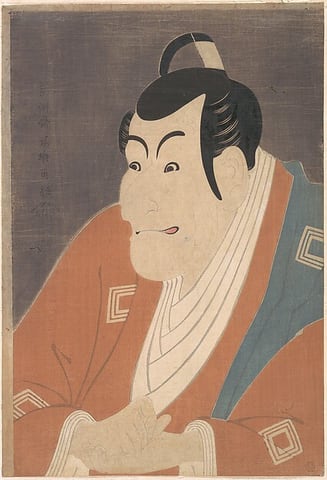
Ichikawa Ebizo IV in the role of Takemura SadanoshinTōshūsai Sharaku, Probably late 1880s or early 1890sCourtesy of The Metropolitan Museum of Art 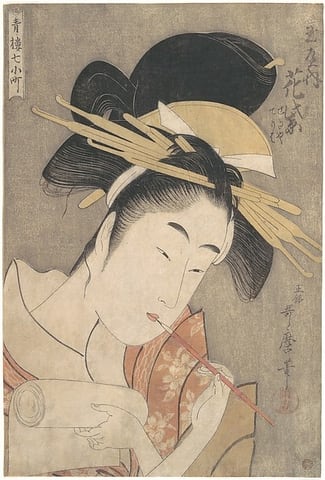
“Hanamurasaki of the Tamaya,” from the series Seven Komachi of the Pleasure Quarters (Seirō Nana Komachi)Kitagawa Utamaro, ca. 1790Courtesy of The Metropolitan Museum of Art
Section 2, north wall
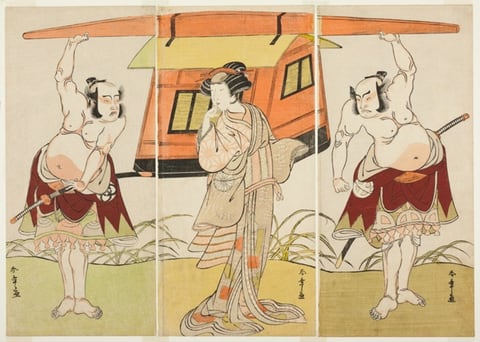
The Actors Otani Hiroji III as Yokambei (right), Nakamura Tomijuro I as Kuzunoha (center), and Bando Mitsugoro I as Yakambei (left), in the Last Scene from the Play Shinodazuma (The Wife from Shinoda Forest), Performed as a Supplement to the Play Kikyo-zome Onna Urakata (Female Diviner in Deep Violet), at the Morita Theater from the Ninth Day of the Ninth Month, 1776Katsukawa Shunshō, c. 1776Courtesy of the Art Institute of Chicago 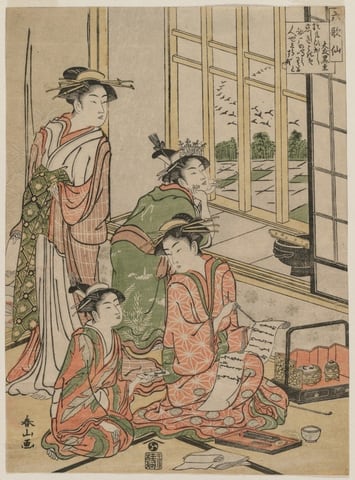
Courtesans at Leisure from the series The Six Immortal PoetsKatsukawa Shunzan, early 1780sCourtesy of the Cleveland Museum of Art 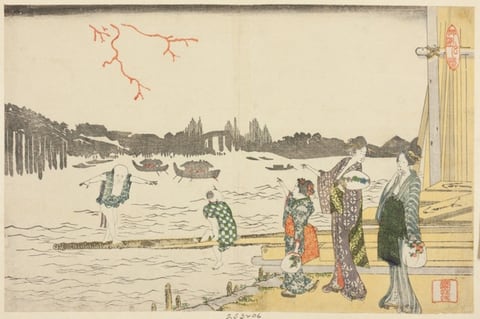
Women and Children Viewing the FireworksKatsushika Hokusai, c. 1798Courtesy of the Art Institute of Chicago
Section 3, north wall
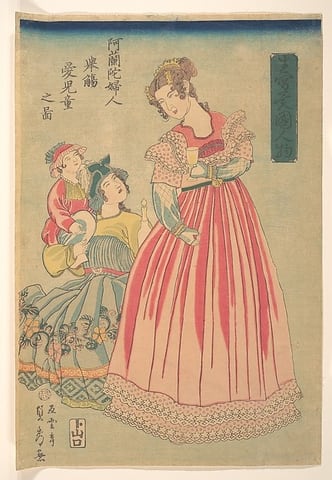
Dutch Woman and Child (Seisha ikoku jinbutsu Oranda fujin aijidō no zu)Utagawa (Gountei) Sadahide, 1860Courtesy of The Metropolitan Museum of Art 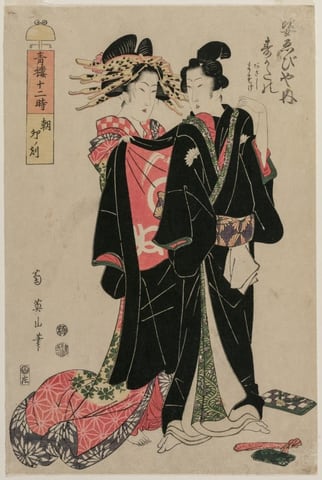
Sugatano of Sugata Ebisuya in the Morning, Hour of the Rabbit, from the series The Twelve Hours in the Pleasure QuartersKikukawa Eizan, 1812Courtesy of the Cleveland Museum of Art 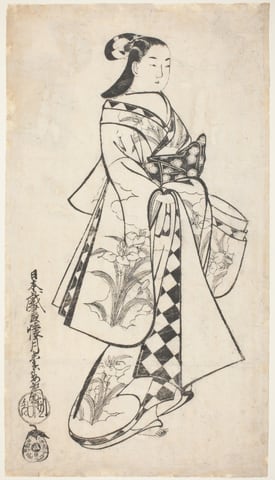
Standing BeautyKaigetsudo Anchi, About 1714Courtesy of the Art Institute of Chicago
Section 3, south wall
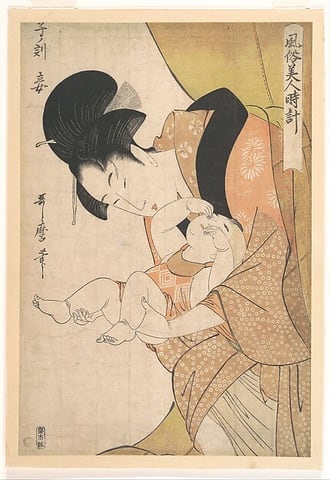
“Hour of the Rat: Mistress,” from the series Women’s Daily Customs (Fuzoku bijin tokei)Kitagawa Utamaro, 1790Courtesy of The Metropolitan Museum of Art 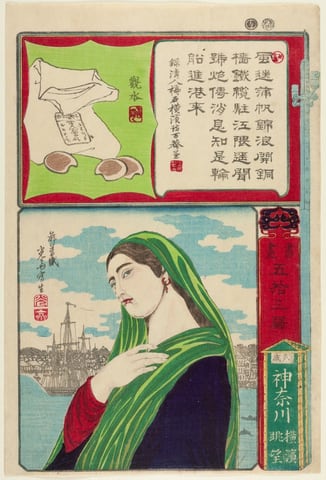
Kanagawa in Musashi Province: Distant View of Yokohama (Yokohama enbo), from the series Calligraphy and Pictures for the Fifty-three Stations of the Tokaido (Shoga gojusan eki)Utagawa Yoshimori, 1982Courtesy of the Art Institute of Chicago