Ukiyo-e
Works in this room
Japanese woodblock prints of the floating world: actors, courtesans, landscapes and the sea.
Section 1, north wall
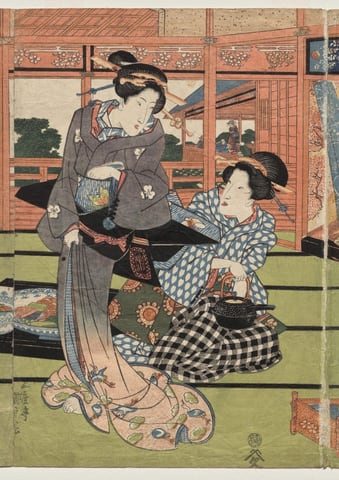
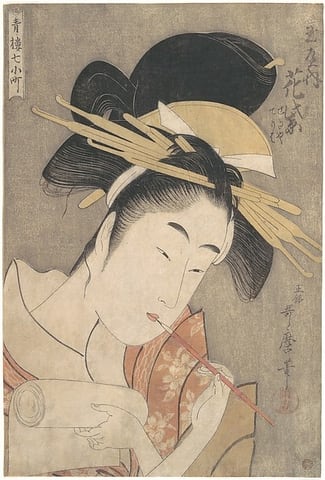
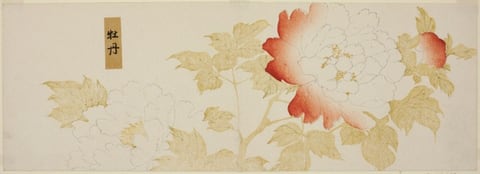
A View of the Large New Room at SakuraiUtagawa Kunisada, early or mid 1830sCourtesy of the Cleveland Museum of Art “Hanamurasaki of the Tamaya,” from the series Seven Komachi of the Pleasure Quarters (Seirō Nana Komachi)Kitagawa Utamaro, ca. 1790Courtesy of The Metropolitan Museum of Art PeoniesKitagawa Utamaro, n.d.Courtesy of the Art Institute of Chicago
Section 1, south wall
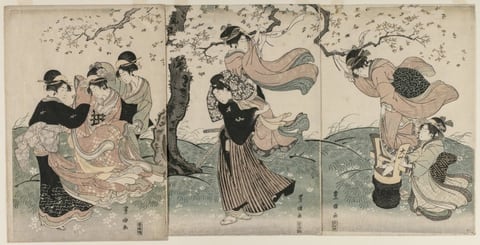
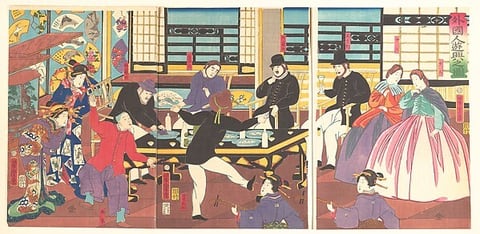
Cherry Blossoms in the WindUtagawa Toyokuni, late 1790sCourtesy of the Cleveland Museum of Art Foreigners Enjoying a Party (Gaikokujin yūkyō no zu)Utagawa Yoshitora, 1st month, 1861Courtesy of The Metropolitan Museum of Art
Section 2, south wall
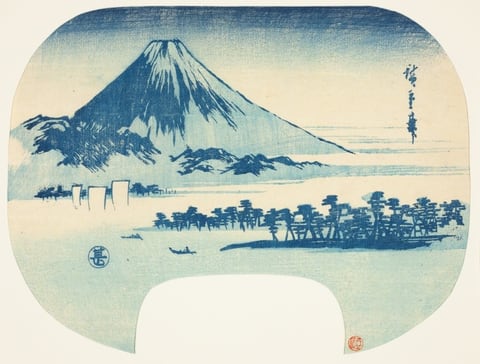
Mount Fuji Rising beyond Miho BeachUtagawa Hiroshige, c. 1838/42Courtesy of the Art Institute of Chicago 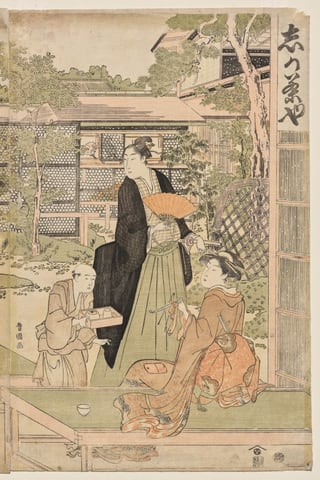
The Shika TeahouseUtagawa Toyokuni, early 1790sCourtesy of the Cleveland Museum of Art 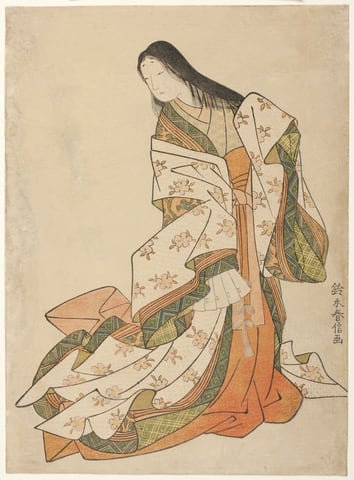
The Poetess Ono no KomachiSuzuki Harunobu, Edo period (1615–1868), 1767/68Courtesy of the Art Institute of Chicago
Section 2, north wall

The Actor Segawa Tomisaburo II as the Otomos' Maid Wakakusa, Actually Prince KorehitoTōshūsai Sharaku, 1794–75Courtesy of The Metropolitan Museum of Art 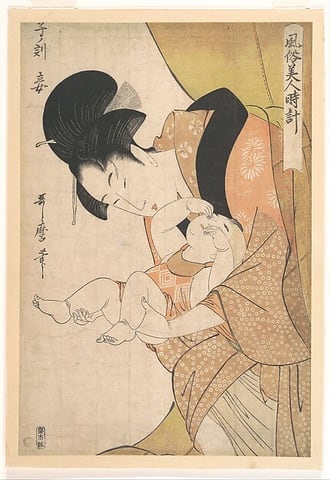
“Hour of the Rat: Mistress,” from the series Women’s Daily Customs (Fuzoku bijin tokei)Kitagawa Utamaro, 1790Courtesy of The Metropolitan Museum of Art 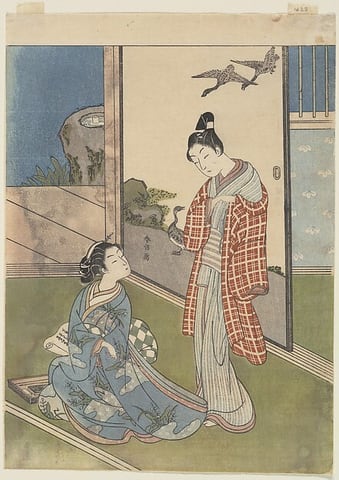
A Girl Writing a LetterSuzuki Harunobu, 18th centuryCourtesy of The Metropolitan Museum of Art
Section 3, north wall
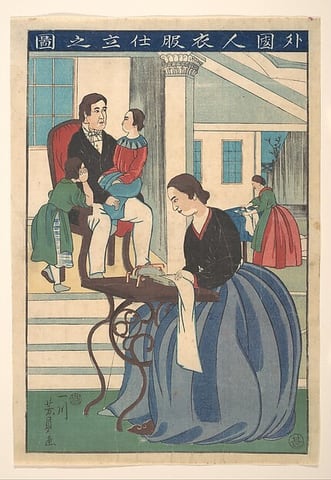
Foreign Family with Wife Making Clothes (Gaikokujin ifuku shitate no zu)Utagawa Yoshikazu, 1860Courtesy of The Metropolitan Museum of Art 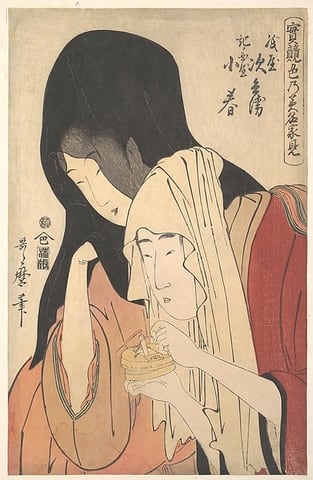
Jihei of Kamiya Eloping with the Geisha Koharu of Kinokuniya, from the series “True Feelings Compared: The Founts of Love” (Jitsu kurabe iro no Minakami)Kitagawa Utamaro, ca. 1798–99Courtesy of The Metropolitan Museum of Art 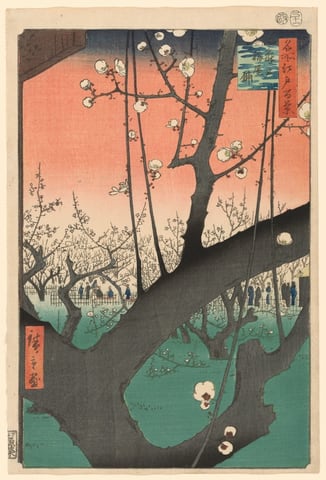
Plum Garden at Kameido (Kameido Umeyashiki), from the series "One Hundred Famous Views of Edo (Meisho Edo hyakkei)"Utagawa Hiroshige, 1857Courtesy of the Art Institute of Chicago
Section 3, south wall
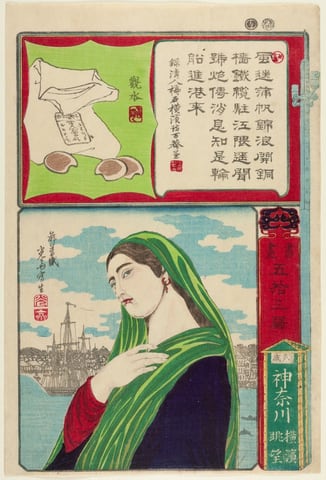
Kanagawa in Musashi Province: Distant View of Yokohama (Yokohama enbo), from the series Calligraphy and Pictures for the Fifty-three Stations of the Tokaido (Shoga gojusan eki)Utagawa Yoshimori, 1982Courtesy of the Art Institute of Chicago 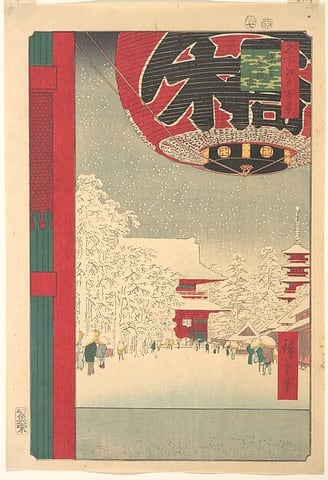
Kinryūsan Temple at Asakusa, from the series "One Hundred Famous Views of Edo"Utagawa Hiroshige, 1856Courtesy of The Metropolitan Museum of Art