Ukiyo-e

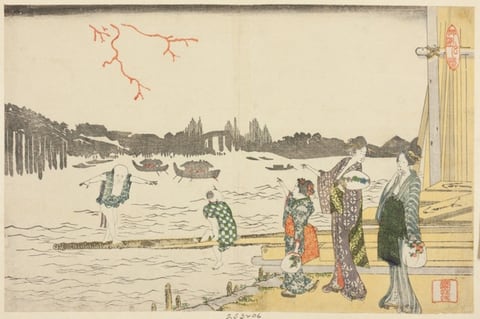
Works in this room
Japanese woodblock prints of the floating world: actors, courtesans, landscapes and the sea.
Section 1, north wall
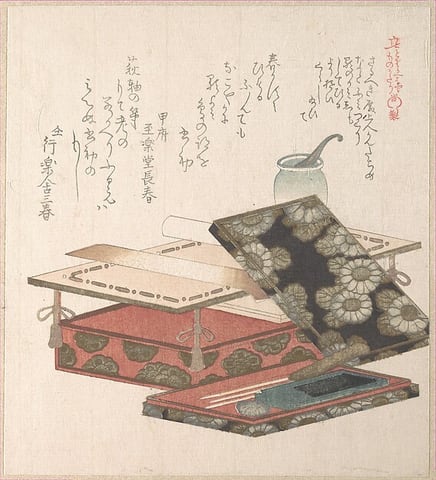
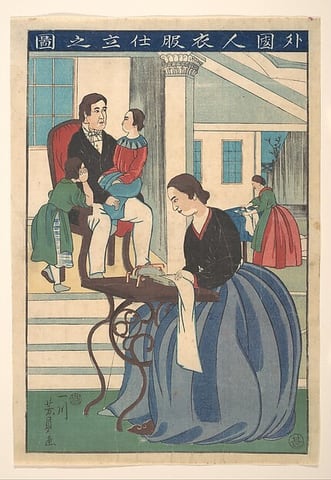
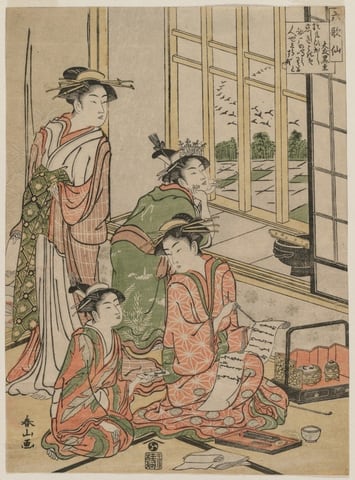
Table and Writing SetKubo Shunman, 19th centuryCourtesy of The Metropolitan Museum of Art Foreign Family with Wife Making Clothes (Gaikokujin ifuku shitate no zu)Utagawa Yoshikazu, 1860Courtesy of The Metropolitan Museum of Art Courtesans at Leisure from the series The Six Immortal PoetsKatsukawa Shunzan, early 1780sCourtesy of the Cleveland Museum of Art
Section 1, south wall
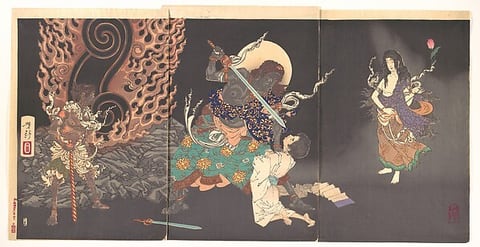
Fudō Myōō Threatening a NoviceTsukioka Yoshitoshi, 1885Courtesy of The Metropolitan Museum of Art The Actor Segawa Tomisaburo II as the Otomos' Maid Wakakusa, Actually Prince KorehitoTōshūsai Sharaku, 1794–75Courtesy of The Metropolitan Museum of Art Women and Children Viewing the FireworksKatsushika Hokusai, c. 1798Courtesy of the Art Institute of Chicago
Section 2, south wall
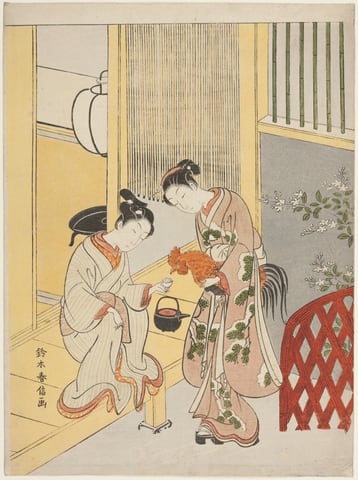
Delaying the announcement of dawnSuzuki Harunobu, c. 1767/68Courtesy of the Art Institute of Chicago 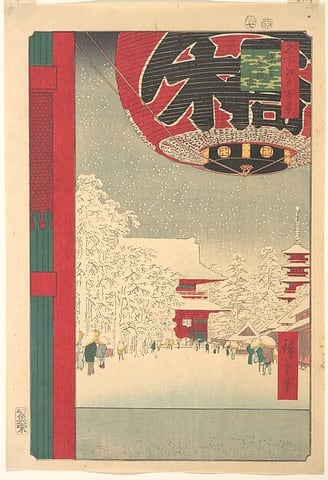
Kinryūsan Temple at Asakusa, from the series "One Hundred Famous Views of Edo"Utagawa Hiroshige, 1856Courtesy of The Metropolitan Museum of Art 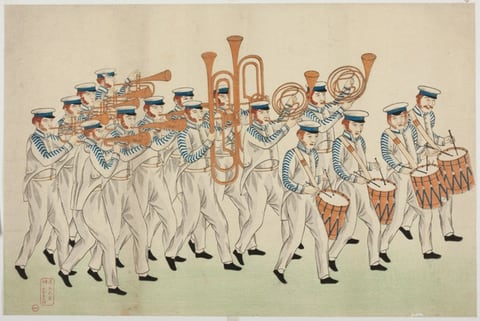
Procession of Russian Marching Band, from the Album of seven prints of Russian Army and Warship (Roshia seigi shashin kan), 1853Keiga, 1853Courtesy of the Art Institute of Chicago
Section 2, north wall
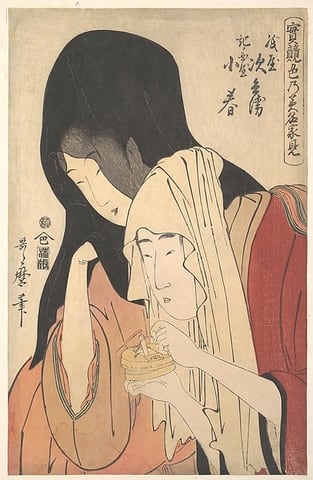
Jihei of Kamiya Eloping with the Geisha Koharu of Kinokuniya, from the series “True Feelings Compared: The Founts of Love” (Jitsu kurabe iro no Minakami)Kitagawa Utamaro, ca. 1798–99Courtesy of The Metropolitan Museum of Art 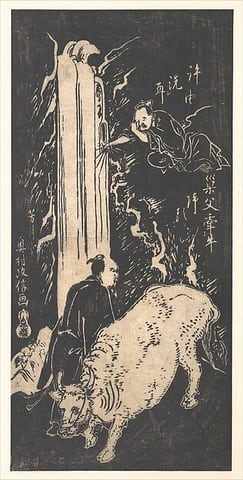
Xu You and Chao FuOkumura Masanobu, 18th centuryCourtesy of The Metropolitan Museum of Art 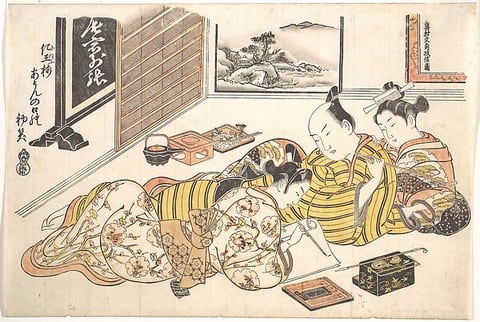
Plate from the Erotic Book Mounds of Dyed Colors: A Pattern Book for the Boudoir (Someiro no yama neya no hinagata), First MonthOkumura Masanobu, ca. 1736–44Courtesy of The Metropolitan Museum of Art
Section 3, north wall
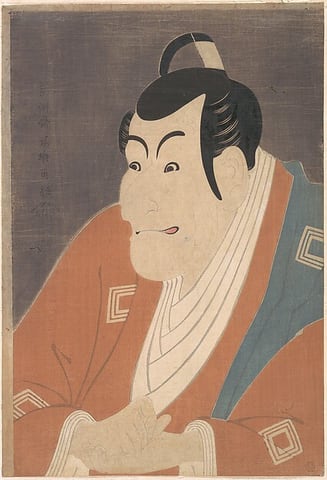
Ichikawa Ebizo IV in the role of Takemura SadanoshinTōshūsai Sharaku, Probably late 1880s or early 1890sCourtesy of The Metropolitan Museum of Art 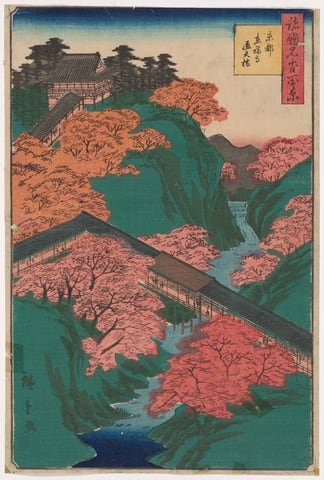
Tsuten-kyo Bridge, Tofuku Temple, Kyoto (Kyoto Tofukuji Tsutenkyo bashi) from the series “One Hundred Famous Views in the Various Provinces (Shokoku meisho hyakkei)”Utagawa Hiroshige II, 1859Courtesy of the Art Institute of Chicago
Section 3, south wall
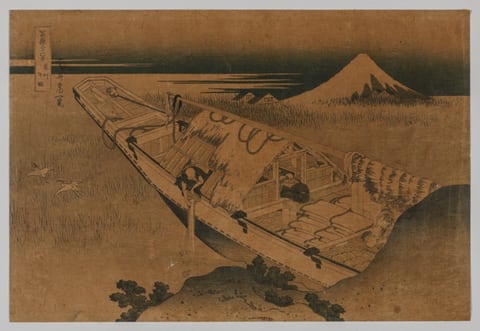
Fuji from Ushibori, Province of HitachiKatsushika Hokusai, 1760–1849Courtesy of the Cleveland Museum of Art 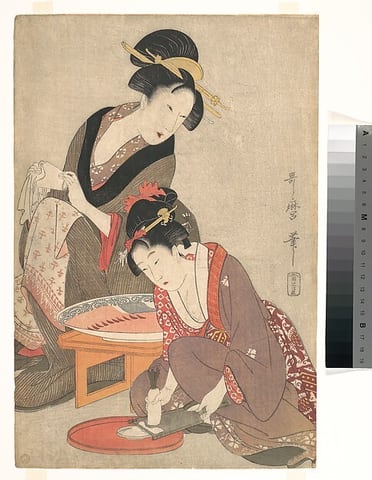
Women Grating Radish for SashimiKitagawa Utamaro, ca. 1798–99Courtesy of The Metropolitan Museum of Art