Floor plan

Style galleriesPrints of the 19th century
Prints of the 19th century
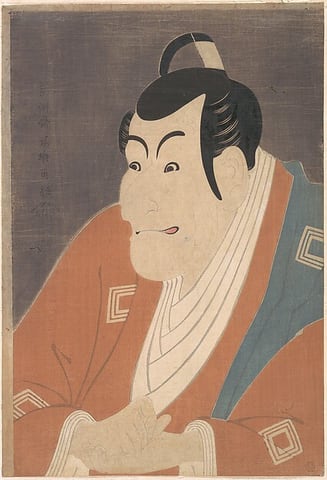
Ichikawa Ebizo IV in the role of Takemura Sadanoshin, by Tōshūsai Sharaku, Probably late 1880s or early 1890s
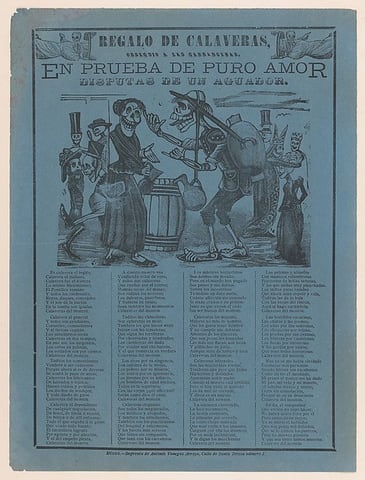
In proof of true love, a watercarrier skeleton arguing with a woman (Posada); two skeleton angels in upper corners (Manilla), by José Guadalupe Posada, ca. 1890–96
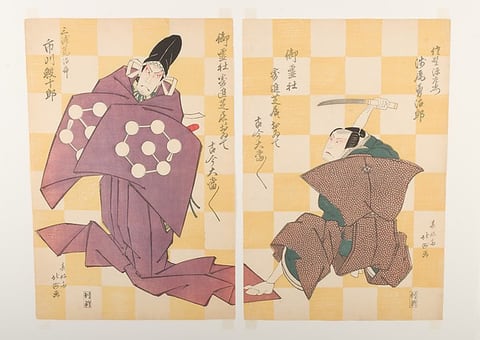
Kabuki Actors Asao Yūjirō as Sano Genzaemon and Ichikawa Ebijūrō I as Miura Arajirō, in the play Keisei Sano no Funabashi, by Shunkōsai Hokushū, 1822
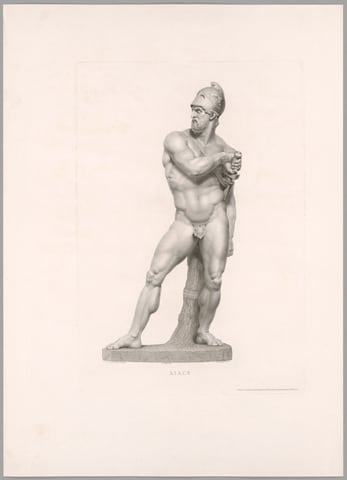
A work made of engraving and etching in black on ivory wove paper.
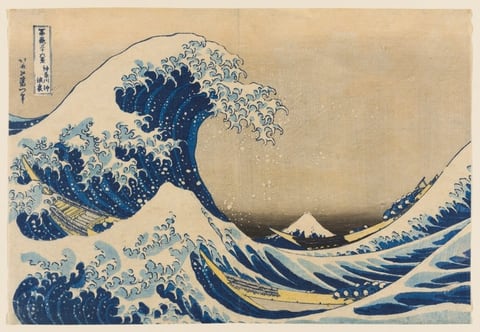
A color woodblock print of a large crashing wave, looms over two narrow boats full of people. Mt Fuji in the background. There is a faint peach colored sky.
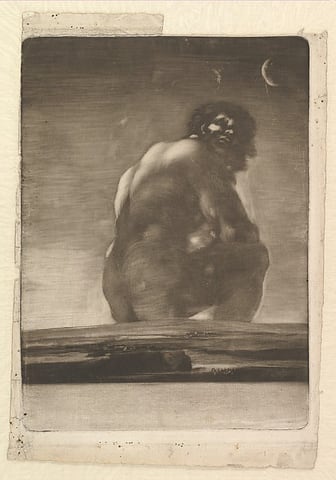
Seated Giant, by Francisco Goya, by 1818 (possibly 1814–18)

The works in this room are listed below.

Works in this room

Prints made in the 19th century, from every museum.

Section 1, north wall

  1. Ichikawa Ebizo IV in the role of Takemura Sadanoshin, by Tōshūsai Sharaku, Probably late 1880s or early 1890s
    Ichikawa Ebizo IV in the role of Takemura SadanoshinTōshūsai Sharaku, Probably late 1880s or early 1890sCourtesy of The Metropolitan Museum of Art
  2. In proof of true love, a watercarrier skeleton arguing with a woman (Posada); two skeleton angels in upper corners (Manilla), by José Guadalupe Posada, ca. 1890–96
    In proof of true love, a watercarrier skeleton arguing with a woman (Posada); two skeleton angels in upper corners (Manilla)José Guadalupe Posada, ca. 1890–96Courtesy of The Metropolitan Museum of Art
  3. Kabuki Actors Asao Yūjirō as Sano Genzaemon and Ichikawa Ebijūrō I as Miura Arajirō, in the play Keisei Sano no Funabashi, by Shunkōsai Hokushū, 1822
    Kabuki Actors Asao Yūjirō as Sano Genzaemon and Ichikawa Ebijūrō I as Miura Arajirō, in the play Keisei Sano no FunabashiShunkōsai Hokushū, 1822Courtesy of The Metropolitan Museum of Art

Section 1, south wall

  1. A work made of engraving and etching in black on ivory wove paper.
    Ajax, Front View, from Oeuvre de CanovaAntonio Canova, 1817Courtesy of the Art Institute of Chicago
  2. A color woodblock print of a large crashing wave, looms over two narrow boats full of people. Mt Fuji in the background. There is a faint peach colored sky.
    Under the Wave off Kanagawa (Kanagawa oki nami ura), also known as The Great Wave, from the series "Thirty-Six Views of Mount Fuji (Fugaku sanjurokkei)"Katsushika Hokusai, 1830/33Courtesy of the Art Institute of Chicago
  3. Seated Giant, by Francisco Goya, by 1818 (possibly 1814–18)
    Seated GiantFrancisco Goya, by 1818 (possibly 1814–18)Courtesy of The Metropolitan Museum of Art

Section 2, south wall
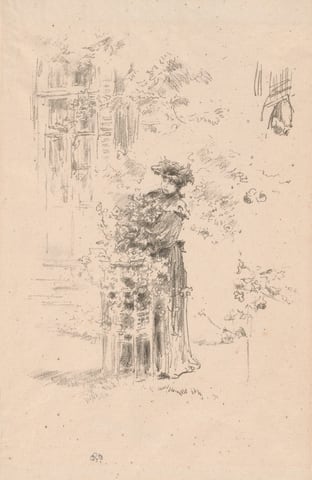
  1. A work made of transfer lithograph in black, with stumping and scraping, on cream laid paper, laid down on a heavy backing sheet.
    La Belle JardinièreJames McNeill Whistler, 1894Courtesy of the Art Institute of Chicago
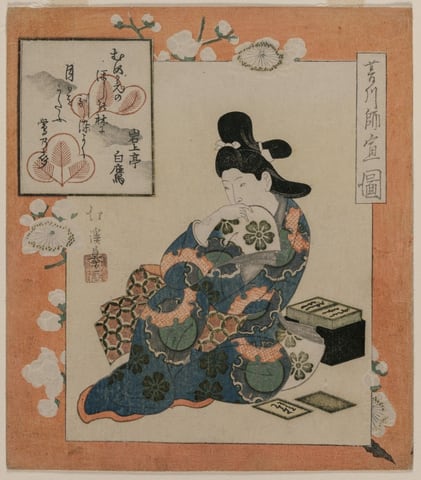
  2. A Picture by Hishikawa Moronobu: Woman with a Set of Poem Cards, by Totoya Hokkei, mid 1820s
    A Picture by Hishikawa Moronobu: Woman with a Set of Poem CardsTotoya Hokkei, mid 1820sCourtesy of the Cleveland Museum of Art
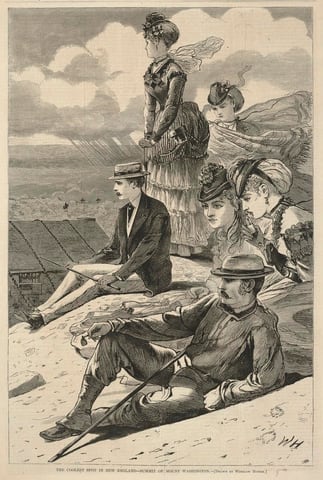
  3. The Coolest Spot in New England--Summit of Mount Washington, from Harper's Bazar, July 23, 1870, by Winslow Homer, 1870
    The Coolest Spot in New England--Summit of Mount Washington, from Harper's Bazar, July 23, 1870Winslow Homer, 1870Courtesy of the Smithsonian American Art Museum

Section 2, north wall
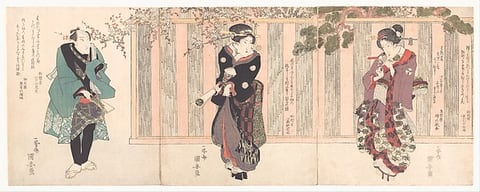
  1. Three Kabuki Actors Playing Hanetsuki, by Utagawa Kuniyasu, ca. 1823
    Three Kabuki Actors Playing HanetsukiUtagawa Kuniyasu, ca. 1823Courtesy of The Metropolitan Museum of Art
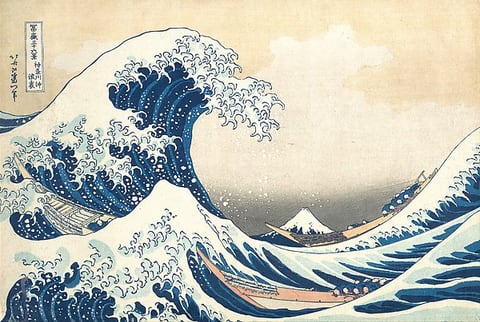
  2. Under the Wave off Kanagawa (Kanagawa oki nami ura), also known as The Great Wave, from the series Thirty-six Views of Mount Fuji (Fugaku sanjūrokkei), by Katsushika Hokusai, ca. 1830–32
    Under the Wave off Kanagawa (Kanagawa oki nami ura), also known as The Great Wave, from the series Thirty-six Views of Mount Fuji (Fugaku sanjūrokkei)Katsushika Hokusai, ca. 1830–32Courtesy of The Metropolitan Museum of Art

Section 3, north wall
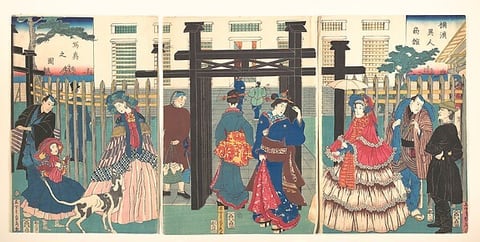
  1. Foreign Business Establishment in Yokohama (Yokohama ijin shōkan shashin no zu), by Utagawa (Gountei) Sadahide, 1861
    Foreign Business Establishment in Yokohama (Yokohama ijin shōkan shashin no zu)Utagawa (Gountei) Sadahide, 1861Courtesy of The Metropolitan Museum of Art
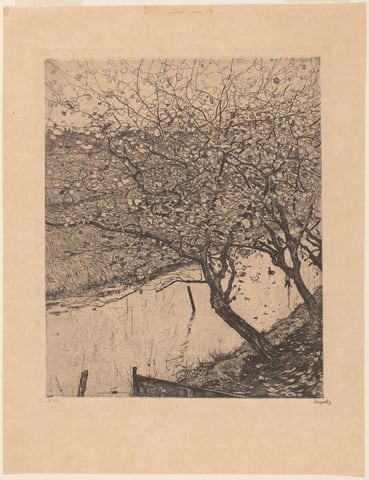
  2. The image shows a small body of water with grass-covered banks on either side. The viewpoint is slightly elevated, looking down at the scene. The horizon is in the upper third of the composition, separating the sky from the land. The artwork features intricate linework and stippling to create texture and detail, particularly in the tree branches. The color palette is monochrome, with shades of sepia and brown. A tree dominates the right side of the scene, leaning over the water. In the distance, more trees and fields are visible with minimal detail in the far background.
    Apple Trees along the Side of a DitchPieter Dupont, 1894Courtesy National Gallery of Art, Washington
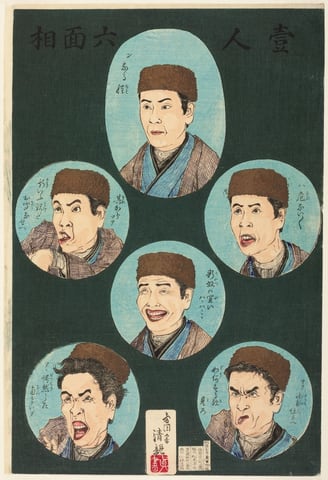
  3. A work made of color woodblock print; oban.
    One Person, Six Expressions (Hitori rokumenso)Kobayashi Kiyochika, 1884Courtesy of the Art Institute of Chicago

Section 3, south wall
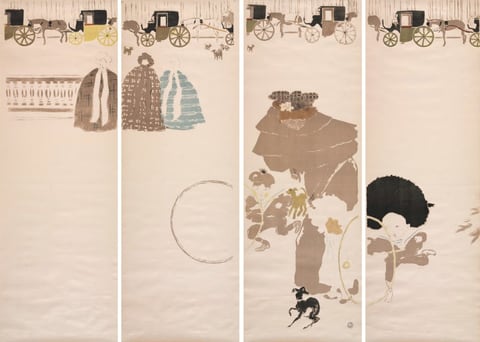
  1. Nursemaids’ Promenade, Frieze of Carriages, by Pierre Bonnard, 1895
    Nursemaids’ Promenade, Frieze of CarriagesPierre Bonnard, 1895Courtesy of the Cleveland Museum of Art
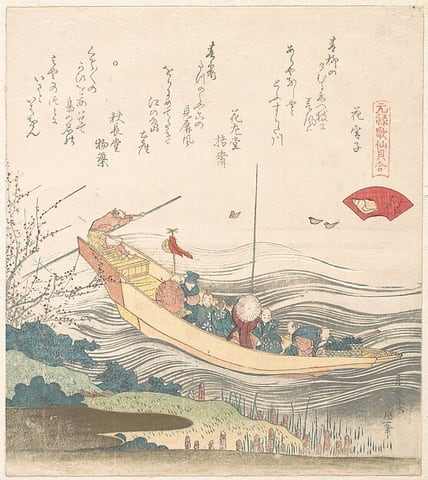
  2. Miyako Shell, by Katsushika Hokusai, probably 1821
    Miyako ShellKatsushika Hokusai, probably 1821Courtesy of The Metropolitan Museum of Art