Floor plan

Style galleriesPost-Impressionism

Post-Impressionism

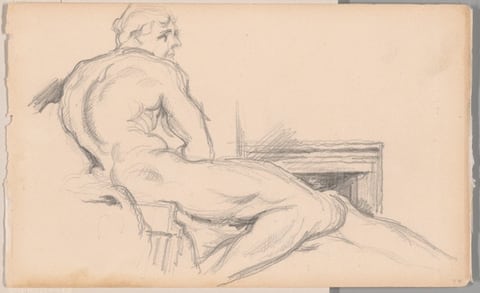
A work made of graphite on ivory wove paper.
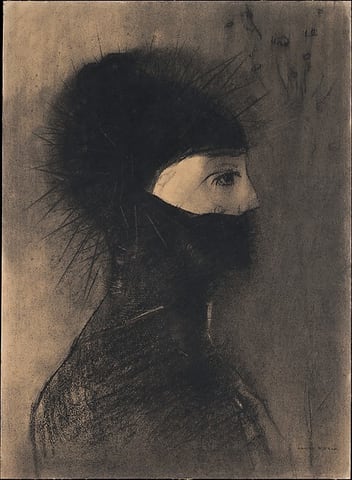
Armor, by Odilon Redon, 1891
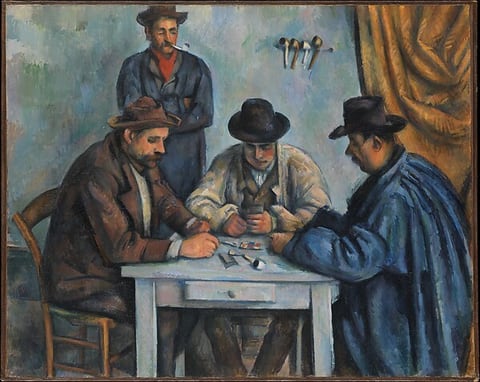
The Card Players, by Paul Cézanne, 1890–92
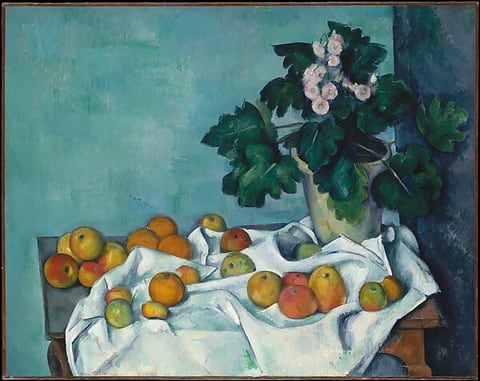
Still Life with Apples and a Pot of Primroses, by Paul Cézanne, ca. 1890
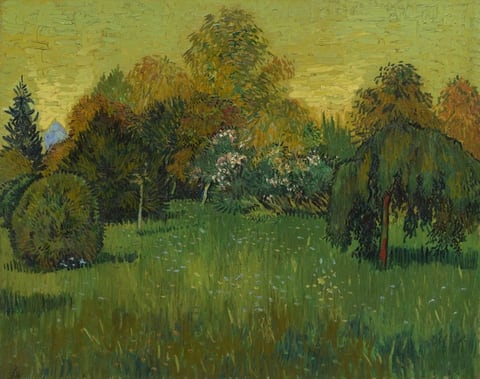
Lush tall grasses with small white flowers foreground a grove of bushy trees of varying types and heights, their leaves ranging from deep green to golden. Beneath a dense and heavy yellow sky, a small blue triangle suggesting a mountain peak crests above the treeline at far left.
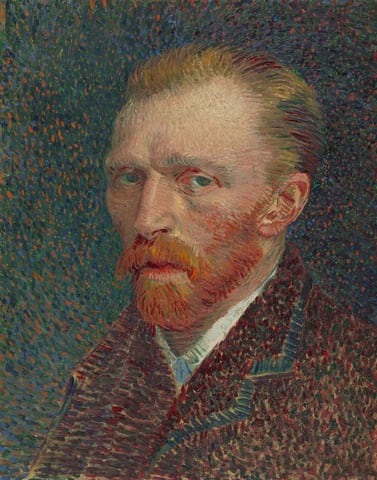
Painting of a red-haired, bearded man with light skin, painted in short brushstrokes and multicolored dots. The background is likewise a mass of small, closely spaced colored dots, these in green, blue, and red-orange.
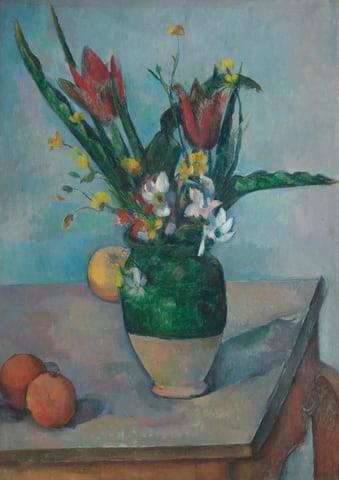
A work made of oil on canvas.
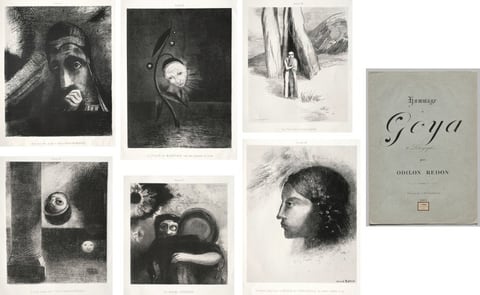
Homage to Goya, by Odilon Redon, 1885

The works in this room are listed below.

Works in this room

Artists who kept Impressionism's colour but pushed towards structure, symbol and feeling.

First room, north wall

  1. A work made of graphite on ivory wove paper.
    Hercules RestingPaul Cézanne, 1897Courtesy of the Art Institute of Chicago
  2. Armor, by Odilon Redon, 1891
    ArmorOdilon Redon, 1891Courtesy of The Metropolitan Museum of Art
  3. The Card Players, by Paul Cézanne, 1890–92
    The Card PlayersPaul Cézanne, 1890–92Courtesy of The Metropolitan Museum of Art
  4. Still Life with Apples and a Pot of Primroses, by Paul Cézanne, ca. 1890
    Still Life with Apples and a Pot of PrimrosesPaul Cézanne, ca. 1890Courtesy of The Metropolitan Museum of Art

First room, south wall

  1. Lush tall grasses with small white flowers foreground a grove of bushy trees of varying types and heights, their leaves ranging from deep green to golden. Beneath a dense and heavy yellow sky, a small blue triangle suggesting a mountain peak crests above the treeline at far left.
    The Poet's GardenVincent van Gogh, 1888Courtesy of the Art Institute of Chicago
  2. Painting of a red-haired, bearded man with light skin, painted in short brushstrokes and multicolored dots. The background is likewise a mass of small, closely spaced colored dots, these in green, blue, and red-orange.
    Self-PortraitVincent van Gogh, 1887Courtesy of the Art Institute of Chicago
  3. A work made of oil on canvas.
    The Vase of TulipsPaul Cézanne, c. 1890Courtesy of the Art Institute of Chicago
  4. Homage to Goya, by Odilon Redon, 1885
    Homage to GoyaOdilon Redon, 1885Courtesy of the Cleveland Museum of Art

Second room, south wall
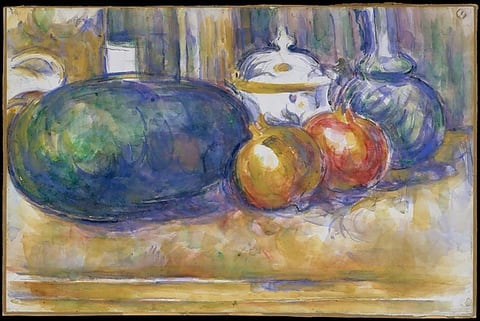
  1. Still-Life with a Watermelon and Pomegranates, by Paul Cézanne, 1900–1906
    Still-Life with a Watermelon and PomegranatesPaul Cézanne, 1900–1906Courtesy of The Metropolitan Museum of Art
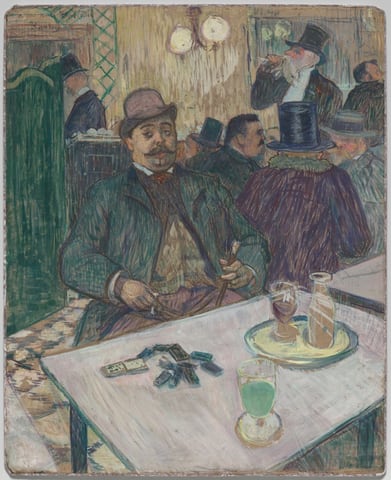
  2. Monsieur Boileau at the Café, by Henri de Toulouse-Lautrec, 1893
    Monsieur Boileau at the CaféHenri de Toulouse-Lautrec, 1893Courtesy of the Cleveland Museum of Art
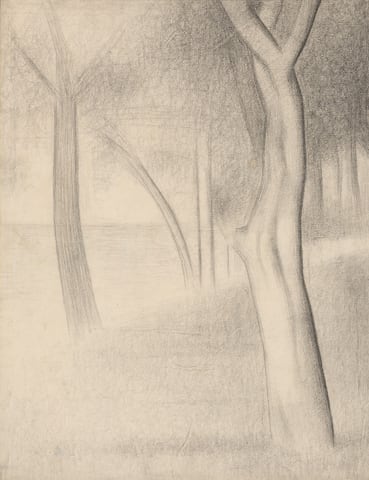
  3. A work made of black conté crayon, on white laid paper, laid down on cream board.
    Trees (study for La Grande Jatte)Georges Seurat, 1884Courtesy of the Art Institute of Chicago
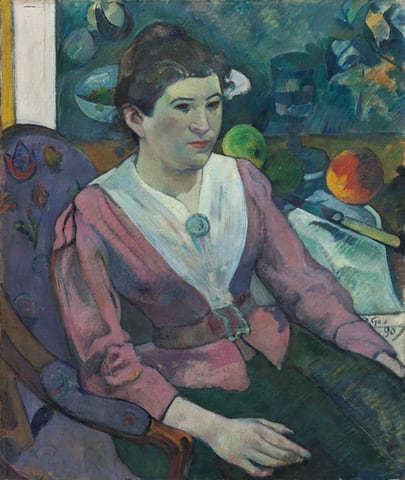
  4. A work made of oil on linen canvas.
    Woman in Front of a Still Life by CezannePaul Gauguin, 1890Courtesy of the Art Institute of Chicago

Second room, north wall
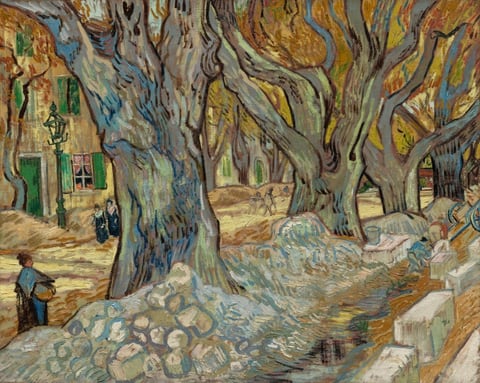
  1. The Large Plane Trees (Road Menders at Saint-Rémy), by Vincent van Gogh, 1889
    The Large Plane Trees (Road Menders at Saint-Rémy)Vincent van Gogh, 1889Courtesy of the Cleveland Museum of Art
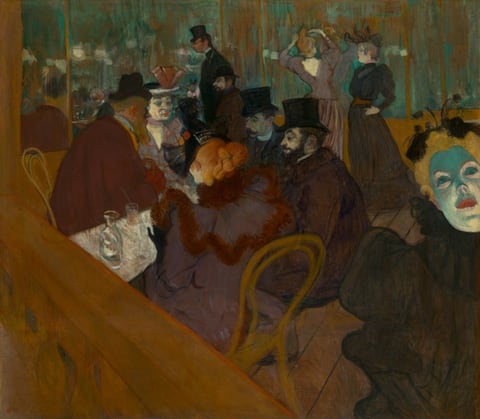
  2. Painting, heavy in tones of blue-green and burnt orange, depicting a bar scene at night. The men wear top hats and many are bearded; the women are dressed in voluminous gowns and decorative hats. Five people converse in the center of the composition and a woman with a green face dominates the right foreground.
    At the Moulin RougeHenri de Toulouse-Lautrec, 1892–95Courtesy of the Art Institute of Chicago

Third room, north wall
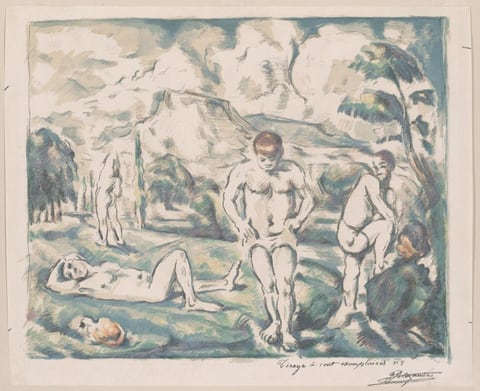
  1. A work made of color lithograph on ivory laid paper.
    BathersPaul Cézanne, 1890–1900Courtesy of the Art Institute of Chicago
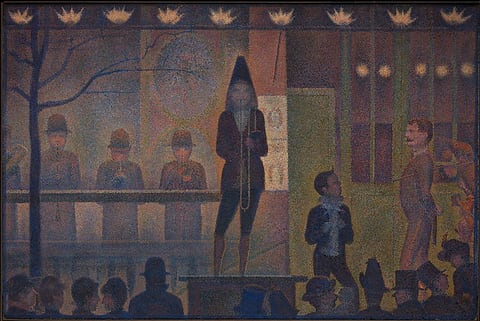
  2. Circus Sideshow (Parade de cirque), by Georges Seurat, 1887–88
    Circus Sideshow (Parade de cirque)Georges Seurat, 1887–88Courtesy of The Metropolitan Museum of Art