Floor plan

Style galleriesParis Salon painting
Paris Salon painting
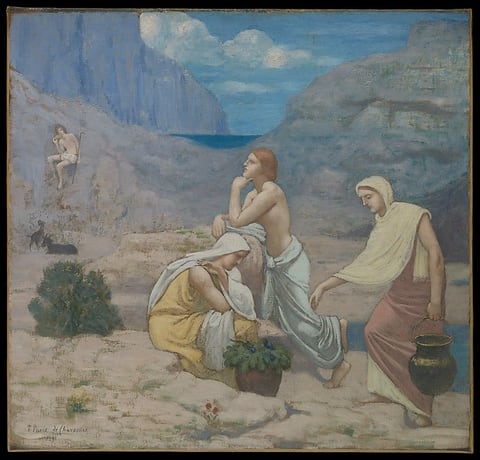
The Shepherd's Song, by Pierre Puvis de Chavannes, 1891
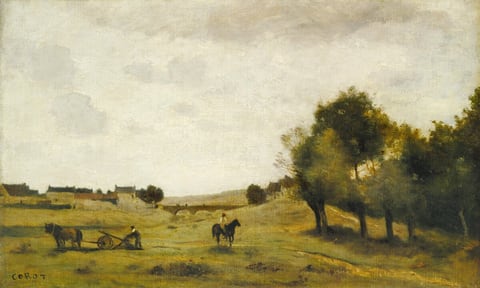
A person at the center of this loosely painted horizontal landscape rides a dark horse across a field as a man to the left works the field behind a horse-drawn plow. The field is carpeted with muted and gold-shaded green, and a grove of trees in the right third of the composition are painted in fern, olive, and dark green. A patch of darker green near us and to left of center is dotted with red and yellow to suggest flowers. The men and horses are small in relation to the composition. The people have brown skin and are painted with a few strokes in dark gray and muted green for the man behind the plow to the left and pale yellow and white and a red cap for the person on horseback. A band of houses with tan or light yellow walls and gray or terracotta red roofs line the far side of the field to the left, and an arched bridge crosses what appears to be a shallow, grassy ravine near the center. The horizon comes about a third of the way up this composition and a few smoke-gray clouds line the upper edge of the otherwise milk-white sky. The artist signed the lower left corner, “COROT.”
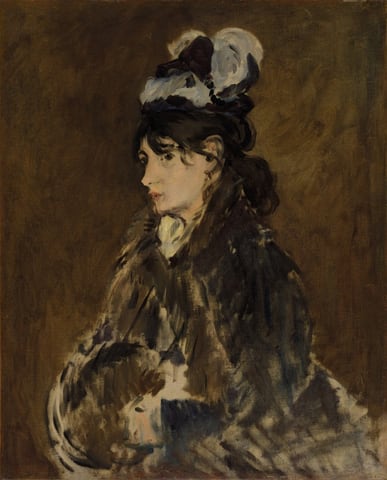
Berthe Morisot with a Muff, by Édouard Manet, c. 1871–72
A work made of oil on canvas.
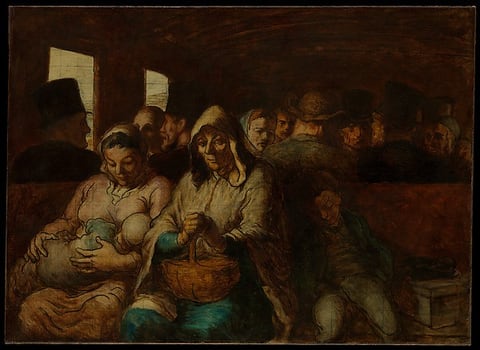
The Third-Class Carriage, by Honoré Daumier, 1864
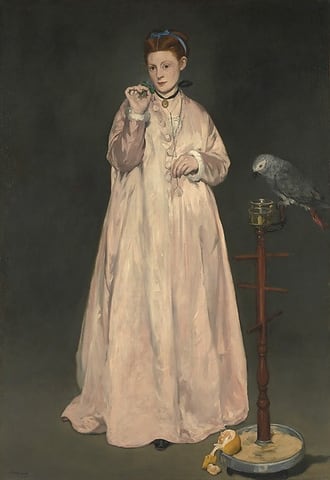
Young Lady in 1866, by Édouard Manet, 1866

The works in this room are listed below.

Works in this room

Painting made for the great annual exhibition in Paris, and the realists who argued with it.

First room, north wall

  1. The Shepherd's Song, by Pierre Puvis de Chavannes, 1891
    The Shepherd's SongPierre Puvis de Chavannes, 1891Courtesy of The Metropolitan Museum of Art
  2. A person at the center of this loosely painted horizontal landscape rides a dark horse across a field as a man to the left works the field behind a horse-drawn plow. The field is carpeted with muted and gold-shaded green, and a grove of trees in the right third of the composition are painted in fern, olive, and dark green. A patch of darker green near us and to left of center is dotted with red and yellow to suggest flowers. The men and horses are small in relation to the composition. The people have brown skin and are painted with a few strokes in dark gray and muted green for the man behind the plow to the left and pale yellow and white and a red cap for the person on horseback. A band of houses with tan or light yellow walls and gray or terracotta red roofs line the far side of the field to the left, and an arched bridge crosses what appears to be a shallow, grassy ravine near the center. The horizon comes about a third of the way up this composition and a few smoke-gray clouds line the upper edge of the otherwise milk-white sky. The artist signed the lower left corner, “COROT.”
    View near EpernonJean Baptiste Camille Corot, 1850/1860Courtesy National Gallery of Art, Washington
  3. Berthe Morisot with a Muff, by Édouard Manet, c. 1871–72
    Berthe Morisot with a MuffÉdouard Manet, c. 1871–72Courtesy of the Cleveland Museum of Art

First room, south wall

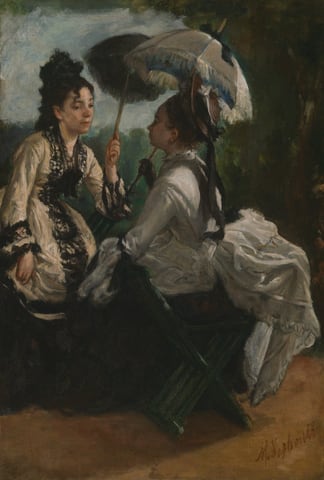
  1. A work made of oil on canvas.
    The ConversationMarcellin Gilbert Desboutin, 1875–79Courtesy of the Art Institute of Chicago
  2. The Third-Class Carriage, by Honoré Daumier, 1864
    The Third-Class CarriageHonoré Daumier, 1864Courtesy of The Metropolitan Museum of Art
  3. Young Lady in 1866, by Édouard Manet, 1866
    Young Lady in 1866Édouard Manet, 1866Courtesy of The Metropolitan Museum of Art

Second room, south wall
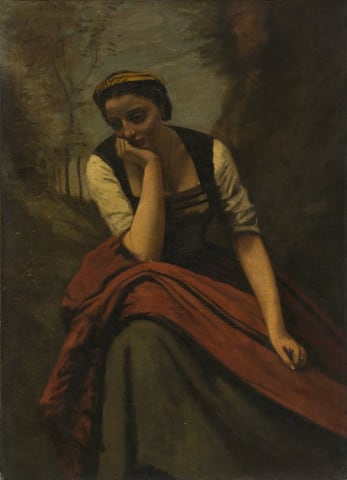
  1. Woman Meditating, by Jean Baptiste Camille Corot, after 1868
    Woman MeditatingJean Baptiste Camille Corot, after 1868Courtesy of the Cleveland Museum of Art
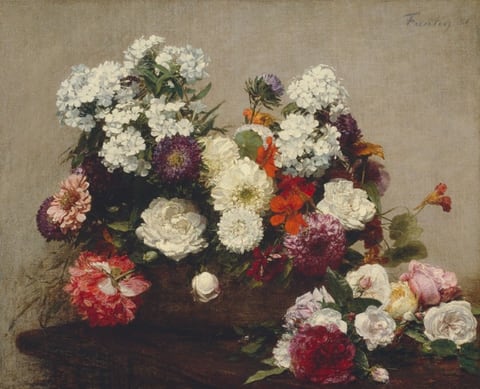
  2. A work made of oil on canvas.
    Still Life with FlowersHenri Fantin-Latour, 1881Courtesy of the Art Institute of Chicago
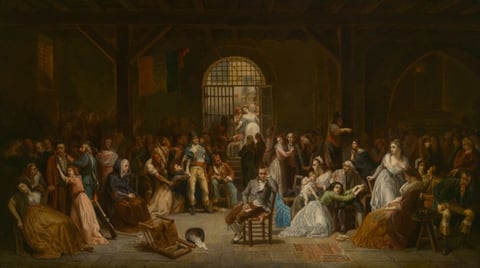
  3. A work made of oil on canvas.
    The Roll Call of the Last Victims of the TerrorCharles Louis-Lucien Muller, c. 1850Courtesy of the Art Institute of Chicago

Second room, north wall
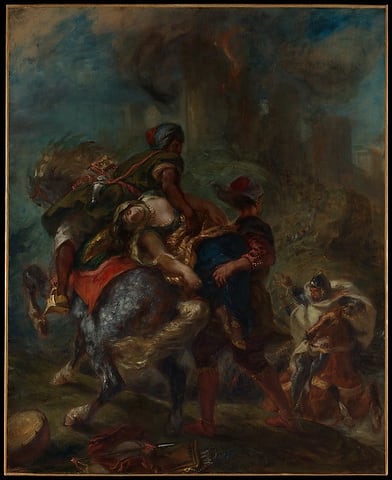
  1. The Abduction of Rebecca, by Eugène Delacroix, 1846
    The Abduction of RebeccaEugène Delacroix, 1846Courtesy of The Metropolitan Museum of Art
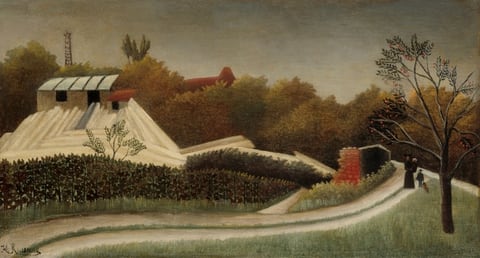
  2. A work made of oil on canvas.
    Sawmill, Outskirts of ParisHenri Rousseau, c. 1893/95Courtesy of the Art Institute of Chicago
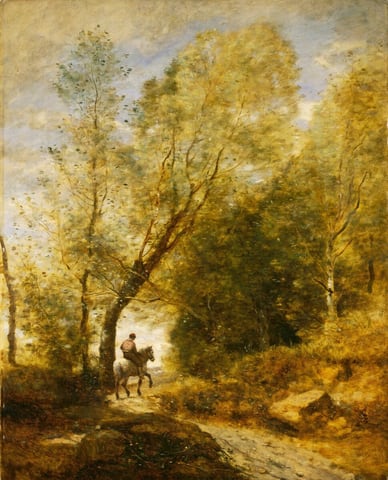
  3. A person rides a horse away from us on a narrow dirt path curving through a forest dominated by golden yellow trees in this vertical landscape painting. A boulder about twice the width of the path is backlit where it sits just left of the lower center of the canvas. The path begins near the bottom right corner of the painting and curves back and to the right. The horse is white, and the rider wears dark brown pants and a hat, and a lighter brown shirt. Trees towering over the rider to either side of the curve nearly reach the top of the composition. The horizon comes less than a third of the way up the painting. Pearly white sky fills in the gap between the trees around the rider, and ivory-colored clouds frame an icy blue sky above. The scene is painted with textured and blended strokes, which gives the painting a soft look even though some of the brushstrokes are visible. The artist signed and dated the lower center of the canvas, though it is partially cut off: “COROT 1872.”
    The Forest of CoubronJean Baptiste Camille Corot, 1872Courtesy National Gallery of Art, Washington

Third room, north wall
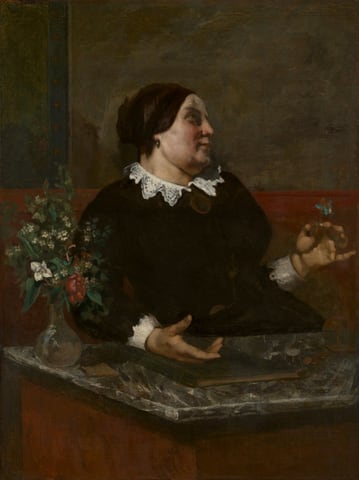
  1. Dark portrait of older woman in black dress with lace collar, flowers.
    Mère GrégoireGustave Courbet, 1855, reworked 1857–59Courtesy of the Art Institute of Chicago
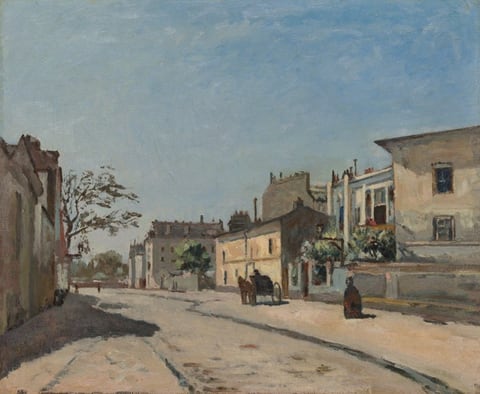
  2. A work made of oil on panel.
    French Street SceneEdouard Béliard, 1873–77Courtesy of the Art Institute of Chicago
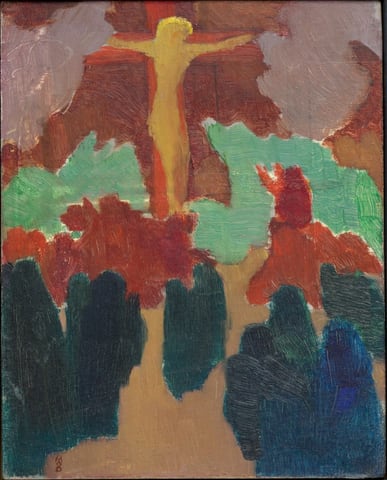
  3. The Orange Christ, by Maurice Denis, 1889
    The Orange ChristMaurice Denis, 1889Courtesy of the Cleveland Museum of Art
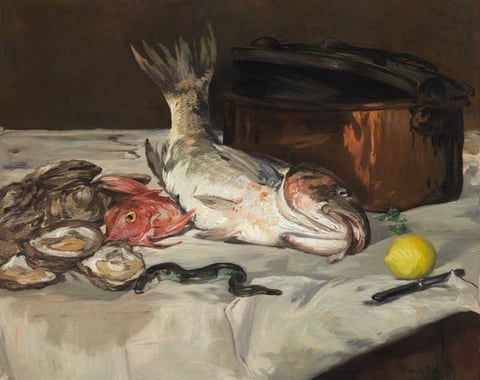
  4. Still-life painting, fish, open oysters, eel, lemon on tablecloth.
    Fish (Still Life)Édouard Manet, 1864Courtesy of the Art Institute of Chicago