Floor plan

Style galleriesPaintings

Paintings

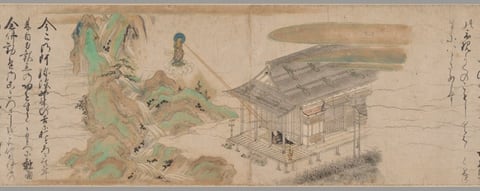
Long painted scroll, green, brown mountains, wooden house, Amida Buddha on cloud.
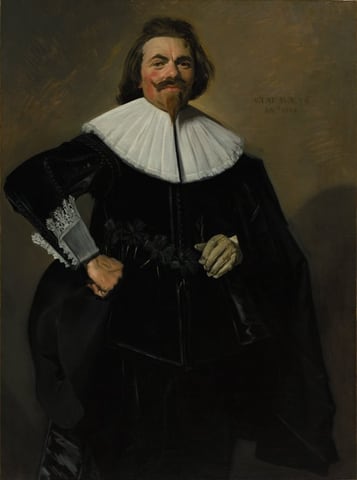
Portrait of Tieleman Roosterman, by Frans Hals, 1634
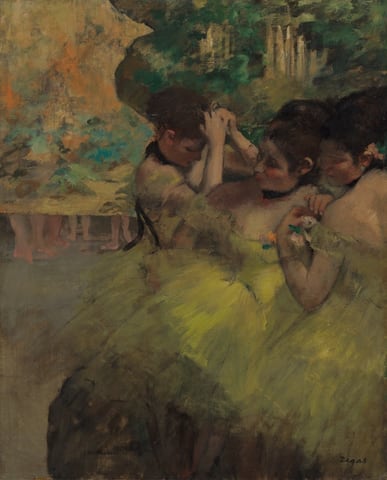
Three light-skinned, dark-haired ballerinas, painted in muted tones, wear off-the-shoulder yellow leotards and tutus as they huddle near each other. One adjusts her costume, while one holds her hands clasped above her head. At left is a painted screen with four pairs of feet visible underneath.
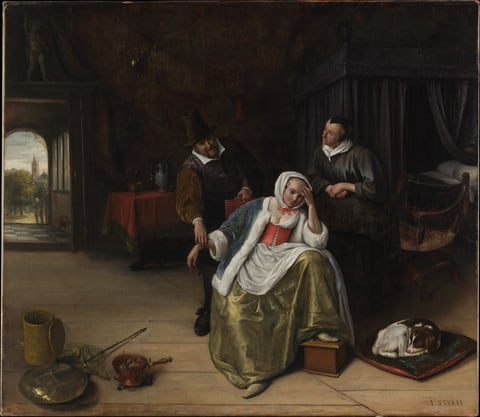
The Lovesick Maiden, by Jan Steen, ca. 1660
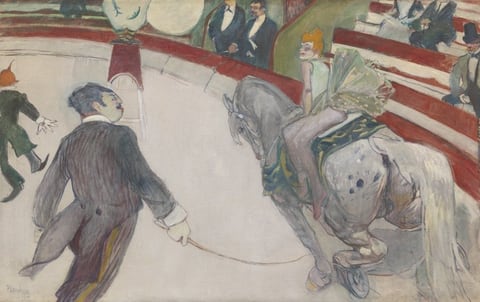
Painting of a performance inside a circus ring. A man wearing a suit holds a whip in his hand and looks towards a woman with red hair riding a gray horse and wearing a green dress. Audience members wearing suits and top hats watch from red and white benches on the side.

The works in this room are listed below.

Works in this room

Every one of the collection's paintings, in today's hang.

Section 1, north wall

  1. Long painted scroll, green, brown mountains, wooden house, Amida Buddha on cloud.
    Legends of the Yūzū Nembutsu SectUnrecorded Japanese maker, Kamakura period (1185–1333), 14th centuryCourtesy of the Art Institute of Chicago
  2. Portrait of Tieleman Roosterman, by Frans Hals, 1634
    Portrait of Tieleman RoostermanFrans Hals, 1634Courtesy of the Cleveland Museum of Art

Section 1, south wall

  1. Three light-skinned, dark-haired ballerinas, painted in muted tones, wear off-the-shoulder yellow leotards and tutus as they huddle near each other. One adjusts her costume, while one holds her hands clasped above her head. At left is a painted screen with four pairs of feet visible underneath.
    Yellow Dancers (In the Wings)Edgar Degas, 1874–76Courtesy of the Art Institute of Chicago
  2. The Lovesick Maiden, by Jan Steen, ca. 1660
    The Lovesick MaidenJan Steen, ca. 1660Courtesy of The Metropolitan Museum of Art
  3. Painting of a performance inside a circus ring. A man wearing a suit holds a whip in his hand and looks towards a woman with red hair riding a gray horse and wearing a green dress. Audience members wearing suits and top hats watch from red and white benches on the side.
    Equestrienne (At the Cirque Fernando)Henri de Toulouse-Lautrec, 1887–88Courtesy of the Art Institute of Chicago

Section 2, south wall
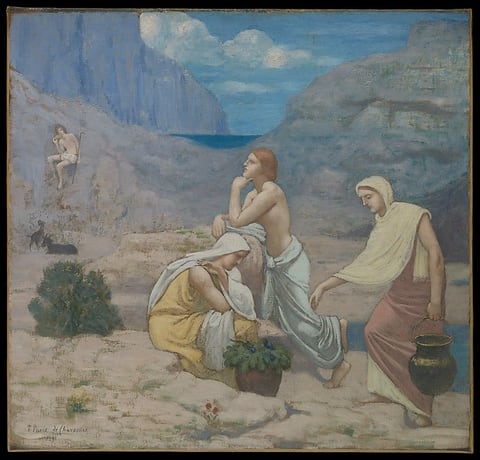
  1. The Shepherd's Song, by Pierre Puvis de Chavannes, 1891
    The Shepherd's SongPierre Puvis de Chavannes, 1891Courtesy of The Metropolitan Museum of Art
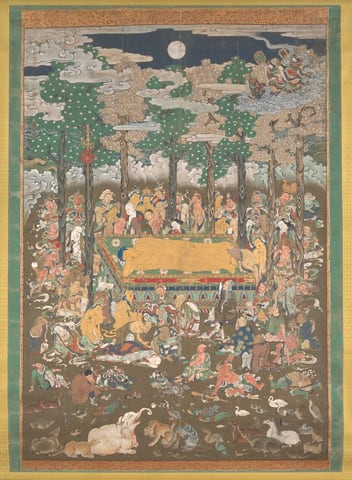
  2. A work made of hanging scroll; ink, colors, and gold on silk.
    Nehan: Death of the BuddhaUnrecorded Japanese maker, late 17th/early 18th centuryCourtesy of the Art Institute of Chicago
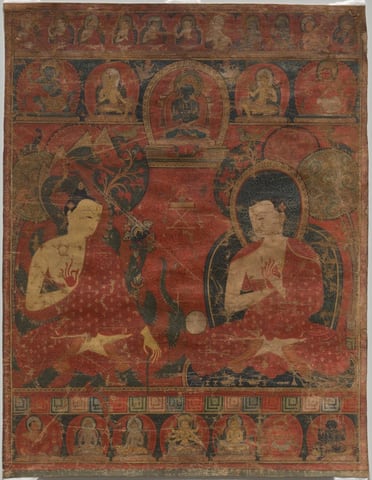
  3. Nagarjuna (c. 150–250 CE) with a Buddhist Master, c. 1300s
    Nagarjuna (c. 150–250 CE) with a Buddhist MasterUnrecorded Himalayan maker, c. 1300sCourtesy of the Cleveland Museum of Art

Section 2, north wall
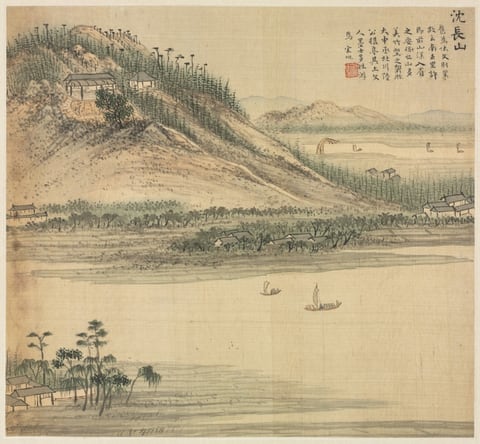
  1. Mt. Shenchang, by Song Xu, c. 1588
    Mt. ShenchangSong Xu, c. 1588Courtesy of the Cleveland Museum of Art
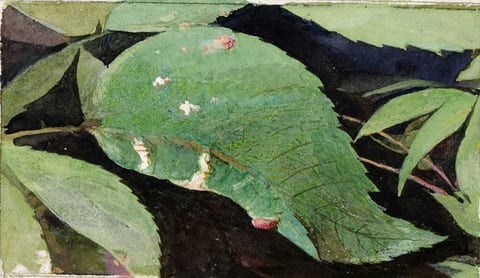
  2. White Birch Leaf Edge Caterpillar, study for book Concealing Coloration in the Animal Kingdom, by Emma Beach Thayer
    White Birch Leaf Edge Caterpillar, study for book Concealing Coloration in the Animal KingdomEmma Beach ThayerCourtesy of the Smithsonian American Art Museum
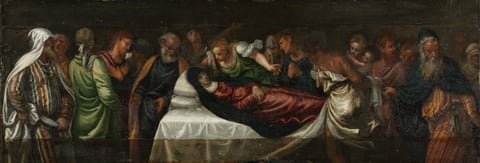
  3. Death of the Virgin, mid-1500s
    Death of the VirginUnrecorded Italian maker, mid-1500sCourtesy of the Cleveland Museum of Art

Section 3, north wall

  1. Washington Crossing the Delaware, by Emanuel Leutze, 1851
    Washington Crossing the DelawareEmanuel Leutze, 1851Courtesy of The Metropolitan Museum of Art
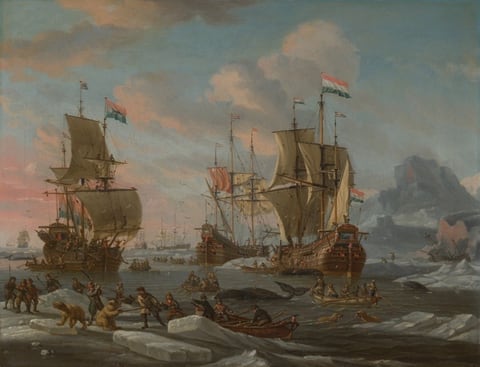
  2. A work made of oil on canvas.
    The Dutch Whaling FleetAbraham Storck, c. 1695Courtesy of the Art Institute of Chicago
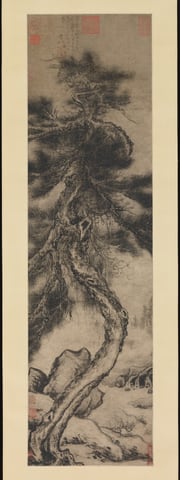
  3. Dragon pine, by Wu Boli, late 14th–early 15th century
    Dragon pineWu Boli, late 14th–early 15th centuryCourtesy of The Metropolitan Museum of Art

Section 3, south wall
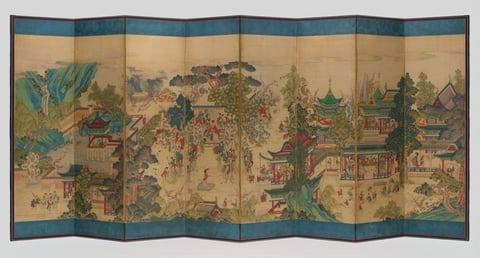
  1. A work made of ink and color on silk.
    Joyous Banquet of Guo Ziyi (곽분양행락도)Unrecorded Korean maker, Joseon dynasty (1392–1910), 19th centuryCourtesy of the Art Institute of Chicago
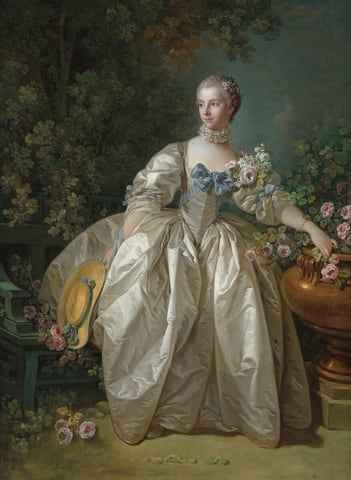
  2. A young woman with light skin stands in a garden, wearing a voluminous, full-length, silvery, shimmering gown in this vertical portrait painting. Her body faces us, as she looks into the distance to our left. She has rosy cheeks, gray-green eyes under gently arched, light brown brows, and her coral-pink, thin, closed lips curve in a slight smile. Her ash-brown hair is pulled back and adorned with tiny shell-pink and azure-blue flowers along the left side top of head, to our right. A pleated lace ruffle encircles her smooth neck. Her gown is parchment white where the light glints off the stiff fabric and is silvery gray in the shadows, creating a silk-like sheen. The dress is cut low across the chest, fits tightly around her narrow waist, and has puffy sleeves tied at the elbows with topaz-blue bows. Another blue bow is tied at her chest, and the ends wrap around her back along her waist. A corsage at her left shoulder, to our right, is a profusion of white flowers around a pale pink rose. In her other hand, to our left, she holds a straw hat with a shallow crown and a wide brim, trimmed with sky-blue ribbon. The arm holding the hat is nearly engulfed in the deep folds of her full skirt. She holds a pink rose in her other hand, which rests on the lip of a shiny, copper-colored urn filled with pink flowers and delicate green leaves. On that wrist she wears a bracelet with four strands of white pearls holding a cameo. She stands on a pale, dirt ground. A teal-blue bench in the lower left corner of the painting is tucked into sage-green shrubbery. Sprigs of pink roses are strewn across the seat and on the ground. The woman is framed to either side with olive and celery-green trees and vegetation, which blend into the hazy distance beyond her head.
    Madame BergeretFrançois Boucher, possibly 1766Courtesy National Gallery of Art, Washington