Floor plan

Style galleriesManuscripts

Manuscripts

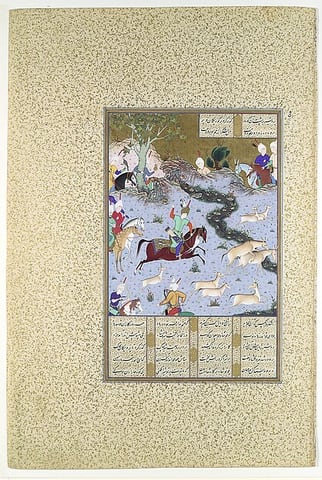
"Bahram Gur Pins the Coupling Onagers", Folio 568r from the Shahnama (Book of Kings) of Shah Tahmasp, by Abu'l Qasim Firdausi, ca. 1530–35
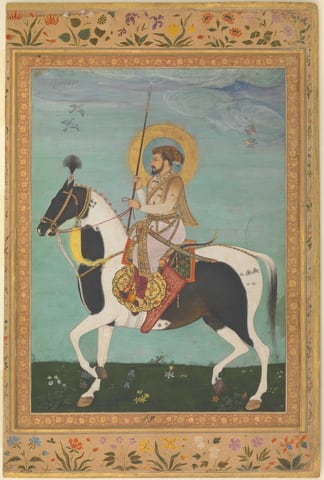
"Shah Jahan on Horseback", Folio from the Shah Jahan Album, by Payag, verso: ca. 1630; recto: ca. 1530–50
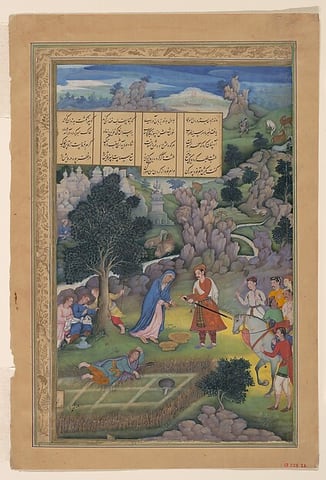
"A King Offers to Make Amends to a Bereaved Mother", Folio from a Khamsa (Quintet) of Amir Khusrau Dihlavi, by Amir Khusrau Dihlavi, 1597–98
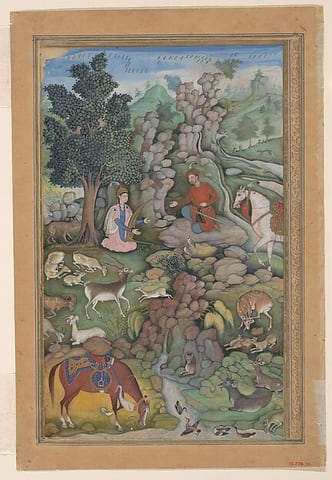
"Bahram Gur Sees a Herd of Deer Mesmerized by Dilaram' s Music", Folio from a Khamsa (Quintet) of Amir Khusrau Dihlavi, by Amir Khusrau Dihlavi, 1597–98
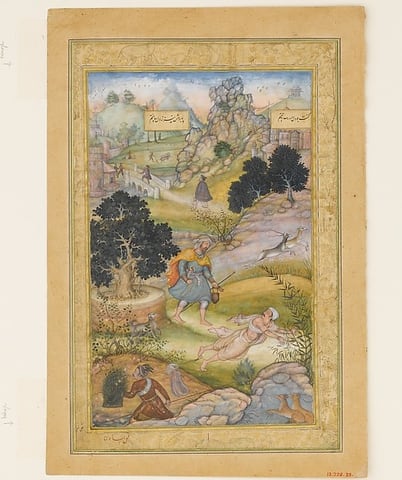
"A Muslim Pilgrim Learns a Lesson in Piety from a Brahman", Folio from a Khamsa (Quintet) of Amir Khusrau Dihlavi, by Amir Khusrau Dihlavi, 1597–98
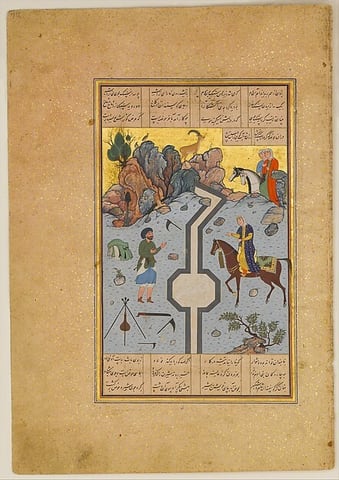
"Farhad Carves a Milk Channel for Shirin", Folio 74 from a Khamsa (Quintet) of Nizami of Ganja, by Nizami, dated 931 AH/1524–25 CE

The works in this room are listed below.

Works in this room

Every one of the collection's manuscripts, in today's hang.

Section 1, north wall

  1. "Bahram Gur Pins the Coupling Onagers", Folio 568r from the Shahnama (Book of Kings) of Shah Tahmasp, by Abu'l Qasim Firdausi, ca. 1530–35
    "Bahram Gur Pins the Coupling Onagers", Folio 568r from the Shahnama (Book of Kings) of Shah TahmaspAbu'l Qasim Firdausi, ca. 1530–35Courtesy of The Metropolitan Museum of Art
  2. "Shah Jahan on Horseback", Folio from the Shah Jahan Album, by Payag, verso: ca. 1630; recto: ca. 1530–50
    "Shah Jahan on Horseback", Folio from the Shah Jahan AlbumPayag, verso: ca. 1630; recto: ca. 1530–50Courtesy of The Metropolitan Museum of Art
  3. "A King Offers to Make Amends to a Bereaved Mother", Folio from a Khamsa (Quintet) of Amir Khusrau Dihlavi, by Amir Khusrau Dihlavi, 1597–98
    "A King Offers to Make Amends to a Bereaved Mother", Folio from a Khamsa (Quintet) of Amir Khusrau DihlaviAmir Khusrau Dihlavi, 1597–98Courtesy of The Metropolitan Museum of Art

Section 1, south wall

  1. "Bahram Gur Sees a Herd of Deer Mesmerized by Dilaram' s Music", Folio from a Khamsa (Quintet) of Amir Khusrau Dihlavi, by Amir Khusrau Dihlavi, 1597–98
    "Bahram Gur Sees a Herd of Deer Mesmerized by Dilaram' s Music", Folio from a Khamsa (Quintet) of Amir Khusrau DihlaviAmir Khusrau Dihlavi, 1597–98Courtesy of The Metropolitan Museum of Art
  2. "A Muslim Pilgrim Learns a Lesson in Piety from a Brahman", Folio from a Khamsa (Quintet) of Amir Khusrau Dihlavi, by Amir Khusrau Dihlavi, 1597–98
    "A Muslim Pilgrim Learns a Lesson in Piety from a Brahman", Folio from a Khamsa (Quintet) of Amir Khusrau DihlaviAmir Khusrau Dihlavi, 1597–98Courtesy of The Metropolitan Museum of Art
  3. "Farhad Carves a Milk Channel for Shirin", Folio 74 from a Khamsa (Quintet) of Nizami of Ganja, by Nizami, dated 931 AH/1524–25 CE
    "Farhad Carves a Milk Channel for Shirin", Folio 74 from a Khamsa (Quintet) of Nizami of GanjaNizami, dated 931 AH/1524–25 CECourtesy of The Metropolitan Museum of Art

Section 2, south wall
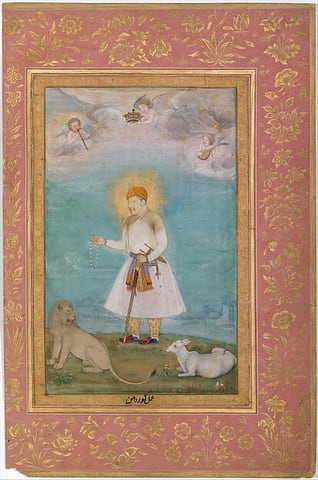
  1. "Akbar With Lion and Calf", Folio from the Shah Jahan Album, by Govardhan, verso: ca. 1630; recto: ca. 1530–50
    "Akbar With Lion and Calf", Folio from the Shah Jahan AlbumGovardhan, verso: ca. 1630; recto: ca. 1530–50Courtesy of The Metropolitan Museum of Art
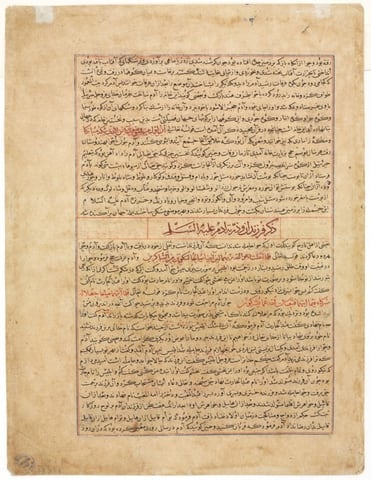
  2. Text Page, Persian Prose (recto) from a Manuscript of the Majma' al-Tavarikh (A Compendium of Histories) by Hafiz-i Abru:, c. 1425
    Text Page, Persian Prose (recto) from a Manuscript of the Majma' al-Tavarikh (A Compendium of Histories) by Hafiz-i Abru:Unrecorded Persian maker, c. 1425Courtesy of the Cleveland Museum of Art
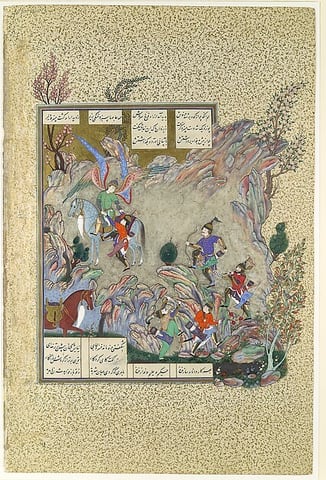
  3. "The Angel Surush Rescues Khusrau Parviz from a Cul-de-sac", Folio 708v from the Shahnama (Book of Kings) of Shah Tahmasp, by Abu'l Qasim Firdausi, ca. 1530–35
    "The Angel Surush Rescues Khusrau Parviz from a Cul-de-sac", Folio 708v from the Shahnama (Book of Kings) of Shah TahmaspAbu'l Qasim Firdausi, ca. 1530–35Courtesy of The Metropolitan Museum of Art

Section 2, north wall
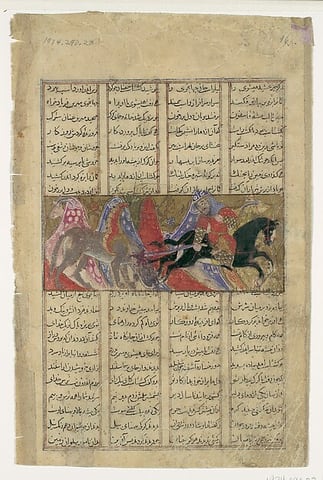
  1. "Gushtasp Slays the Rhino-Wolf", Folio from a Shahnama (Book of Kings), by Abu'l Qasim Firdausi, ca. 1330–40
    "Gushtasp Slays the Rhino-Wolf", Folio from a Shahnama (Book of Kings)Abu'l Qasim Firdausi, ca. 1330–40Courtesy of The Metropolitan Museum of Art
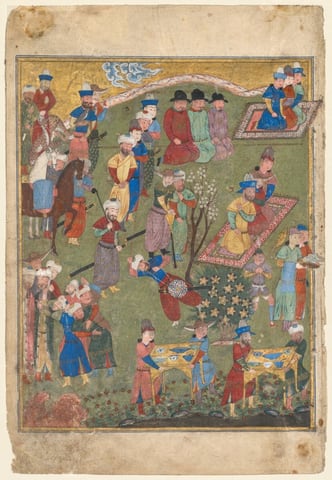
  2. Royal Reception in a Landscape, left folio from the double frontispiece of a Shahnama (Book of Kings) of Firdausi (Persian, about 940–1019 or 1025), 1444
    Royal Reception in a Landscape, left folio from the double frontispiece of a Shahnama (Book of Kings) of Firdausi (Persian, about 940–1019 or 1025)Unrecorded Persian maker, 1444Courtesy of the Cleveland Museum of Art
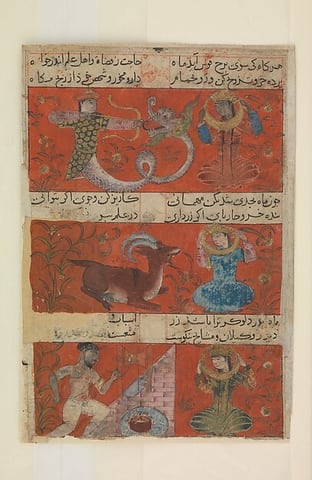
  3. Folio from a Mu'nis al-ahrar fi daqa'iq al-ash'ar (The Free Man's Companion to the Subtleties of Poems) of Jajarmi, by Muhammad ibn Badr al-Din Jajarmi, dated 741 AH/1341 CE
    Folio from a Mu'nis al-ahrar fi daqa'iq al-ash'ar (The Free Man's Companion to the Subtleties of Poems) of JajarmiMuhammad ibn Badr al-Din Jajarmi, dated 741 AH/1341 CECourtesy of The Metropolitan Museum of Art

Section 3, north wall
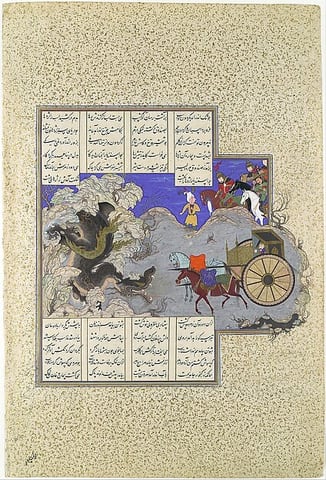
  1. "Isfandiyar's Third Course: He Slays a Dragon", Folio 434v from the Shahnama (Book of Kings) of Shah Tahmasp, by Abu'l Qasim Firdausi, ca. 1530
    "Isfandiyar's Third Course: He Slays a Dragon", Folio 434v from the Shahnama (Book of Kings) of Shah TahmaspAbu'l Qasim Firdausi, ca. 1530Courtesy of The Metropolitan Museum of Art
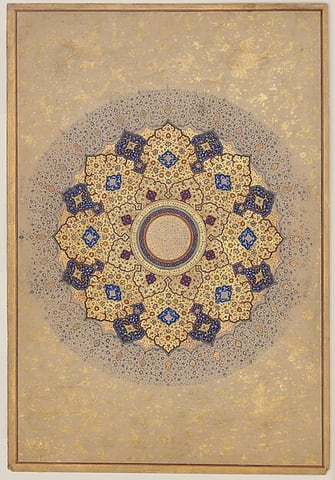
  2. "Rosette Bearing the Names and Titles of Shah Jahan", Folio from the Shah Jahan Album, recto: ca. 1645; verso: ca. 1630–40
    "Rosette Bearing the Names and Titles of Shah Jahan", Folio from the Shah Jahan AlbumUnrecorded maker, recto: ca. 1645; verso: ca. 1630–40Courtesy of The Metropolitan Museum of Art

Section 3, south wall
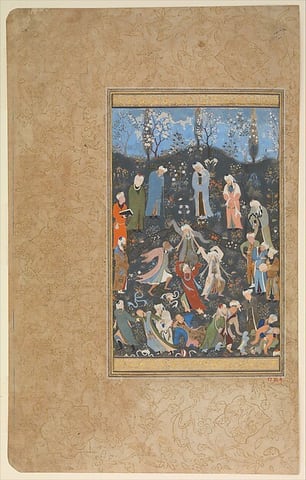
  1. "Dancing Dervishes", Folio from a Divan of Hafiz, by Hafiz, ca. 1480
    "Dancing Dervishes", Folio from a Divan of HafizHafiz, ca. 1480Courtesy of The Metropolitan Museum of Art
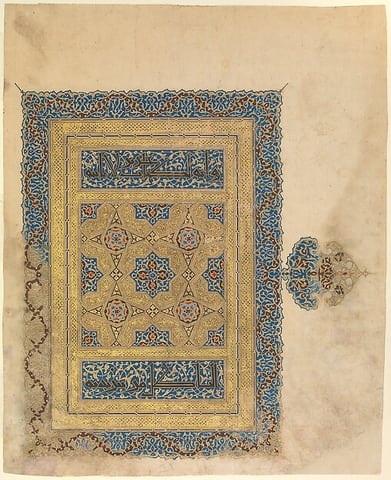
  2. Opening Folio of the 26th Volume of the "Anonymous Baghdad Qur'an", by Ahmad ibn al-Suhrawardi al-Bakri, 706 AH/1306–7 CE
    Opening Folio of the 26th Volume of the "Anonymous Baghdad Qur'an"Ahmad ibn al-Suhrawardi al-Bakri, 706 AH/1306–7 CECourtesy of The Metropolitan Museum of Art