Floor plan

Style galleriesThe Etching Revival

The Etching Revival

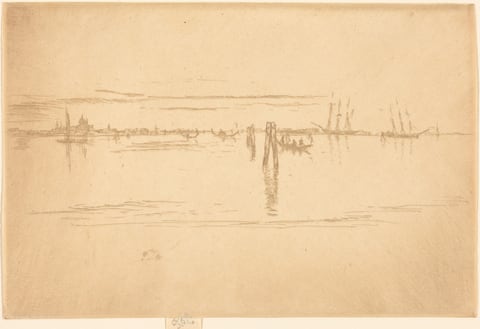
The image shows a landscape with a waterscape. The horizon separates the water and the sky. In the distance, there are buildings, structures, and ships with tall masts. Close to us, there are reflections of the ships and structures in the water with fine brushstrokes. The style is impressionistic with thin lines conveying details. The color palette is monochromatic with sepia tones.
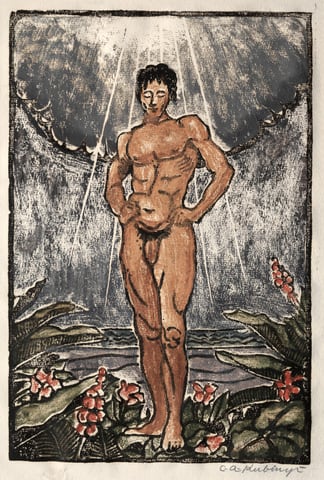
The Creation, by Kálmán Kubinyi, before 1927
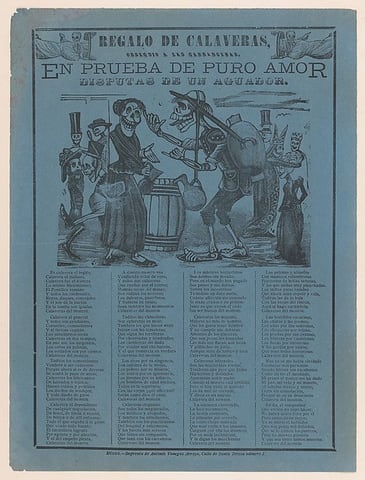
In proof of true love, a watercarrier skeleton arguing with a woman (Posada); two skeleton angels in upper corners (Manilla), by José Guadalupe Posada, ca. 1890–96
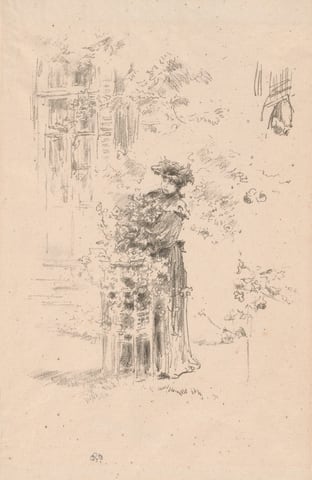
A work made of transfer lithograph in black, with stumping and scraping, on cream laid paper, laid down on a heavy backing sheet.
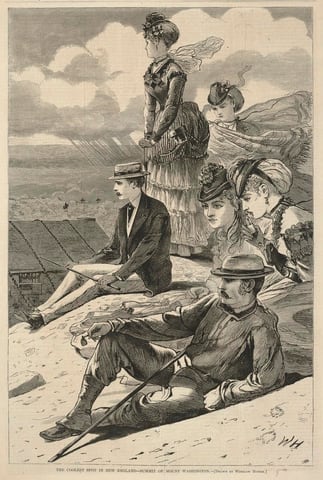
The Coolest Spot in New England--Summit of Mount Washington, from Harper's Bazar, July 23, 1870, by Winslow Homer, 1870
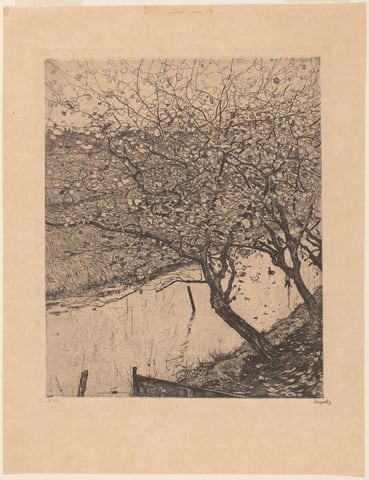
The image shows a small body of water with grass-covered banks on either side. The viewpoint is slightly elevated, looking down at the scene. The horizon is in the upper third of the composition, separating the sky from the land. The artwork features intricate linework and stippling to create texture and detail, particularly in the tree branches. The color palette is monochrome, with shades of sepia and brown. A tree dominates the right side of the scene, leaning over the water. In the distance, more trees and fields are visible with minimal detail in the far background.

The works in this room are listed below.

Works in this room

Artists who took up the etching needle again, from Whistler to the Paris printmakers.

Section 1, north wall

  1. The image shows a landscape with a waterscape. The horizon separates the water and the sky. In the distance, there are buildings, structures, and ships with tall masts. Close to us, there are reflections of the ships and structures in the water with fine brushstrokes. The style is impressionistic with thin lines conveying details. The color palette is monochromatic with sepia tones.
    Long LagoonJames McNeill Whistler, 1880Courtesy National Gallery of Art, Washington
  2. The Creation, by Kálmán Kubinyi, before 1927
    The CreationKálmán Kubinyi, before 1927Courtesy of the Cleveland Museum of Art
  3. In proof of true love, a watercarrier skeleton arguing with a woman (Posada); two skeleton angels in upper corners (Manilla), by José Guadalupe Posada, ca. 1890–96
    In proof of true love, a watercarrier skeleton arguing with a woman (Posada); two skeleton angels in upper corners (Manilla)José Guadalupe Posada, ca. 1890–96Courtesy of The Metropolitan Museum of Art

Section 1, south wall

  1. A work made of transfer lithograph in black, with stumping and scraping, on cream laid paper, laid down on a heavy backing sheet.
    La Belle JardinièreJames McNeill Whistler, 1894Courtesy of the Art Institute of Chicago
  2. The Coolest Spot in New England--Summit of Mount Washington, from Harper's Bazar, July 23, 1870, by Winslow Homer, 1870
    The Coolest Spot in New England--Summit of Mount Washington, from Harper's Bazar, July 23, 1870Winslow Homer, 1870Courtesy of the Smithsonian American Art Museum
  3. The image shows a small body of water with grass-covered banks on either side. The viewpoint is slightly elevated, looking down at the scene. The horizon is in the upper third of the composition, separating the sky from the land. The artwork features intricate linework and stippling to create texture and detail, particularly in the tree branches. The color palette is monochrome, with shades of sepia and brown. A tree dominates the right side of the scene, leaning over the water. In the distance, more trees and fields are visible with minimal detail in the far background.
    Apple Trees along the Side of a DitchPieter Dupont, 1894Courtesy National Gallery of Art, Washington

Section 2, south wall
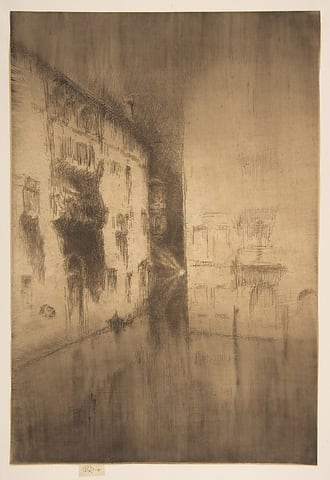
  1. Nocturne: Palaces, by James McNeill Whistler, 1879–80
    Nocturne: PalacesJames McNeill Whistler, 1879–80Courtesy of The Metropolitan Museum of Art
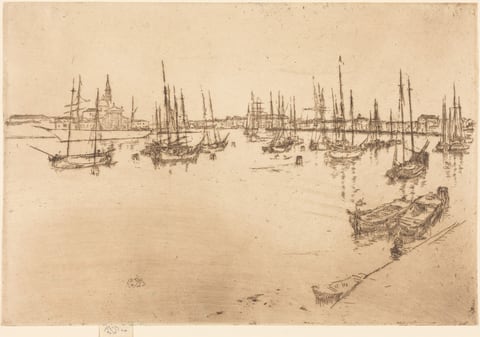
  2. The image displays a harbor filled with boats and ships. The perspective is slightly elevated, likely from a dock, with a partially visible boat and dock at the forefront. The horizon is in the upper third of the image, showing a distant cityscape with spires and structures. The brushwork is delicate, with fine, linear strokes typical of etching. The color palette is monochromatic, sepia tones creating a vintage and serene mood. The ships with tall masts populate the water, with reflections giving a sense of stillness. In the distance, faint impressions of buildings line the harbor, blending into the horizon.
    San GiorgioJames McNeill Whistler, 1880Courtesy National Gallery of Art, Washington

Section 2, north wall
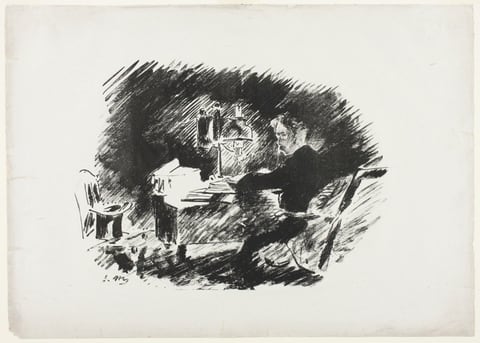
  1. A work made of transfer lithograph in black on gray china paper.
    Under the Lamp ("Once upon a midnight dreary..."), from The Raven (Le Corbeau)Édouard Manet, 1875Courtesy of the Art Institute of Chicago
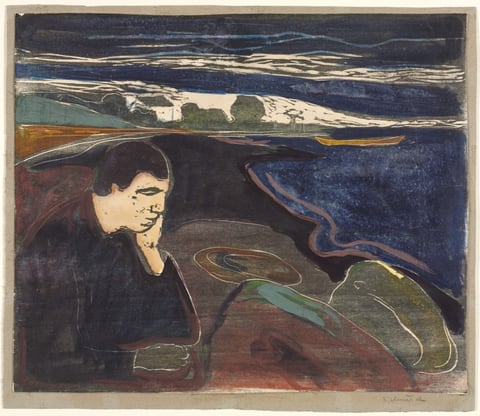
  2. Evening, Melancholy I, by Edvard Munch, 1896
    Evening, Melancholy IEdvard Munch, 1896Courtesy of the Cleveland Museum of Art

Section 3, north wall
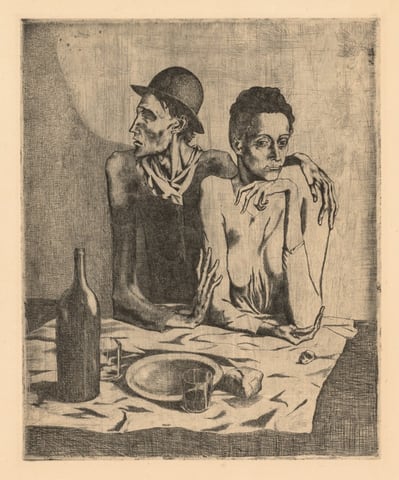
  1. The Frugal Meal, by Pablo Picasso, September 1904, printed 1913
    The Frugal MealPablo Picasso, September 1904, printed 1913Courtesy of the Cleveland Museum of Art
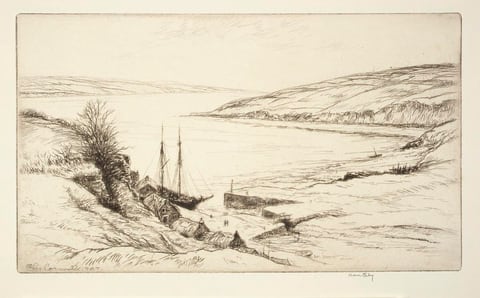
  2. Cornwall, by Kerr Eby, 1927
    CornwallKerr Eby, 1927Courtesy of the Smithsonian American Art Museum
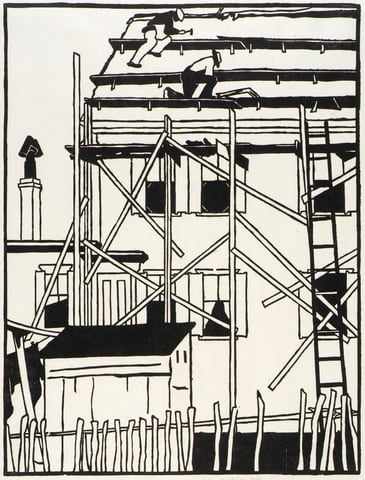
  3. Untitled, by Mildred McMillen, 1915
    UntitledMildred McMillen, 1915Courtesy of the Smithsonian American Art Museum

Section 3, south wall
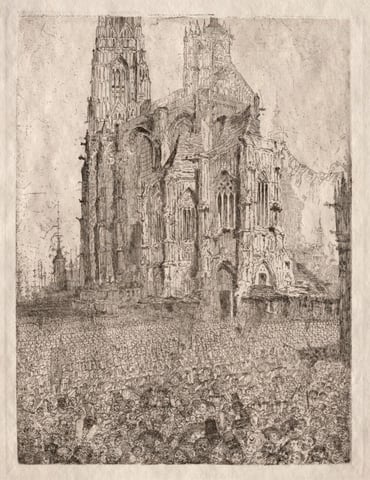
  1. The Cathedral, by James Ensor, 1886
    The CathedralJames Ensor, 1886Courtesy of the Cleveland Museum of Art
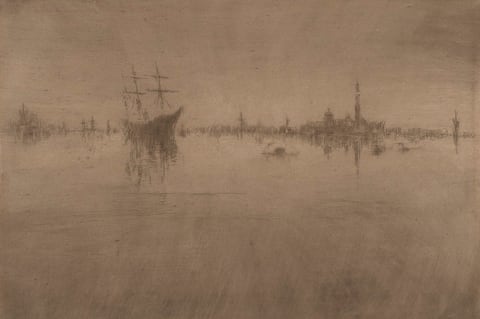
  2. A work made of etching and drypoint in brown on cream laid paper.
    Nocturne, from Venice, a Series of Twelve Etchings (the "First Venice Set")James McNeill Whistler, 1879–80Courtesy of the Art Institute of Chicago
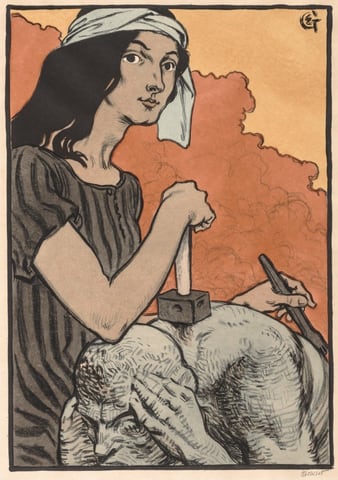
  3. Sculptress, by Eugène Grasset, 1897
    SculptressEugène Grasset, 1897Courtesy of the Cleveland Museum of Art