Floor plan

Style galleriesDrawings of the 19th century
Drawings of the 19th century
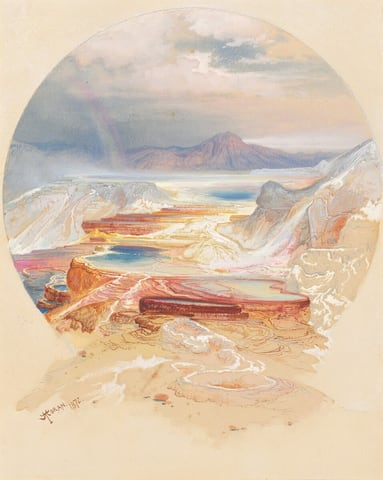
This painting shows a view looking out over a vast landscape. Most of the painting is circular, with a small part of the bottom bleeding out of the circle towards us. The top third of the circle shows a mountain range with a large purple peak in the distance. In front of the mountain is a faint rainbow. A body of water flows from in front of the mountain to the bottom of the painting, weaving in between shorter white peaks. Towards the bottom, the water appears to flow into small, layered pools of various bright colors including yellow, orange, red, pink, blue, and teal. The sky is a light blue-gray color. The background of the painting outside of the circle is plain paper.
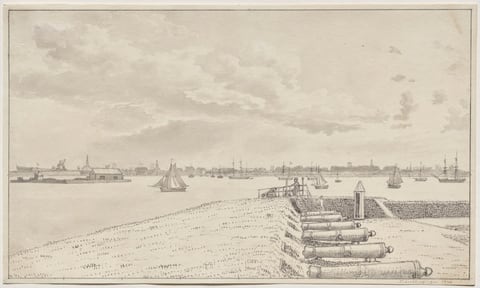
View from the Battery toward the City, by Christoffer Wilhelm Eckersberg, 1836
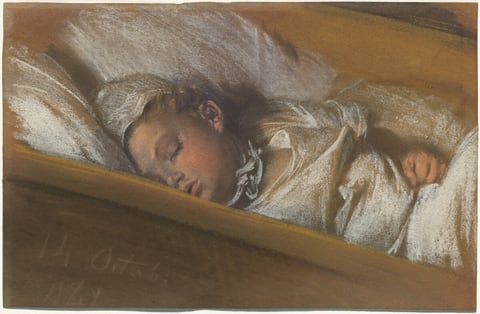
The image shows a person lying down, positioned on their side, resting on a pillow. The individual appears to be asleep, with closed eyes, slightly parted lips, and a relaxed facial expression. The person has light-colored hair, partially covered by a white nightcap, and is dressed in white nightwear with a ruffled collar. They are covered by a white blanket and their hand is partially visible near the face, with fingers interlaced. The background features a wooden headboard or furniture piece.
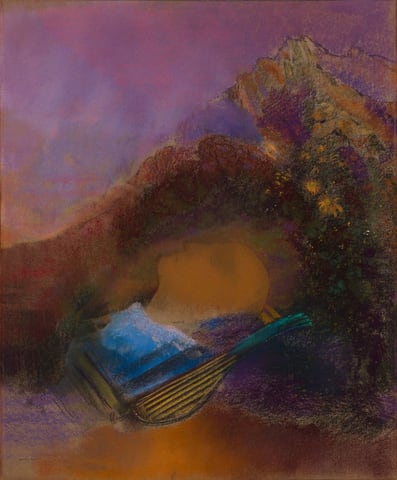
Orpheus, by Odilon Redon, c. 1903–10
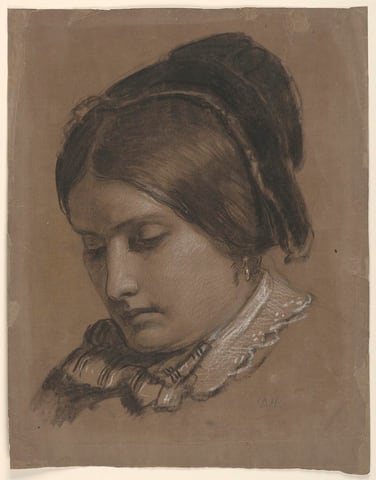
THE ARTIST'S WIFE SOPHIE

The works in this room are listed below.

Works in this room

Drawings made in the 19th century, from every museum.

Section 1, north wall

  1. This painting shows a view looking out over a vast landscape. Most of the painting is circular, with a small part of the bottom bleeding out of the circle towards us. The top third of the circle shows a mountain range with a large purple peak in the distance. In front of the mountain is a faint rainbow. A body of water flows from in front of the mountain to the bottom of the painting, weaving in between shorter white peaks. Towards the bottom, the water appears to flow into small, layered pools of various bright colors including yellow, orange, red, pink, blue, and teal. The sky is a light blue-gray color. The background of the painting outside of the circle is plain paper.
    Minerva Terrace, YellowstoneThomas Moran, 1872Courtesy National Gallery of Art, Washington
  2. View from the Battery toward the City, by Christoffer Wilhelm Eckersberg, 1836
    View from the Battery toward the CityChristoffer Wilhelm Eckersberg, 1836Courtesy of the Cleveland Museum of Art
  3. The image shows a person lying down, positioned on their side, resting on a pillow. The individual appears to be asleep, with closed eyes, slightly parted lips, and a relaxed facial expression. The person has light-colored hair, partially covered by a white nightcap, and is dressed in white nightwear with a ruffled collar. They are covered by a white blanket and their hand is partially visible near the face, with fingers interlaced. The background features a wooden headboard or furniture piece.
    An Infant Asleep in His CribAdolph Menzel, 1848Courtesy National Gallery of Art, Washington

Section 1, south wall

  1. Orpheus, by Odilon Redon, c. 1903–10
    OrpheusOdilon Redon, c. 1903–10Courtesy of the Cleveland Museum of Art
  2. THE ARTIST'S WIFE SOPHIE
    The Artist's Wife SophieDaniel Huntington, 1853Courtesy of Cooper Hewitt, Smithsonian Design Museum

Section 2, south wall
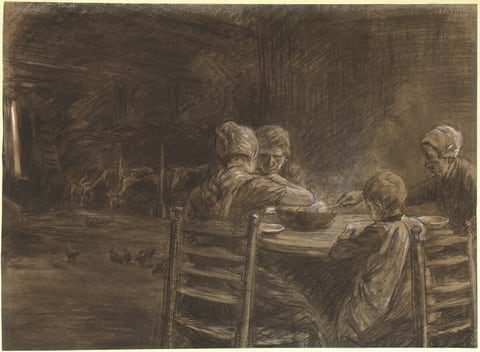
  1. This is a drawing of a rustic interior scene. The artwork depicts an interior where a table is surrounded by chairs. On the table, there is a bowl, as the individuals appear to be interacting or reaching towards it. In the background, livestock and chickens are visible, suggesting the environment is possibly a farm or a barn with a dining space. The use of soft lines and shading creates a warm, intimate, and slightly somber atmosphere within the image, with light and shadow playing an important role in highlighting the subjects and their surroundings.
    East Frisian Peasants Eating SupperMax Liebermann, 1893Courtesy National Gallery of Art, Washington
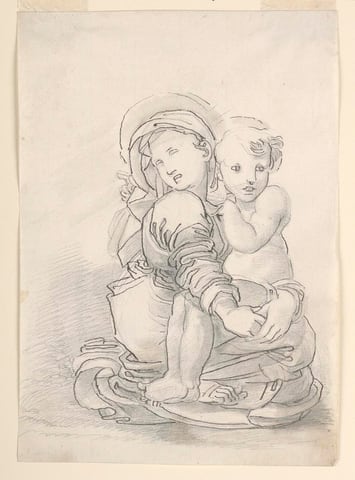
  2. THE VIRGIN WITH THE CHILD
    The Virgin with the ChildFortunato Duranti, 1820–1850Courtesy of Cooper Hewitt, Smithsonian Design Museum
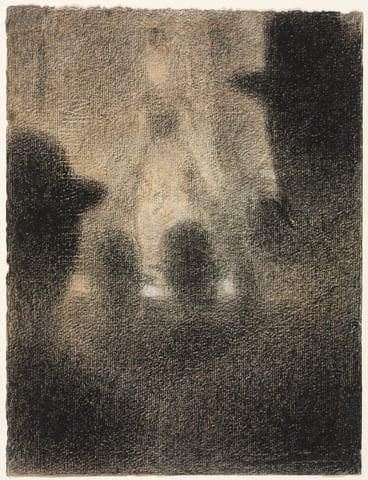
  3. At the Concert Parisien, by Georges Seurat, 1887–88
    At the Concert ParisienGeorges Seurat, 1887–88Courtesy of the Cleveland Museum of Art

Section 2, north wall
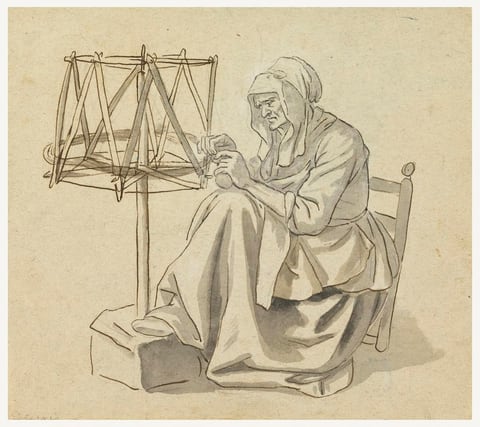
  1. AN OLD WOMAN SPINNING
    An Old Woman SpinningClaude-Louis Desrais, 1810–30Courtesy of Cooper Hewitt, Smithsonian Design Museum
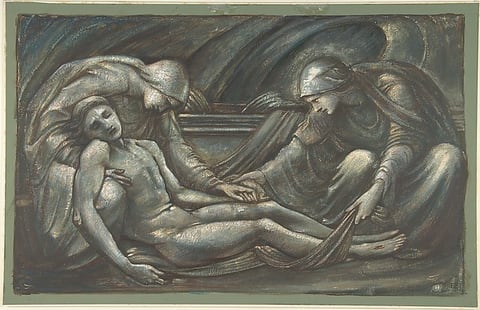
  2. The Entombment, by Sir Edward Burne-Jones, 1879
    The EntombmentSir Edward Burne-Jones, 1879Courtesy of The Metropolitan Museum of Art
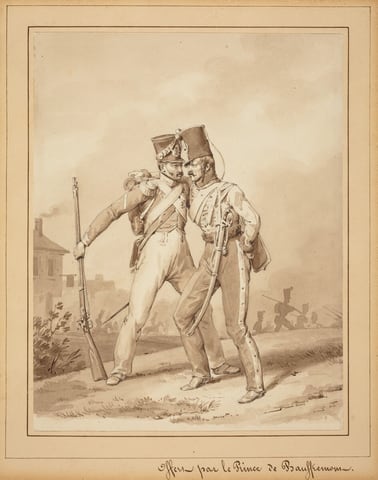
  3. The image features two men in military uniform engaging closely with each other. Both are shown from head to toe. The man on the left stands with his left leg forward, holding a rifle, and has his right arm around the shoulder of the other man. The man on the right has his right leg slightly bent, supporting his weight, and is holding a sword in his left hand. Each man has distinctive facial features. Both wear tall, elaborate military hats and detailed uniforms. The man on the left displays a strap over his shoulder, while the man on the right has intricate decorations on his jacket and trousers. In the background, there are a few more soldiers and part of a building to the left. The setting is monochromatic.
    Two GrenadiersVictor AdamCourtesy National Gallery of Art, Washington

Section 3, north wall
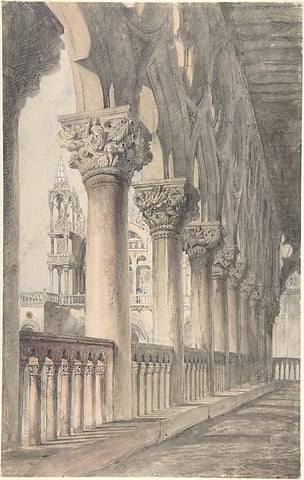
  1. Loggia of the Ducal Palace, Venice, by John Ruskin, 1849–50
    Loggia of the Ducal Palace, VeniceJohn Ruskin, 1849–50Courtesy of The Metropolitan Museum of Art
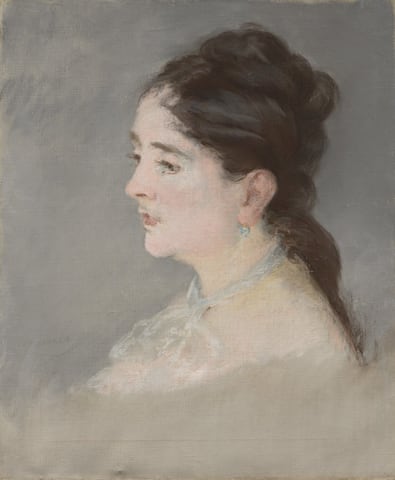
  2. Claire Campbell, by Édouard Manet, 1876
    Claire CampbellÉdouard Manet, 1876Courtesy of the Cleveland Museum of Art
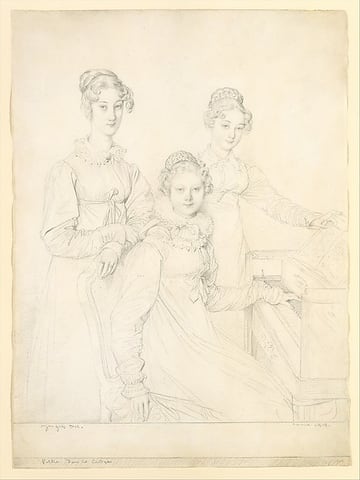
  3. The Kaunitz Sisters (Leopoldine, Caroline, and Ferdinandine), by Jean Auguste Dominique Ingres, 1818
    The Kaunitz Sisters (Leopoldine, Caroline, and Ferdinandine)Jean Auguste Dominique Ingres, 1818Courtesy of The Metropolitan Museum of Art

Section 3, south wall
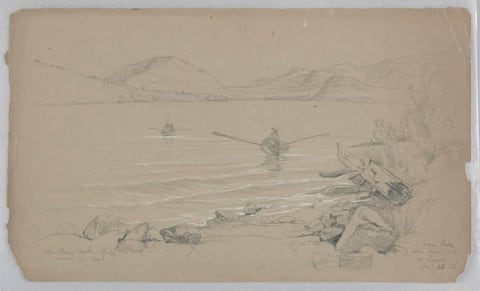
  1. EAGLE LAKE, MT. DESERT
    Eagle Lake, Mt. DesertDaniel Huntington, August 23, 1856Courtesy of Cooper Hewitt, Smithsonian Design Museum
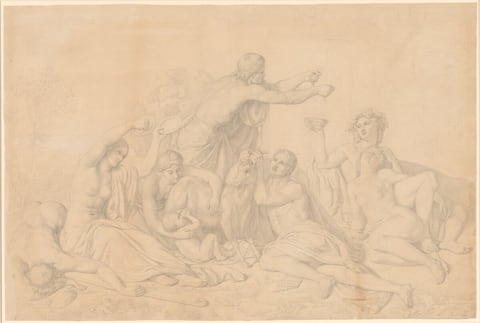
  2. This is a drawing of a group of mythological figures in a ceremonial scene. The composition features multiple figures in various poses, centered around a symbolic gathering. The drawing is detailed, providing a classical representation of human forms, draped fabrics, and an animal. A plateau with trees is subtly depicted in the background. The figures display expressions ranging from serene to contemplative.
    The Nursing of JupiterThéodore ChassériauCourtesy National Gallery of Art, Washington