Floor plan

Style galleriesThe American Gilded Age
The American Gilded Age
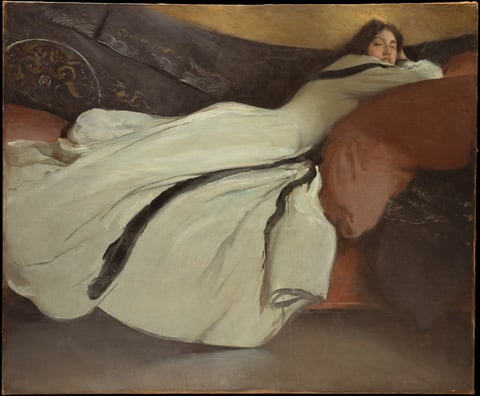
Repose, by John White Alexander, 1895
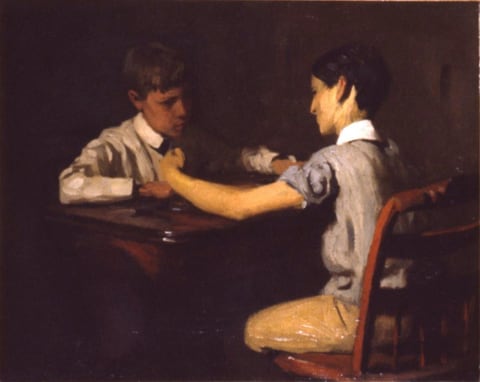
Checker Players, by Thomas Anshutz, ca. 1895
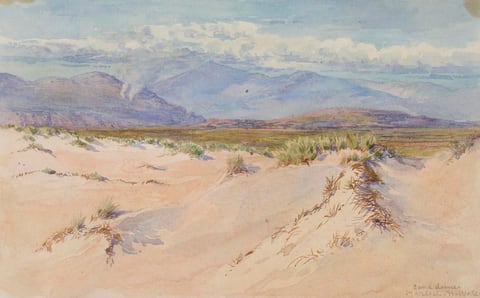
Sand Dunes, Harlech, North Wales, by George Elbert Burr, 1899
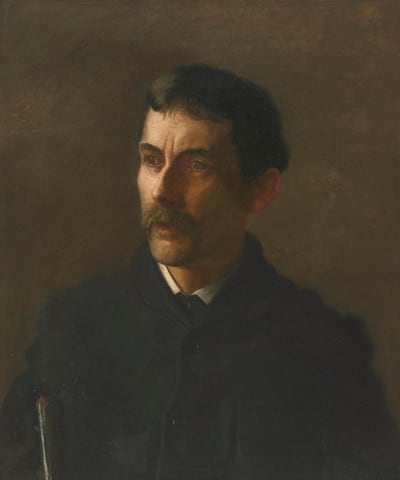
Artist: Thomas Cowperthwaite Eakins, Sitter: Talcott Williams, Current owner: National Portrait Gallery, Smithsonian Institution
BALCONY
William Merritt Chase
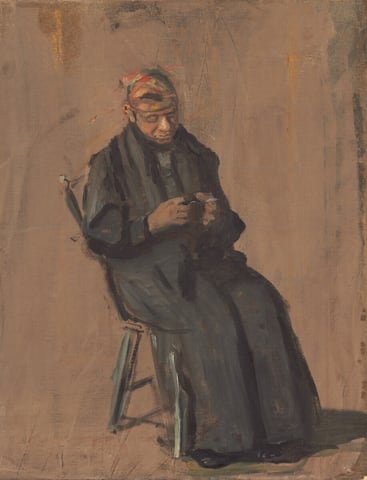
This painting shows a person seated on a stool or chair, wearing a long, dark-blue robe or gown. They are slightly turned toward the right, looking downward at something they hold in their hands, and their head is covered with a cloth or cap. The background is textured with earthy tones, mostly tan with some patches of yellow ochre and gray.

The works in this room are listed below.

Works in this room

Painting and design in the United States from the Civil War to 1910.

First room, north wall

  1. Repose, by John White Alexander, 1895
    ReposeJohn White Alexander, 1895Courtesy of The Metropolitan Museum of Art
  2. Checker Players, by Thomas Anshutz, ca. 1895
    Checker PlayersThomas Anshutz, ca. 1895Courtesy of the Smithsonian American Art Museum
  3. Sand Dunes, Harlech, North Wales, by George Elbert Burr, 1899
    Sand Dunes, Harlech, North WalesGeorge Elbert Burr, 1899Courtesy of the Smithsonian American Art Museum

First room, south wall

  1. Artist: Thomas Cowperthwaite Eakins, Sitter: Talcott Williams, Current owner: National Portrait Gallery, Smithsonian Institution
    Talcott WilliamsThomas Eakins, c. 1889Courtesy of the National Portrait Gallery, Smithsonian Institution
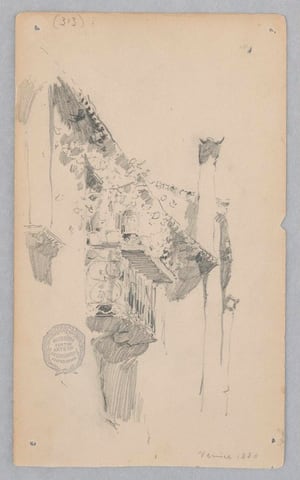
  2. BALCONY
    BalconyRobert Frederick Blum, 1880Courtesy of Cooper Hewitt, Smithsonian Design Museum
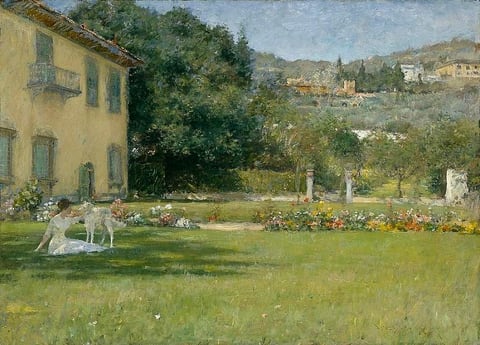
  3. William Merritt Chase
    Good FriendsWilliam Merritt Chase, (c. 1909)Courtesy of the Hirshhorn Museum and Sculpture Garden, Smithsonian Institution
  4. This painting shows a person seated on a stool or chair, wearing a long, dark-blue robe or gown. They are slightly turned toward the right, looking downward at something they hold in their hands, and their head is covered with a cloth or cap. The background is textured with earthy tones, mostly tan with some patches of yellow ochre and gray.
    The ChaperoneThomas Eakins, c. 1908Courtesy National Gallery of Art, Washington

Second room, south wall
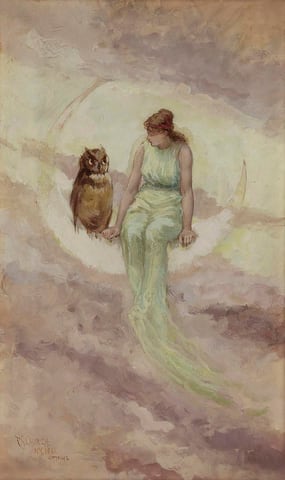
  1. The Witch's Daughter, by Frederick Stuart Church, 1881
    The Witch's DaughterFrederick Stuart Church, 1881Courtesy of the Smithsonian American Art Museum
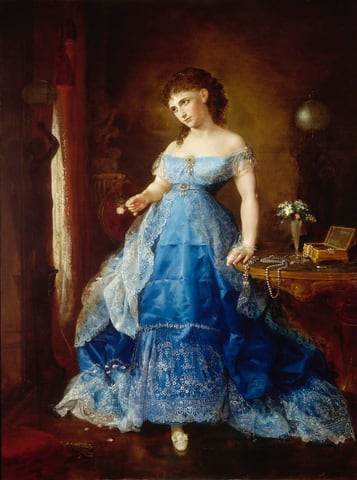
  2. We Both Must Fade (Mrs. Fithian), by Lilly Martin Spencer, 1869
    We Both Must Fade (Mrs. Fithian)Lilly Martin Spencer, 1869Courtesy of the Smithsonian American Art Museum
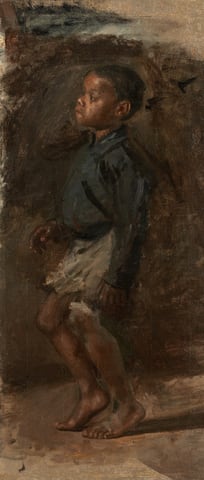
  3. Study for "The Dancing Lesson": The Boy, by Thomas Eakins, probably 1877
    Study for "The Dancing Lesson": The BoyThomas Eakins, probably 1877Courtesy National Gallery of Art, Washington
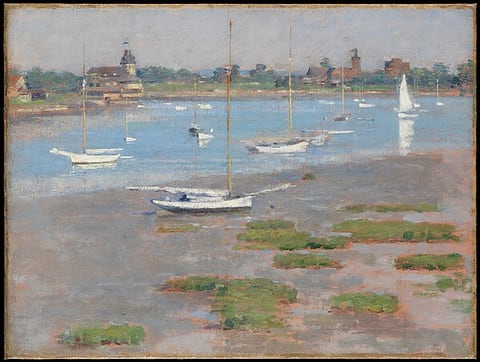
  4. Low Tide, Riverside Yacht Club, by Theodore Robinson, 1894
    Low Tide, Riverside Yacht ClubTheodore Robinson, 1894Courtesy of The Metropolitan Museum of Art

Second room, north wall
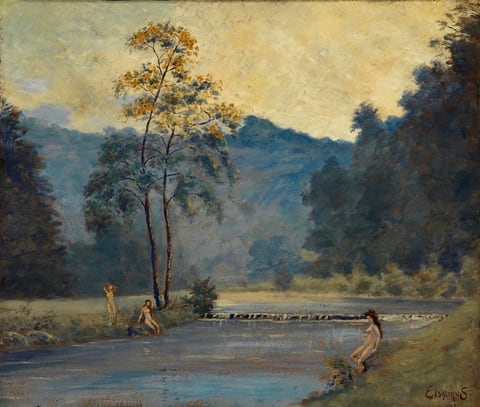
  1. Three Girls and River, by Louis M. Eilshemius, 1907
    Three Girls and RiverLouis M. Eilshemius, 1907Courtesy of the Smithsonian American Art Museum
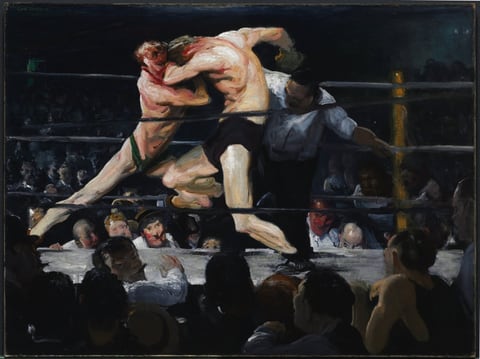
  2. Stag at Sharkey's, by George Bellows, 1909
    Stag at Sharkey'sGeorge Bellows, 1909Courtesy of the Cleveland Museum of Art
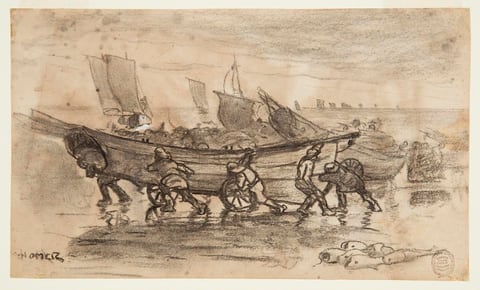
  3. FISHERMEN BEACHING A DORY, CULLERCOATS, ENGLAND
    Fishermen Beaching a Dory, Cullercoats, EnglandWinslow Homer, 1881Courtesy of Cooper Hewitt, Smithsonian Design Museum

Third room, north wall
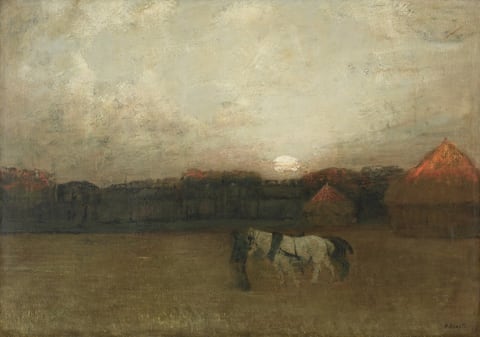
  1. The Stubble Field, by Henry Golden Dearth, c. 1909
    The Stubble FieldHenry Golden Dearth, c. 1909Courtesy of the Cleveland Museum of Art
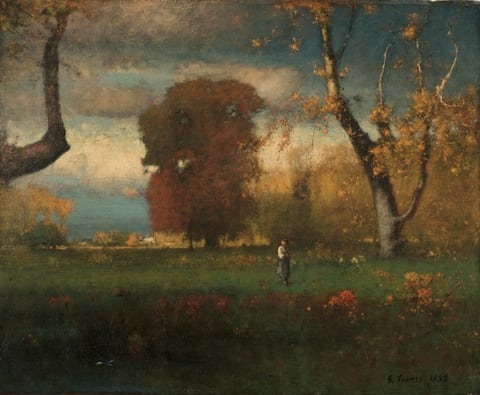
  2. Landscape, by George Inness, 1888
    LandscapeGeorge Inness, 1888Courtesy of the Cleveland Museum of Art