Floor plan

Style galleriesThe American Gilded Age
The American Gilded Age
VIEW OF VENICE, ITALY
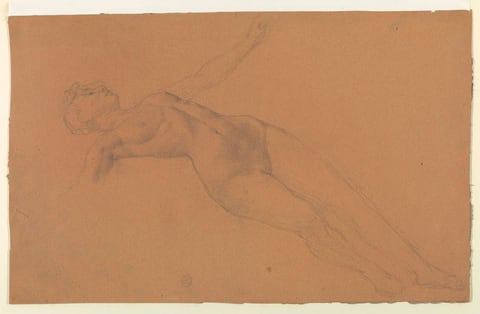
STUDY FOR "DIANA AND HER ATTENDANTS AMONG THE CONSTELLATIONS"
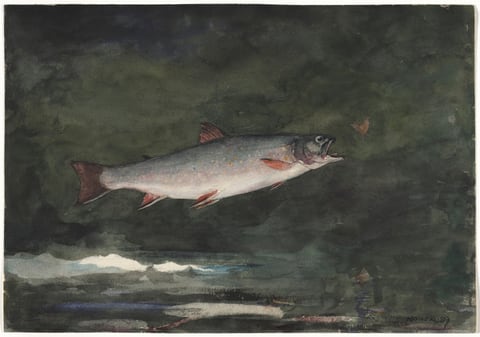
Leaping Trout, by Winslow Homer, 1889
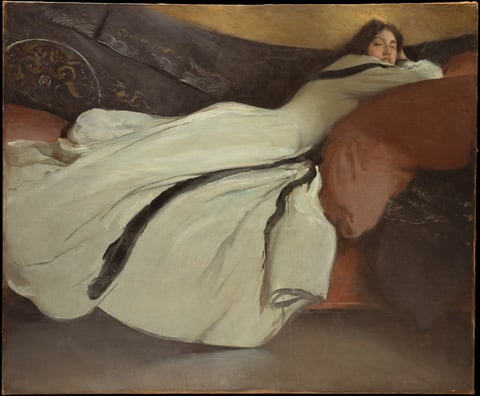
Repose, by John White Alexander, 1895
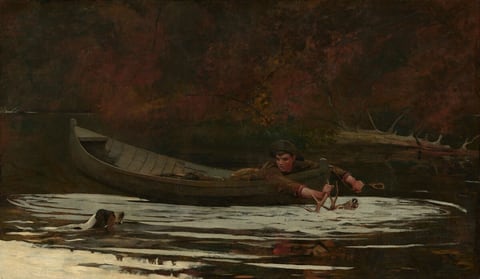
A young man with a peachy, ruddy complexion lies on his stomach in a wooden rowboat on a river, reaching forward to grasp the horn of a stag almost completely submerged in the rippling water with one hand. On the opposite riverbank, gold, rust, and scarlet-red trees span the width of this horizontal painting. The boy’s arms straddle the stern of the boat so one holds the antler with his right hand, closer to us, while the other clutches a rope with a loop at the end. He turns his face, mouth agape and cheeks flushed, over his right shoulder to look to our left, at a dog swimming toward the boat. The dog has white and caramel-brown markings, with dark brown ears. The boy wears earth-brown clothing and the front of his wide-brimmed hat is pushed up to reveal dark eyes and sable-brown bangs and brows. The stag and dog are between us and the boat, and are surrounded by thick brushstrokes of parchment white to create ripples in the forest-green water. Only the open muzzle, part of the eye, and the tips of the stag’s antlers are above the water’s surface. To our right, a bare, fallen tree lies along the far riverbank parallel to the boat. The boat and water fill the lower half of the scene and the autumn trees fill the upper half. The artist has signed and dated the painting in the lower right, “Winslow Homer 1892.”
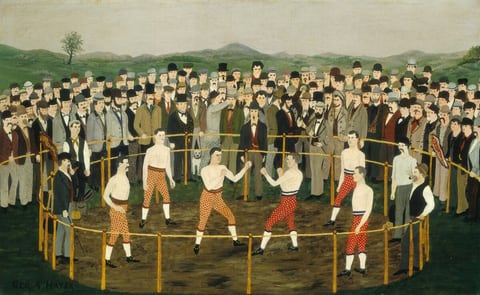
This is a painting depicting a bare-knuckle boxing match with two fighters in a ring surrounded by a crowd. Both fighters are men with light skin, and they wear no shirts. The fighter on the left wears orange pants with black dots, while the fighter on the right wears red pants with white dots. Behind these men are two other shirtless men wearing the same types of pants, as well as two other men wearing more formal attire, including jackets, vests, and hats. Outside the ring, a semi-circle of light-skinned men in formal attire watch the central fight. The setting is outdoors, with grass around the feet of the spectators and green hills in the background. Above the group, the sky is light gray.

The works in this room are listed below.

Works in this room

Painting and design in the United States from the Civil War to 1910.

First room, north wall

  1. VIEW OF VENICE, ITALY
    View of Venice, ItalyRobert Frederick Blum, 1880Courtesy of Cooper Hewitt, Smithsonian Design Museum
  2. STUDY FOR "DIANA AND HER ATTENDANTS AMONG THE CONSTELLATIONS"
    Study for "Diana and Her Attendants among the Constellations"Francis Augustus Lathrop, ca. 1894Courtesy of Cooper Hewitt, Smithsonian Design Museum
  3. Leaping Trout, by Winslow Homer, 1889
    Leaping TroutWinslow Homer, 1889Courtesy of the Cleveland Museum of Art

First room, south wall

  1. Repose, by John White Alexander, 1895
    ReposeJohn White Alexander, 1895Courtesy of The Metropolitan Museum of Art
  2. A young man with a peachy, ruddy complexion lies on his stomach in a wooden rowboat on a river, reaching forward to grasp the horn of a stag almost completely submerged in the rippling water with one hand. On the opposite riverbank, gold, rust, and scarlet-red trees span the width of this horizontal painting. The boy’s arms straddle the stern of the boat so one holds the antler with his right hand, closer to us, while the other clutches a rope with a loop at the end. He turns his face, mouth agape and cheeks flushed, over his right shoulder to look to our left, at a dog swimming toward the boat. The dog has white and caramel-brown markings, with dark brown ears. The boy wears earth-brown clothing and the front of his wide-brimmed hat is pushed up to reveal dark eyes and sable-brown bangs and brows. The stag and dog are between us and the boat, and are surrounded by thick brushstrokes of parchment white to create ripples in the forest-green water. Only the open muzzle, part of the eye, and the tips of the stag’s antlers are above the water’s surface. To our right, a bare, fallen tree lies along the far riverbank parallel to the boat. The boat and water fill the lower half of the scene and the autumn trees fill the upper half. The artist has signed and dated the painting in the lower right, “Winslow Homer 1892.”
    Hound and HunterWinslow Homer, 1892Courtesy National Gallery of Art, Washington
  3. This is a painting depicting a bare-knuckle boxing match with two fighters in a ring surrounded by a crowd. Both fighters are men with light skin, and they wear no shirts. The fighter on the left wears orange pants with black dots, while the fighter on the right wears red pants with white dots. Behind these men are two other shirtless men wearing the same types of pants, as well as two other men wearing more formal attire, including jackets, vests, and hats. Outside the ring, a semi-circle of light-skinned men in formal attire watch the central fight. The setting is outdoors, with grass around the feet of the spectators and green hills in the background. Above the group, the sky is light gray.
    Bare KnucklesGeorge A. Hayes, c. 1870/1885Courtesy National Gallery of Art, Washington

Second room, south wall
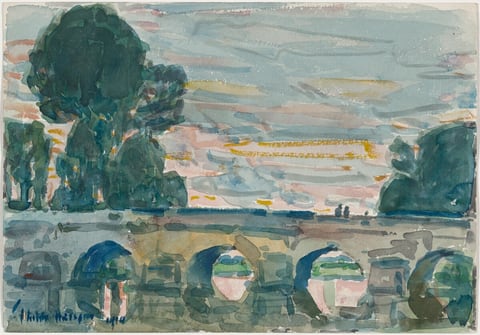
  1. The Bridge at Grez [recto], by Childe Hassam, 1904
    The Bridge at Grez [recto]Childe Hassam, 1904Courtesy National Gallery of Art, Washington
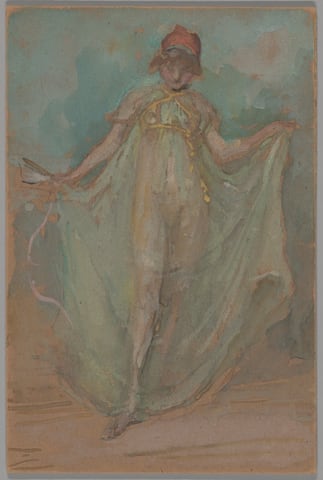
  2. Pale watercolor drawing of young dancer in long sheer dress.
    Green and Blue: The DancerJames McNeill Whistler, c. 1893Courtesy of the Art Institute of Chicago
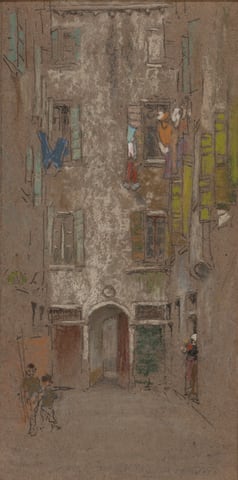
  3. A work made of pastel and black chalk on brown wove paper with fibrous inclusions.
    Corte del ParadisoJames McNeill Whistler, 1880Courtesy of the Art Institute of Chicago
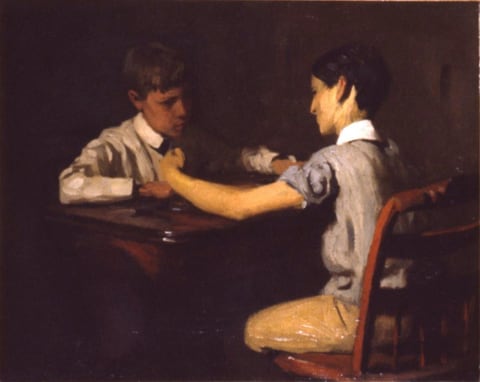
  4. Checker Players, by Thomas Anshutz, ca. 1895
    Checker PlayersThomas Anshutz, ca. 1895Courtesy of the Smithsonian American Art Museum

Second room, north wall
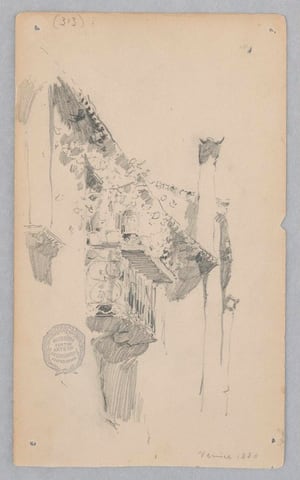
  1. BALCONY
    BalconyRobert Frederick Blum, 1880Courtesy of Cooper Hewitt, Smithsonian Design Museum
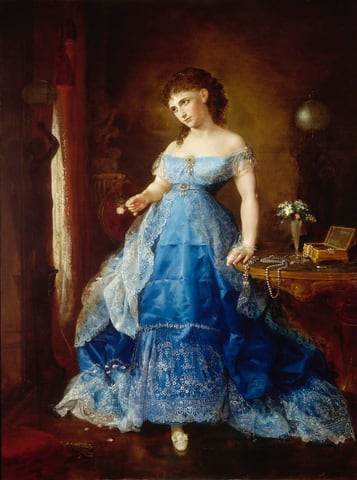
  2. We Both Must Fade (Mrs. Fithian), by Lilly Martin Spencer, 1869
    We Both Must Fade (Mrs. Fithian)Lilly Martin Spencer, 1869Courtesy of the Smithsonian American Art Museum
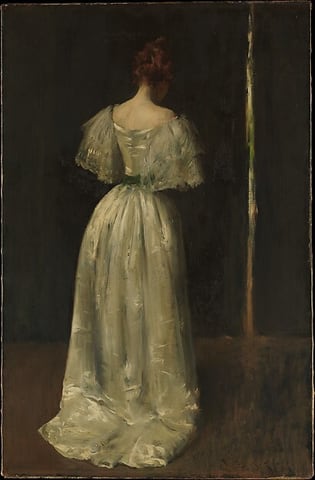
  3. Seventeenth Century Lady, by William Merritt Chase, ca. 1895
    Seventeenth Century LadyWilliam Merritt Chase, ca. 1895Courtesy of The Metropolitan Museum of Art

Third room, north wall
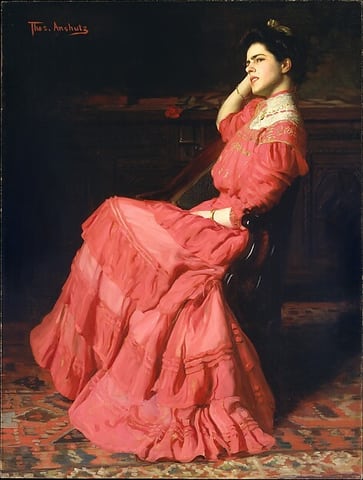
  1. A Rose, by Thomas Anshutz, 1907
    A RoseThomas Anshutz, 1907Courtesy of The Metropolitan Museum of Art
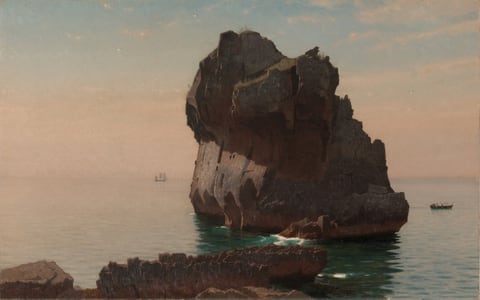
  2. Capri, by William Stanley Haseltine, 1869
    CapriWilliam Stanley Haseltine, 1869Courtesy of the Cleveland Museum of Art
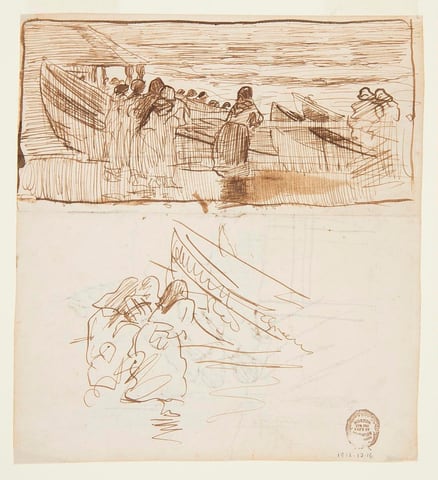
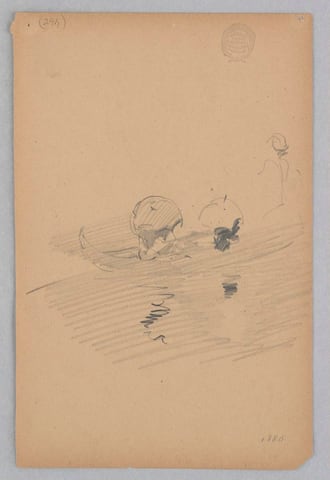
  3. TWO STUDIES OF WOMEN STANDING BEHIND RAILING, LOOKING AT THE LAUNCHING OF DORIES, CULLERCOATS, ENGLAND
    Two Studies of Women Standing behind Railing, Looking at the Launching of Dories, Cullercoats, EnglandWinslow Homer, 1881Courtesy of Cooper Hewitt, Smithsonian Design Museum