Floor plan

West wing: Old MastersRenaissance

Renaissance

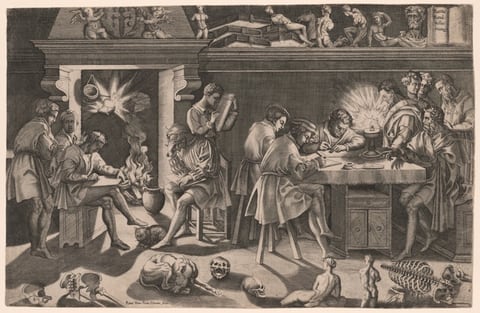
A work made of engraving in black on cream laid paper.
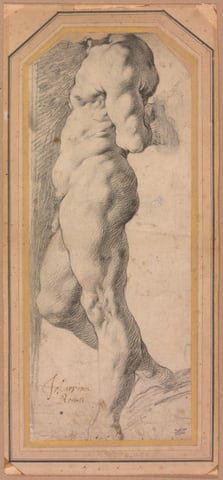
A work made of black chalk on laid paper, laid down on tan laid pulp board.
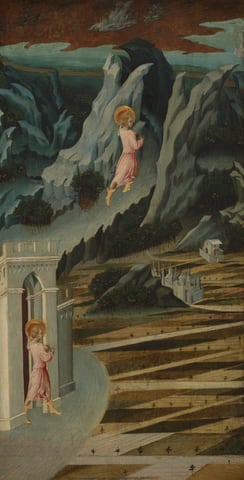
A work made of tempera on panel.
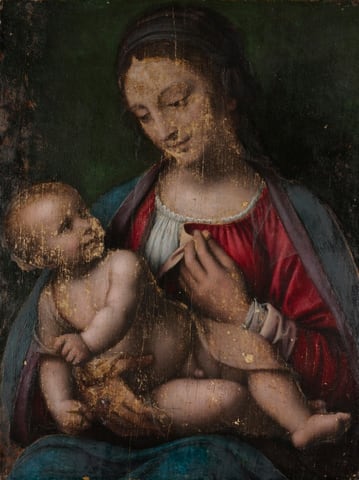
Virgin and Child, by Bernardino Luini, 1500s
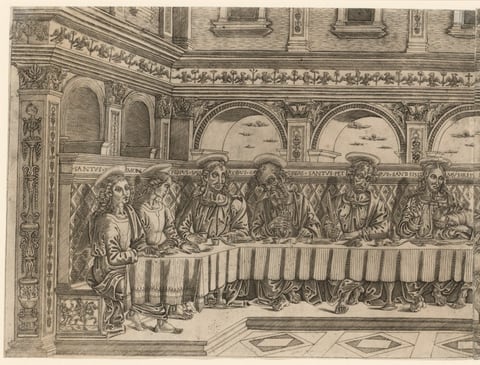
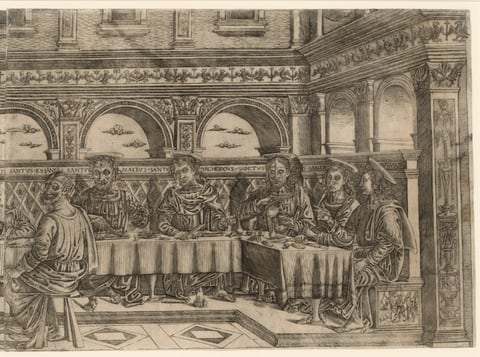
The Last Supper, by Lucantonio degli Uberti, c. 1500
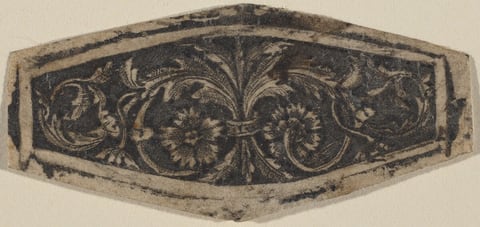
This is a drawing of an ornamental floral design. The image shows a central floral motif resembling a flower with radiating petals, surrounded by swirling leaf patterns. The background is dark, contrasting with the lighter line work of the floral design. The drawing's borders are uneven and have an antique appearance.
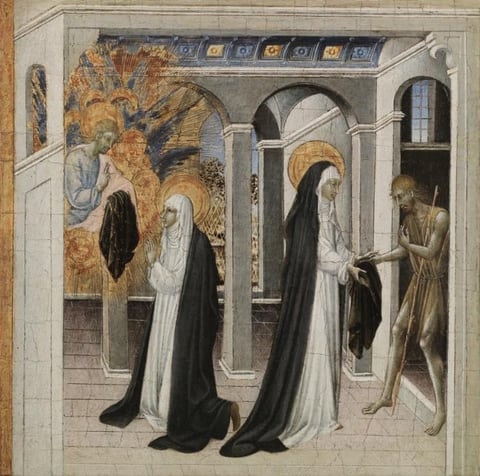
St. Catherine of Siena and the Beggar, by Giovanni di Paolo, 1460s

The works in this room are listed below.

Works in this room

European art from about 1400 to 1600, when painters rediscovered perspective and the classical past.

Section 1, north wall

  1. A work made of engraving in black on cream laid paper.
    The Academy of Baccio BandinelliEnea Vico, 1544/50, printed c. 1560sCourtesy of the Art Institute of Chicago
  2. A work made of black chalk on laid paper, laid down on tan laid pulp board.
    Study of a Standing Male NudeGiuseppe Cesari, called Cavaliere d'Arpino, 1595/96Courtesy of the Art Institute of Chicago
  3. A work made of tempera on panel.
    Saint John the Baptist Entering the WildernessGiovanni di Paolo, 1455–60Courtesy of the Art Institute of Chicago
  4. Virgin and Child, by Bernardino Luini, 1500s
    Virgin and ChildBernardino Luini, 1500sCourtesy of the Cleveland Museum of Art

Section 1, south wall

  1. The Last Supper, by Lucantonio degli Uberti, c. 1500
    The Last SupperLucantonio degli Uberti, c. 1500Courtesy of the Cleveland Museum of Art
  2. The Last Supper, by Lucantonio degli Uberti, c. 1500
    The Last SupperLucantonio degli Uberti, c. 1500Courtesy of the Cleveland Museum of Art
  3. This is a drawing of an ornamental floral design. The image shows a central floral motif resembling a flower with radiating petals, surrounded by swirling leaf patterns. The background is dark, contrasting with the lighter line work of the floral design. The drawing's borders are uneven and have an antique appearance.
    Ornament in Hexagonal ShapeUnrecorded Italian maker, c. 1480/1510Courtesy National Gallery of Art, Washington
  4. St. Catherine of Siena and the Beggar, by Giovanni di Paolo, 1460s
    St. Catherine of Siena and the BeggarGiovanni di Paolo, 1460sCourtesy of the Cleveland Museum of Art

Section 2, south wall
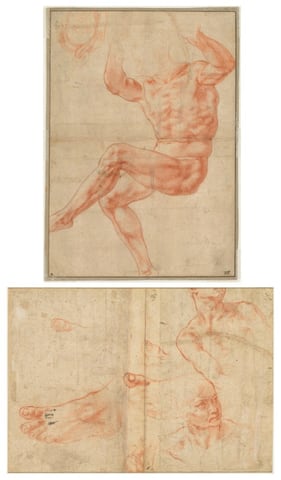
  1. Study for the Nude Youth over the Prophet Daniel (recto); Figure Studies for the Sistine Ceiling (verso), by Michelangelo Buonarroti, 1510–11
    Study for the Nude Youth over the Prophet Daniel (recto); Figure Studies for the Sistine Ceiling (verso)Michelangelo Buonarroti, 1510–11Courtesy of the Cleveland Museum of Art
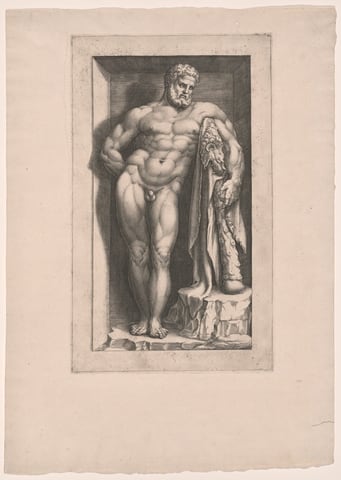
  2. A work made of engraving in black on cream laid paper.
    The Farnese HerculesGiorgio Ghisi, c. 1577Courtesy of the Art Institute of Chicago
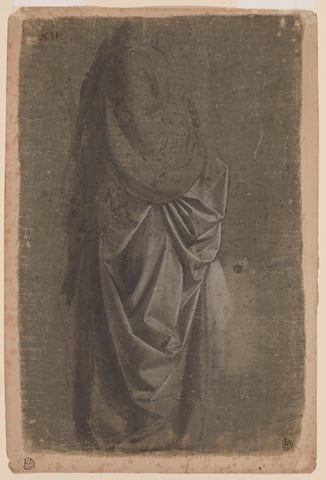
  3. A work made of brush and opaque watercolor, on linen prepared with a gray ground, mounted to cream laid paper.
    Drapery Study of a Standing Figure Facing Right, in ProfileAndrea del Verrocchio, late 1460s–early 1470sCourtesy of the Art Institute of Chicago
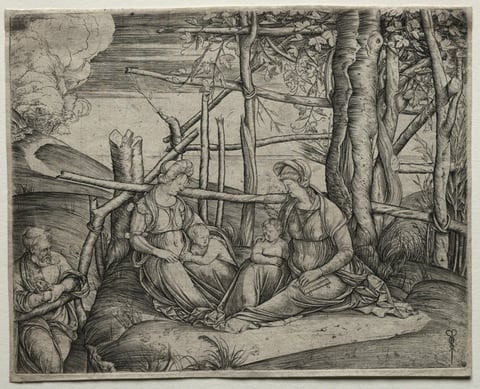
  4. The Holy Family with Saint Elizabeth, by Jacopo de' Barbari, c. 1503
    The Holy Family with Saint ElizabethJacopo de' Barbari, c. 1503Courtesy of the Cleveland Museum of Art

Section 2, north wall
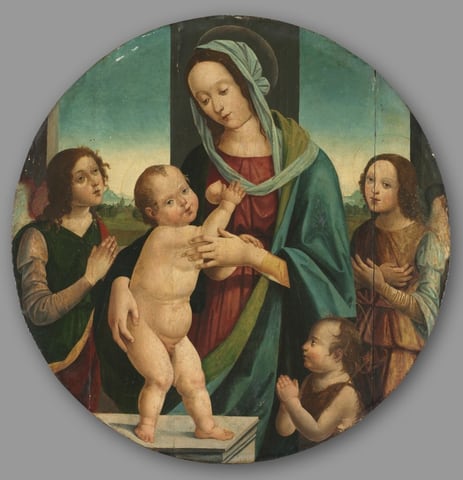
  1. Virgin and Child with John the Baptist and Angels, by Pietro del Donzello, c. 1500
    Virgin and Child with John the Baptist and AngelsPietro del Donzello, c. 1500Courtesy of the Cleveland Museum of Art
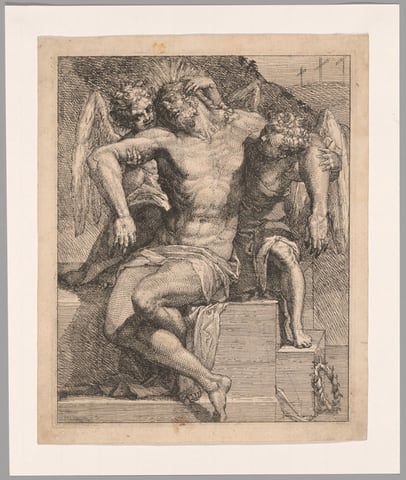
  2. A work made of etching in black on cream laid paper.
    Dead Christ Held by AngelsOrazio Samacchini, 1580/1620Courtesy of the Art Institute of Chicago
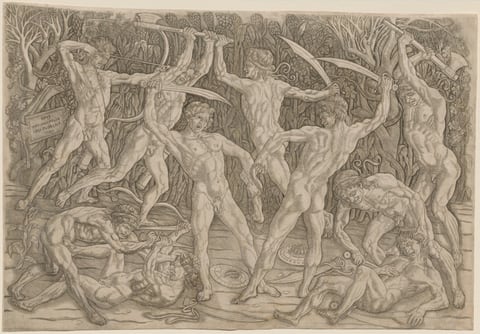
  3. Battle of the Nudes, by Antonio Pollaiuolo, 1470s–80s
    Battle of the NudesAntonio Pollaiuolo, 1470s–80sCourtesy of the Cleveland Museum of Art
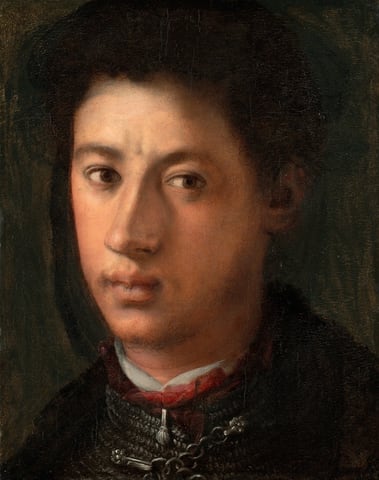
  4. A work made of oil on panel.
    Alessandro de' MediciPontormo, (Jacopo Carrucci), 1534–35Courtesy of the Art Institute of Chicago