Floor plan

West wing: Old MastersRenaissance

Renaissance

A work made of oil on panel.
Outdoors, distinct groupings of adult men and women, some with halos, gather near a building. The front-facing wall of the building is not depicted, allowing for a view inside, where a woman sits in bed with two women nearby and two other women dress a baby. A bearded man sits near the bed.
A work made of oil on panel.
The Holy Family with Saint Elizabeth, by Jacopo de' Barbari, c. 1503
A work made of tempera on panel, transferred to canvas.
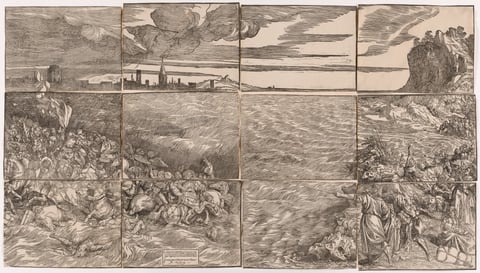
The Submersion of Pharaoh's Army in the Red Sea, by Titian, 1514–15, printed 1549
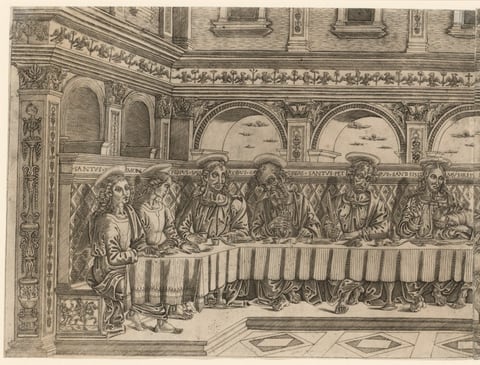
The Last Supper, by Lucantonio degli Uberti, c. 1500
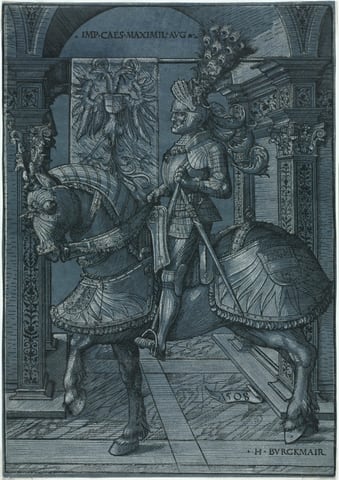
Equestrian Portrait of the Emperor Maximilian, by Hans Burgkmair, 1508

The works in this room are listed below.

Works in this room

European art from about 1400 to 1600, when painters rediscovered perspective and the classical past.

Section 1, north wall

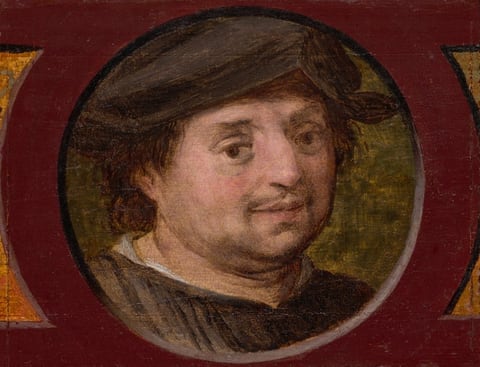
  1. A work made of oil on panel.
    Domenico da GambassiAndrea del Sarto, 1525–28Courtesy of the Art Institute of Chicago
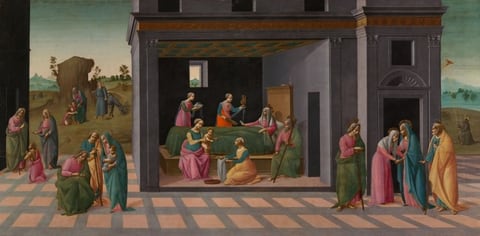
  2. Outdoors, distinct groupings of adult men and women, some with halos, gather near a building. The front-facing wall of the building is not depicted, allowing for a view inside, where a woman sits in bed with two women nearby and two other women dress a baby. A bearded man sits near the bed.
    Scenes from the Life of Saint John the BaptistBartolomeo di Giovanni, 1490/95Courtesy of the Art Institute of Chicago
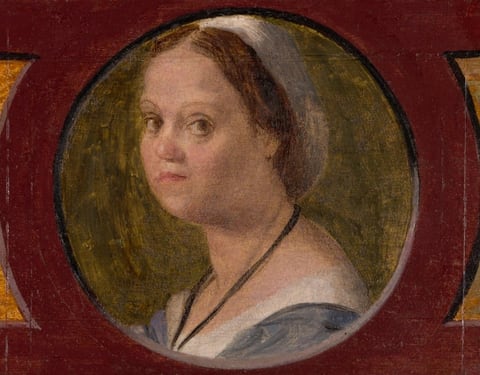
  3. A work made of oil on panel.
    Lucrezia di Lippo di Iacopo GuidiAndrea del Sarto, 1525–28Courtesy of the Art Institute of Chicago
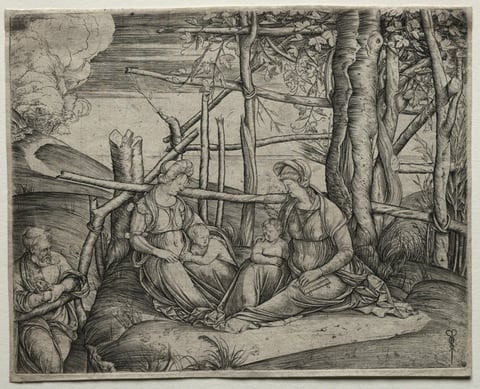
  4. The Holy Family with Saint Elizabeth, by Jacopo de' Barbari, c. 1503
    The Holy Family with Saint ElizabethJacopo de' Barbari, c. 1503Courtesy of the Cleveland Museum of Art

Section 1, south wall

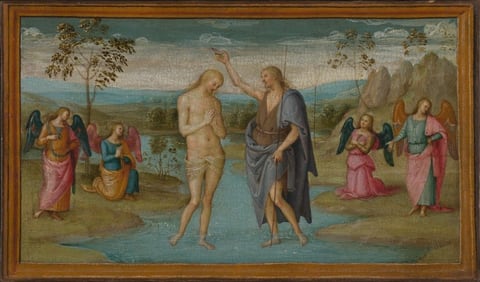
  1. A work made of tempera on panel, transferred to canvas.
    The Baptism of ChristPerugino, 1500–05Courtesy of the Art Institute of Chicago
  2. The Submersion of Pharaoh's Army in the Red Sea, by Titian, 1514–15, printed 1549
    The Submersion of Pharaoh's Army in the Red SeaTitian, 1514–15, printed 1549Courtesy of the Cleveland Museum of Art
  3. The Last Supper, by Lucantonio degli Uberti, c. 1500
    The Last SupperLucantonio degli Uberti, c. 1500Courtesy of the Cleveland Museum of Art
  4. Equestrian Portrait of the Emperor Maximilian, by Hans Burgkmair, 1508
    Equestrian Portrait of the Emperor MaximilianHans Burgkmair, 1508Courtesy of the Cleveland Museum of Art

Section 2, south wall
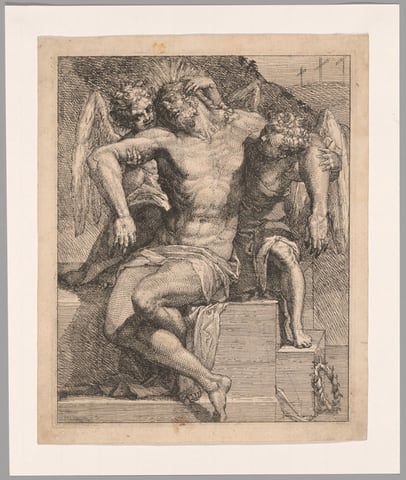
  1. A work made of etching in black on cream laid paper.
    Dead Christ Held by AngelsOrazio Samacchini, 1580/1620Courtesy of the Art Institute of Chicago
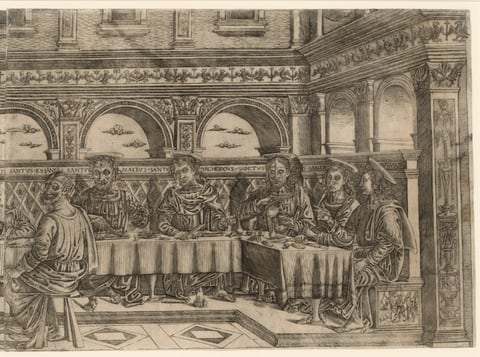
  2. The Last Supper, by Lucantonio degli Uberti, c. 1500
    The Last SupperLucantonio degli Uberti, c. 1500Courtesy of the Cleveland Museum of Art
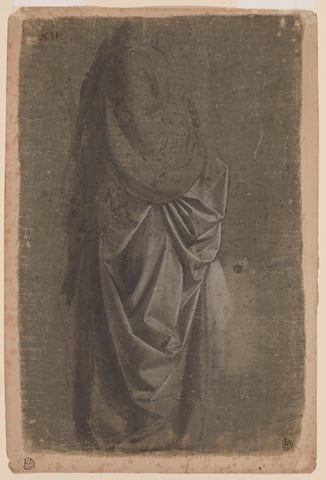
  3. A work made of brush and opaque watercolor, on linen prepared with a gray ground, mounted to cream laid paper.
    Drapery Study of a Standing Figure Facing Right, in ProfileAndrea del Verrocchio, late 1460s–early 1470sCourtesy of the Art Institute of Chicago
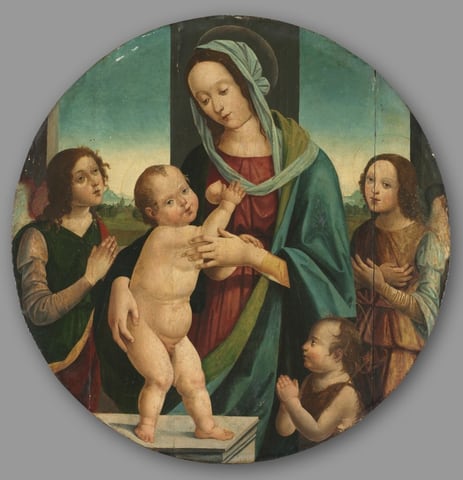
  4. Virgin and Child with John the Baptist and Angels, by Pietro del Donzello, c. 1500
    Virgin and Child with John the Baptist and AngelsPietro del Donzello, c. 1500Courtesy of the Cleveland Museum of Art

Section 2, north wall
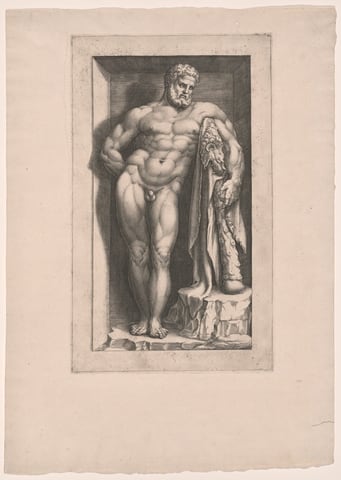
  1. A work made of engraving in black on cream laid paper.
    The Farnese HerculesGiorgio Ghisi, c. 1577Courtesy of the Art Institute of Chicago
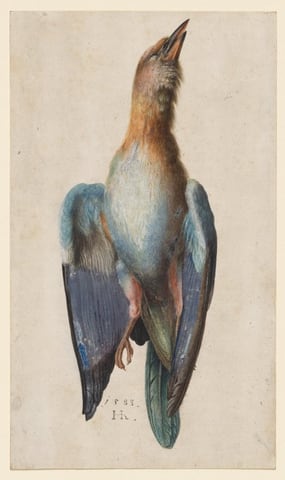
  2. Dead Blue Roller, by Hans Hoffmann, 1583
    Dead Blue RollerHans Hoffmann, 1583Courtesy of the Cleveland Museum of Art
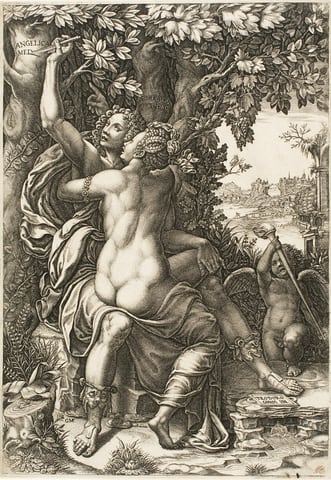
  3. A work made of engraving in black on ivory laid paper.
    Angelica and MedoroGiorgio Ghisi, c. 1570Courtesy of the Art Institute of Chicago
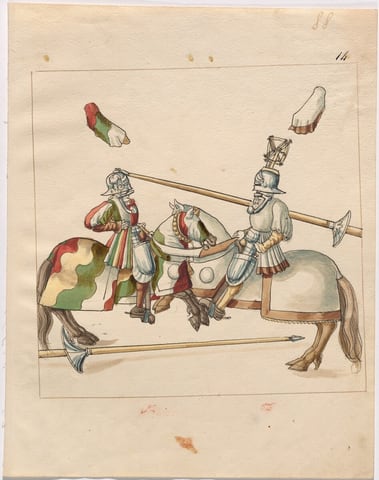
  4. This is a drawing of two armored knights on horseback during a joust. It depicts two horses with riders clad in full armor, including helmets with decorative details. Each knight holds a lance, poised as if they are about to engage in a jousting match. The horses are also adorned in armor, with a colorful caparison draped over them. On the ground, there are lances and a halberd seen in the foreground. There are also disembodied arms and hands illustrated in the composition, adding an abstract element. The style is illustrative, capturing the medieval theme of chivalric tournaments.
    Mock Joust of War with Flying Shields and Without BevorsUnrecorded German maker, c.1512-1515Courtesy National Gallery of Art, Washington