Floor plan

East wing: The Nineteenth CenturyThe Hudson River School
The Hudson River School
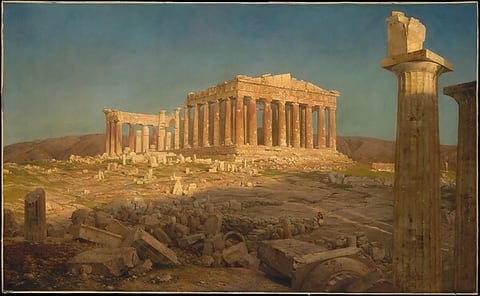
The Parthenon, by Frederic Edwin Church, 1871
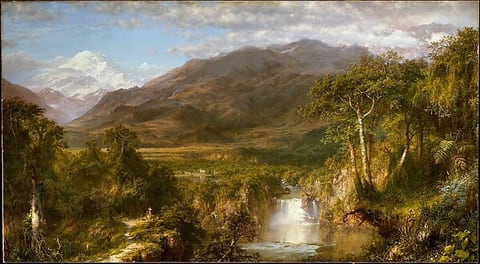
Heart of the Andes, by Frederic Edwin Church, 1859
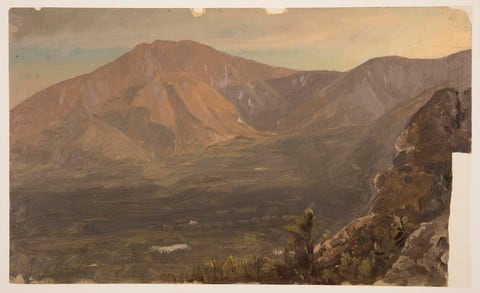
MT. KATAHDIN FROM SOUTH TURNER MOUNTAIN, MAINE
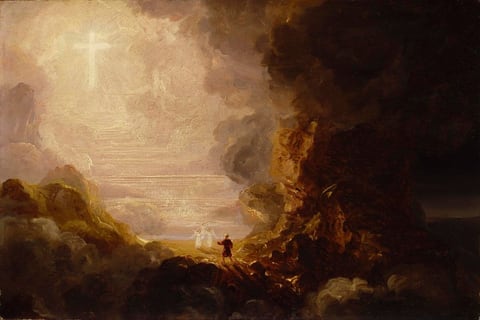
The Pilgrim of the Cross at the End of His Journey (study for series, The Cross and the World), by Thomas Cole, ca. 1846-1848
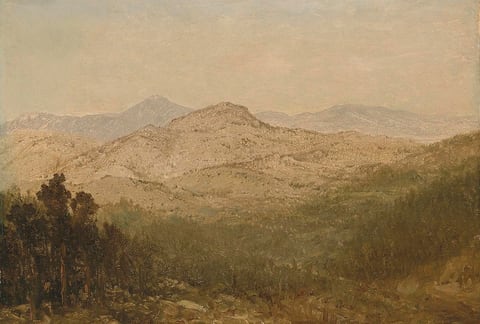
Mountains in Colorado, by John Frederick Kensett, 1870

The works in this room are listed below.

Works in this room

American landscape painters of the mid-1800s who made wilderness their grand subject.

Section 1, north wall

  1. The Parthenon, by Frederic Edwin Church, 1871
    The ParthenonFrederic Edwin Church, 1871Courtesy of The Metropolitan Museum of Art
  2. Heart of the Andes, by Frederic Edwin Church, 1859
    Heart of the AndesFrederic Edwin Church, 1859Courtesy of The Metropolitan Museum of Art

Section 1, south wall

  1. MT. KATAHDIN FROM SOUTH TURNER MOUNTAIN, MAINE
    Mt. Katahdin from South Turner Mountain, MaineFrederic Edwin Church, 1877–78Courtesy of Cooper Hewitt, Smithsonian Design Museum
  2. The Pilgrim of the Cross at the End of His Journey (study for series, The Cross and the World), by Thomas Cole, ca. 1846-1848
    The Pilgrim of the Cross at the End of His Journey (study for series, The Cross and the World)Thomas Cole, ca. 1846-1848Courtesy of the Smithsonian American Art Museum
  3. Mountains in Colorado, by John Frederick Kensett, 1870
    Mountains in ColoradoJohn Frederick Kensett, 1870Courtesy of the Smithsonian American Art Museum

Section 2, south wall
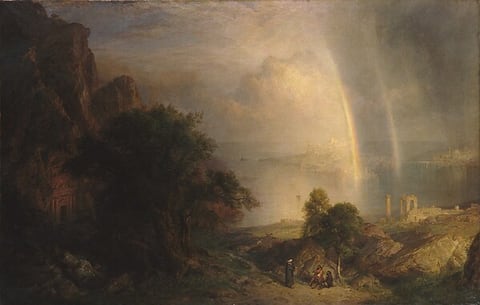
  1. The Aegean Sea, by Frederic Edwin Church, ca. 1877
    The Aegean SeaFrederic Edwin Church, ca. 1877Courtesy of The Metropolitan Museum of Art
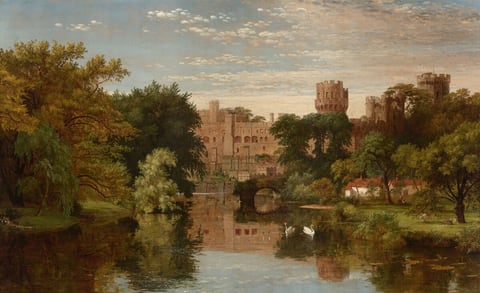
  2. This painting features a landscape with a calm body of water dominating the lower portion. The view is slightly elevated, overlooking the water that reflects the surrounding greenery and sky. Two white swans glide on the river, which is surrounded by green trees and shrubs. In the distance, a large tan castle with multiple towers and crenellations stands above the trees. In front of the castle, on the right side of the painting, a smaller structure with white walls and red roofs sits, surrounded by greenery. One or two people appear to sit out in front of it, and on the right sheep lay in the soft green grass. The color palette includes deep greens, soft browns, and varying shades of blue.
    Warwick Castle, EnglandJasper Francis Cropsey, 1857Courtesy National Gallery of Art, Washington

Section 2, north wall
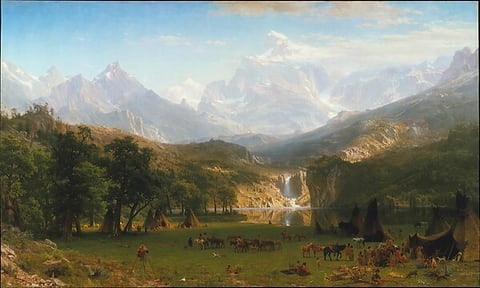
  1. The Rocky Mountains, Lander's Peak, by Albert Bierstadt, 1863
    The Rocky Mountains, Lander's PeakAlbert Bierstadt, 1863Courtesy of The Metropolitan Museum of Art
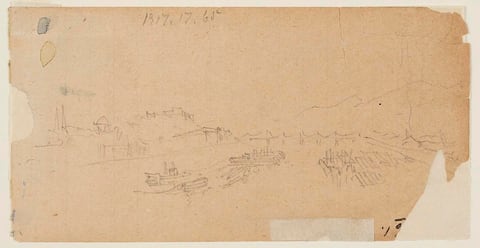
  2. THE TETONS, SHOWN FROM THE PLAIN
    The Tetons, Shown from the PlainThomas Moran, August 28, 1879Courtesy of Cooper Hewitt, Smithsonian Design Museum
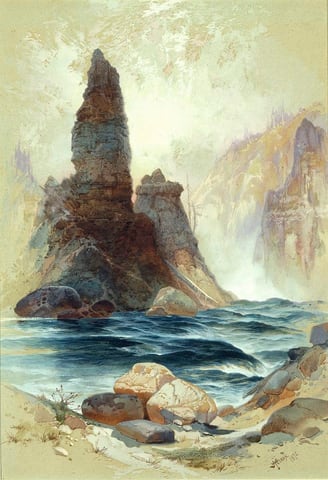
  3. Above Tower Falls, Yellowstone, by Thomas Moran, 1872
    Above Tower Falls, YellowstoneThomas Moran, 1872Courtesy of the Smithsonian American Art Museum

Section 3, north wall
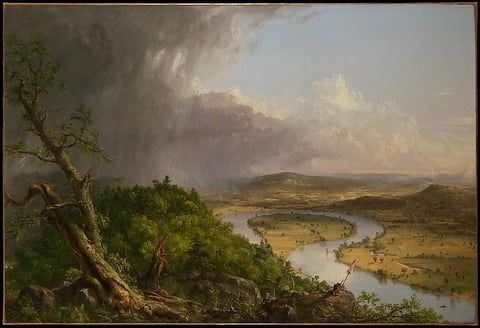
  1. View from Mount Holyoke, Northampton, Massachusetts, after a Thunderstorm—The Oxbow, by Thomas Cole, 1836
    View from Mount Holyoke, Northampton, Massachusetts, after a Thunderstorm—The OxbowThomas Cole, 1836Courtesy of The Metropolitan Museum of Art
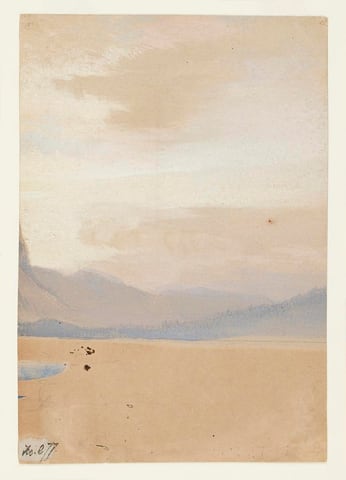
  2. AMERICAN PLAINS WITH MOUNTAIN RANGE IN THE DISTANCE
    American Plains with Mountain Range in the DistanceThomas Moran, before 1872Courtesy of Cooper Hewitt, Smithsonian Design Museum
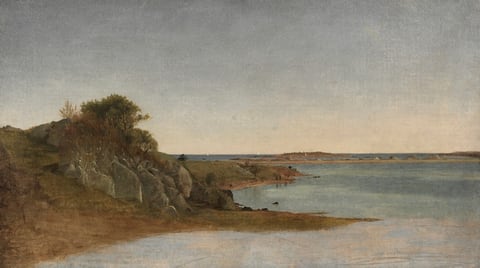
  3. View near Newport, by John Frederick Kensett, 1860s
    View near NewportJohn Frederick Kensett, 1860sCourtesy of the Cleveland Museum of Art

Section 3, south wall
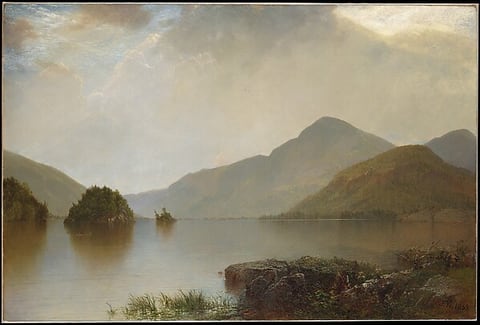
  1. Lake George, by John Frederick Kensett, 1869
    Lake GeorgeJohn Frederick Kensett, 1869Courtesy of The Metropolitan Museum of Art
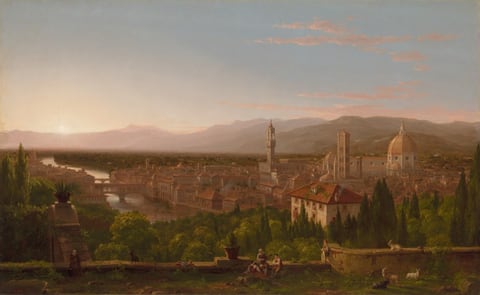
  2. View of Florence, by Thomas Cole, 1837
    View of FlorenceThomas Cole, 1837Courtesy of the Cleveland Museum of Art
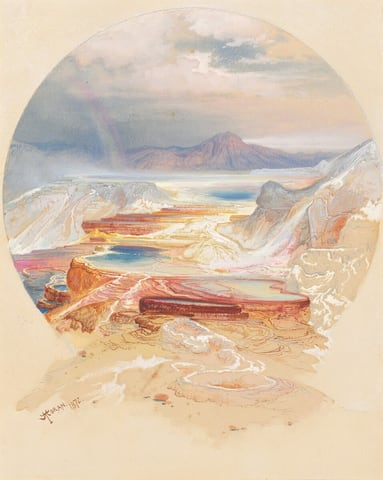
  3. This painting shows a view looking out over a vast landscape. Most of the painting is circular, with a small part of the bottom bleeding out of the circle towards us. The top third of the circle shows a mountain range with a large purple peak in the distance. In front of the mountain is a faint rainbow. A body of water flows from in front of the mountain to the bottom of the painting, weaving in between shorter white peaks. Towards the bottom, the water appears to flow into small, layered pools of various bright colors including yellow, orange, red, pink, blue, and teal. The sky is a light blue-gray color. The background of the painting outside of the circle is plain paper.
    Minerva Terrace, YellowstoneThomas Moran, 1872Courtesy National Gallery of Art, Washington