Floor plan

Time and placeThe United States

The United States

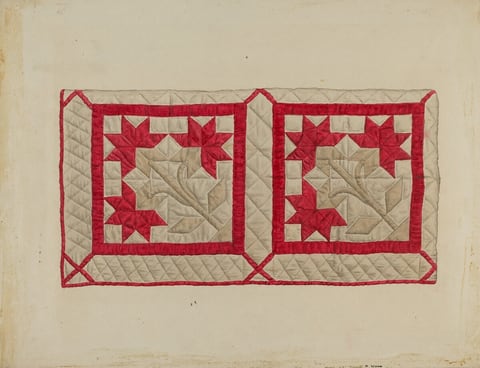
The image shows two large quilt blocks with a matching design, side by side. Each block consists of red and beige fabric with quilted stitching creating a textured appearance. The color palette includes primarily red, beige, and dark stitching outlining the patterns. The quilt blocks are placed centrally on a light-colored surface.
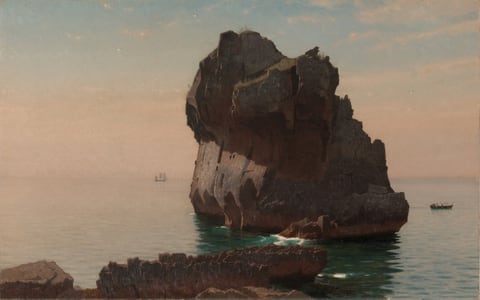
Capri, by William Stanley Haseltine, 1869
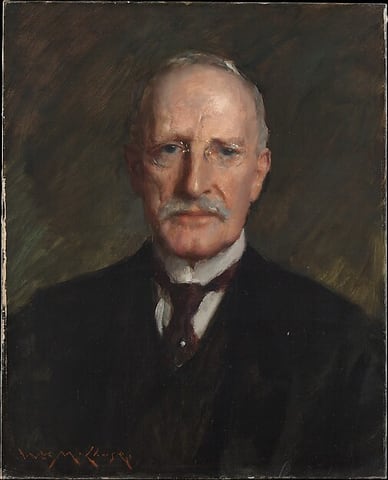
Edward Guthrie Kennedy, by William Merritt Chase, ca. 1895
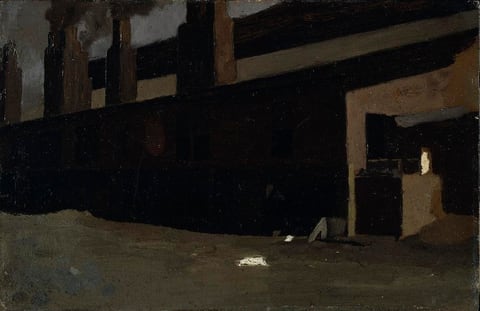
Thomas Anshutz
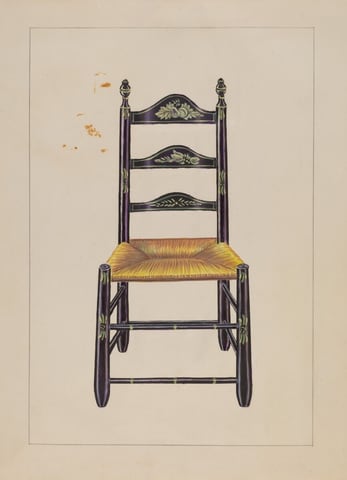
The image shows a wooden chair with a rush seat. It features ornate details on the backrest. The color palette includes dark wood tones, pale greenish detailing, and a warm yellowish hue for the seat. The chair is centrally positioned in the image, viewed from the front, with no other objects around it.
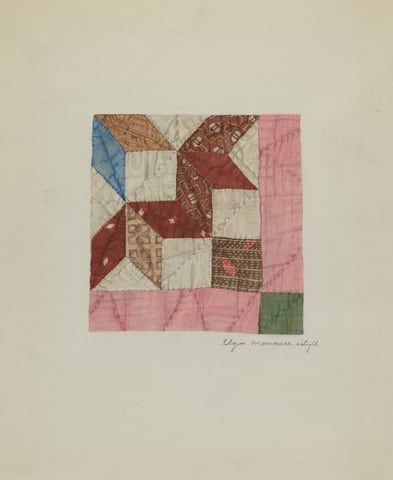
This is a painting of a quilt design pattern. The image depicts a square quilt block featuring a variety of geometric shapes and patterns pieced together. The quilt features a mix of colors, including blues, reds, browns, and a pink border, with intricate patterns in the fabric segments. The textures and colors create an intricate optical composition resembling different geometric forms and depth. The piece is delicately framed within a larger white space, which emphasizes the detail of the quilt pattern. This is in the style of a traditional textile or quilting pattern illustrator.
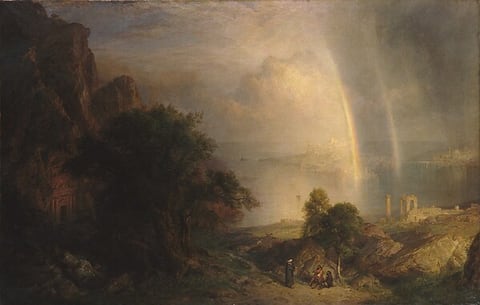
The Aegean Sea, by Frederic Edwin Church, ca. 1877

The works in this room are listed below.

Works in this room

Works made in the United States, from every century in the collection.

First room, north wall

  1. The image shows two large quilt blocks with a matching design, side by side. Each block consists of red and beige fabric with quilted stitching creating a textured appearance. The color palette includes primarily red, beige, and dark stitching outlining the patterns. The quilt blocks are placed centrally on a light-colored surface.
    Patchwork QuiltPaul Ward, c. 1936Courtesy National Gallery of Art, Washington
  2. Capri, by William Stanley Haseltine, 1869
    CapriWilliam Stanley Haseltine, 1869Courtesy of the Cleveland Museum of Art
  3. Edward Guthrie Kennedy, by William Merritt Chase, ca. 1895
    Edward Guthrie KennedyWilliam Merritt Chase, ca. 1895Courtesy of The Metropolitan Museum of Art
  4. Thomas Anshutz
    Factory--Study for "Ironworkers, Noontime"/Verso: Still Life with OrangeThomas Anshutz, (1880)Courtesy of the Hirshhorn Museum and Sculpture Garden, Smithsonian Institution

First room, south wall

  1. The image shows a wooden chair with a rush seat. It features ornate details on the backrest. The color palette includes dark wood tones, pale greenish detailing, and a warm yellowish hue for the seat. The chair is centrally positioned in the image, viewed from the front, with no other objects around it.
    Ladderback ChairGerald Bernhardt, c. 1936Courtesy National Gallery of Art, Washington
  2. This is a painting of a quilt design pattern. The image depicts a square quilt block featuring a variety of geometric shapes and patterns pieced together. The quilt features a mix of colors, including blues, reds, browns, and a pink border, with intricate patterns in the fabric segments. The textures and colors create an intricate optical composition resembling different geometric forms and depth. The piece is delicately framed within a larger white space, which emphasizes the detail of the quilt pattern. This is in the style of a traditional textile or quilting pattern illustrator.
    Cotton Bed QuiltElgin Moncure Styll, c. 1941Courtesy National Gallery of Art, Washington
  3. The Aegean Sea, by Frederic Edwin Church, ca. 1877
    The Aegean SeaFrederic Edwin Church, ca. 1877Courtesy of The Metropolitan Museum of Art

Second room, south wall
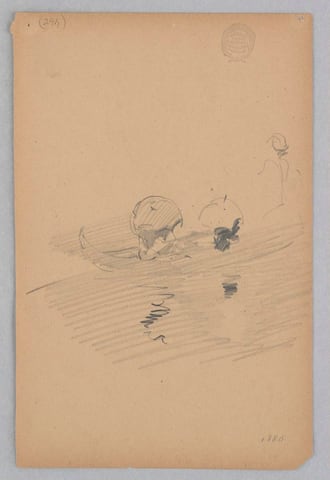
  1. VIEW OF VENICE, ITALY
    View of Venice, ItalyRobert Frederick Blum, 1880Courtesy of Cooper Hewitt, Smithsonian Design Museum
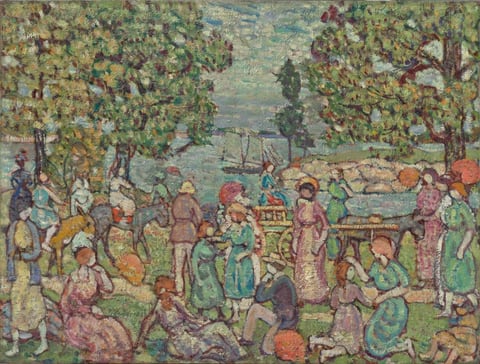
  2. On the Beach, No. 3, by Maurice Prendergast, c. 1915–18
    On the Beach, No. 3Maurice Prendergast, c. 1915–18Courtesy of the Cleveland Museum of Art
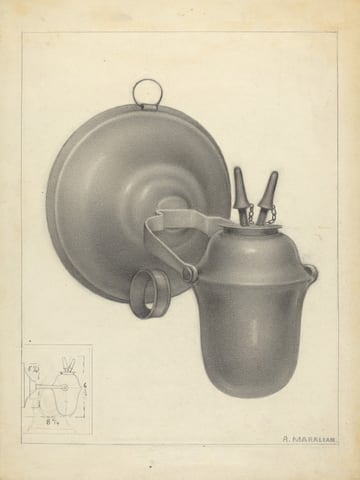
  3. The image depicts a detailed drawing of a wall-mounted vessel. It consists of a large, spherical body attached to a flat disc, with two smaller protrusions resembling handles or clips. The color palette is monochromatic with shades of gray, giving it a metallic or ceramic appearance. The objects are centrally positioned, with a small inset illustration in the bottom left corner showing annotations. The artist's signature, "A. Marshall," is located near the lower right corner of the image.
    LampArsen Maralian, c. 1936Courtesy National Gallery of Art, Washington
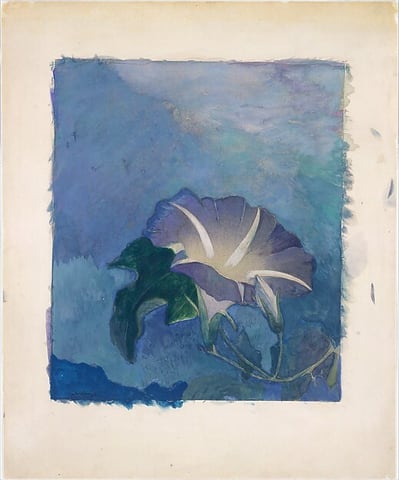
  4. Nocturne, by John La Farge, ca. 1885
    NocturneJohn La Farge, ca. 1885Courtesy of The Metropolitan Museum of Art

Second room, north wall
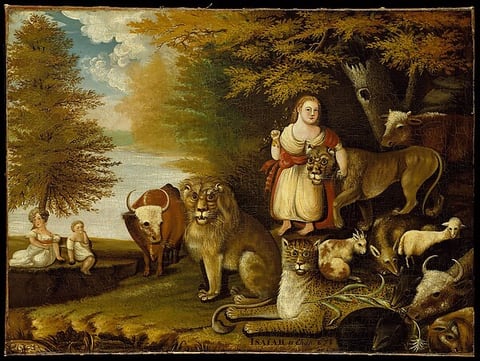
  1. Peaceable Kingdom, by Edward Hicks, ca. 1830–32
    Peaceable KingdomEdward Hicks, ca. 1830–32Courtesy of The Metropolitan Museum of Art
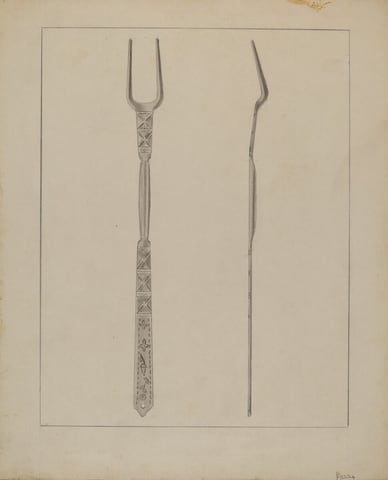
  2. This is a drawing of a tool with intricate patterns. The tool appears elongated with a pronged end, and features symmetrical geometric designs etched along the handle. The drawing also includes a side profile showing its slender form.
    ForkAnthony Zuccarello, c. 1936Courtesy National Gallery of Art, Washington
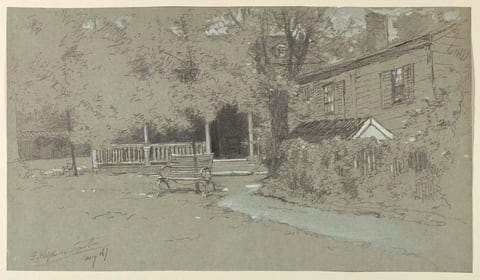
  3. THE OLD HOPKINSON HOUSE, BORDENTOWN, NJ
    The Old Hopkinson House, Bordentown, NJFrancis Hopkinson Smith, ca. 1880Courtesy of Cooper Hewitt, Smithsonian Design Museum

Third room, north wall
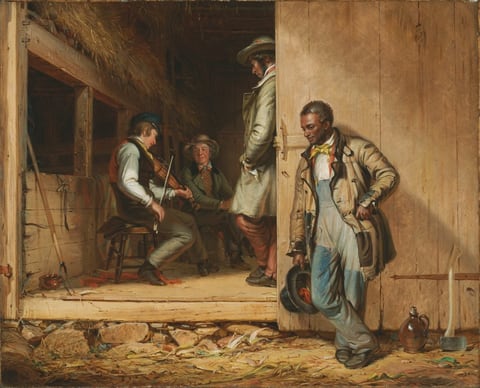
  1. The Power of Music, by William Sidney Mount, 1847
    The Power of MusicWilliam Sidney Mount, 1847Courtesy of the Cleveland Museum of Art
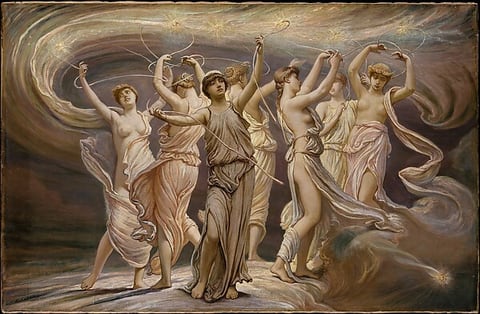
  2. The Pleiades, by Elihu Vedder, 1885
    The PleiadesElihu Vedder, 1885Courtesy of The Metropolitan Museum of Art