Floor plan

Time and placeSpain

Spain

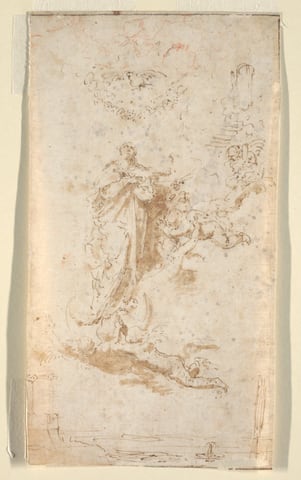
THE IMMACULATE CONCEPTION
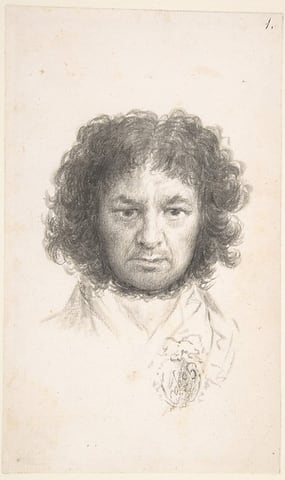
Self-Portrait, by Francisco Goya, ca. 1796
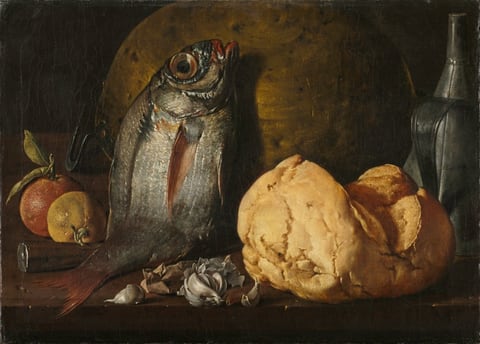
Still Life with Fish, Bread, and Kettle, by Luis Meléndez, c. 1772
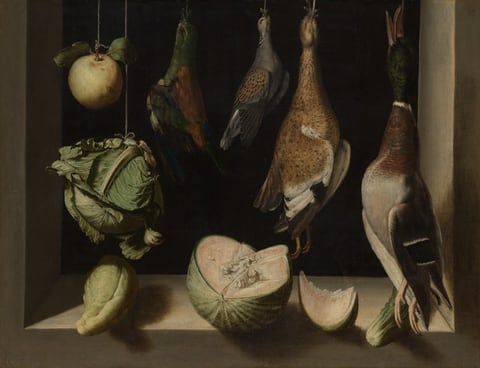
Still life painting of dead waterfowl and vegetables in windowsill.
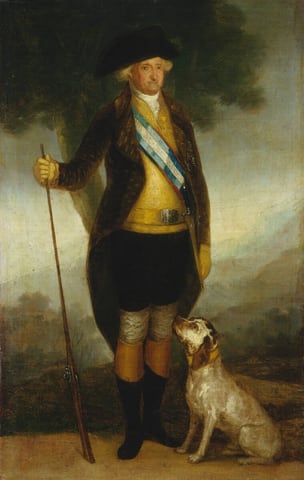
This painting shows a man standing upright, his body slightly turned to the right. He has pale skin and curled white hair under a large black hat, and he wears a long brown jacket over a yellow vest with a white ruffled neck and a wide blue-and-white striped sash over his torso. His pants are black, and he wears tall black boots with brown tops. His hands are covered by yellow gloves, and he is holding a tall, thin rifle on the left, its bottom on the ground. Next to him on the right is a white dog with brown spots and large brown ears. The dog is sitting, looking up at the man. The background features an outdoor setting, with a landscape of hazy hills in shades of pale green and blue below a white and gray sky. There is a tall, dark green tree behind the man, and the ground he stands on is brown.
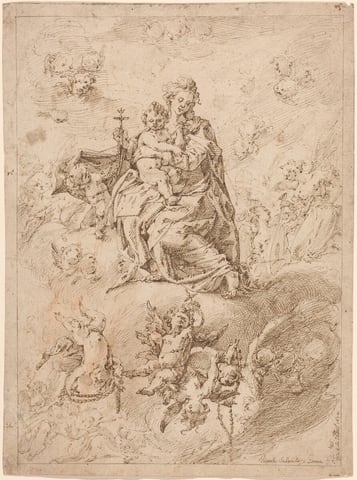
The image depicts a woman seated with a child in her lap. The woman looks down at the child, who has curly hair. Both figures are intricately drawn in a detailed line drawing style. The woman wears a headdress and flowing garment, holding a cross-topped staff. The child clutches her arm. Surrounding them are cloud-like forms and cherubic figures with wings, some holding rosary beads. In the background, more clouds and angelic faces are sketched.
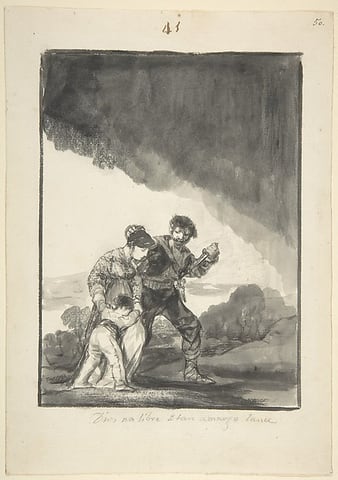
God save us from such a bitter fate; a bandit threatening a woman and a child with a knife, page 41 from the "Black Border Album" (E), by Francisco Goya, ca. 1816–20
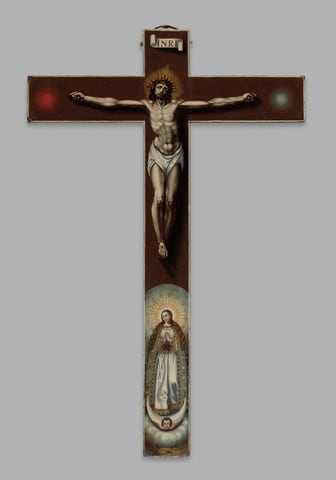
A work made of oil on panel.

The works in this room are listed below.

Works in this room

Works made in Spain, from every century in the collection.

First room, north wall

  1. THE IMMACULATE CONCEPTION
    The Immaculate ConceptionJusepe de Ribera (called Lo Spagnoletto), ca. 1640Courtesy of Cooper Hewitt, Smithsonian Design Museum
  2. Self-Portrait, by Francisco Goya, ca. 1796
    Self-PortraitFrancisco Goya, ca. 1796Courtesy of The Metropolitan Museum of Art
  3. Still Life with Fish, Bread, and Kettle, by Luis Meléndez, c. 1772
    Still Life with Fish, Bread, and KettleLuis Meléndez, c. 1772Courtesy of the Cleveland Museum of Art
  4. Still life painting of dead waterfowl and vegetables in windowsill.
    Still Life with Game FowlJuan Sánchez Cotán, c. 1600–3Courtesy of the Art Institute of Chicago

First room, south wall

  1. This painting shows a man standing upright, his body slightly turned to the right. He has pale skin and curled white hair under a large black hat, and he wears a long brown jacket over a yellow vest with a white ruffled neck and a wide blue-and-white striped sash over his torso. His pants are black, and he wears tall black boots with brown tops. His hands are covered by yellow gloves, and he is holding a tall, thin rifle on the left, its bottom on the ground. Next to him on the right is a white dog with brown spots and large brown ears. The dog is sitting, looking up at the man. The background features an outdoor setting, with a landscape of hazy hills in shades of pale green and blue below a white and gray sky. There is a tall, dark green tree behind the man, and the ground he stands on is brown.
    Charles IV of Spain as HuntsmanUnrecorded Spanish maker, c. 1799/1800Courtesy National Gallery of Art, Washington
  2. The image depicts a woman seated with a child in her lap. The woman looks down at the child, who has curly hair. Both figures are intricately drawn in a detailed line drawing style. The woman wears a headdress and flowing garment, holding a cross-topped staff. The child clutches her arm. Surrounding them are cloud-like forms and cherubic figures with wings, some holding rosary beads. In the background, more clouds and angelic faces are sketched.
    The Madonna of the RosaryVicente Salvador Gómez, 1674Courtesy National Gallery of Art, Washington
  3. God save us from such a bitter fate; a bandit threatening a woman and a child with a knife, page 41 from the "Black Border Album" (E), by Francisco Goya, ca. 1816–20
    God save us from such a bitter fate; a bandit threatening a woman and a child with a knife, page 41 from the "Black Border Album" (E)Francisco Goya, ca. 1816–20Courtesy of The Metropolitan Museum of Art
  4. A work made of oil on panel.
    CrucifixionMaría Josefa Sánchez, 1646Courtesy of the Art Institute of Chicago

Second room, south wall
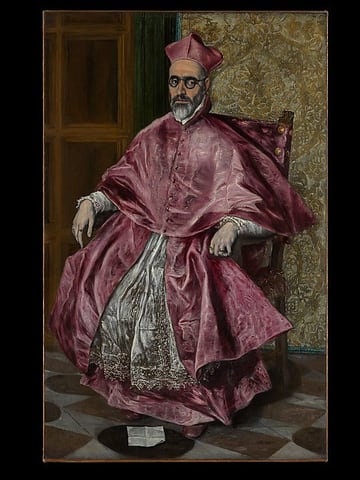
  1. Cardinal Fernando Niño de Guevara (1541–1609), by El Greco, ca. 1600
    Cardinal Fernando Niño de Guevara (1541–1609)El Greco, ca. 1600Courtesy of The Metropolitan Museum of Art
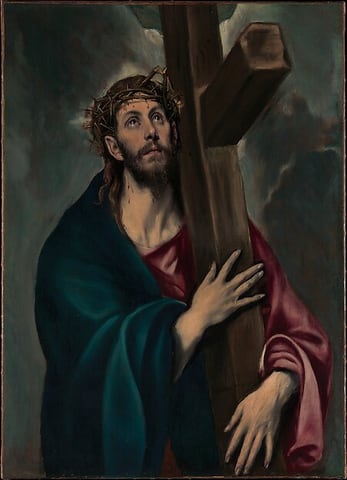
  2. Christ Carrying the Cross, by El Greco, ca. 1577–87
    Christ Carrying the CrossEl Greco, ca. 1577–87Courtesy of The Metropolitan Museum of Art

Second room, north wall
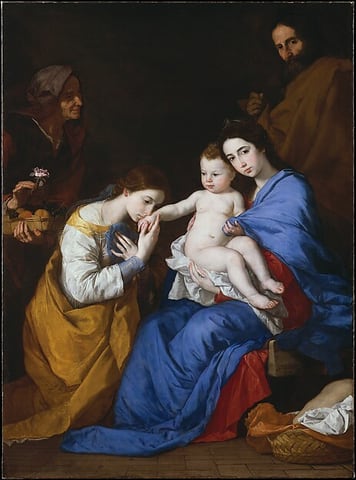
  1. The Holy Family with Saints Anne and Catherine of Alexandria, by Jusepe de Ribera (called Lo Spagnoletto), 1648
    The Holy Family with Saints Anne and Catherine of AlexandriaJusepe de Ribera (called Lo Spagnoletto), 1648Courtesy of The Metropolitan Museum of Art
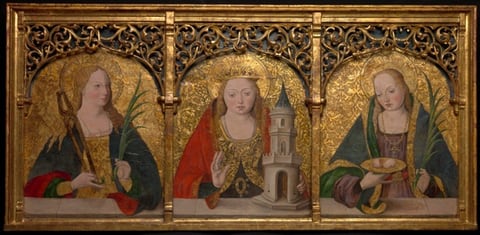
  2. A work made of tempera on panel.
    Saints Apollonia, Barbara, and AgathaMaster Alejo (Alejo Andía?), 1490–1500Courtesy of the Art Institute of Chicago

Third room, north wall
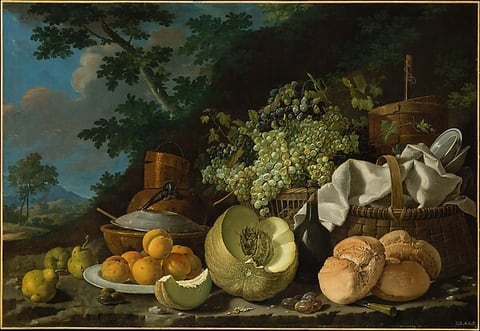
  1. The Afternoon Meal (La Merienda), by Luis Meléndez, ca. 1772
    The Afternoon Meal (La Merienda)Luis Meléndez, ca. 1772Courtesy of The Metropolitan Museum of Art
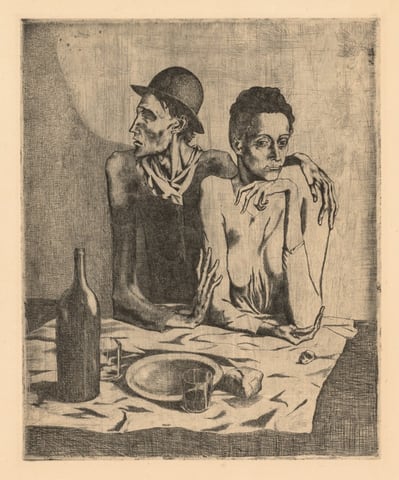
  2. The Frugal Meal, by Pablo Picasso, September 1904, printed 1913
    The Frugal MealPablo Picasso, September 1904, printed 1913Courtesy of the Cleveland Museum of Art

Third room, south wall
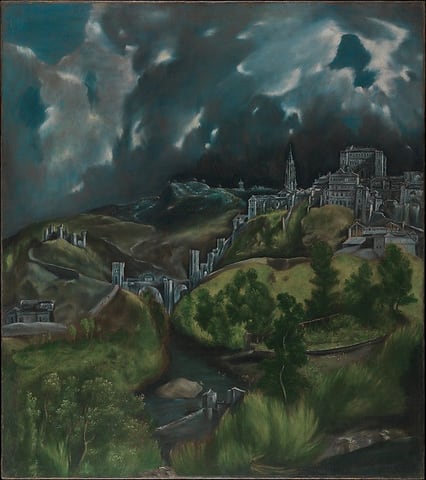
  1. View of Toledo, by El Greco, ca. 1599–1600
    View of ToledoEl Greco, ca. 1599–1600Courtesy of The Metropolitan Museum of Art
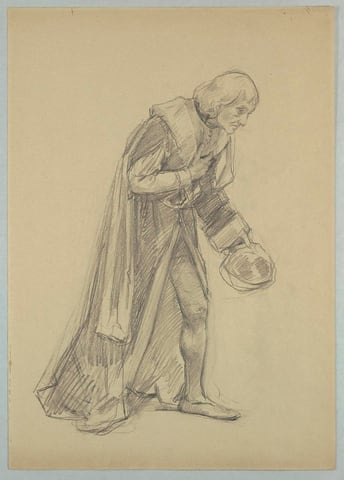
  2. STUDY OF A BOWING MAN (CHRISTOPHER COLUMBUS)
    Study of a Bowing Man (Christopher Columbus)Raimundo de MadrazoCourtesy of Cooper Hewitt, Smithsonian Design Museum