Floor plan

Time and placeThe Netherlands

The Netherlands

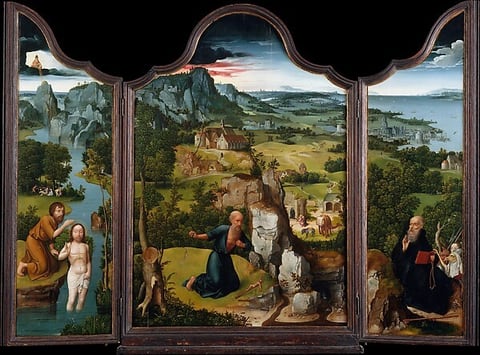
The Penitence of Saint Jerome, by Joachim Patinir, ca. 1515
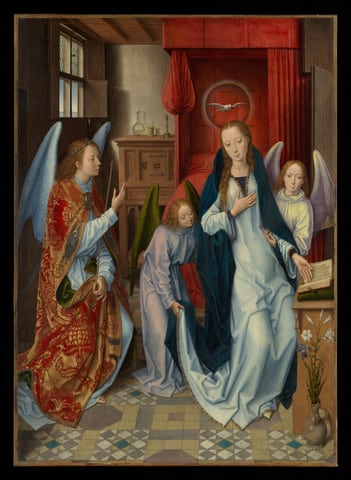
The Annunciation, by Hans Memling, 1480–89
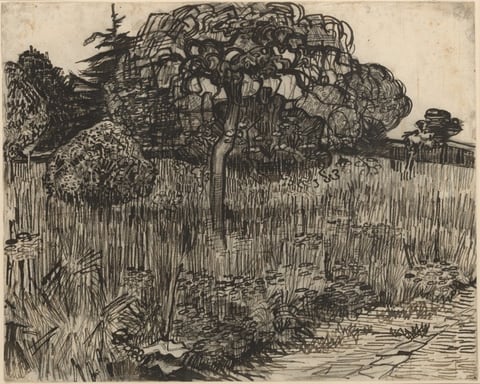
A work made of reed pen and black-brown ink, with black chalk on off-white wove paper.
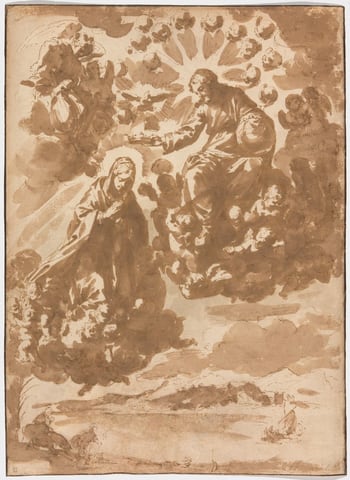
A work made of pen and brown ink and brush and brown wash on ivory laid paper, laid down on cream laid paper.
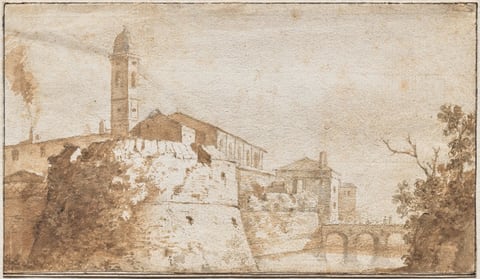
A View of Bracciano with the Church of S. Maria Assunta, by Bartholomeus Breenberg, c. 1619–33
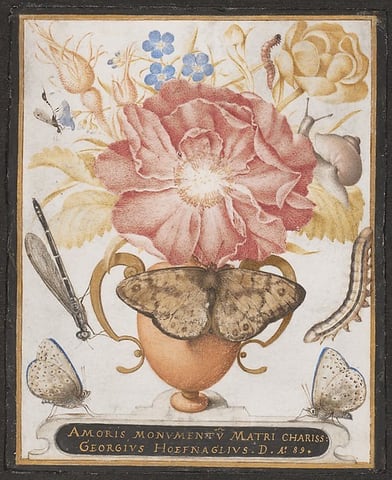
Still Life with Flowers, a Snail and Insects, by Joris Hoefnagel, 1589
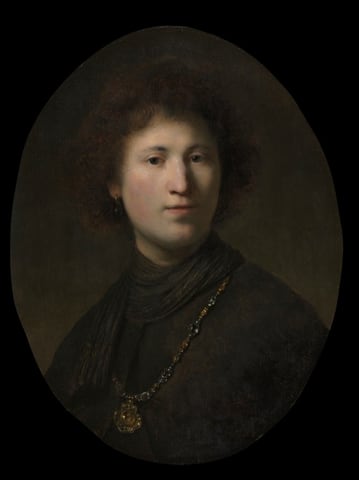
A Young Man with a Chain, by Rembrandt van Rijn, c. 1629 or 1632

The works in this room are listed below.

Works in this room

Works made in the Netherlands, from every century in the collection.

First room, north wall

  1. The Penitence of Saint Jerome, by Joachim Patinir, ca. 1515
    The Penitence of Saint JeromeJoachim Patinir, ca. 1515Courtesy of The Metropolitan Museum of Art
  2. The Annunciation, by Hans Memling, 1480–89
    The AnnunciationHans Memling, 1480–89Courtesy of The Metropolitan Museum of Art
  3. A work made of reed pen and black-brown ink, with black chalk on off-white wove paper.
    Weeping TreeVincent van Gogh, 1889Courtesy of the Art Institute of Chicago

First room, south wall

  1. A work made of pen and brown ink and brush and brown wash on ivory laid paper, laid down on cream laid paper.
    The Coronation of the Virgin and The Flight into EgyptJan de Bisschop, 1648/71Courtesy of the Art Institute of Chicago
  2. A View of Bracciano with the Church of S. Maria Assunta, by Bartholomeus Breenberg, c. 1619–33
    A View of Bracciano with the Church of S. Maria AssuntaBartholomeus Breenberg, c. 1619–33Courtesy of the Cleveland Museum of Art
  3. Still Life with Flowers, a Snail and Insects, by Joris Hoefnagel, 1589
    Still Life with Flowers, a Snail and InsectsJoris Hoefnagel, 1589Courtesy of The Metropolitan Museum of Art
  4. A Young Man with a Chain, by Rembrandt van Rijn, c. 1629 or 1632
    A Young Man with a ChainRembrandt van Rijn, c. 1629 or 1632Courtesy of the Cleveland Museum of Art

Second room, south wall
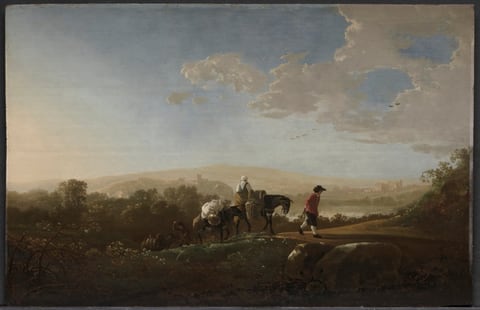
  1. Travelers in Hilly Countryside, by Aelbert Cuyp, c. 1650
    Travelers in Hilly CountrysideAelbert Cuyp, c. 1650Courtesy of the Cleveland Museum of Art
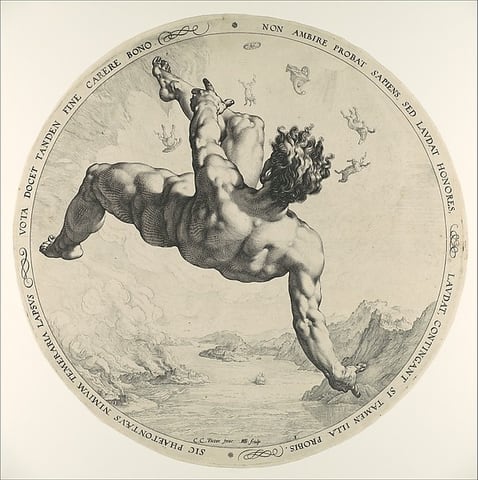
  2. Phaeton, from "The Four Disgracers", by Hendrick Goltzius, 1588
    Phaeton, from "The Four Disgracers"Hendrick Goltzius, 1588Courtesy of The Metropolitan Museum of Art
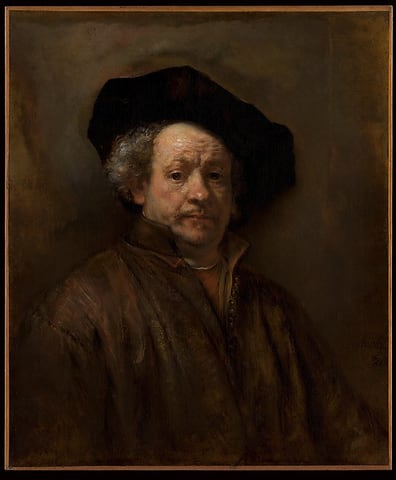
  3. Self-Portrait, by Rembrandt van Rijn, 1660
    Self-PortraitRembrandt van Rijn, 1660Courtesy of The Metropolitan Museum of Art

Second room, north wall
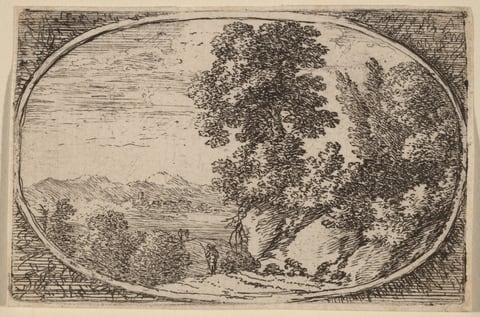
  1. The image shows a landscape viewed from above. The scene is oval, framed by tree branches on each side. Distant mountains form a boundary near the top. Delicate, finely executed lines create detailed foliage and landscape features. A winding path with a small figure adds scale. Lush trees climb upwards, with a muted color palette of the paper and dark brown and black lines providing contrast.
    The Boulder Crowned with TreesHerman van SwaneveltCourtesy National Gallery of Art, Washington
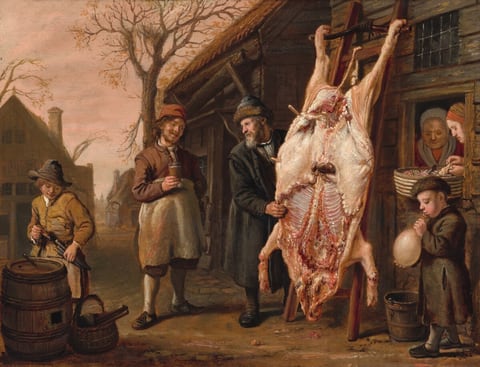
  2. In the center of this painting, a large animal carcass is hanging upside down from a wooden frame, with several people attending to it. The carcass is light pink and has been cut open to reveal white ribs, red muscles, and purple organs. On the far left, a young boy stands next to a barrel and a basket, holding several small knives. To the right, a man in a red cap and white apron observes the carcass while holding a drink. An older man in a furred cap and dark clothing looks towards him and holds one edge of the carcass. On the other side of the animal, a young boy blows up a round object. Two women peer out from the doorway of a wooden building in the background, one holding a basket full of what looks like meat. Behind this group of people are several brown structures and a bare tree against a light pink sky.
    The Slaughtered HogJan Victors, 1653Courtesy National Gallery of Art, Washington
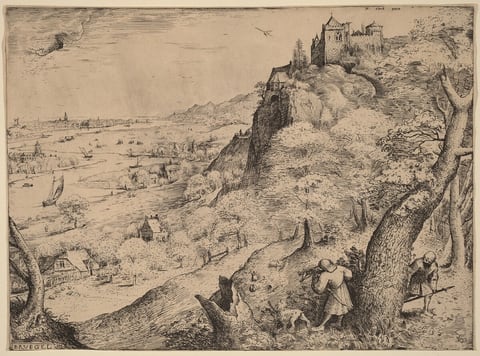
  3. The image shows a landscape with a city in the distance, a castle on a cliff, fields, forests, and two figures with a dog hunting. There are sailboats on water and houses on farmland. The style is detailed with etching lines in sepia tones.
    The Rabbit HuntersPieter Bruegel, 1560Courtesy National Gallery of Art, Washington

Third room, north wall
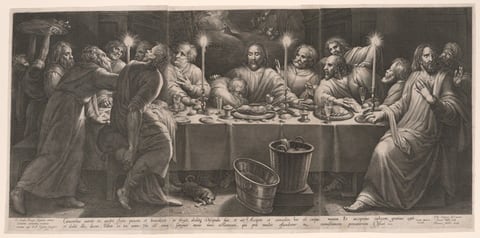
  1. A work made of engraving on three joined sheets of laid paper.
    The Last SupperJan Harmensz. Muller, 1594Courtesy of the Art Institute of Chicago
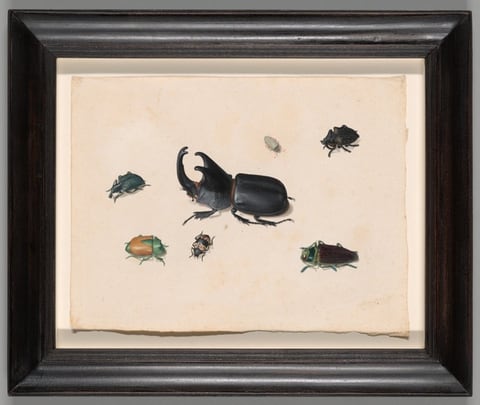
  2. A work made of watercolor and opaque watercolor on cream laid paper.
    Megasoma Elephas or Megaceras Jason and Six Other InsectsPieter Holsteyn, the younger, 1640/80Courtesy of the Art Institute of Chicago
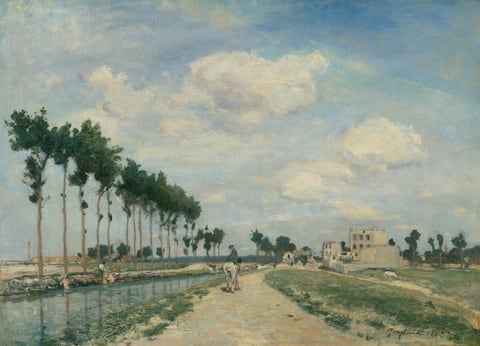
  3. This painting shows a landscape with a horizon in the lower third of the composition. On the left side of the painting, there are tall trees along a canal. In the center is a dirt path on the other edge of the canal, with a person riding a donkey who looks over their shoulder towards us. On the right side, there are white buildings in the distance, with a grassy field leading towards them. The light blue sky is filled with fluffy clouds, and the water of the canal reflects the sky and trees. The brushstrokes of the painting are thick and visible, especially in the sky.
    The TowpathJohan Barthold Jongkind, 1864Courtesy National Gallery of Art, Washington