Floor plan

Time and placeFlanders

Flanders

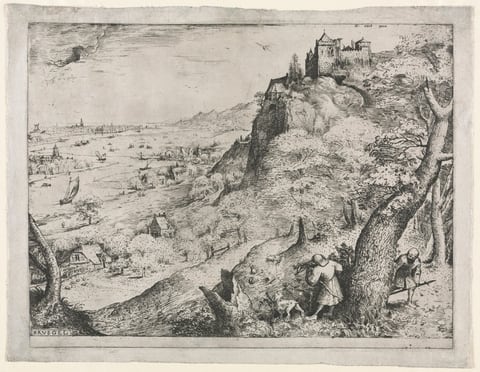
The Rabbit Hunt, by Pieter Bruegel, 1560
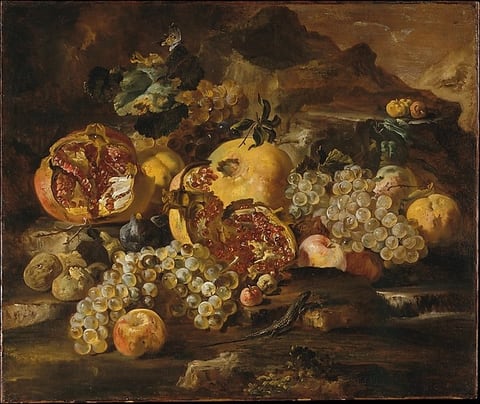
Pomegranates and Other Fruit in a Landscape, by Abraham Brueghel
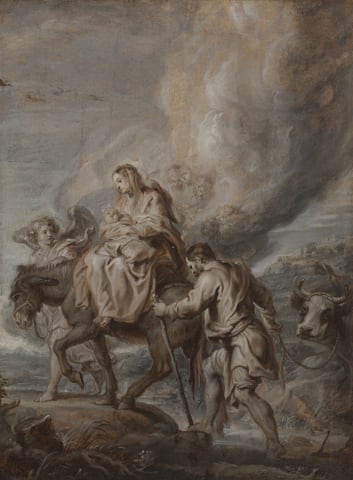
A work made of oil on panel.
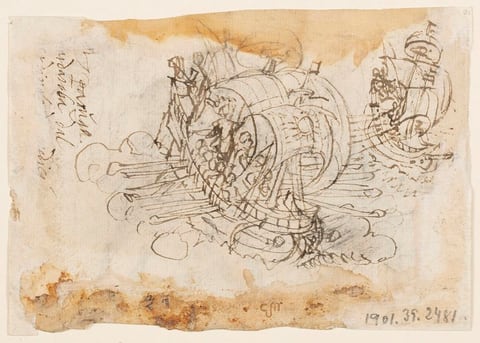
TWO GALLEYS AT SEA
The image features a detailed black and white illustration with multiple human and animal figures in a symbolic arrangement. In the foreground, two full-body figures are depicted in long robes and sandals, positioned on either side of a large draped banner with text. One figure holds an open book. Above the banner are celestial figures in dynamic poses. To the left is a winged bull-like creature and a seated male figure with a beard, next to a female figure in classical attire. They are all surrounded by flowing fabric and a lion-like animal. In the lower center foreground, there is an emblem resembling a coat of arms with an eagle and a crowned shield. The background is textured, with no natural landscape or architecture present, allowing the figures to stand out. The illustration is framed by the margins of an open book.
Still Life with Meat, Fish, Vegetables, and Fruit, by Jacob van Hulsdonck, c. 1615–20
A Mill with a Fortified Bridge, a Rowing Boat in the Foreground, by Roelandt Savery, 1596–1639
Portrait of Isabella Brant, by Peter Paul Rubens, c. 1620–25

The works in this room are listed below.

Works in this room

Works made in Flanders, from every century in the collection.

First room, north wall

  1. The Rabbit Hunt, by Pieter Bruegel, 1560
    The Rabbit HuntPieter Bruegel, 1560Courtesy of the Cleveland Museum of Art
  2. Pomegranates and Other Fruit in a Landscape, by Abraham Brueghel
    Pomegranates and Other Fruit in a LandscapeAbraham BrueghelCourtesy of The Metropolitan Museum of Art
  3. A work made of oil on panel.
    The Flight into EgyptAbraham Jansz. van Diepenbeeck, c. 1650Courtesy of the Art Institute of Chicago
  4. TWO GALLEYS AT SEA
    Two Galleys at SeaJan van der Straet, called Stradanus, ca. 1587 – 1590Courtesy of Cooper Hewitt, Smithsonian Design Museum

First room, south wall

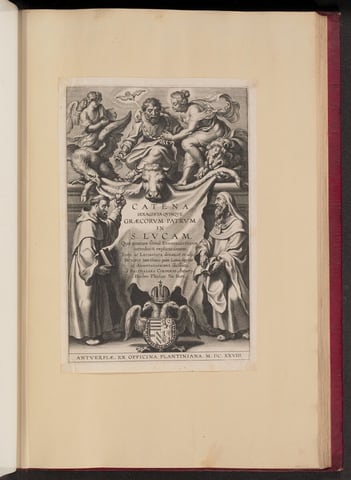
  1. The image features a detailed black and white illustration with multiple human and animal figures in a symbolic arrangement. In the foreground, two full-body figures are depicted in long robes and sandals, positioned on either side of a large draped banner with text. One figure holds an open book. Above the banner are celestial figures in dynamic poses. To the left is a winged bull-like creature and a seated male figure with a beard, next to a female figure in classical attire. They are all surrounded by flowing fabric and a lion-like animal. In the lower center foreground, there is an emblem resembling a coat of arms with an eagle and a crowned shield. The background is textured, with no natural landscape or architecture present, allowing the figures to stand out. The illustration is framed by the margins of an open book.
    Title Page for Balthasar Cordier, Catena Sexaginta Qvinqve Graecorvm Patrvm in S. Lvcam...Cornelis Galle I, 1628Courtesy National Gallery of Art, Washington
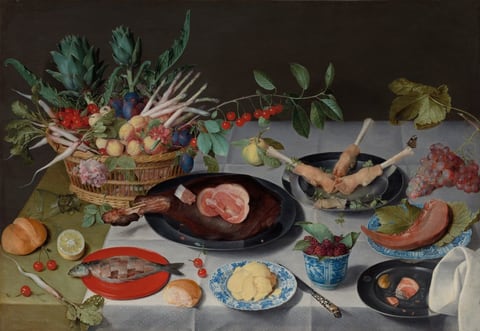
  2. Still Life with Meat, Fish, Vegetables, and Fruit, by Jacob van Hulsdonck, c. 1615–20
    Still Life with Meat, Fish, Vegetables, and FruitJacob van Hulsdonck, c. 1615–20Courtesy of the Cleveland Museum of Art
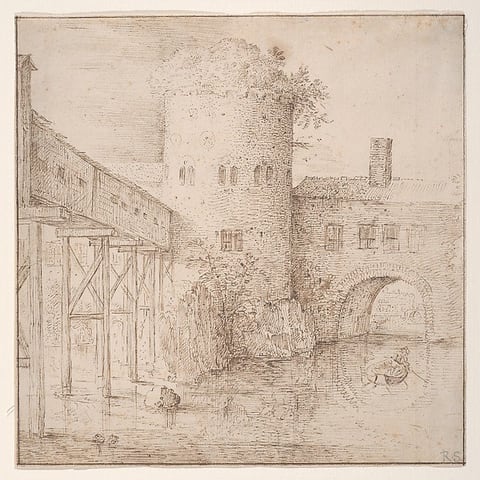
  3. A Mill with a Fortified Bridge, a Rowing Boat in the Foreground, by Roelandt Savery, 1596–1639
    A Mill with a Fortified Bridge, a Rowing Boat in the ForegroundRoelandt Savery, 1596–1639Courtesy of The Metropolitan Museum of Art
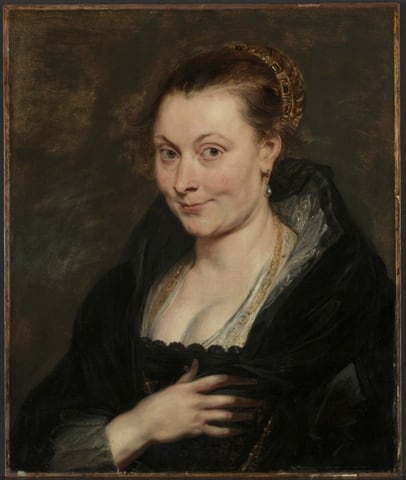
  4. Portrait of Isabella Brant, by Peter Paul Rubens, c. 1620–25
    Portrait of Isabella BrantPeter Paul Rubens, c. 1620–25Courtesy of the Cleveland Museum of Art

Second room, south wall
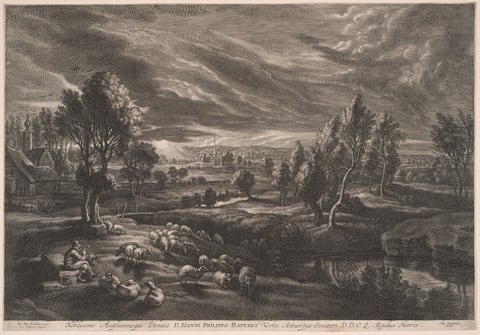
  1. A work made of engraving on ivory laid paper.
    Landscape with Sheep, from The Small LandscapesSchelte Adamsz. Bolswert, c. 1638Courtesy of the Art Institute of Chicago
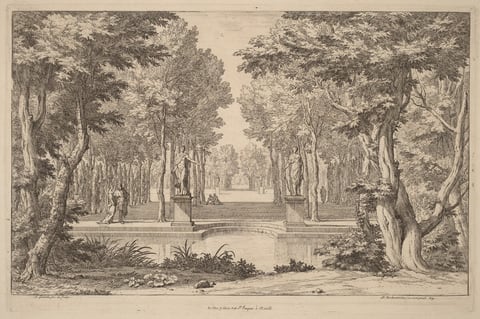
  2. The image shows a formal garden or park with a symmetrical view. It is taken from a slightly elevated position, revealing the vast space beyond a foreground of foliage and low-growing plants. The horizon line is positioned near the midpoint, where a tree-lined pathway extends into the distance. Flanking the pathway are two statues on pedestals under leafy trees. The scene is detailed with intricate line work emphasizing textures and forms. The color palette is monochromatic in various shades of brown, creating a classic appearance. Paved steps and a bridge over a small body of water add to the ordered elegance of the garden.
    The Two StatuesAbraham Genoels IICourtesy National Gallery of Art, Washington
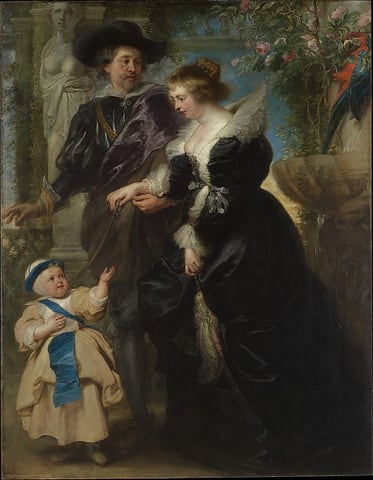
  3. Rubens, Helena Fourment (1614–1673), and Their Son Frans (1633–1678), by Peter Paul Rubens, ca. 1635
    Rubens, Helena Fourment (1614–1673), and Their Son Frans (1633–1678)Peter Paul Rubens, ca. 1635Courtesy of The Metropolitan Museum of Art

Second room, north wall
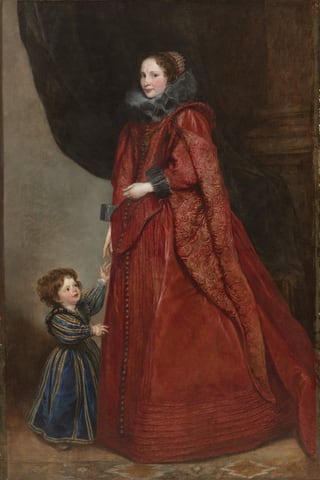
  1. A Genoese Lady with Her Child, by Anthony van Dyck, c. 1623–25
    A Genoese Lady with Her ChildAnthony van Dyck, c. 1623–25Courtesy of the Cleveland Museum of Art
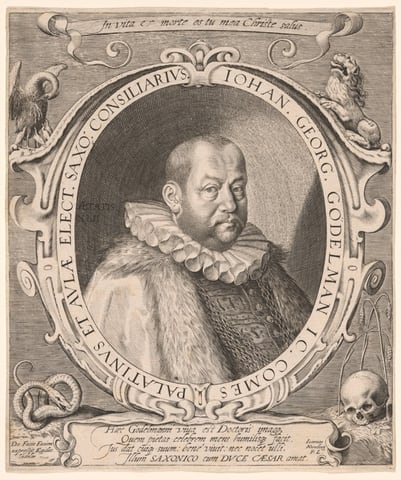
  2. A work made of engraving on paper.
    Johann Georg von Gödelmann, Law Professor, DiplomatAegidius Sadeler, II, c. 1601Courtesy of the Art Institute of Chicago
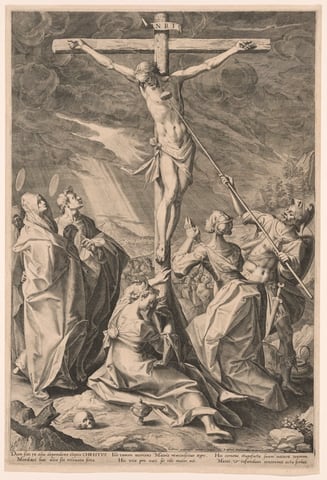
  3. A work made of engraving in black on cream laid paper.
    Christ on the CrossRaphael Sadeler, I, 1590Courtesy of the Art Institute of Chicago

Third room, north wall
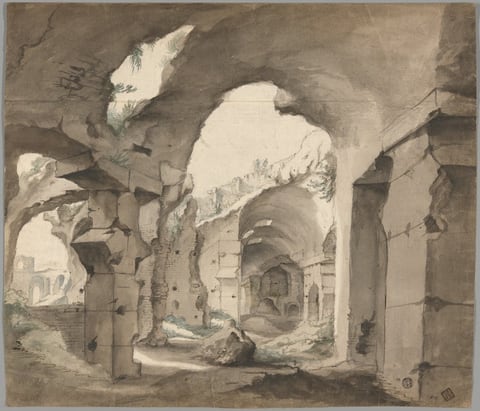
  1. A work made of pen and brown ink and brush and black and green washes, over black chalk, on cream laid paper.
    Interior View of the ColiseumLodewijk Toeput, c. 1580Courtesy of the Art Institute of Chicago
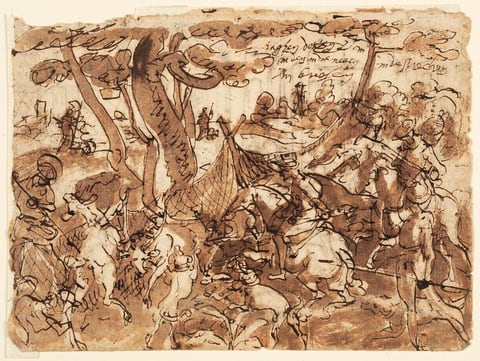
  2. DEER HUNT WITH NETS
    Deer Hunt with NetsJan van der Straet, called Stradanus, ca. 1590 – 1599Courtesy of Cooper Hewitt, Smithsonian Design Museum