Floor plan

Time and placeThe 20th century

The 20th century

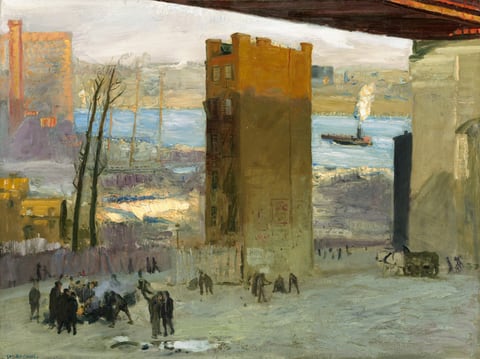
A six-story, narrow building stands alone in an otherwise unoccupied lot under the deck of a high bridge, with a river and cityscape in the background in this horizontal painting. Dozens of people, small in scale, are each painted with a few swipes of black and some with peach-colored faces. They gather at the foot of the building and around a fire to our left, near the lower left corner of the composition. The fire is painted with a dash of orange, a few touches of canary yellow, and a smudge of gray smoke. Several more people stand and sit against the building, which has a streetlamp near its entrance. The back end of the building angles away from us to our right, so we see the narrow, front entrance side to our left. Each of the six floors of the building has two windows with fire escape ladders on the narrow side we can see. Some strokes in red and white on the lower levels of the long, flat side of the building suggest signs or posters. The top story glows a warm sienna brown in sunlight, while the rest of the building and the scene below are in shadow. More people walk along a grayish-violet fence that encloses the lot beyond the building. The ground is painted thickly with slate gray, pale, sage green, and one smear of white to suggest snow. To our right and a short distance from us, a white horse pulls a carriage near the foot of the bridge. The ivory-white, concrete piling rises up and off the right edge of the canvas and supports the deck of the bridge above. Only a sliver of the brick-red underside of the bridge is visible, skimming the top edge of the painting in the upper right corner. Two twiggy, barren trees grow up beyond the muted purple fence, and the landscape beyond is bright in the sunlight. A terracotta-orange building rises along the left edge of the painting, with the area between it and the lot under the bridge filled with thickly painted patches of butter yellow, amethyst purple, and sage green. Beyond that, an ice-blue river flows across the composition. The shore beyond is lined with patches of beige and tan paint that could be buildings. A black tugboat puffs bright white smoke in the river. The sky above is frosty white. The artist signed the work with dark blue in the lower left corner of the painting, “Geo Bellows.”
In the Generalife, by John Singer Sargent, 1912
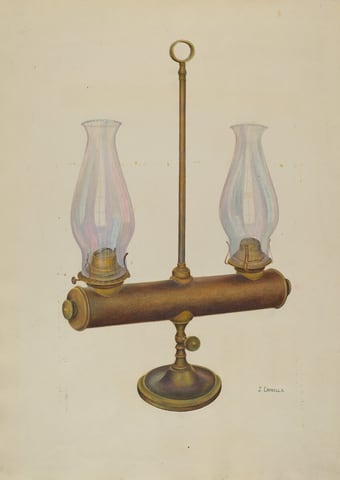
The image shows an antique double kerosene lamp with ornate glass chimneys set atop a horizontal cylindrical base with a central vertical support ending in a circular handle. The base and lamp parts have a bronze-like color with a textured appearance, and the glass chimneys are primarily clear but show hints of colorful reflections. Positioned centrally in the image, the lamp stands upright with the two chimneys equally spaced on either side of the vertical support, which is topped by a circular loop handle, while the signature "J. Cannella" is visible towards the lower right side of the image.
Mr. and Mrs. Phillip Wase, by George Bellows, 1924
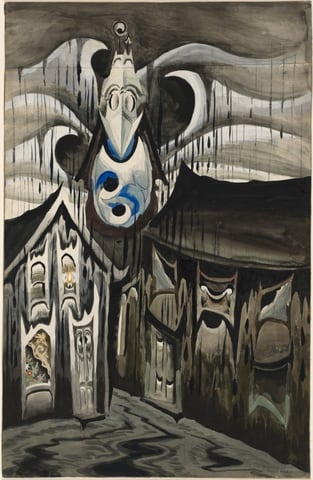
Church Bells Ringing, Rainy Winter Night, by Charles Burchfield, December 1917
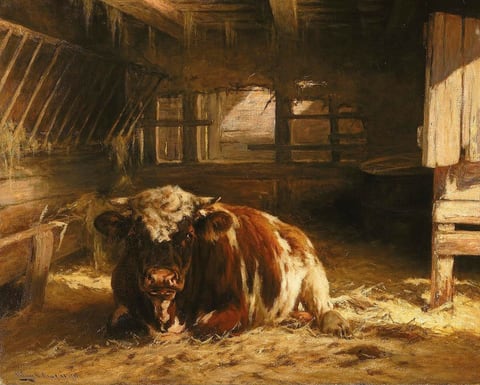
My Day at Home, by William H. Howe, 1906

The works in this room are listed below.

Works in this room

Works made in the 20th century, anywhere in the world.

Section 1, north wall

  1. A six-story, narrow building stands alone in an otherwise unoccupied lot under the deck of a high bridge, with a river and cityscape in the background in this horizontal painting. Dozens of people, small in scale, are each painted with a few swipes of black and some with peach-colored faces. They gather at the foot of the building and around a fire to our left, near the lower left corner of the composition. The fire is painted with a dash of orange, a few touches of canary yellow, and a smudge of gray smoke. Several more people stand and sit against the building, which has a streetlamp near its entrance. The back end of the building angles away from us to our right, so we see the narrow, front entrance side to our left. Each of the six floors of the building has two windows with fire escape ladders on the narrow side we can see. Some strokes in red and white on the lower levels of the long, flat side of the building suggest signs or posters. The top story glows a warm sienna brown in sunlight, while the rest of the building and the scene below are in shadow. More people walk along a grayish-violet fence that encloses the lot beyond the building. The ground is painted thickly with slate gray, pale, sage green, and one smear of white to suggest snow. To our right and a short distance from us, a white horse pulls a carriage near the foot of the bridge. The ivory-white, concrete piling rises up and off the right edge of the canvas and supports the deck of the bridge above. Only a sliver of the brick-red underside of the bridge is visible, skimming the top edge of the painting in the upper right corner. Two twiggy, barren trees grow up beyond the muted purple fence, and the landscape beyond is bright in the sunlight. A terracotta-orange building rises along the left edge of the painting, with the area between it and the lot under the bridge filled with thickly painted patches of butter yellow, amethyst purple, and sage green. Beyond that, an ice-blue river flows across the composition. The shore beyond is lined with patches of beige and tan paint that could be buildings. A black tugboat puffs bright white smoke in the river. The sky above is frosty white. The artist signed the work with dark blue in the lower left corner of the painting, “Geo Bellows.”
    The Lone TenementGeorge Bellows, 1909Courtesy National Gallery of Art, Washington
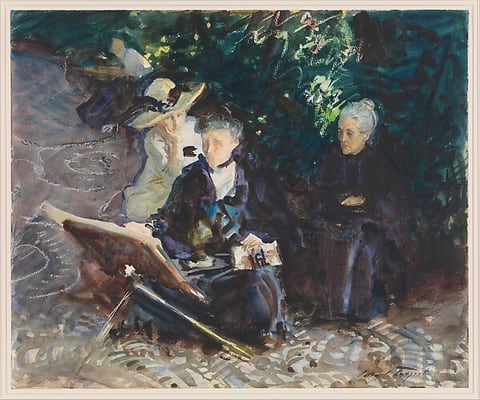
  2. In the Generalife, by John Singer Sargent, 1912
    In the GeneralifeJohn Singer Sargent, 1912Courtesy of The Metropolitan Museum of Art
  3. The image shows an antique double kerosene lamp with ornate glass chimneys set atop a horizontal cylindrical base with a central vertical support ending in a circular handle. The base and lamp parts have a bronze-like color with a textured appearance, and the glass chimneys are primarily clear but show hints of colorful reflections. Positioned centrally in the image, the lamp stands upright with the two chimneys equally spaced on either side of the vertical support, which is topped by a circular loop handle, while the signature "J. Cannella" is visible towards the lower right side of the image.
    Reading LampJoseph Cannella, 1941Courtesy National Gallery of Art, Washington

Section 1, south wall

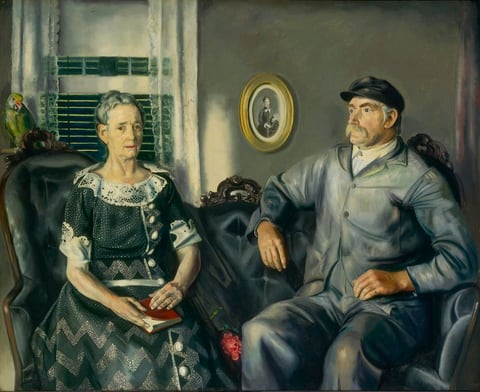
  1. Mr. and Mrs. Phillip Wase, by George Bellows, 1924
    Mr. and Mrs. Phillip WaseGeorge Bellows, 1924Courtesy of the Smithsonian American Art Museum
  2. Church Bells Ringing, Rainy Winter Night, by Charles Burchfield, December 1917
    Church Bells Ringing, Rainy Winter NightCharles Burchfield, December 1917Courtesy of the Cleveland Museum of Art
  3. My Day at Home, by William H. Howe, 1906
    My Day at HomeWilliam H. Howe, 1906Courtesy of the Smithsonian American Art Museum

Section 2, south wall
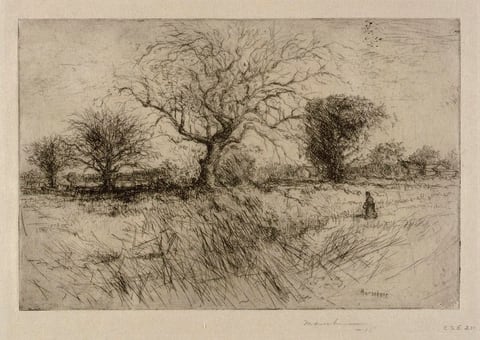
  1. The Old Orchard, by Arthur A. Marschner, 1915
    The Old OrchardArthur A. Marschner, 1915Courtesy of the Smithsonian American Art Museum
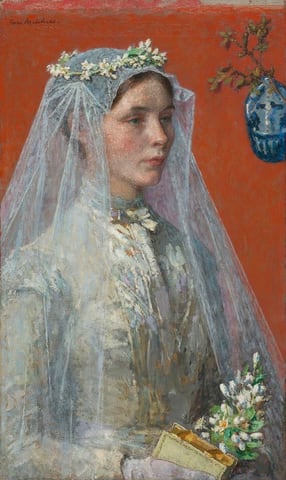
  2. The Bride, by Gari Melchers, ca. 1907
    The BrideGari Melchers, ca. 1907Courtesy of the Smithsonian American Art Museum
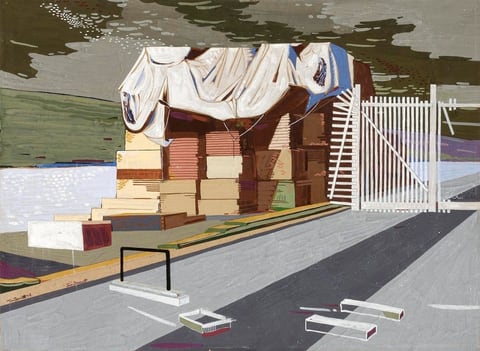
  3. Dutton Lumber Yard, by Thomas Weeks Barrett, 1942
    Dutton Lumber YardThomas Weeks Barrett, 1942Courtesy of the Smithsonian American Art Museum
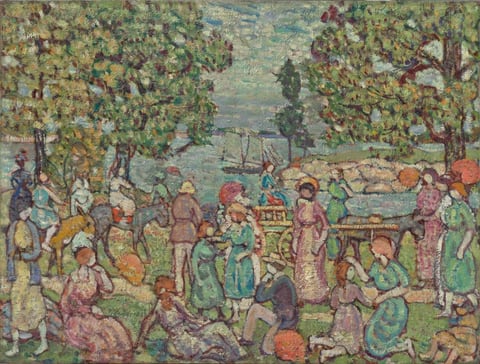
  4. On the Beach, No. 3, by Maurice Prendergast, c. 1915–18
    On the Beach, No. 3Maurice Prendergast, c. 1915–18Courtesy of the Cleveland Museum of Art

Section 2, north wall
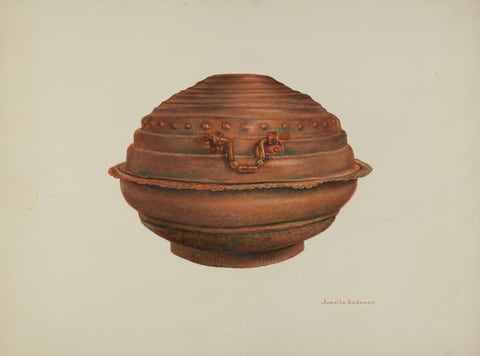
  1. The image depicts a large, round, domed container with a handle on its side. It has a textured and layered appearance with a central band. The color palette consists of various shades of brown and some orange tones. The container is centered in the image with the handle facing towards the viewer. The name "Janetta Badanes" is visible near the bottom right of the image.
    Copper Baptismal FontJuanita Donahoo, c. 1941Courtesy National Gallery of Art, Washington
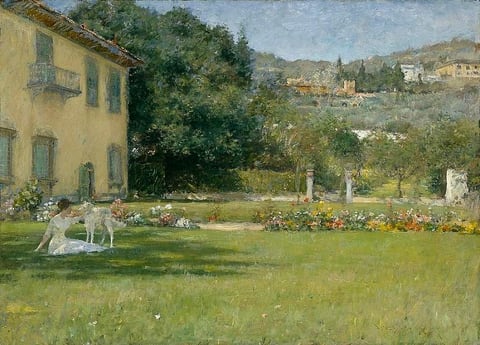
  2. William Merritt Chase
    Good FriendsWilliam Merritt Chase, (c. 1909)Courtesy of the Hirshhorn Museum and Sculpture Garden, Smithsonian Institution
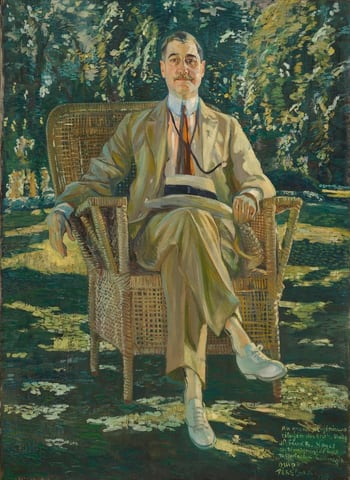
  3. Artist: Ossip Perelma, Sitter: Frank Brett Noyes, Current owner: National Portrait Gallery, Smithsonian Institution
    Frank Brett NoyesOssip Perelma, 1917Courtesy of the National Portrait Gallery, Smithsonian Institution
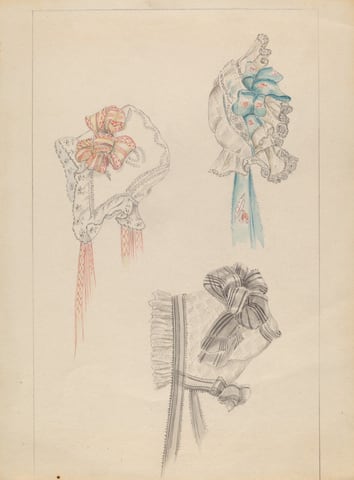
  4. This is a drawing of three decorative bonnets. The drawing features three different hat designs, each embellished with lace, ribbon, and bow details. The upper left bonnet is adorned with pink hues and intricate lace, displaying a floral-like bow. The top right bonnet showcases a turquoise ribbon and bow, surrounded by soft lace. The lower bonnet is in grayscale, with shadowing for dimension, featuring a checkered ribbon. Each hat is detailed with line work and shading, conveying elegance.
    CapsUnrecorded American maker, 1935/1942Courtesy National Gallery of Art, Washington

Section 3, north wall
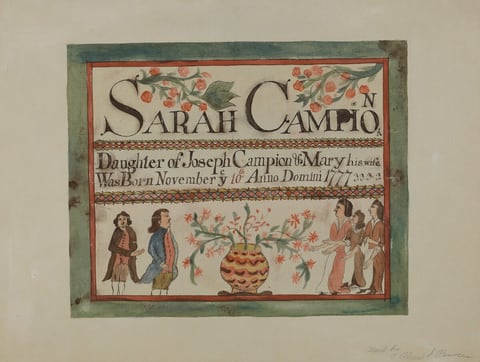
  1. This painting is a birth record for Sarah Campion, daughter of Joseph and Mary Campion, born on November 16th, 1777. It features elaborate calligraphy and ornamental designs. The borders contain floral patterns with red and orange-colored flowers and green leaves. The central text is decorative, and at the bottom are human-like figures in colonial attire standing beside a flower vase. The artwork reflects a style reminiscent of early American folk art, created by an anonymous folk artist capturing the essence of 18th-century American artistry.
    Pa. German Birth CertificateGlenn Pearce, c. 1936Courtesy National Gallery of Art, Washington
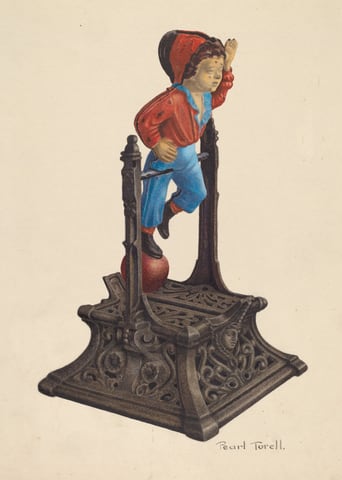
  2. The sculpture depicts a young boy dressed in a bright red coat, blue shirt, and blue pants, with black shoes. He is wearing a black hat with a red rim and has curly hair. The boy is balanced on one foot atop a red ball, with one leg lifted behind him and one hand held high above his head. The sculpture is made of painted, cast metal with intricate designs and textures. The boy stands on an ornately decorated dark pedestal.
    Toy BankPearl Torell, c. 1939Courtesy National Gallery of Art, Washington