Floor plan

Time and placeThe 19th century

The 19th century

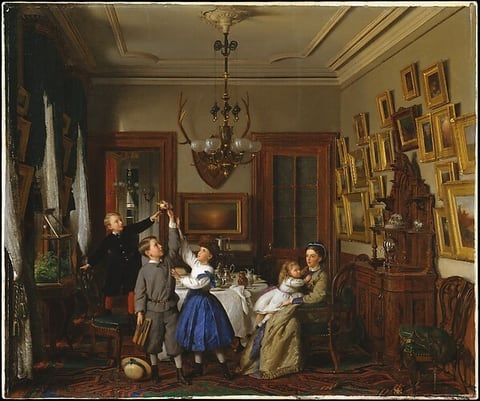
The Contest for the Bouquet: The Family of Robert Gordon in Their New York Dining-Room, by Seymour Joseph Guy, 1866
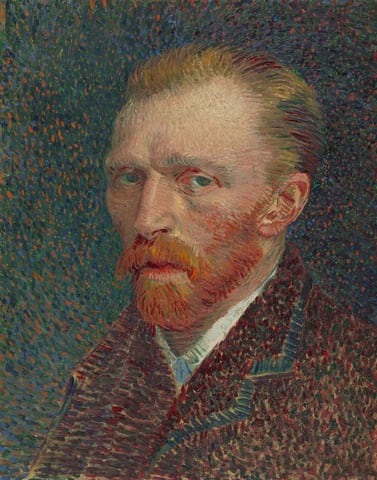
Painting of a red-haired, bearded man with light skin, painted in short brushstrokes and multicolored dots. The background is likewise a mass of small, closely spaced colored dots, these in green, blue, and red-orange.
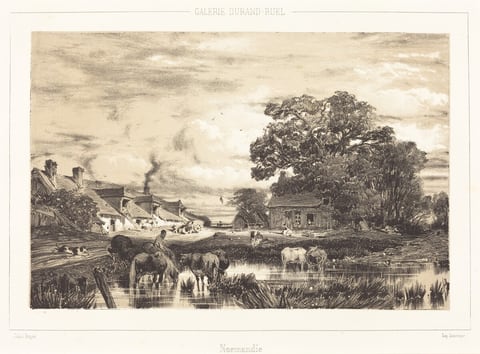
This image shows a rural landscape with a pond in the foreground where cattle are being herded by a person on horseback. There are low buildings with smoking chimneys in the middle ground. Trees on the horizon separate the land from the sky, which is filled with clouds. The painting is detailed with a consistent brushwork, capturing foliage and buildings. The color palette is primarily sepia, giving a vintage and serene feel to the scene.
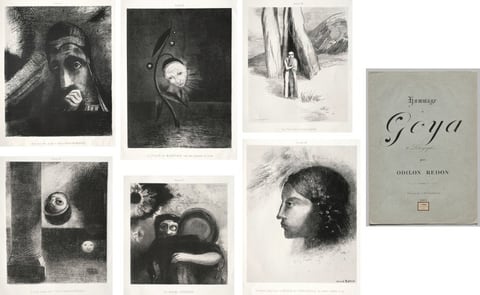
Homage to Goya, by Odilon Redon, 1885
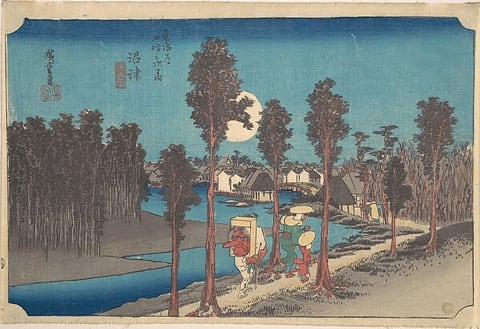
Numazu Ki Kure, by Utagawa Hiroshige, ca. 1834
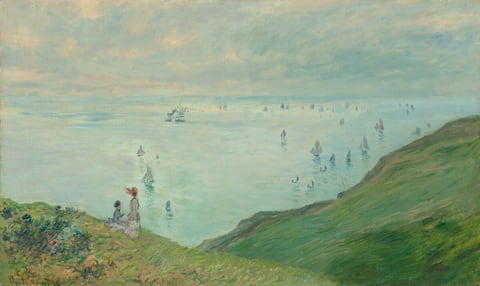
From a high perspective, we look beyond two overlapping, emerald-green hills to a body of powder-blue water dotted with sailboats in this loosely painted horizontal landscape. Closest to us, the hills create a shallow V that spans the lower third of the composition, with the right-hand hill rising to more than halfway up the right edge. The hills are painted with dashes and long strokes mostly in seafoam, shamrock, and celery green, with some swipes of peach, goldenrod yellow, and royal blue. On the hill to our left, one woman sits and the other stands next to her. They wear hats, long-sleeved, fitted jackets, and long skirts in tones of dusky pink and dove gray. A touch of peach on the seated woman, to our left, gives the impression of a pale face. A red veil or scarf at the back of the other woman’s hat is lifted, as if in the wind. The water is painted with blended strokes of pale blue, light turquoise, smoky mauve pink, and touches of soft peach. The horizon comes two-thirds of the way up the composition, and the sky is painted with the same tones of blue, green, and peach to suggest a screen of clouds. Triangles and dashes of slate blue suggest about three dozen sailboats, rowboats, and one steamship in the rippling water. Squiggles of teal and sage green create reflections for some of the boats. The brushstrokes are visible throughout. In some areas, the paint is so thinly applied that the texture of the canvas shows through, especially in the sky. The artist signed the work in the lower left corner: “Claude Monet 82.”
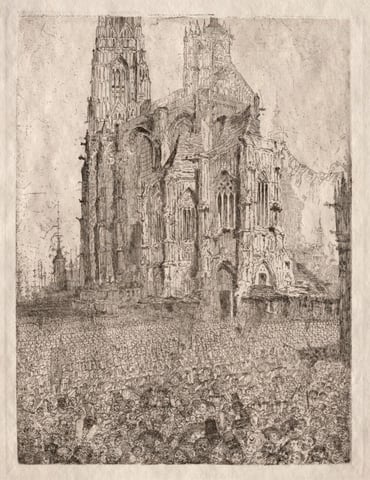
The Cathedral, by James Ensor, 1886
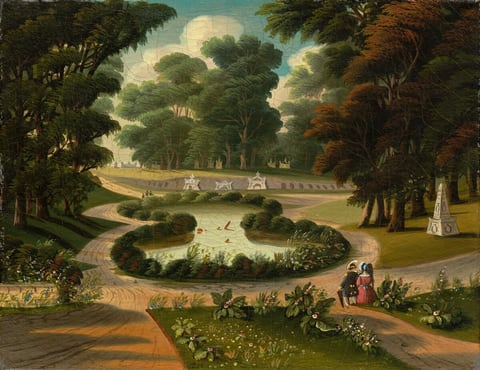
This painting shows a park-like landscape with trees, flowers, bushes, and a pond, all surrounded by light brown paths. The pond is in the center of the park, with light green-blue water framed by bushes, ferns, and tall flowers. Across from the pond are three large, white structures that could be mausoleums. Behind them is a hill with trees and more white graves or mausoleums on top of it. On either side of the pond, past the paths that encircle it, are tall trees with leaves in shades of dark green and brown. On the right side is a tall white structure that could be a grave or a monument. At the bottom of the painting, the paths curve up over a small hill in front of the pond. In between the paths are sections of grass dotted with small pink and white flowers. On the right side of the painting, a couple walks down the hill towards the pond. The person on the left wears a long blue coat decorated with gold buttons and a large, plumed hat, while the person on the right wears a pink gown and blue bonnet. Above the scene, the sky is blue, with puffy white clouds.

The works in this room are listed below.

Works in this room

Works made in the 19th century, anywhere in the world.

Section 1, north wall

  1. The Contest for the Bouquet: The Family of Robert Gordon in Their New York Dining-Room, by Seymour Joseph Guy, 1866
    The Contest for the Bouquet: The Family of Robert Gordon in Their New York Dining-RoomSeymour Joseph Guy, 1866Courtesy of The Metropolitan Museum of Art
  2. Painting of a red-haired, bearded man with light skin, painted in short brushstrokes and multicolored dots. The background is likewise a mass of small, closely spaced colored dots, these in green, blue, and red-orange.
    Self-PortraitVincent van Gogh, 1887Courtesy of the Art Institute of Chicago
  3. This image shows a rural landscape with a pond in the foreground where cattle are being herded by a person on horseback. There are low buildings with smoking chimneys in the middle ground. Trees on the horizon separate the land from the sky, which is filled with clouds. The painting is detailed with a consistent brushwork, capturing foliage and buildings. The color palette is primarily sepia, giving a vintage and serene feel to the scene.
    View in Normandy (Vue prise en Normandie)Jules Dupré, 1835Courtesy National Gallery of Art, Washington
  4. Homage to Goya, by Odilon Redon, 1885
    Homage to GoyaOdilon Redon, 1885Courtesy of the Cleveland Museum of Art

Section 1, south wall

  1. Numazu Ki Kure, by Utagawa Hiroshige, ca. 1834
    Numazu Ki KureUtagawa Hiroshige, ca. 1834Courtesy of The Metropolitan Museum of Art
  2. From a high perspective, we look beyond two overlapping, emerald-green hills to a body of powder-blue water dotted with sailboats in this loosely painted horizontal landscape. Closest to us, the hills create a shallow V that spans the lower third of the composition, with the right-hand hill rising to more than halfway up the right edge. The hills are painted with dashes and long strokes mostly in seafoam, shamrock, and celery green, with some swipes of peach, goldenrod yellow, and royal blue. On the hill to our left, one woman sits and the other stands next to her. They wear hats, long-sleeved, fitted jackets, and long skirts in tones of dusky pink and dove gray. A touch of peach on the seated woman, to our left, gives the impression of a pale face. A red veil or scarf at the back of the other woman’s hat is lifted, as if in the wind. The water is painted with blended strokes of pale blue, light turquoise, smoky mauve pink, and touches of soft peach. The horizon comes two-thirds of the way up the composition, and the sky is painted with the same tones of blue, green, and peach to suggest a screen of clouds. Triangles and dashes of slate blue suggest about three dozen sailboats, rowboats, and one steamship in the rippling water. Squiggles of teal and sage green create reflections for some of the boats. The brushstrokes are visible throughout. In some areas, the paint is so thinly applied that the texture of the canvas shows through, especially in the sky. The artist signed the work in the lower left corner: “Claude Monet 82.”
    Cliffs at PourvilleClaude Monet, 1882Courtesy National Gallery of Art, Washington
  3. The Cathedral, by James Ensor, 1886
    The CathedralJames Ensor, 1886Courtesy of the Cleveland Museum of Art
  4. This painting shows a park-like landscape with trees, flowers, bushes, and a pond, all surrounded by light brown paths. The pond is in the center of the park, with light green-blue water framed by bushes, ferns, and tall flowers. Across from the pond are three large, white structures that could be mausoleums. Behind them is a hill with trees and more white graves or mausoleums on top of it. On either side of the pond, past the paths that encircle it, are tall trees with leaves in shades of dark green and brown. On the right side is a tall white structure that could be a grave or a monument. At the bottom of the painting, the paths curve up over a small hill in front of the pond. In between the paths are sections of grass dotted with small pink and white flowers. On the right side of the painting, a couple walks down the hill towards the pond. The person on the left wears a long blue coat decorated with gold buttons and a large, plumed hat, while the person on the right wears a pink gown and blue bonnet. Above the scene, the sky is blue, with puffy white clouds.
    Mount Auburn CemeteryThomas Chambers, mid 19th centuryCourtesy National Gallery of Art, Washington

Section 2, south wall
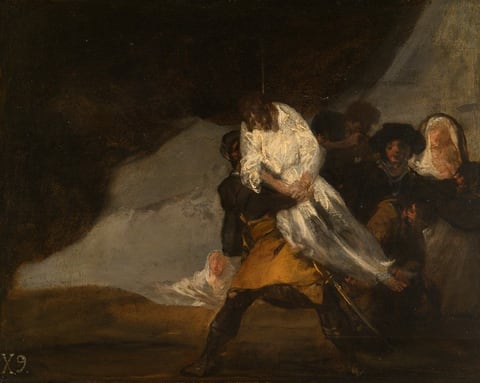
  1. A work made of oil on panel.
    The Hanged MonkFrancisco Goya, c. 1810Courtesy of the Art Institute of Chicago
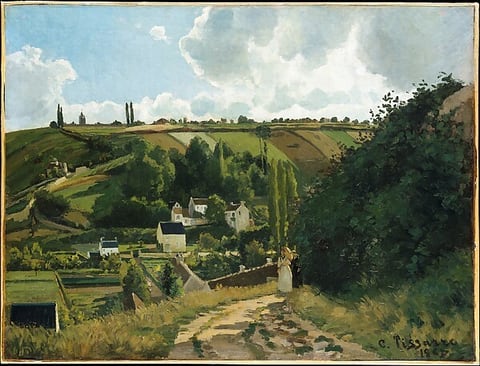
  2. Jalais Hill, Pontoise, by Camille Pissarro, 1867
    Jalais Hill, PontoiseCamille Pissarro, 1867Courtesy of The Metropolitan Museum of Art
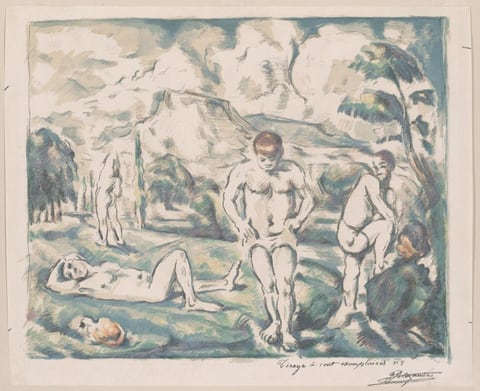
  3. A work made of color lithograph on ivory laid paper.
    BathersPaul Cézanne, 1890–1900Courtesy of the Art Institute of Chicago
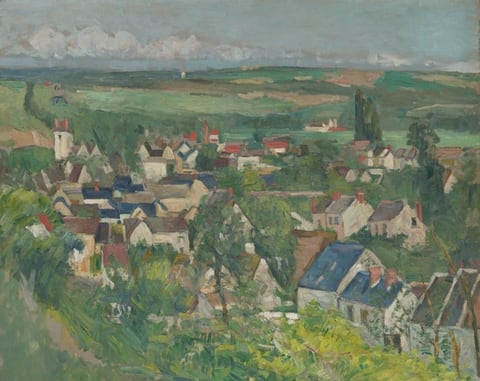
  4. View of a village surrounded by hills, fields, and trees, shown from a vantage point above the scene. Subtly rolling hills recede into a bluish gray-ish sky punctuated by white clouds. Thick brushstrokes built up atop each other are visible throughout.
    Auvers, Panoramic ViewPaul Cézanne, 1873–75Courtesy of the Art Institute of Chicago

Section 2, north wall
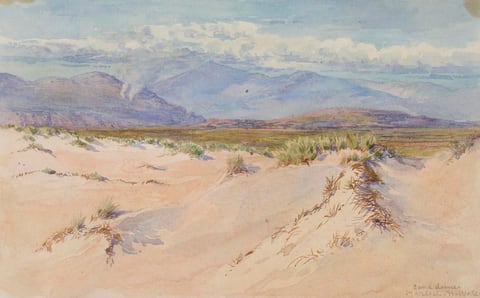
  1. Sand Dunes, Harlech, North Wales, by George Elbert Burr, 1899
    Sand Dunes, Harlech, North WalesGeorge Elbert Burr, 1899Courtesy of the Smithsonian American Art Museum
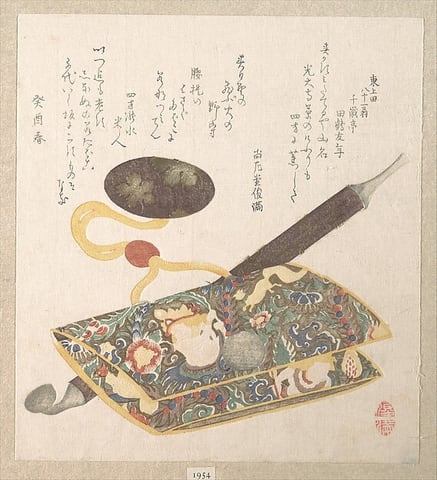
  2. Tobacco Pouch and Pipe, by Kubo Shunman, 1813
    Tobacco Pouch and PipeKubo Shunman, 1813Courtesy of The Metropolitan Museum of Art
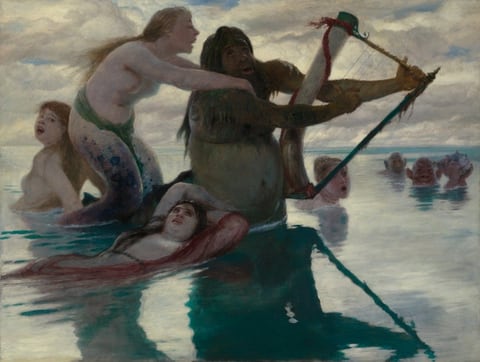
  3. Painting of centaur with harp, in water, surrounded by mermaids and mermen.
    In the SeaArnold Böcklin, 1883Courtesy of the Art Institute of Chicago
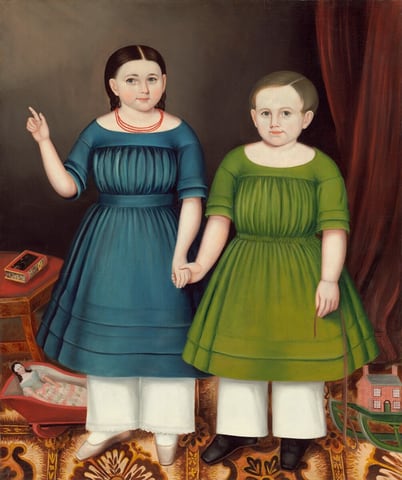
  4. The image features two young children standing side by side. The child on the left extends one arm sideways and has the other arm lowered, while the child on the right has both arms relaxed by their sides, one holding a string. Both children have round faces with light complexions; the child on the left has dark brown hair styled in waves down to the shoulders, while the child on the right has light brown hair. The child on the left is dressed in a blue dress with a loosely gathered waist and short sleeves, white stockings, white shoes, and a red beaded necklace. The child on the right wears a green dress with similar design features, white stockings, and black shoes. Near their feet are a toy doll in a red cradle and a small toy house. In the background, there is a plain dark wall, a deep red drapery, a carpet with elaborate patterns, and a small wooden table with a box on top.
    Mary and Francis WilcoxJoseph Whiting Stock, 1845Courtesy National Gallery of Art, Washington