Floor plan

Time and placeThe 19th century

The 19th century

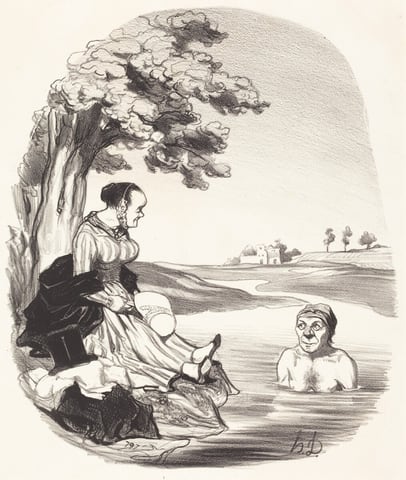
The image shows a woman sitting beside a body of water, under a tree. She is wearing a long dress and holding a bonnet by her side. In the water, a person is visible from the shoulders up with short hair. The background includes a landscape with trees, water, and a distant structure that resembles a house or castle.
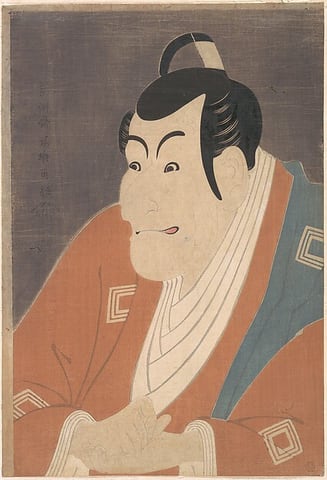
Ichikawa Ebizo IV in the role of Takemura Sadanoshin, by Tōshūsai Sharaku, Probably late 1880s or early 1890s
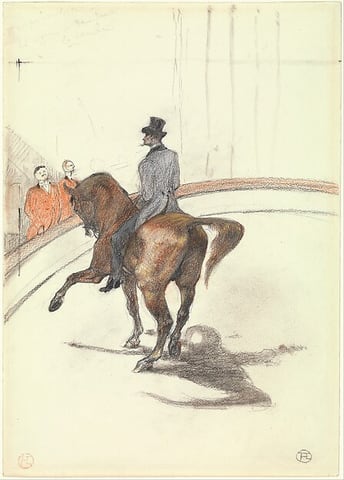
At the Circus: The Spanish Walk (Au Cirque: Le Pas espagnol), by Henri de Toulouse-Lautrec, 1899
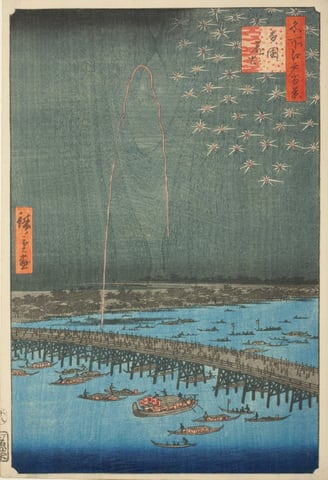
A work made of color woodblock print; oban.
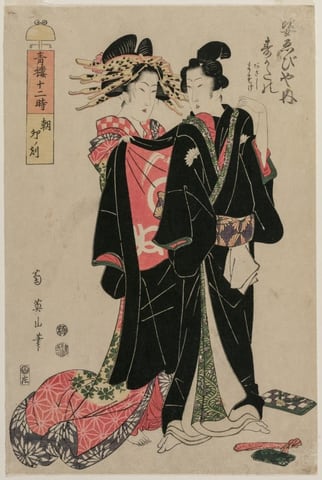
Sugatano of Sugata Ebisuya in the Morning, Hour of the Rabbit, from the series The Twelve Hours in the Pleasure Quarters, by Kikukawa Eizan, 1812
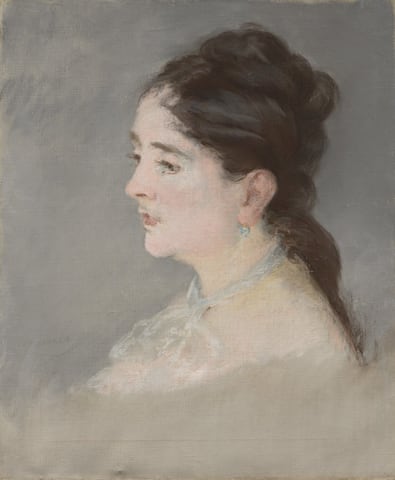
Claire Campbell, by Édouard Manet, 1876
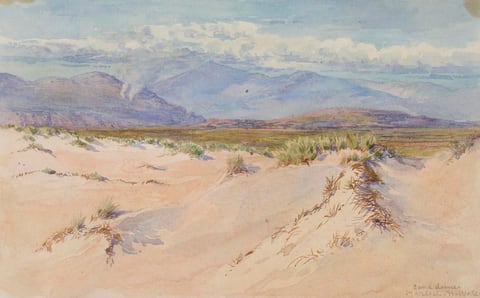
Sand Dunes, Harlech, North Wales, by George Elbert Burr, 1899
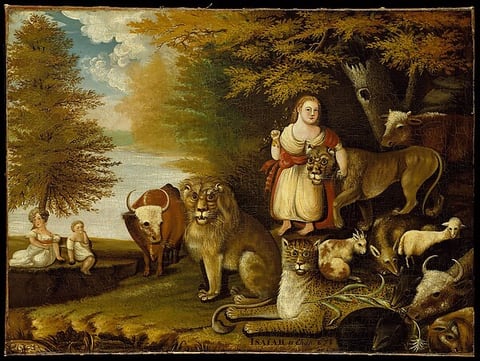
Peaceable Kingdom, by Edward Hicks, ca. 1830–32

The works in this room are listed below.

Works in this room

Works made in the 19th century, anywhere in the world.

Section 1, north wall

  1. The image shows a woman sitting beside a body of water, under a tree. She is wearing a long dress and holding a bonnet by her side. In the water, a person is visible from the shoulders up with short hair. The background includes a landscape with trees, water, and a distant structure that resembles a house or castle.
    L'Eau est délicieuse... je t'assure...Honoré Daumier, 1845Courtesy National Gallery of Art, Washington
  2. Ichikawa Ebizo IV in the role of Takemura Sadanoshin, by Tōshūsai Sharaku, Probably late 1880s or early 1890s
    Ichikawa Ebizo IV in the role of Takemura SadanoshinTōshūsai Sharaku, Probably late 1880s or early 1890sCourtesy of The Metropolitan Museum of Art
  3. At the Circus: The Spanish Walk (Au Cirque: Le Pas espagnol), by Henri de Toulouse-Lautrec, 1899
    At the Circus: The Spanish Walk (Au Cirque: Le Pas espagnol)Henri de Toulouse-Lautrec, 1899Courtesy of The Metropolitan Museum of Art
  4. A work made of color woodblock print; oban.
    Fireworks at Ryōgoku (Ryōgoku hanabi), from the series One Hundred Famous Views of Edo (Meisho Edo hyakkei)Utagawa Hiroshige, 1858Courtesy of the Art Institute of Chicago

Section 1, south wall

  1. Sugatano of Sugata Ebisuya in the Morning, Hour of the Rabbit, from the series The Twelve Hours in the Pleasure Quarters, by Kikukawa Eizan, 1812
    Sugatano of Sugata Ebisuya in the Morning, Hour of the Rabbit, from the series The Twelve Hours in the Pleasure QuartersKikukawa Eizan, 1812Courtesy of the Cleveland Museum of Art
  2. Claire Campbell, by Édouard Manet, 1876
    Claire CampbellÉdouard Manet, 1876Courtesy of the Cleveland Museum of Art
  3. Sand Dunes, Harlech, North Wales, by George Elbert Burr, 1899
    Sand Dunes, Harlech, North WalesGeorge Elbert Burr, 1899Courtesy of the Smithsonian American Art Museum
  4. Peaceable Kingdom, by Edward Hicks, ca. 1830–32
    Peaceable KingdomEdward Hicks, ca. 1830–32Courtesy of The Metropolitan Museum of Art

Section 2, south wall
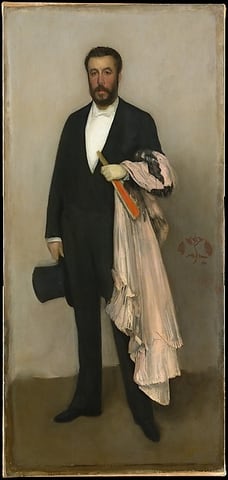
  1. Arrangement in Flesh Colour and Black: Portrait of Theodore Duret, by James McNeill Whistler, 1883
    Arrangement in Flesh Colour and Black: Portrait of Theodore DuretJames McNeill Whistler, 1883Courtesy of The Metropolitan Museum of Art
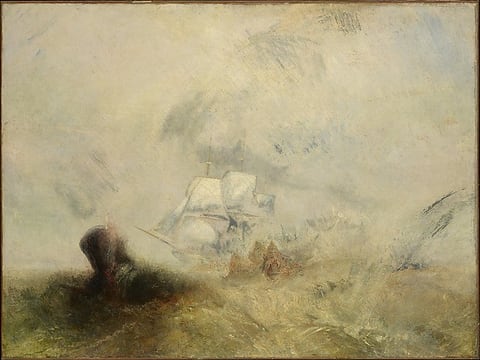
  2. Whalers, by Joseph Mallord William Turner, ca. 1845
    WhalersJoseph Mallord William Turner, ca. 1845Courtesy of The Metropolitan Museum of Art
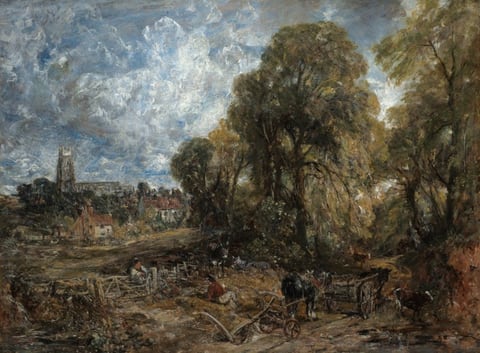
  3. Large English country landscape painting, farmers with horses, green trees.
    Stoke-by-NaylandJohn Constable, 1836Courtesy of the Art Institute of Chicago

Section 2, north wall
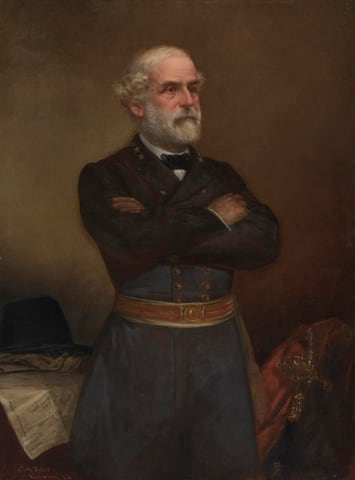
  1. Artist: John Adams Elder, Sitter: Robert Edward Lee, Current owner: National Portrait Gallery, Smithsonian Institution
    Robert Edward LeeJohn Adams Elder, 1876Courtesy of the National Portrait Gallery, Smithsonian Institution
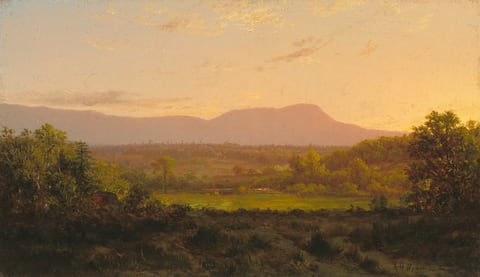
  2. The painting depicts a rural landscape at sunset or sunrise. The horizon is slightly above the center, showing distant pale-pink and purple mountains against the sky. Closest to us is an area with dark green bushes and vegetation, leading to a lighter green field surrounded by green-and-brown trees. The palette is warm and earthy, with greens and browns in the bottom transitioning to purples and pinks in the distance. The sky is a pale-yellow color that fades into light blue towards the top left corner, and faint yellow and gray clouds drift across it.
    Peaceful ValleyAlexander Helwig Wyant, c. 1872Courtesy National Gallery of Art, Washington
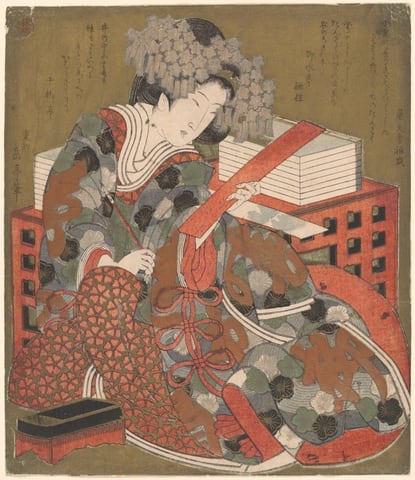
  3. A work made of color woodblock print with metallic pigments; surimono shikishiban.
    Woman About to Write a PoemYashima Gakutei, c. 1824Courtesy of the Art Institute of Chicago

Section 3, north wall
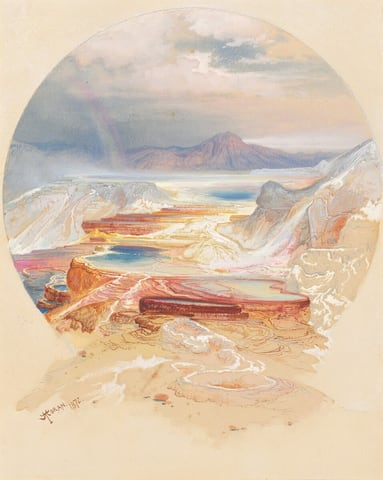
  1. This painting shows a view looking out over a vast landscape. Most of the painting is circular, with a small part of the bottom bleeding out of the circle towards us. The top third of the circle shows a mountain range with a large purple peak in the distance. In front of the mountain is a faint rainbow. A body of water flows from in front of the mountain to the bottom of the painting, weaving in between shorter white peaks. Towards the bottom, the water appears to flow into small, layered pools of various bright colors including yellow, orange, red, pink, blue, and teal. The sky is a light blue-gray color. The background of the painting outside of the circle is plain paper.
    Minerva Terrace, YellowstoneThomas Moran, 1872Courtesy National Gallery of Art, Washington
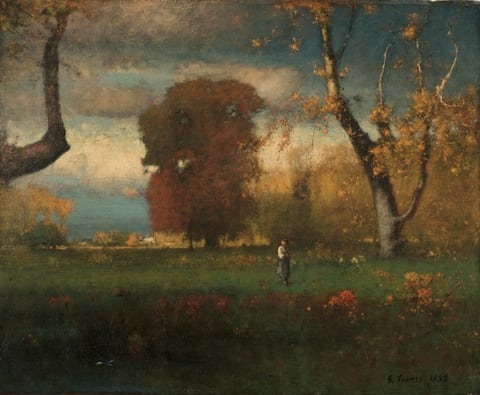
  2. Landscape, by George Inness, 1888
    LandscapeGeorge Inness, 1888Courtesy of the Cleveland Museum of Art