Floor plan

Time and placeThe 19th century

The 19th century

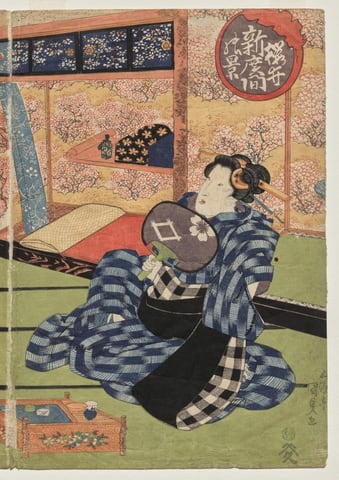
A View of the Large New Room at Sakurai, by Utagawa Kunisada, early or mid 1830s
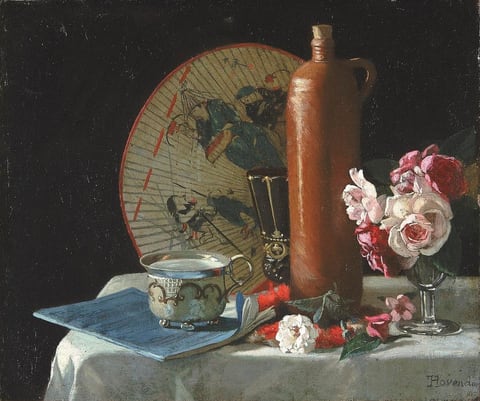
Still Life with Fan and Roses, by Thomas Hovenden, 1874
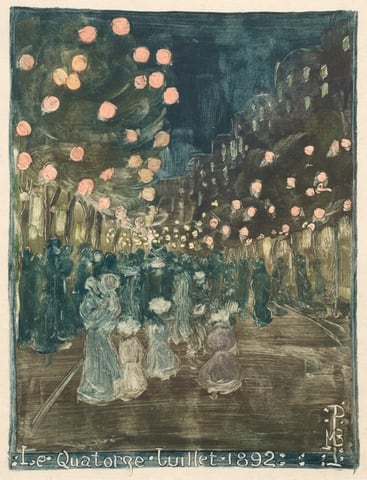
Bastille Day, by Maurice Prendergast, 1892
A work made of oil on canvas.
STUDY FOR "SCIENTIFIC GROUP"
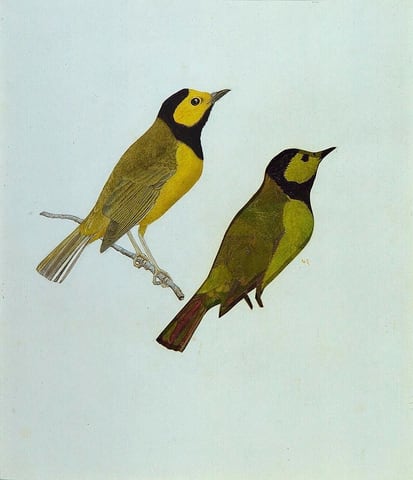
Hooded Warblers, study for book Concealing Coloration in the Animal Kingdom, by Gladys Thayer, ca. 1900-1909
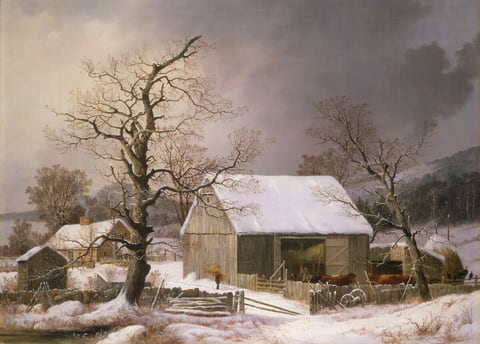
This painting shows a winter landscape with snowy, rural terrain. It includes a large barn, a farmhouse, and some bare trees covered in snow. Some brown cows are fenced in by the barn on the left, and a person walking along a snowy path brings them a bundle of golden hay. The sky is overcast, with dark gray clouds, and the color palette of the painting consists of earth tones with variations of grey and brown among the white snow.
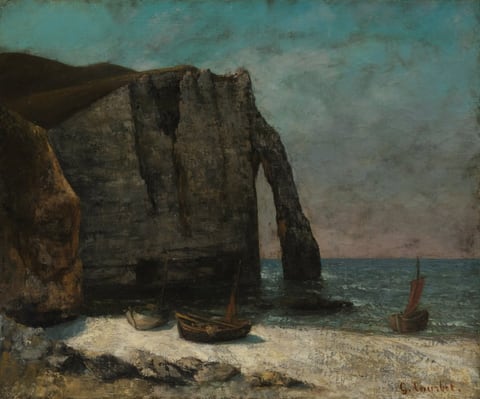
The Cliff at Étretat, by Gustave Courbet, after 1872

The works in this room are listed below.

Works in this room

Works made in the 19th century, anywhere in the world.

Section 1, north wall

  1. A View of the Large New Room at Sakurai, by Utagawa Kunisada, early or mid 1830s
    A View of the Large New Room at SakuraiUtagawa Kunisada, early or mid 1830sCourtesy of the Cleveland Museum of Art
  2. Still Life with Fan and Roses, by Thomas Hovenden, 1874
    Still Life with Fan and RosesThomas Hovenden, 1874Courtesy of the Smithsonian American Art Museum
  3. Bastille Day, by Maurice Prendergast, 1892
    Bastille DayMaurice Prendergast, 1892Courtesy of the Cleveland Museum of Art
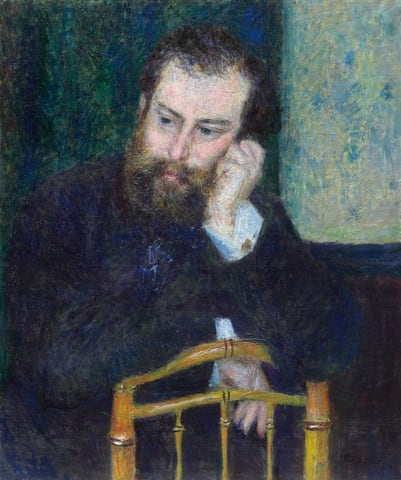
  4. A work made of oil on canvas.
    Alfred SisleyPierre-Auguste Renoir, 1876Courtesy of the Art Institute of Chicago

Section 1, south wall

  1. STUDY FOR "SCIENTIFIC GROUP"
    Study for "Scientific Group"Daniel Huntington, 1858Courtesy of Cooper Hewitt, Smithsonian Design Museum
  2. Hooded Warblers, study for book Concealing Coloration in the Animal Kingdom, by Gladys Thayer, ca. 1900-1909
    Hooded Warblers, study for book Concealing Coloration in the Animal KingdomGladys Thayer, ca. 1900-1909Courtesy of the Smithsonian American Art Museum
  3. This painting shows a winter landscape with snowy, rural terrain. It includes a large barn, a farmhouse, and some bare trees covered in snow. Some brown cows are fenced in by the barn on the left, and a person walking along a snowy path brings them a bundle of golden hay. The sky is overcast, with dark gray clouds, and the color palette of the painting consists of earth tones with variations of grey and brown among the white snow.
    Winter in the CountryGeorge Henry Durrie, c. 1859Courtesy National Gallery of Art, Washington
  4. The Cliff at Étretat, by Gustave Courbet, after 1872
    The Cliff at ÉtretatGustave Courbet, after 1872Courtesy of the Cleveland Museum of Art

Section 2, south wall
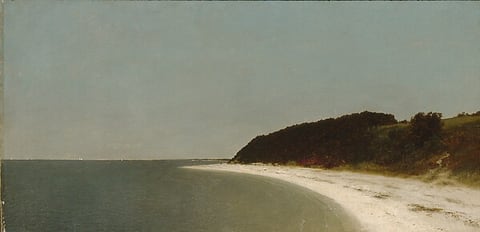
  1. Eaton's Neck, Long Island, by John Frederick Kensett, 1872
    Eaton's Neck, Long IslandJohn Frederick Kensett, 1872Courtesy of The Metropolitan Museum of Art
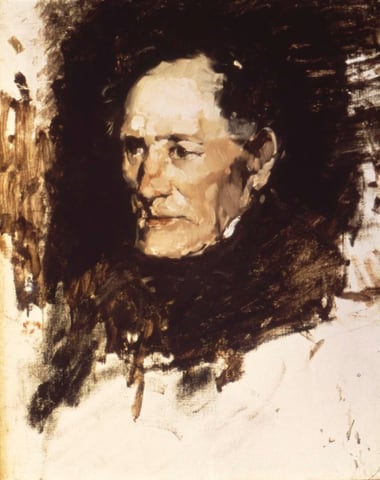
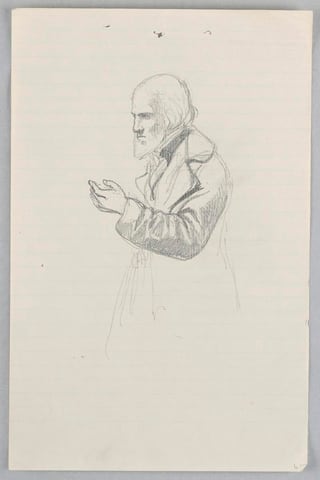
  2. Head of an Old Man, by Frank Duveneck, ca. 1877-1879
    Head of an Old ManFrank Duveneck, ca. 1877-1879Courtesy of the Smithsonian American Art Museum
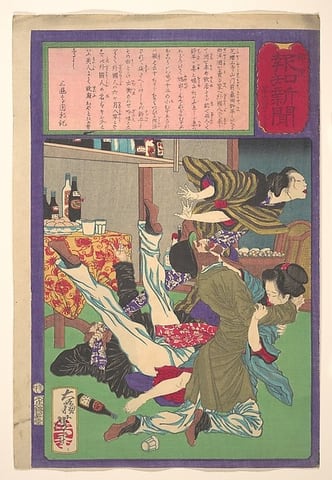
  3. Postal Hōchi Newspaper no. 645, Englishman raping a wine shopkeeper's daughter (Yūbin Hōchi shinbun, roppyaku yonjū gogō), by Tsukioka Yoshitoshi, August, 1875
    Postal Hōchi Newspaper no. 645, Englishman raping a wine shopkeeper's daughter (Yūbin Hōchi shinbun, roppyaku yonjū gogō)Tsukioka Yoshitoshi, August, 1875Courtesy of The Metropolitan Museum of Art
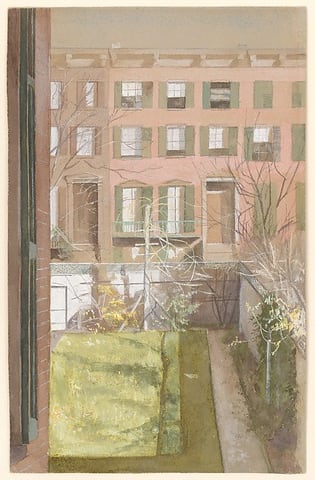
  4. Garden View, Brooklyn, by Fidelia Bridges, ca. 1867
    Garden View, BrooklynFidelia Bridges, ca. 1867Courtesy of The Metropolitan Museum of Art

Section 2, north wall
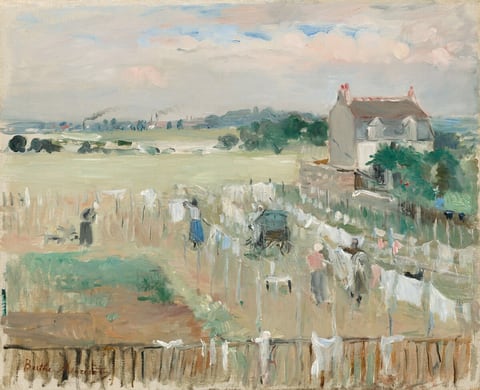
  1. We look down onto a landscape where several laundry lines have been draped mostly with white sheets or cloth to dry in a flat, grassy yard in front of a rustic house and a distant town in this horizontal painting. The scene is created entirely with thick, visible brushstrokes that creates a sense of texture on the canvas’s surface and makes many details difficult to make out. The forms of at least three women wearing skirts hang laundry out along the lines, and a person wearing trousers tends to a flat piece of green ground near the lower left corner. A few pieces of white cloth have been draped over the wooden fence that runs along the bottom edge of the canvas. A dove-gray cart with wooden carriage wheels rests, tipped forward, at the center of the laundry lines. To our right and just beyond the laundry lines, a two-story ivory and slate-blue house with a gray peaked roof sits behind a grove of emerald-green trees. The laundry field and the grassy plane beyond is painted with a pale celery green with long, horizontal strokes. Dabs of moss green and a white streak interrupt the field in the distance. Beyond that, touches of steel and silvery-gray paint suggest smokestacks and smoke in a town along the horizon, which comes about three-quarters of the way up this composition. A few patches of vivid blue sky peek through a screen of shell-pink and cream-white clouds above. The artist signed the work in brick-red paint in the lower left corner, “Berthe Morisot.”
    Hanging the Laundry out to DryBerthe Morisot, 1875Courtesy National Gallery of Art, Washington
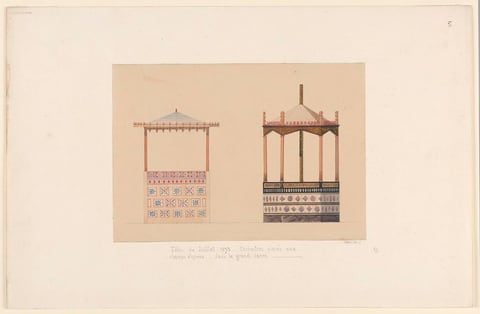
  2. "ORCHSTRES PLACES AUX CHAMPS ELYSEES, DANS LE GRAN CARRES"
    "Orchstres places aux Champs elysees, dans le gran carres"Félix Duban, 1833Courtesy of Cooper Hewitt, Smithsonian Design Museum
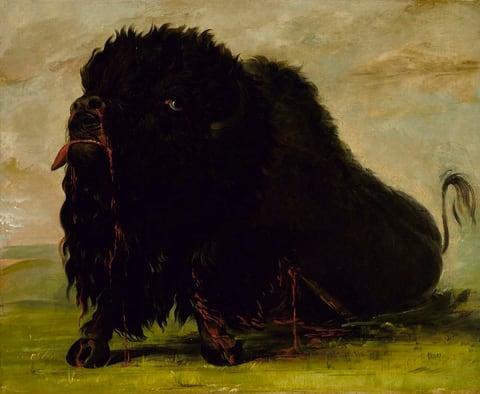
  3. Dying Buffalo, Shot with an Arrow, by George Catlin, 1832-1833
    Dying Buffalo, Shot with an ArrowGeorge Catlin, 1832-1833Courtesy of the Smithsonian American Art Museum
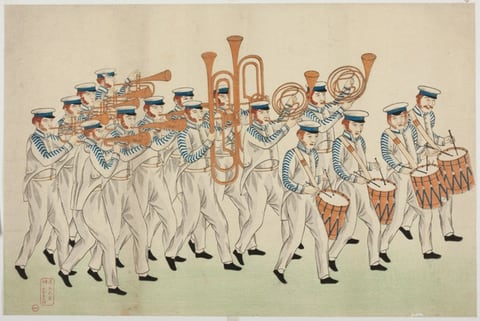
  4. A work made of color woodblock print.
    Procession of Russian Marching Band, from the Album of seven prints of Russian Army and Warship (Roshia seigi shashin kan), 1853Keiga, 1853Courtesy of the Art Institute of Chicago