Floor plan

Time and placeThe 19th century

The 19th century

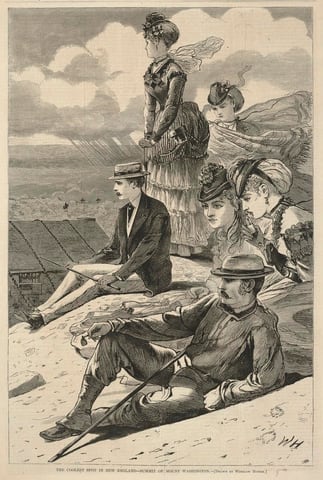
The Coolest Spot in New England--Summit of Mount Washington, from Harper's Bazar, July 23, 1870, by Winslow Homer, 1870
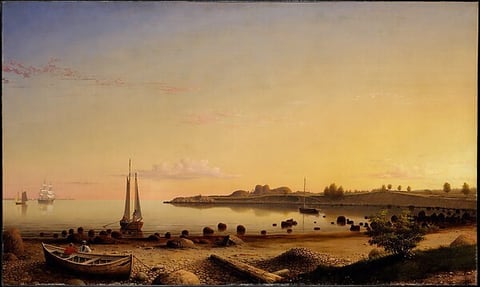
Stage Fort across Gloucester Harbor, by Fitz Henry Lane, 1862
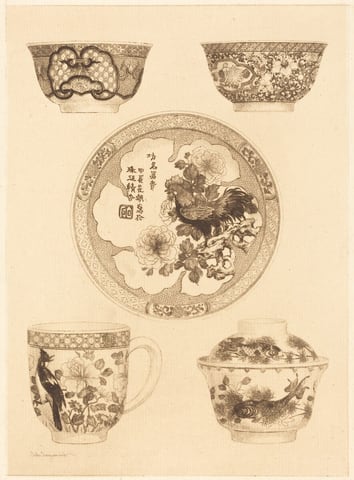
The image features a collection of ceramics, including two bowls, a plate, a mug, and a lidded cup. The color palette is sepia-toned, with shades of brown. The plate has an intricate illustration of a rooster and floral patterns. Two bowls with different designs are above the plate. A mug with floral and bird illustrations sits on the left, and a lidded cup with fish and aquatic plants is on the right.
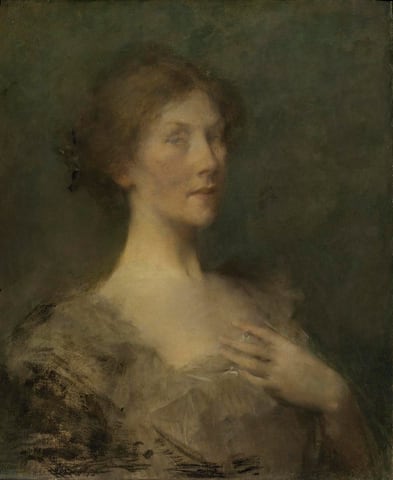
Portrait of a Lady, by Thomas Wilmer Dewing, ca. 1895
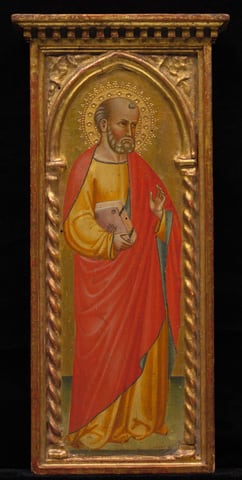
Saint in Red Cloak, late 19th - early 20th century
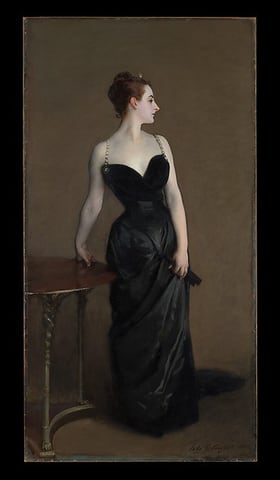
Madame X (Virginie Amélie Avegno Gautreau), by John Singer Sargent, 1883–84
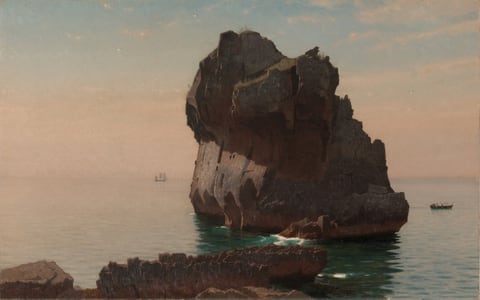
Capri, by William Stanley Haseltine, 1869
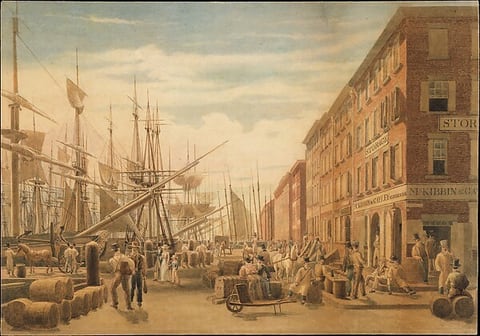
View of South Street, from Maiden Lane, New York City, by William James Bennett, ca. 1827

The works in this room are listed below.

Works in this room

Works made in the 19th century, anywhere in the world.

Section 1, north wall

  1. The Coolest Spot in New England--Summit of Mount Washington, from Harper's Bazar, July 23, 1870, by Winslow Homer, 1870
    The Coolest Spot in New England--Summit of Mount Washington, from Harper's Bazar, July 23, 1870Winslow Homer, 1870Courtesy of the Smithsonian American Art Museum
  2. Stage Fort across Gloucester Harbor, by Fitz Henry Lane, 1862
    Stage Fort across Gloucester HarborFitz Henry Lane, 1862Courtesy of The Metropolitan Museum of Art
  3. The image features a collection of ceramics, including two bowls, a plate, a mug, and a lidded cup. The color palette is sepia-toned, with shades of brown. The plate has an intricate illustration of a rooster and floral patterns. Two bowls with different designs are above the plate. A mug with floral and bird illustrations sits on the left, and a lidded cup with fish and aquatic plants is on the right.
    Five Pieces of ChinaJules-Ferdinand JacquemartCourtesy National Gallery of Art, Washington
  4. Portrait of a Lady, by Thomas Wilmer Dewing, ca. 1895
    Portrait of a LadyThomas Wilmer Dewing, ca. 1895Courtesy of the Smithsonian American Art Museum

Section 1, south wall

  1. Saint in Red Cloak, late 19th - early 20th century
    Saint in Red CloakUnrecorded Italian maker, late 19th - early 20th centuryCourtesy of the Cleveland Museum of Art
  2. Madame X (Virginie Amélie Avegno Gautreau), by John Singer Sargent, 1883–84
    Madame X (Virginie Amélie Avegno Gautreau)John Singer Sargent, 1883–84Courtesy of The Metropolitan Museum of Art
  3. Capri, by William Stanley Haseltine, 1869
    CapriWilliam Stanley Haseltine, 1869Courtesy of the Cleveland Museum of Art
  4. View of South Street, from Maiden Lane, New York City, by William James Bennett, ca. 1827
    View of South Street, from Maiden Lane, New York CityWilliam James Bennett, ca. 1827Courtesy of The Metropolitan Museum of Art

Section 2, south wall
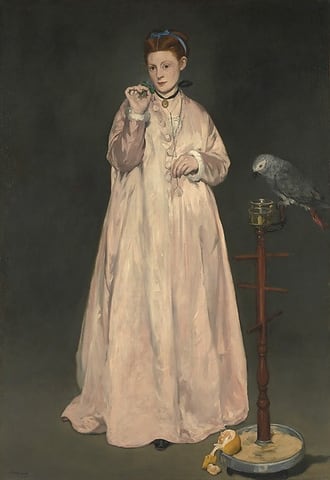
  1. Young Lady in 1866, by Édouard Manet, 1866
    Young Lady in 1866Édouard Manet, 1866Courtesy of The Metropolitan Museum of Art
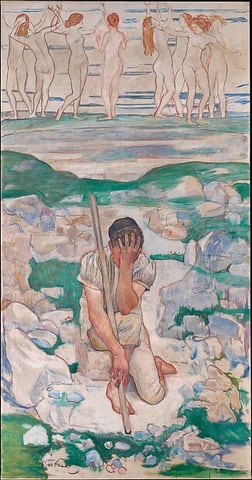
  2. The Dream of the Shepherd (Der Traum des Hirten), by Ferdinand Hodler, 1896
    The Dream of the Shepherd (Der Traum des Hirten)Ferdinand Hodler, 1896Courtesy of The Metropolitan Museum of Art
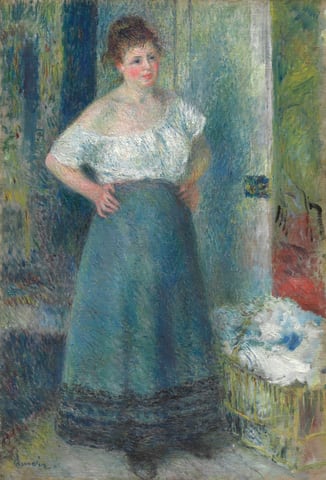
  3. A work made of oil on canvas.
    The LaundressPierre-Auguste Renoir, 1877–79Courtesy of the Art Institute of Chicago

Section 2, north wall
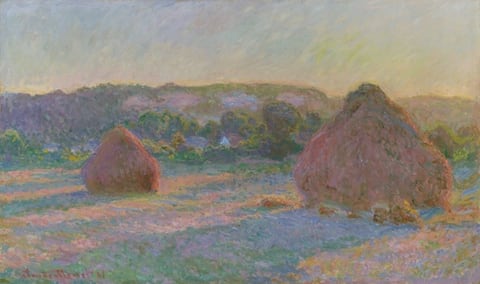
  1. Painting composed of short, dense brushstrokes depicts two domed stacks of wheat that cast long shadows on a field. The angled light indicates either a rising or setting sun.
    Stacks of Wheat (End of Summer)Claude Monet, 1890–91Courtesy of the Art Institute of Chicago
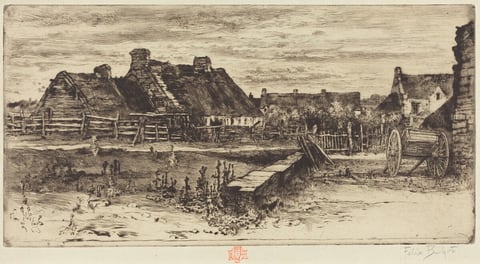
  2. The image depicts a rustic village scene featuring thatched-roof cottages, wooden fences, and a low horizon with rooftops and chimneys. The etching showcases detailed brushstrokes capturing various textures, with a monochromatic sepia color palette. A stone or wooden wall leads into the scene, alongside grassy vegetation. The cottages create a sense of enclosure, with trees and other structures in the background. A cart is placed near the wall.
    Les Grandes ChaumièresFélix-Hilaire Buhot, 1881Courtesy National Gallery of Art, Washington
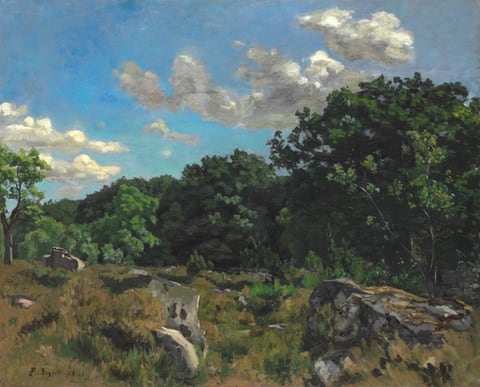
  3. A work made of oil on canvas.
    Landscape at ChaillyFrédéric Bazille, 1865Courtesy of the Art Institute of Chicago

Section 3, north wall
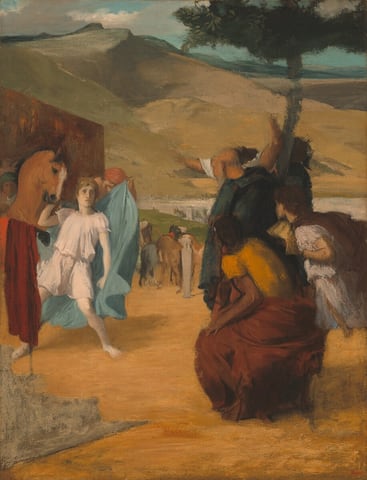
  1. Two groups of people face off in front of a hilly landscape in this loosely painted, vertical scene. On our left, a pale young man in a white tunic looks with eyes wide and lips parted at a group of three people on our right. The young man's right hand, on our left, is raised to stroke the head of a reddish-brown horse at his right shoulder. He stands with feet planted wide, knees bent, and he curls his left hand into a fist. Behind him, a man holds up a fluttering, light blue cape. A mottled red wall forms a backdrop to this scene on our left. The tight group gathered under a tree on our right stares back at the young man. The trio is made up of a balding, older man, a light-skinned boy also wearing a white tunic, and, closest to us, a brown-skinned woman wearing a marigold-orange shirt and a maroon-red skirt. Behind this group, a pair of pale raised arms suggests a fourth person, but the head is missing or has been painted over. The ground under the people is saffron orange. In the center of the picture, beyond the people, a group of horses stands near a green bank by a river, its surface reflecting white. The far bank is lined with white buildings. Tan and olive-green slopes rise from the opposite riverbank under a pale blue sky with cream-white clouds sweeping along the top edge of the composition. The artist signed his name in red paint in the lower right corner: “Degas.”
    Alexander and BucephalusEdgar Degas, 1861/1862Courtesy National Gallery of Art, Washington
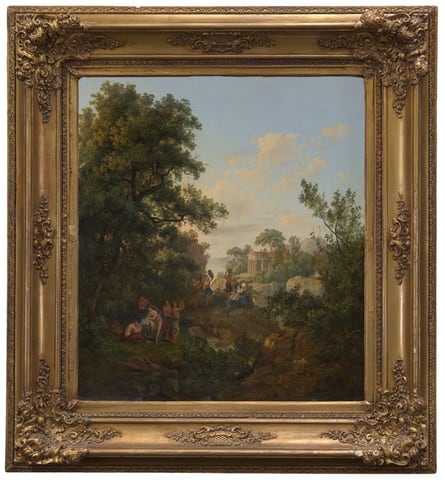
  2. A work made of oil on canvas.
    Birth of BacchusKároly Markó, Sr., 1826 (?)Courtesy of the Art Institute of Chicago