Floor plan

Time and placeThe 19th century

The 19th century

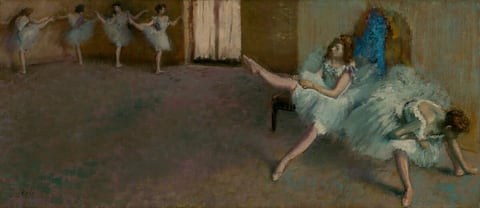
In a dance studio, two ballerinas wearing knee-length tutus and ballet slippers sit on a bench and stretch to our right while four more pose at the back of the space, to our left, in this long, horizontal painting. The scene and dancers are loosely painted so many features are indistinct. All the women have light skin and dark brown hair. Each pale, robins’ egg-blue costume has a low-cut, tightly fitting, sleeveless bodice and a full skirt. Dabs of off white, teal, and blue suggest flowers lining the deep U of the neckline at the front and down the back of each bodice. Closest to us and nearly brushing the edges of the lower right corner of the canvas, one dancer sits on the end of a wooden bench and leans down between her legs, her feet widely planted. She rests her torso on an elbow folded onto one knee as she reaches for her left foot, farther from us, with her other hand. Her hair is pulled up and her face, looking downward, is deep in shadow. Sitting behind her on the bench, to our left, a second dancer lifts her right leg, toe pointing, as she pulls on her pale pink tights. Her other leg stretches straight, pointed toe brushing the floor, in front of her. This woman’s hair hangs loose around her shoulders. The pair is brightly lit from a source to our right, and an arched area of electric blue and mustard yellow behind them is difficult to interpret. The floor, which takes up about two-thirds of the composition, is painted with dabs of teal blue, pale fuchsia pink, and caramel brown. It leads us back to the upper left corner of the painting where four more four ballerinas stand in a line. The pair to our left stands with their backs to us, facing the wall with their right legs raised to shoulder height, toes pointed. The pair to our right faces us. They also stand with their right legs raised, creating a wide angle with their standing legs. All four ballerinas bend their arms gently at the elbow, and some tip their heads toward the raised legs. The rightmost dancer is illuminated by a pair of French doors at the back corner, at the top center of the painting. The wall behind the bench is streaked with mint green over honey brown, and the wall at the back of the room is leather brown. The visible, soft brushstrokes give the image a blurred, ethereal appearance in the dimmed studio. The artist signed the painting in the lower left corner, “Degas.”
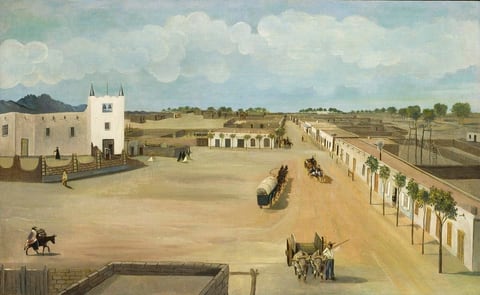
Old Mesilla Plaza, by Leon Trousset, ca. 1885-1886
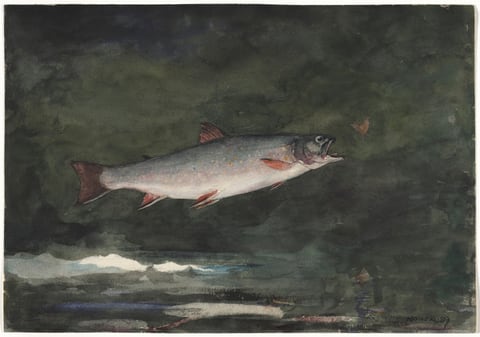
Leaping Trout, by Winslow Homer, 1889
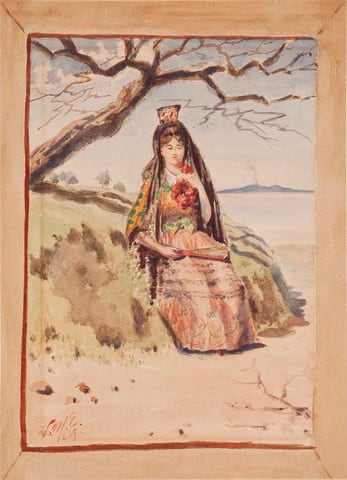
Louis Eilshemius
Saint in Red Cloak, late 19th - early 20th century
Incense Boxes with a Wrapping Cloth, by Kubo Shunman, 1808
View of Florence, by Thomas Cole, 1837
A work made of oil on canvas.

The works in this room are listed below.

Works in this room

Works made in the 19th century, anywhere in the world.

Section 1, north wall

  1. In a dance studio, two ballerinas wearing knee-length tutus and ballet slippers sit on a bench and stretch to our right while four more pose at the back of the space, to our left, in this long, horizontal painting. The scene and dancers are loosely painted so many features are indistinct. All the women have light skin and dark brown hair. Each pale, robins’ egg-blue costume has a low-cut, tightly fitting, sleeveless bodice and a full skirt. Dabs of off white, teal, and blue suggest flowers lining the deep U of the neckline at the front and down the back of each bodice. Closest to us and nearly brushing the edges of the lower right corner of the canvas, one dancer sits on the end of a wooden bench and leans down between her legs, her feet widely planted. She rests her torso on an elbow folded onto one knee as she reaches for her left foot, farther from us, with her other hand. Her hair is pulled up and her face, looking downward, is deep in shadow. Sitting behind her on the bench, to our left, a second dancer lifts her right leg, toe pointing, as she pulls on her pale pink tights. Her other leg stretches straight, pointed toe brushing the floor, in front of her. This woman’s hair hangs loose around her shoulders. The pair is brightly lit from a source to our right, and an arched area of electric blue and mustard yellow behind them is difficult to interpret. The floor, which takes up about two-thirds of the composition, is painted with dabs of teal blue, pale fuchsia pink, and caramel brown. It leads us back to the upper left corner of the painting where four more four ballerinas stand in a line. The pair to our left stands with their backs to us, facing the wall with their right legs raised to shoulder height, toes pointed. The pair to our right faces us. They also stand with their right legs raised, creating a wide angle with their standing legs. All four ballerinas bend their arms gently at the elbow, and some tip their heads toward the raised legs. The rightmost dancer is illuminated by a pair of French doors at the back corner, at the top center of the painting. The wall behind the bench is streaked with mint green over honey brown, and the wall at the back of the room is leather brown. The visible, soft brushstrokes give the image a blurred, ethereal appearance in the dimmed studio. The artist signed the painting in the lower left corner, “Degas.”
    Before the BalletEdgar Degas, 1890/1892Courtesy National Gallery of Art, Washington
  2. Old Mesilla Plaza, by Leon Trousset, ca. 1885-1886
    Old Mesilla PlazaLeon Trousset, ca. 1885-1886Courtesy of the Smithsonian American Art Museum
  3. Leaping Trout, by Winslow Homer, 1889
    Leaping TroutWinslow Homer, 1889Courtesy of the Cleveland Museum of Art
  4. Louis Eilshemius
    Spanish LadyLouis M. Eilshemius, 1889Courtesy of the Hirshhorn Museum and Sculpture Garden, Smithsonian Institution

Section 1, south wall

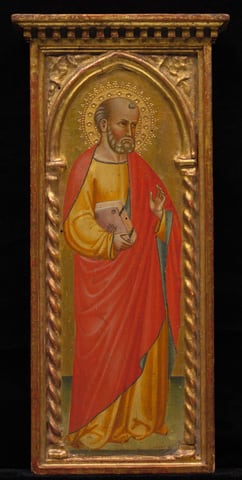
  1. Saint in Red Cloak, late 19th - early 20th century
    Saint in Red CloakUnrecorded Italian maker, late 19th - early 20th centuryCourtesy of the Cleveland Museum of Art
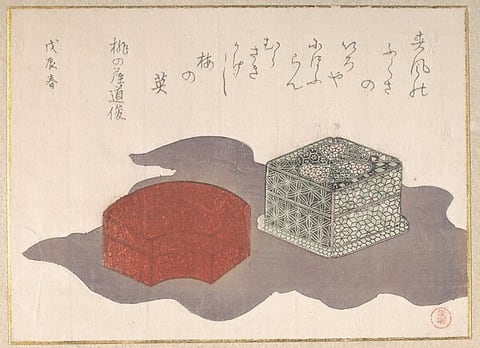
  2. Incense Boxes with a Wrapping Cloth, by Kubo Shunman, 1808
    Incense Boxes with a Wrapping ClothKubo Shunman, 1808Courtesy of The Metropolitan Museum of Art
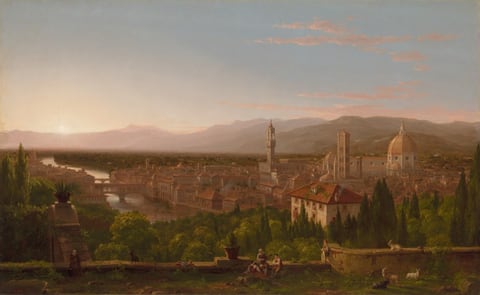
  3. View of Florence, by Thomas Cole, 1837
    View of FlorenceThomas Cole, 1837Courtesy of the Cleveland Museum of Art
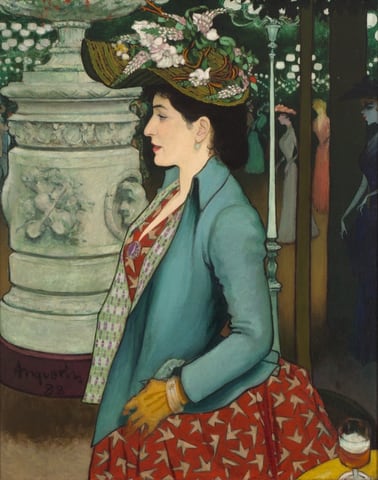
  4. A work made of oil on canvas.
    A Woman at the Élysée Montmartre (Femme à l’Élysée Montmartre)Louis Anquetin, 1888Courtesy of the Art Institute of Chicago

Section 2, south wall
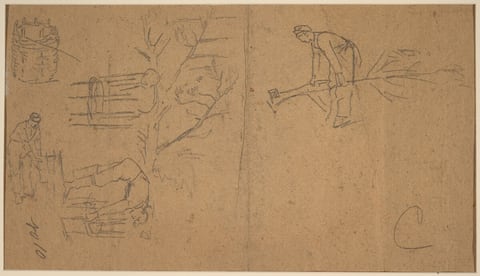
  1. This is a drawing of various sketches related to woodcutting or carpentry. The drawing features several pencil sketches on tan paper. On the left side, there are depictions of a barrel or basket, and beneath it, several outline sketches of figures engaged in activities involving woodwork. The right side of the drawing shows a figure bent over a large beam or branch. The sketches are simple, with minimal detail, capturing the basic form and movement of the figures and objects involved in woodwork-related activities.
    Soldiers felling sapling, and weaving saplings into baskets [verso]Winslow Homer, 1862Courtesy National Gallery of Art, Washington
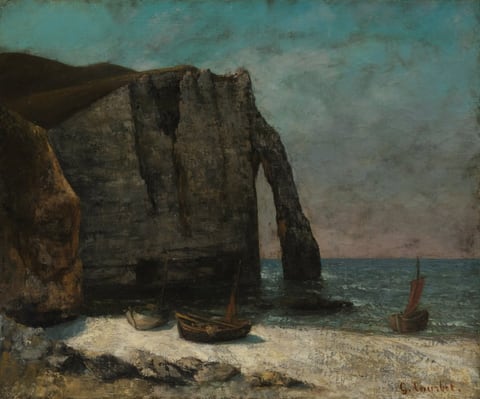
  2. The Cliff at Étretat, by Gustave Courbet, after 1872
    The Cliff at ÉtretatGustave Courbet, after 1872Courtesy of the Cleveland Museum of Art
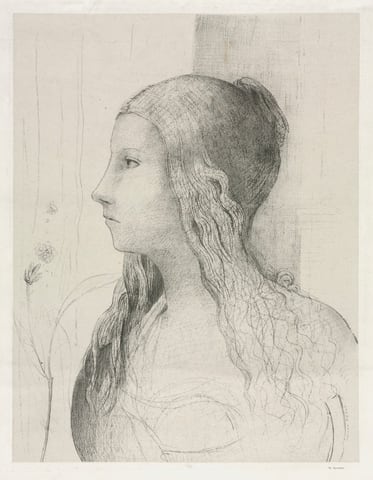
  3. Brünnhilde in Twilight of the Gods, by Odilon Redon, 1894
    Brünnhilde in Twilight of the GodsOdilon Redon, 1894Courtesy of the Cleveland Museum of Art
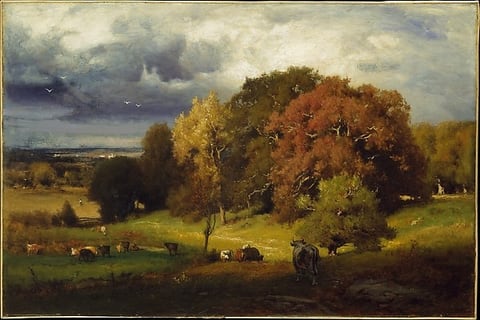
  4. Autumn Oaks, by George Inness, ca. 1878
    Autumn OaksGeorge Inness, ca. 1878Courtesy of The Metropolitan Museum of Art

Section 2, north wall
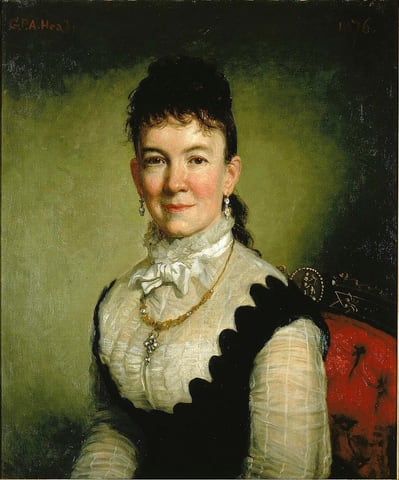
  1. Mrs. Albert J. Myer (Catherine Walden), by George Peter Alexander Healy, 1876
    Mrs. Albert J. Myer (Catherine Walden)George Peter Alexander Healy, 1876Courtesy of the Smithsonian American Art Museum
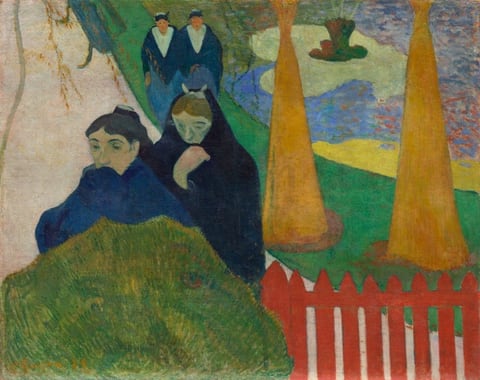
  2. Painting of four women with blue shawls walking near red fence.
    Arlésiennes (Mistral)Paul Gauguin, 1888Courtesy of the Art Institute of Chicago
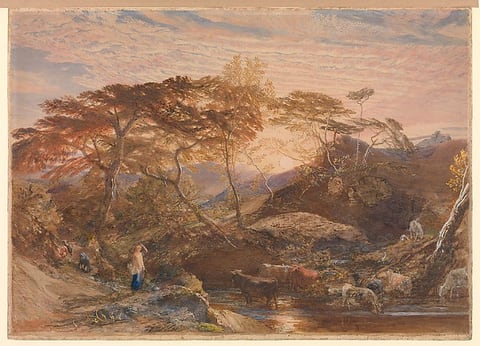
  3. Sabrina, by Samuel Palmer, 1856
    SabrinaSamuel Palmer, 1856Courtesy of The Metropolitan Museum of Art
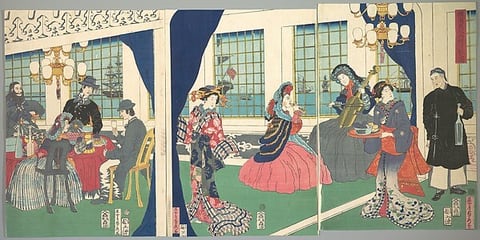
  4. Foreigners in the Drawing Room of Foreign Merchant's House in Yokohama, by Utagawa (Gountei) Sadahide, 9th month, 1861
    Foreigners in the Drawing Room of Foreign Merchant's House in YokohamaUtagawa (Gountei) Sadahide, 9th month, 1861Courtesy of The Metropolitan Museum of Art