Floor plan

Time and place19th-century United States
19th-century United States
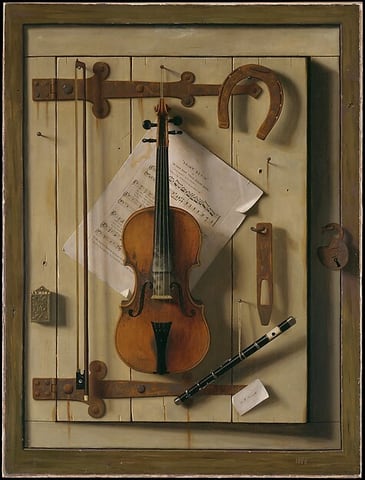
Still Life—Violin and Music, by William Michael Harnett, 1888
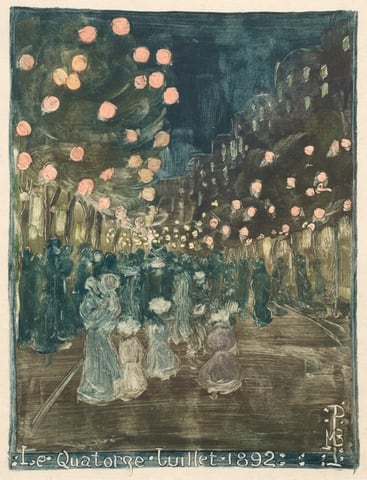
Bastille Day, by Maurice Prendergast, 1892
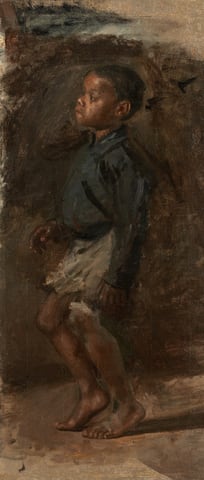
Study for "The Dancing Lesson": The Boy, by Thomas Eakins, probably 1877
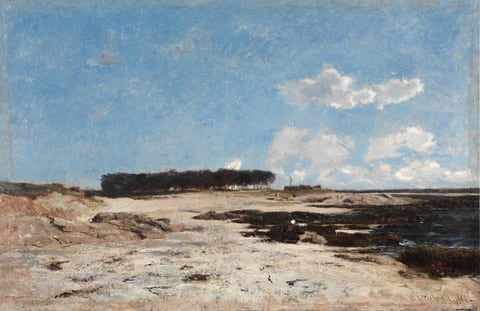
Pointe de Cabellou, Brittany, by William L. Picknell, 1881
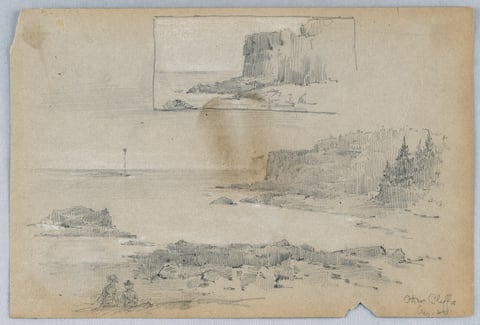
OTTER CLIFFS
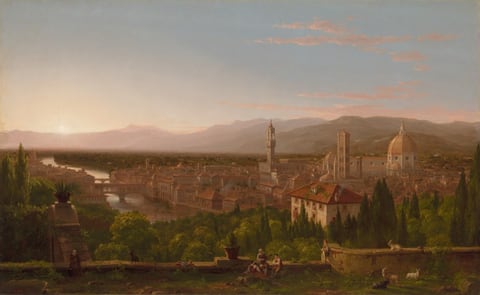
View of Florence, by Thomas Cole, 1837
THE TETONS, SHOWN FROM THE PLAIN
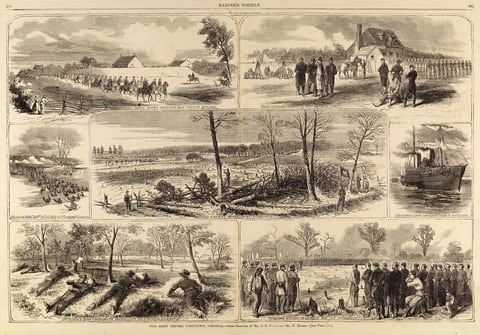
Our Army before Yorktown, Virginia, from Harper's Weekly, May 3, 1862, by Winslow Homer, 1862

The works in this room are listed below.

Works in this room

Works made in the United States in the 19th century.

Section 1, north wall

  1. Still Life—Violin and Music, by William Michael Harnett, 1888
    Still Life—Violin and MusicWilliam Michael Harnett, 1888Courtesy of The Metropolitan Museum of Art
  2. Bastille Day, by Maurice Prendergast, 1892
    Bastille DayMaurice Prendergast, 1892Courtesy of the Cleveland Museum of Art
  3. Study for "The Dancing Lesson": The Boy, by Thomas Eakins, probably 1877
    Study for "The Dancing Lesson": The BoyThomas Eakins, probably 1877Courtesy National Gallery of Art, Washington
  4. Pointe de Cabellou, Brittany, by William L. Picknell, 1881
    Pointe de Cabellou, BrittanyWilliam L. Picknell, 1881Courtesy of the Cleveland Museum of Art

Section 1, south wall

  1. OTTER CLIFFS
    Otter CliffsArnold William Brunner, 1879–80Courtesy of Cooper Hewitt, Smithsonian Design Museum
  2. View of Florence, by Thomas Cole, 1837
    View of FlorenceThomas Cole, 1837Courtesy of the Cleveland Museum of Art
  3. THE TETONS, SHOWN FROM THE PLAIN
    The Tetons, Shown from the PlainThomas Moran, August 28, 1879Courtesy of Cooper Hewitt, Smithsonian Design Museum
  4. Our Army before Yorktown, Virginia, from Harper's Weekly, May 3, 1862, by Winslow Homer, 1862
    Our Army before Yorktown, Virginia, from Harper's Weekly, May 3, 1862Winslow Homer, 1862Courtesy of the Smithsonian American Art Museum

Section 2, south wall
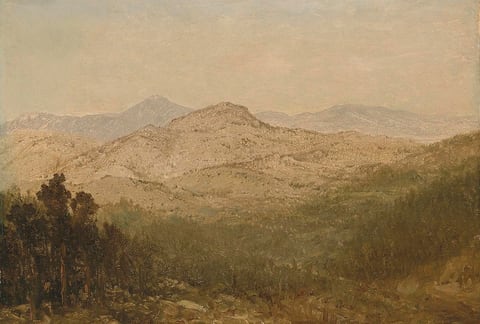
  1. Mountains in Colorado, by John Frederick Kensett, 1870
    Mountains in ColoradoJohn Frederick Kensett, 1870Courtesy of the Smithsonian American Art Museum
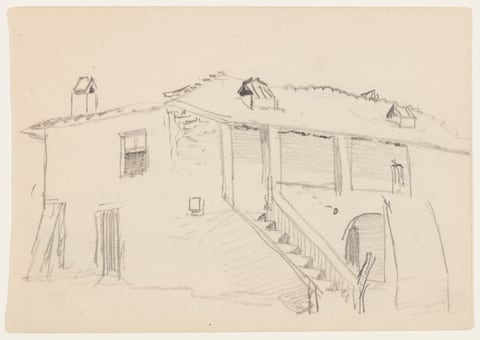
  2. ITALIAN FARMHOUSE
    Italian FarmhouseFrederic Edwin Church, September 1868 - April 1869Courtesy of Cooper Hewitt, Smithsonian Design Museum
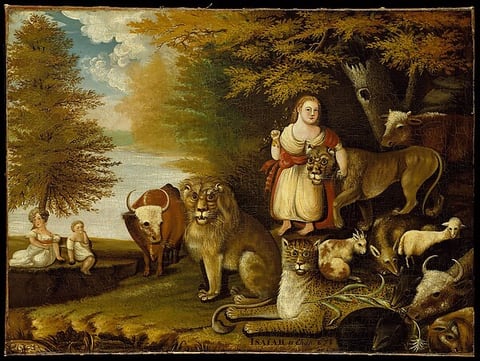
  3. Peaceable Kingdom, by Edward Hicks, ca. 1830–32
    Peaceable KingdomEdward Hicks, ca. 1830–32Courtesy of The Metropolitan Museum of Art
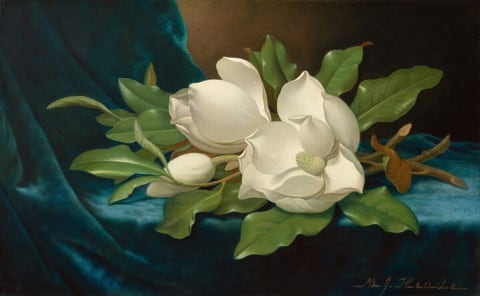
  4. Twigs of a magnolia tree with light green, glossy leaves and three cream-white blossoms lie on a sapphire-blue cloth in this horizontal still life painting. Brightly lit from our left, the blossoms and leaves nearly fill the composition, and the cut ends lie on the fabric to our right. The blue fabric cascades from the upper left and across the table or ledge. The three flowers are in various stages of bloom. The tightest bud is to our left, overlapped by a stem and the tender, unfurling leaves of a branch. The blossom next to it, at the center, is starting to open. The petals of the third blossom, to our right, splay open around the flower’s oval-shaped stamen. Light glints off the waxy leaves surrounding the flowers. The tawny-brown underside of one leaf is visible where it turns over, near the cut ends of the branches. Light shimmering on the fabric darkens from bright blue to our right, to deep royal blue in the shadows to the upper left, suggesting the fabric is velvet. The background is streaked with tan and pine green behind the fabric, and becomes nearly black in the shadows of the upper right corner and along the bottom edge. The artist signed the lower right corner, "MJ. Heade."
    Giant Magnolias on a Blue Velvet ClothMartin Johnson Heade, c. 1890Courtesy National Gallery of Art, Washington

Section 2, north wall
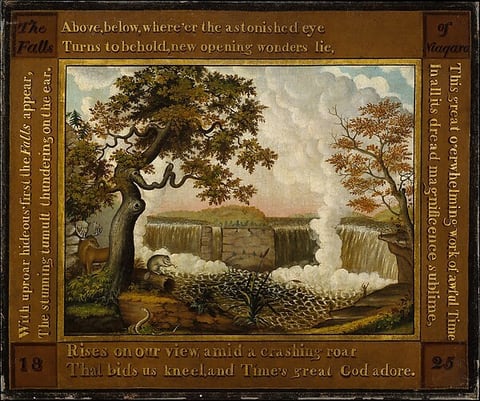
  1. The Falls of Niagara, by Edward Hicks, ca. 1825
    The Falls of NiagaraEdward Hicks, ca. 1825Courtesy of The Metropolitan Museum of Art
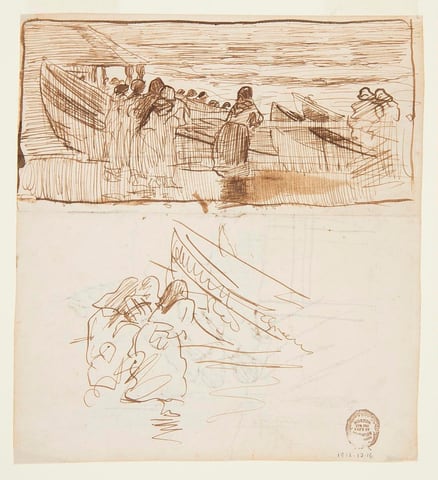
  2. TWO STUDIES OF WOMEN STANDING BEHIND RAILING, LOOKING AT THE LAUNCHING OF DORIES, CULLERCOATS, ENGLAND
    Two Studies of Women Standing behind Railing, Looking at the Launching of Dories, Cullercoats, EnglandWinslow Homer, 1881Courtesy of Cooper Hewitt, Smithsonian Design Museum
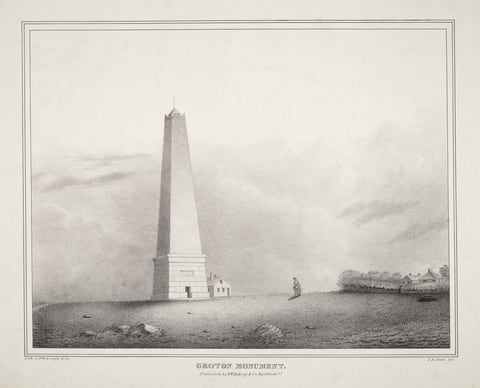
  3. The image shows a scene from a slightly elevated point of view. The horizon is low, highlighting the vast sky above. On the right, there are buildings surrounded by trees. In the center, there is a tall monument with a small structure at its base, slightly to the left. To the right of the monument, a person is standing. The drawing features detailed linework and delicate shading for the sky. The color palette is monochromatic with shades of gray. Rocks and grass in the foreground lead towards the monument and buildings in the distance.
    Groton MonumentJ.R. Butts, c. 1830-1840Courtesy National Gallery of Art, Washington
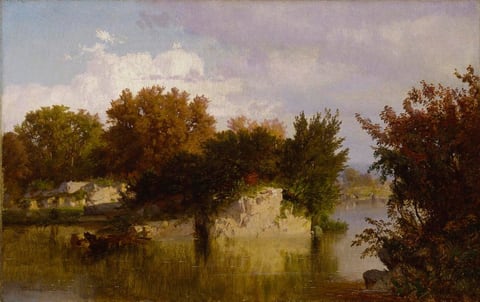
  4. Trees along Stream in Fall, by William Trost Richards, 1861
    Trees along Stream in FallWilliam Trost Richards, 1861Courtesy of the Smithsonian American Art Museum