Floor plan

Time and place19th-century United States
19th-century United States
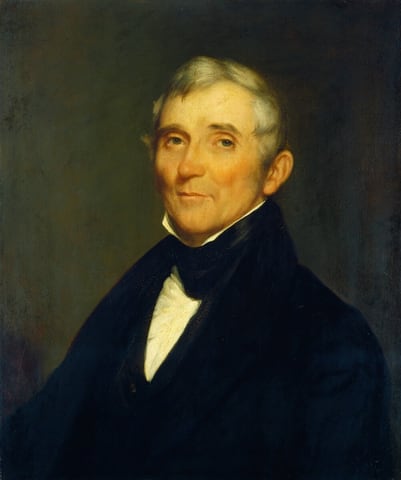
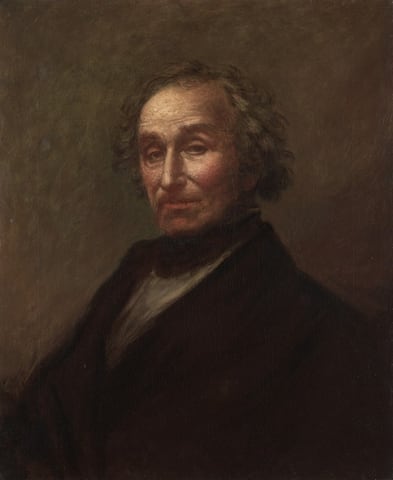
Alvan Clark, 1870s
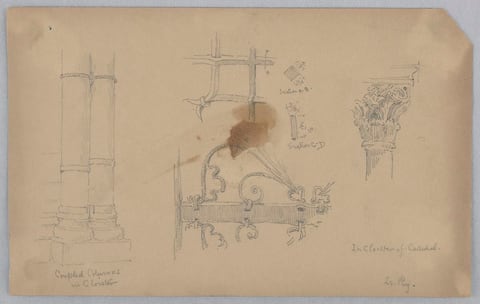
IN CLOISTER OF CATHEDREAL, LE PUY
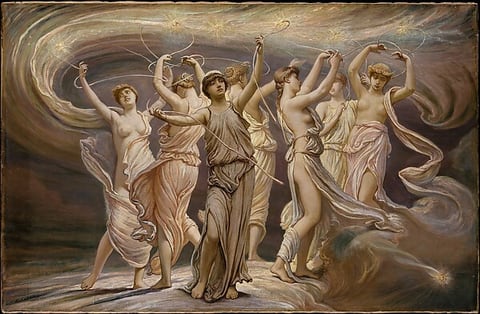
The Pleiades, by Elihu Vedder, 1885
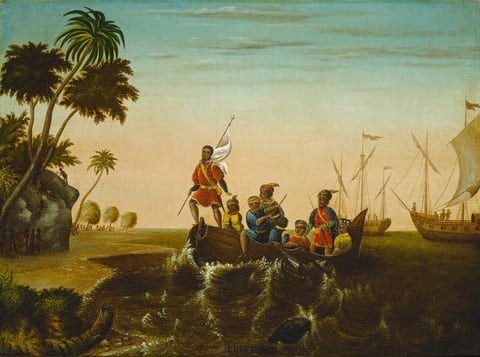
The painting features a scene showing men in a boat landing on a shore. The horizon is low, with larger sailing ships seen in the distance on the right, floating on the dark green water. The central boat has around eight men in it, all with tan skin and dark hair, dressed in bright garments in shades of red, blue, and gold. Many of them wear plumed helmets and have jewelry or badges adorning them. The boat is heading towards land on the left, and one man stands at the front of the boat, holding a white flag. The land on the left is green, with tall palm trees and a rocky gray mountain. People with dark skin can be seen in on the land in the distance, some climbing the mountain and others standing beneath trees. The sky is a gradient from pinkish-orange near the horizon to light blue at the top of the painting, with a few faint gray clouds.
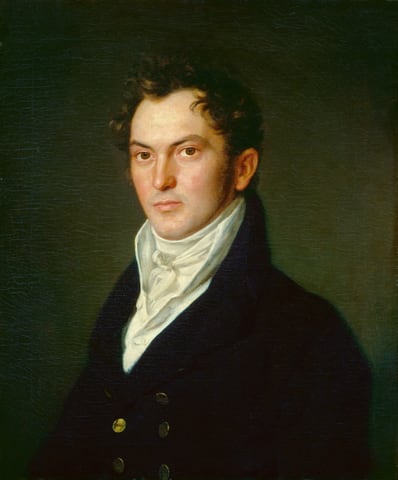
The image shows a man depicted from the waist up, positioned slightly turned to the side yet facing the viewer directly. He has a composed expression with defined facial features, including a high forehead, strong eyebrows, prominent cheekbones, and a clean-shaven face. His hair is dark and curly, styled away from his forehead. He is dressed in a dark coat featuring a double-breasted design with gold buttons, complemented by a high-collared, white cravat intricately tied at his neck. In the background, there is a subtle, dark, greenish hue.
Thomas Anshutz
FIGURES
The image is a portrait painting showing a man's upper body. He is positioned slightly turned to his right, with his head facing the viewer. The man has fair skin, defined cheekbones, and small, bright eyes. His hair is short, neatly combed, and grey or white. He is wearing a dark coat over a white shirt with a high collar, partially visible. The background is a muted, dark color, providing a simple setting that emphasizes the subject. There are no visible jewelry or objects in the image.

The works in this room are listed below.

Works in this room

Works made in the United States in the 19th century.

Section 1, north wall

  1. Alvan Clark, 1870s
    Alvan ClarkUnrecorded American maker, 1870sCourtesy of the Cleveland Museum of Art
  2. IN CLOISTER OF CATHEDREAL, LE PUY
    In Cloister of Cathedreal, Le PuyArnold William Brunner, 1883Courtesy of Cooper Hewitt, Smithsonian Design Museum
  3. The Pleiades, by Elihu Vedder, 1885
    The PleiadesElihu Vedder, 1885Courtesy of The Metropolitan Museum of Art
  4. The painting features a scene showing men in a boat landing on a shore. The horizon is low, with larger sailing ships seen in the distance on the right, floating on the dark green water. The central boat has around eight men in it, all with tan skin and dark hair, dressed in bright garments in shades of red, blue, and gold. Many of them wear plumed helmets and have jewelry or badges adorning them. The boat is heading towards land on the left, and one man stands at the front of the boat, holding a white flag. The land on the left is green, with tall palm trees and a rocky gray mountain. People with dark skin can be seen in on the land in the distance, some climbing the mountain and others standing beneath trees. The sky is a gradient from pinkish-orange near the horizon to light blue at the top of the painting, with a few faint gray clouds.
    The Landing of ColumbusEdward Hicks, c. 1837Courtesy National Gallery of Art, Washington

Section 1, south wall

  1. The image shows a man depicted from the waist up, positioned slightly turned to the side yet facing the viewer directly. He has a composed expression with defined facial features, including a high forehead, strong eyebrows, prominent cheekbones, and a clean-shaven face. His hair is dark and curly, styled away from his forehead. He is dressed in a dark coat featuring a double-breasted design with gold buttons, complemented by a high-collared, white cravat intricately tied at his neck. In the background, there is a subtle, dark, greenish hue.
    Zachariah SchoonmakerJohn Vanderlyn, 1815/1818Courtesy National Gallery of Art, Washington
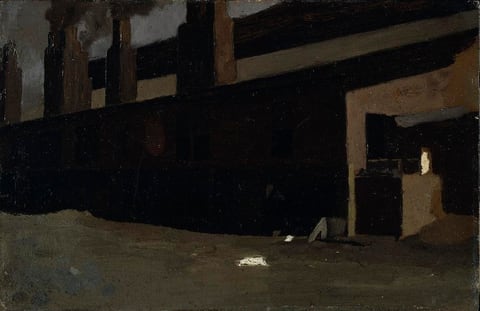
  2. Thomas Anshutz
    Factory--Study for "Ironworkers, Noontime"/Verso: Still Life with OrangeThomas Anshutz, (1880)Courtesy of the Hirshhorn Museum and Sculpture Garden, Smithsonian Institution
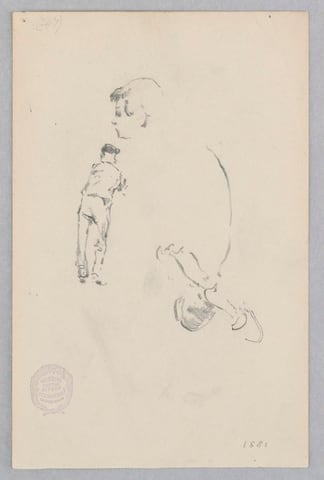
  3. FIGURES
    FiguresRobert Frederick Blum, 1881Courtesy of Cooper Hewitt, Smithsonian Design Museum
  4. The image is a portrait painting showing a man's upper body. He is positioned slightly turned to his right, with his head facing the viewer. The man has fair skin, defined cheekbones, and small, bright eyes. His hair is short, neatly combed, and grey or white. He is wearing a dark coat over a white shirt with a high collar, partially visible. The background is a muted, dark color, providing a simple setting that emphasizes the subject. There are no visible jewelry or objects in the image.
    Aaron BaldwinFrancis Alexander, c. 1835Courtesy National Gallery of Art, Washington

Section 2, south wall
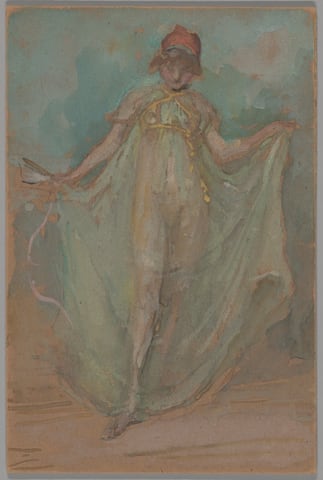
  1. Pale watercolor drawing of young dancer in long sheer dress.
    Green and Blue: The DancerJames McNeill Whistler, c. 1893Courtesy of the Art Institute of Chicago
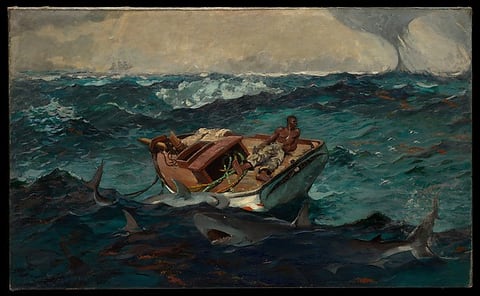
  2. The Gulf Stream, by Winslow Homer, 1899; reworked by 1906
    The Gulf StreamWinslow Homer, 1899; reworked by 1906Courtesy of The Metropolitan Museum of Art
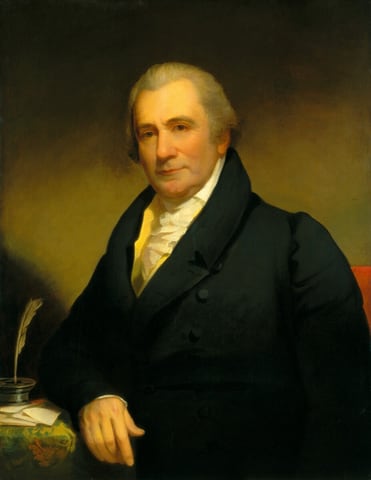
  3. The image shows a man sitting and facing the viewer. He has his right hand on a table. The man's hair is gray and neatly styled. He is wearing a dark coat with a high collar, a white shirt, and a yellow vest peeking through. On the table are a quill, inkwell, and papers. The background is a dark, neutral tone.
    Robert ColemanJacob Eichholtz, c. 1820Courtesy National Gallery of Art, Washington
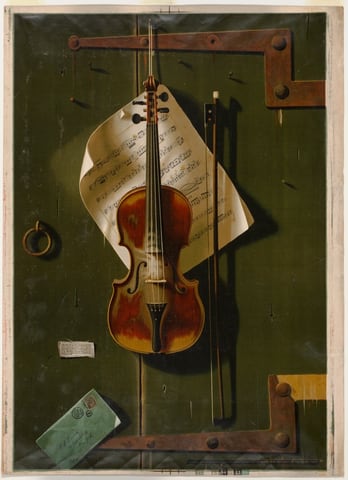
  4. A work made of color lithograph on paper.
    The Old ViolinWilliam Michael Harnett, 1887Courtesy of the Art Institute of Chicago

Section 2, north wall
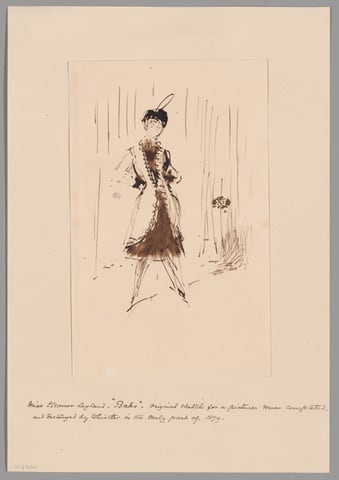
  1. A work made of pen and brown ink, with brush and brown ink, on cream pseudo-laid paper tipped onto cream wove paper.
    Study for "The Blue Girl: Portrait of Miss Elinor Leyland"James McNeill Whistler, c. 1879Courtesy of the Art Institute of Chicago
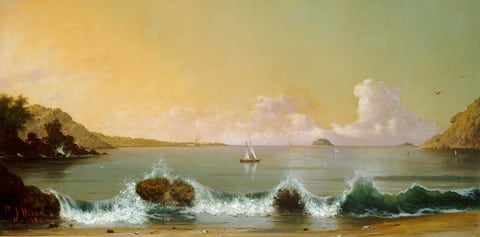
  2. Across a short stretch of sand in front of us, waves of bottle-green water break over two boulders on the shoreline, with sailboats in the water beyond, in this wide, horizontal painting. One boulder is at the left edge of the painting; the other is a short distance away, about a quarter of the way across. The water cascades down between those large rocks. Across the rest of the beach, the waves flare up to break toward us in white, foamy surf. The land curves back into view on both sides of the canvas with muted, sage-green hills and, to our left, dark green trees on more craggy boulders. A more distant finger of land to our left stretches nearly halfway across the horizon, which comes about halfway up the composition. Minuscule in scale there, smoke pours out of a chimney, which is surrounded by pale yellow buildings. A mound emerges from the horizon to our right of center. About ten sailboats float on the water. The closest one to us is near the center of the painting, and the tiny forms of people aboard can just barely be made out. The other boats become smaller as they move back to the horizon, and some are only a touch of white or gray on the canvas. White and pale lavender-purple clouds sweep up from the horizon into the sky, which glows butter yellow along the left edge. The sky cools to mint green in the upper right corner. Several white or brown birds fly across the sky or low over the water. The artist signed and dated the lower left, “M. J. Heade 1864.”
    Rio de Janeiro BayMartin Johnson Heade, 1864Courtesy National Gallery of Art, Washington
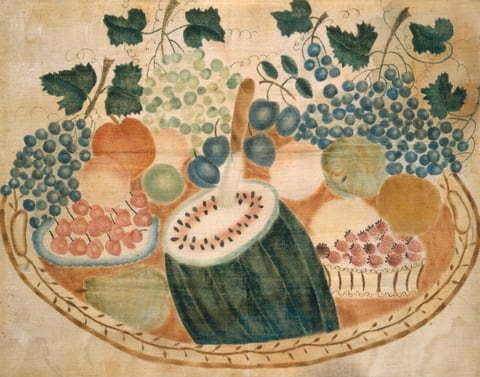
  3. The image shows a large cut watermelon in a woven basket surrounded by various fruits including grapes, peaches, and small round red fruits. The color palette includes greens, blues, oranges, and browns. The basket takes up most of the space and is filled with fruits, with grape clusters hanging above it.
    Fruit on a TrayUnrecorded American maker, c. 1840Courtesy National Gallery of Art, Washington
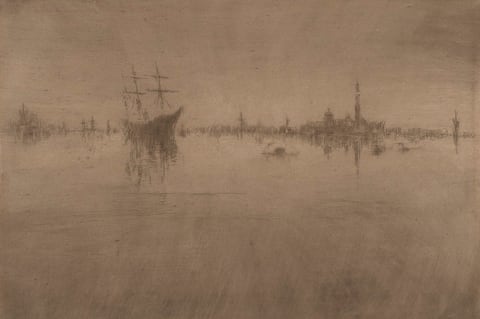
  4. A work made of etching and drypoint in brown on cream laid paper.
    Nocturne, from Venice, a Series of Twelve Etchings (the "First Venice Set")James McNeill Whistler, 1879–80Courtesy of the Art Institute of Chicago