18th-century Japan
Works in this room
Works made in Japan in the 18th century.
Section 1, north wall
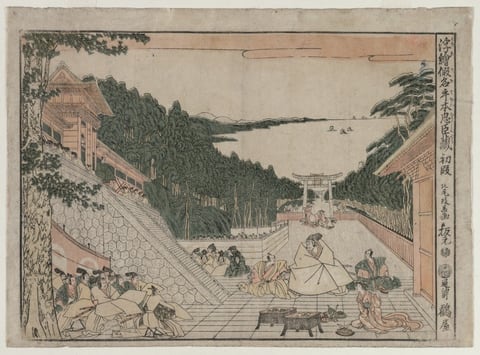
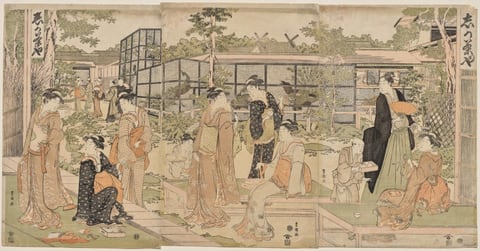
Perspective Pictures for The Treasure House of LoyaltyKitao Masayoshi, c. 1790sCourtesy of the Cleveland Museum of Art The Shika TeahouseUtagawa Toyokuni, early 1790sCourtesy of the Cleveland Museum of Art
Section 1, south wall
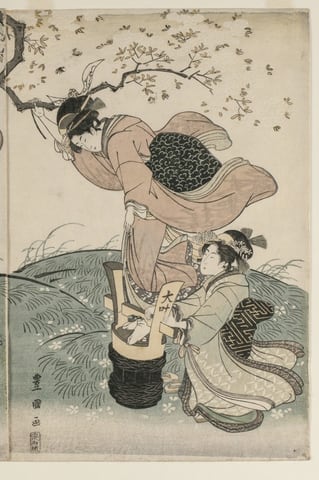
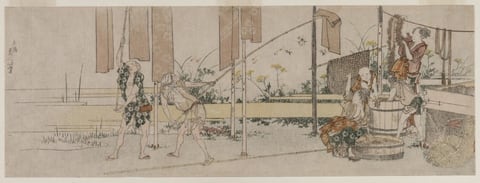
Cherry Blossoms in the WindUtagawa Toyokuni, late 1790sCourtesy of the Cleveland Museum of Art Dyers at WorkKatsushika Hokusai, c. 1800Courtesy of the Cleveland Museum of Art
Section 2, south wall
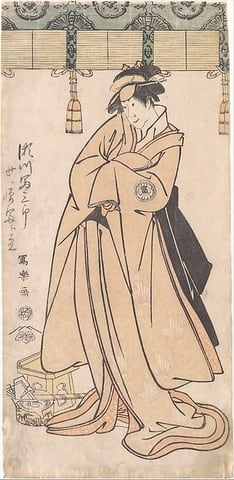
The Actor Segawa Tomisaburo II as the Otomos' Maid Wakakusa, Actually Prince KorehitoTōshūsai Sharaku, 1794–75Courtesy of The Metropolitan Museum of Art 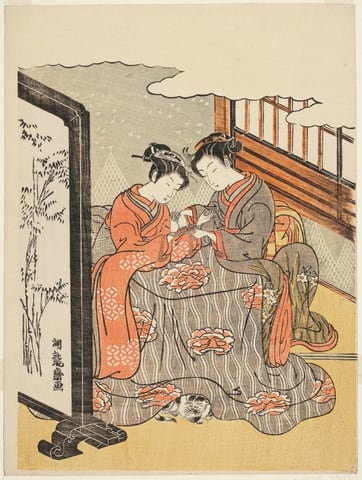
Two Young Women Playing Cat's CradleIsoda Koryusai, c. 1769Courtesy of the Art Institute of Chicago 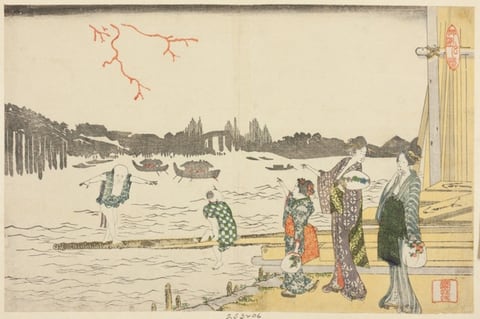
Women and Children Viewing the FireworksKatsushika Hokusai, c. 1798Courtesy of the Art Institute of Chicago
Section 2, north wall
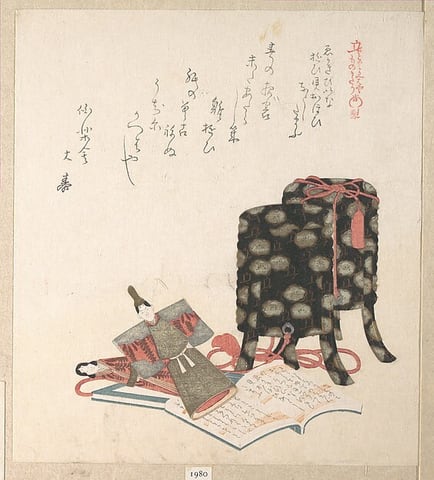
The Doll Festival, Third Day of the Third MonthKubo Shunman, 19th centuryCourtesy of The Metropolitan Museum of Art 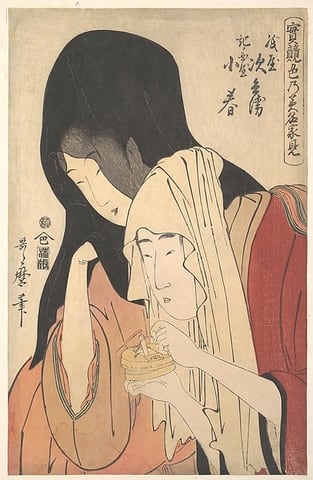
Jihei of Kamiya Eloping with the Geisha Koharu of Kinokuniya, from the series “True Feelings Compared: The Founts of Love” (Jitsu kurabe iro no Minakami)Kitagawa Utamaro, ca. 1798–99Courtesy of The Metropolitan Museum of Art 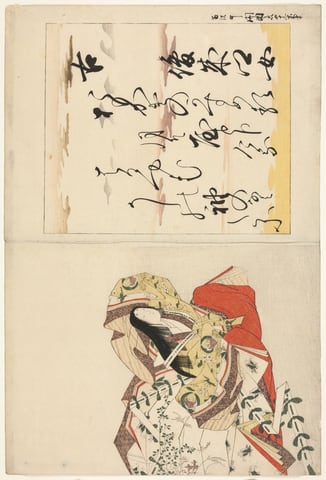
The Poetess Shunzei no Musume, from the series The Thirty-six Immortal Women Poets (Nishikizuri onna sanjurokkasen)Chôbunsai Eishi, Edo period (1615–1868), 1801Courtesy of the Art Institute of Chicago
Section 3, north wall
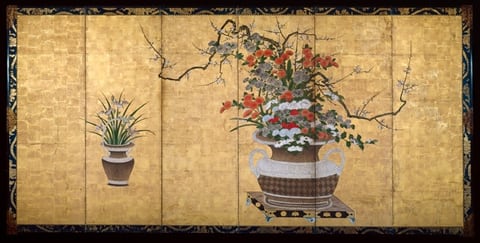
Baskets with Flowers of the Four SeasonsUnrecorded Japanese maker, 19th centuryCourtesy of the Art Institute of Chicago 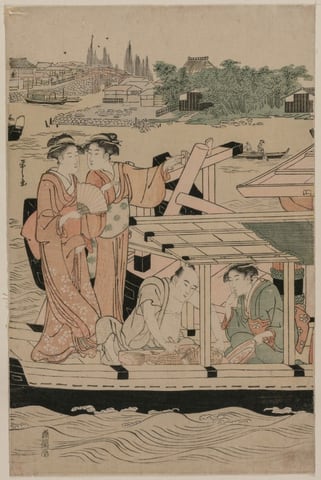
Leftmost Print from Pleasure Boats on the Sumida River beneath Shin-Ōhashi BridgeChôbunsai Eishi, c. 1792Courtesy of the Cleveland Museum of Art
Section 3, south wall
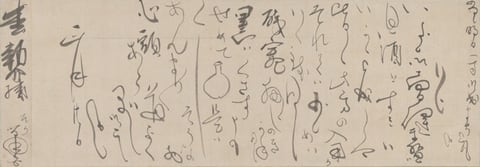
Handwritten LetterSoga Shohaku, c. 1754Courtesy of the Art Institute of Chicago 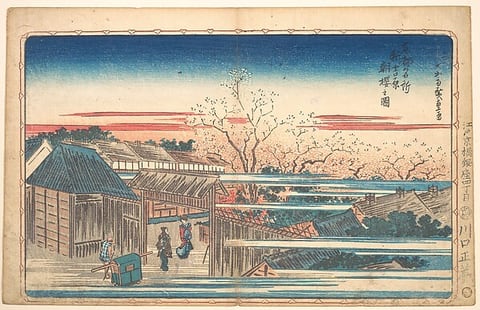
Morning Cherries at YoshiwaraUtagawa HiroshigeCourtesy of The Metropolitan Museum of Art
Section 4, south wall
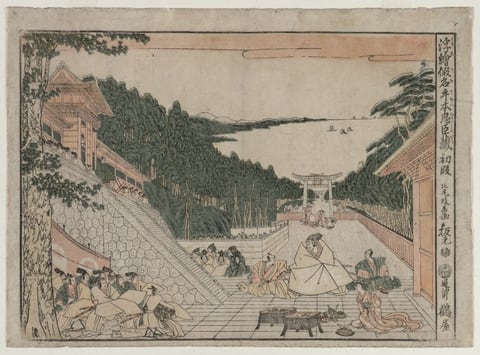
Chushingura: Act I (from the series Perspective Pictures for The Treasure House of Loyalty)Kitao Masayoshi, c. 1790sCourtesy of the Cleveland Museum of Art 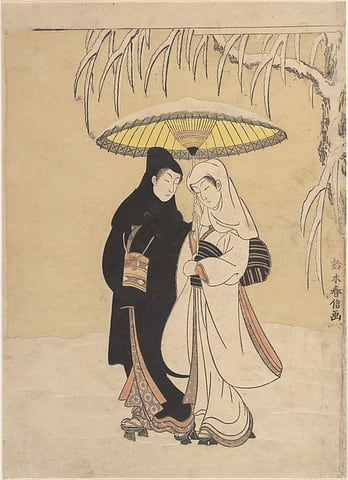
Lovers Walking in the Snow (Crow and Heron)Suzuki Harunobu, 1764–72Courtesy of The Metropolitan Museum of Art