Floor plan

Time and place17th-century Netherlands
17th-century Netherlands
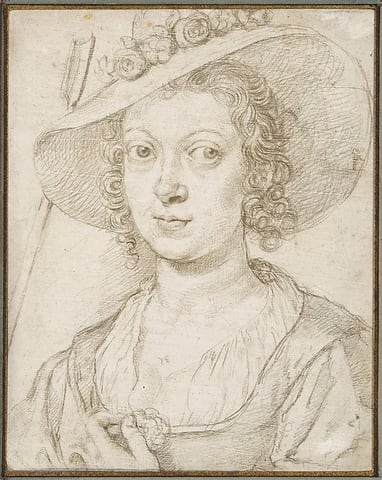
Portrait of a woman as a shepherdess, by Crispijn de Passe the Younger, 1635-40
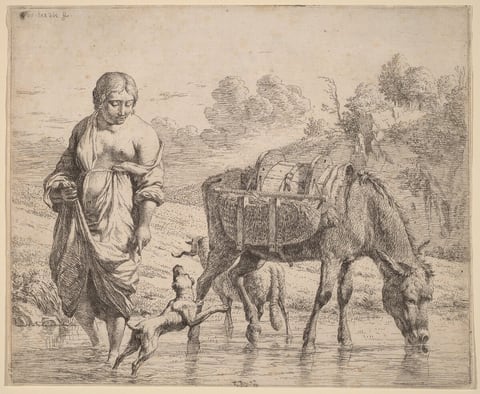
The image shows a woman standing close to us, slightly turned to the side, looking down, with a hand supporting her draped attire and the other grasping a stick. Next to her, a donkey drinks from a shallow stream, carrying a large wicker basket with barrels inside. A dog is splashing in the water beside them. The horizon is low, meeting a rise of land with trees and shrubs, leading the eye to a distant pathway where a couple of small figures can be seen. The sky above has sketchily rendered clouds. The style involves fine, detailed linework, characteristic of etching, emphasizing textures such as the fur of the donkey and the folds of the fabric. The color palette is monochromatic, relying on various intensities of ink and line density to render shadows and highlights.
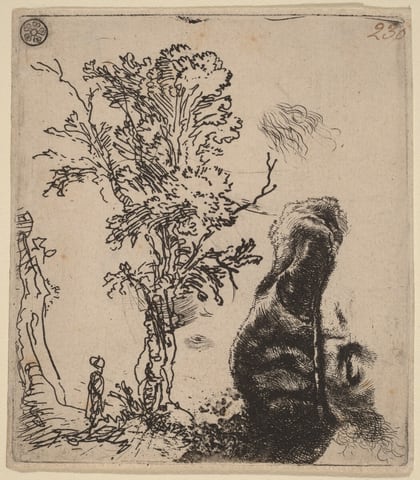
The image displays intricate, swirling lines and textured shading to create an abstract scene. On the left side are fine lines resembling branches and leaves, with a small figure nearby. On the right side is a large, densely shaded form reminiscent of mountains or a rock formation. The elements come together to suggest landscapes and nature through imaginative shapes and line work.
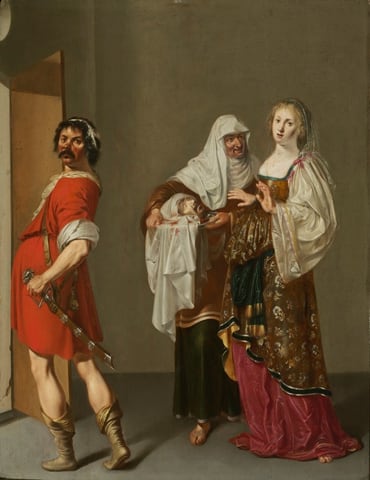
Salome with the Head of Saint John the Baptist, by Jacob Duck, mid-1600s
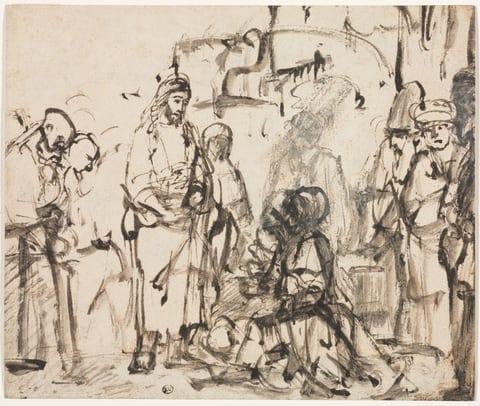
The Meeting of Christ with Martha and Mary after the Death of Lazarus, by Rembrandt van Rijn, c. 1662–65
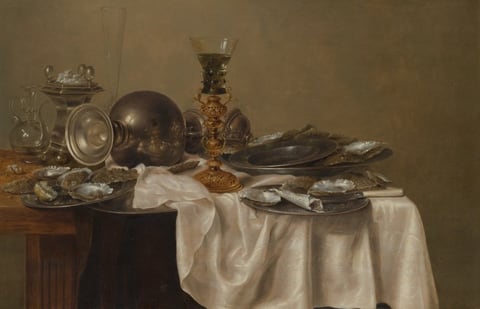
A work made of oil on panel.
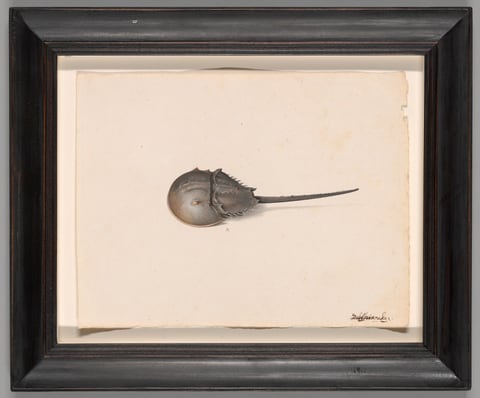
A work made of watercolor and opaque watercolor on cream laid paper.
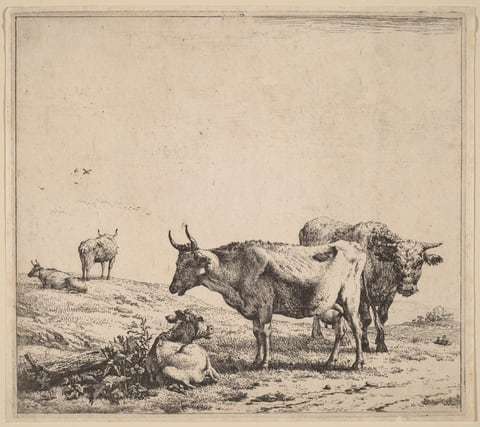
Cow, Bull and Calf, by Karel Dujardin

The works in this room are listed below.

Works in this room

Works made in the Netherlands in the 17th century.

First room, north wall

  1. Portrait of a woman as a shepherdess, by Crispijn de Passe the Younger, 1635-40
    Portrait of a woman as a shepherdessCrispijn de Passe the Younger, 1635-40Courtesy of The Metropolitan Museum of Art
  2. The image shows a woman standing close to us, slightly turned to the side, looking down, with a hand supporting her draped attire and the other grasping a stick. Next to her, a donkey drinks from a shallow stream, carrying a large wicker basket with barrels inside. A dog is splashing in the water beside them. The horizon is low, meeting a rise of land with trees and shrubs, leading the eye to a distant pathway where a couple of small figures can be seen. The sky above has sketchily rendered clouds. The style involves fine, detailed linework, characteristic of etching, emphasizing textures such as the fur of the donkey and the folds of the fabric. The color palette is monochromatic, relying on various intensities of ink and line density to render shadows and highlights.
    Woman Crossing a StreamKarel Dujardin, 1662Courtesy National Gallery of Art, Washington
  3. The image displays intricate, swirling lines and textured shading to create an abstract scene. On the left side are fine lines resembling branches and leaves, with a small figure nearby. On the right side is a large, densely shaded form reminiscent of mountains or a rock formation. The elements come together to suggest landscapes and nature through imaginative shapes and line work.
    Sheet with Two Studies: a Tree, and the Upper Part of a Head of the Artist Wearing a Velvet CapRembrandt van Rijn, c. 1642Courtesy National Gallery of Art, Washington
  4. Salome with the Head of Saint John the Baptist, by Jacob Duck, mid-1600s
    Salome with the Head of Saint John the BaptistJacob Duck, mid-1600sCourtesy of the Cleveland Museum of Art

First room, south wall

  1. The Meeting of Christ with Martha and Mary after the Death of Lazarus, by Rembrandt van Rijn, c. 1662–65
    The Meeting of Christ with Martha and Mary after the Death of LazarusRembrandt van Rijn, c. 1662–65Courtesy of the Cleveland Museum of Art
  2. A work made of oil on panel.
    Breakfast Still LifeWillem Claesz. Heda, 1647Courtesy of the Art Institute of Chicago
  3. A work made of watercolor and opaque watercolor on cream laid paper.
    A Horseshoe CrabPieter Holsteyn, the younger, 1640/80Courtesy of the Art Institute of Chicago
  4. Cow, Bull and Calf, by Karel Dujardin
    Cow, Bull and CalfKarel DujardinCourtesy National Gallery of Art, Washington

Second room, south wall
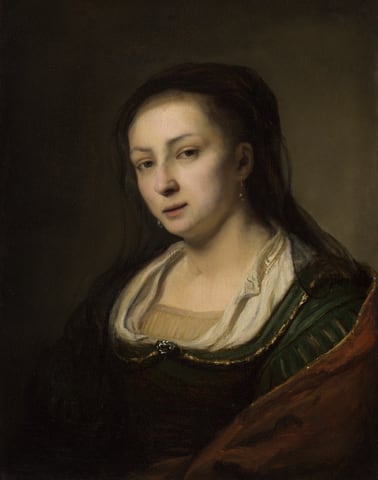
  1. A work made of oil on canvas.
    Portrait of a womanFerdinand Bol, c. 1655Courtesy of the Art Institute of Chicago
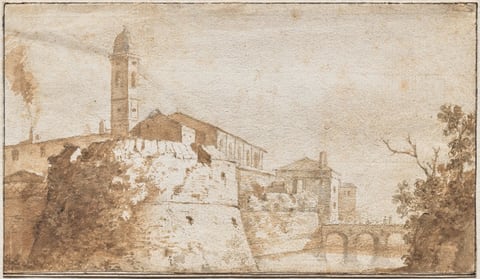
  2. A View of Bracciano with the Church of S. Maria Assunta, by Bartholomeus Breenberg, c. 1619–33
    A View of Bracciano with the Church of S. Maria AssuntaBartholomeus Breenberg, c. 1619–33Courtesy of the Cleveland Museum of Art
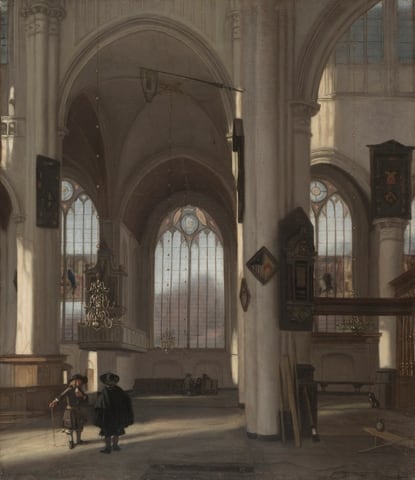
  3. Interior of a Church, by Emanuel de Witte, c. 1680
    Interior of a ChurchEmanuel de Witte, c. 1680Courtesy of the Cleveland Museum of Art
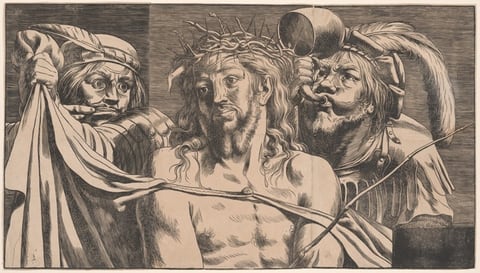
  4. A work made of woodcut on three joined sheets of ivory laid paper.
    The Mocking of ChristWerner van den Valckert, c. 1620Courtesy of the Art Institute of Chicago

Second room, north wall
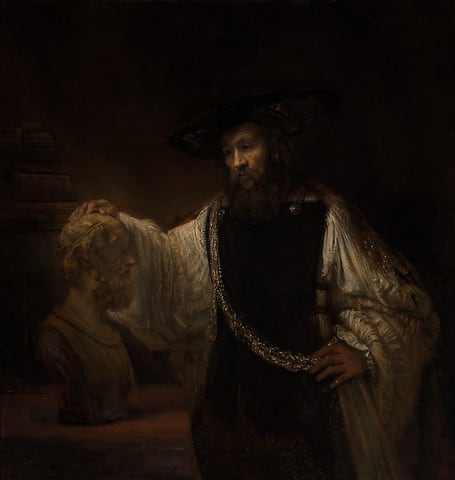
  1. Aristotle with a Bust of Homer, by Rembrandt van Rijn, 1653
    Aristotle with a Bust of HomerRembrandt van Rijn, 1653Courtesy of The Metropolitan Museum of Art
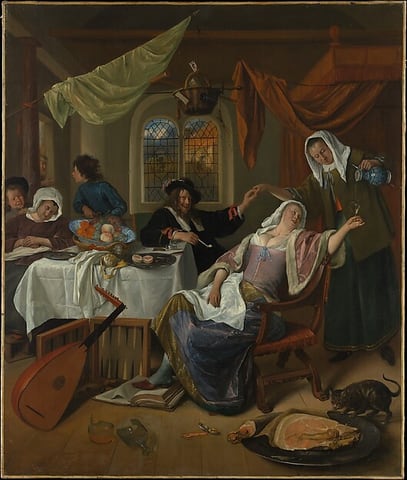
  2. The Dissolute Household, by Jan Steen, ca. 1663–64
    The Dissolute HouseholdJan Steen, ca. 1663–64Courtesy of The Metropolitan Museum of Art

Third room, north wall
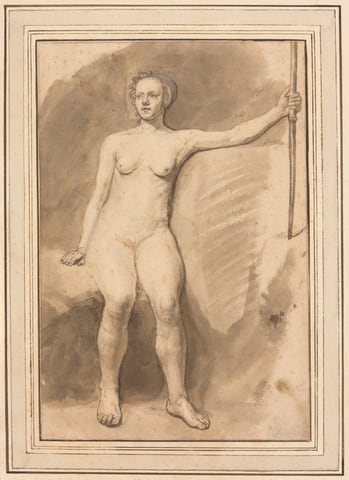
  1. A work made of pen and brown ink and brush and brown wash, with traces of black chalk and opaque white watercolor, on cream laid paper, laid down on cream laid paper.
    Seated Female NudeSamuel van Hoogstraten, 1647/78Courtesy of the Art Institute of Chicago
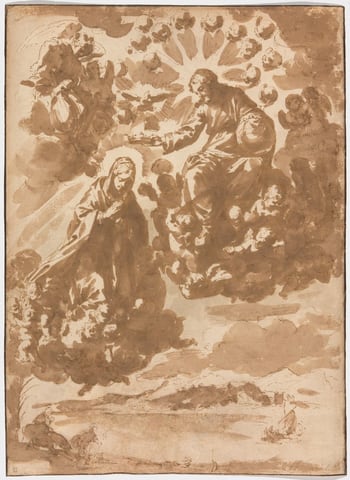
  2. A work made of pen and brown ink and brush and brown wash on ivory laid paper, laid down on cream laid paper.
    The Coronation of the Virgin and The Flight into EgyptJan de Bisschop, 1648/71Courtesy of the Art Institute of Chicago