Floor plan

Time and placeThe 16th century

The 16th century

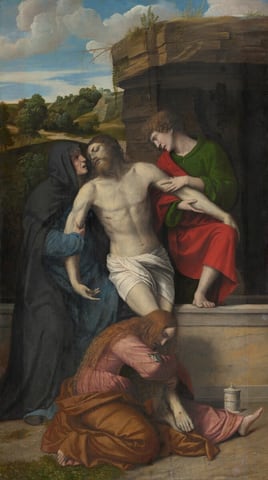
Two women and a man support the gray, lifeless body of a nearly nude man along a stone ledge in this vertical painting. The people have pale skin, except for the dead man at the center, Jesus, who has ash-white skin with dark shadows around his closed eyes. He has a long straight nose, and his lips are slightly parted. He has a brown beard, and his long, wavy hair falls away from his face. A white cloth wraps across his hips, and blood trickles from a gash over his right ribs and holes in his feet. A woman and man prop him up on either side, each holding Jesus by a limp arm, and each has a faint, gold halo encircling their heads. To our left, the woman holds her face close to his, her brows deeply furrowed and her mouth wide open, teeth showing. Her forehead, chin, and neck are covered by a white veil, worn under navy-blue cloak that covers her head and body. The cloak falls open over one arm and a bent knee to reveal her long-sleeved, lighter blue dress. On Jesus’s other side, a cleanshaven man with curly brown hair holds Jesus’s arm with both hands. The man’s eyes squint with tears as he tips his head toward Jesus. His pink lips are parted, and the corner of the mouth we can see is pulled down. He wears an emerald-green, long-sleeved tunic under a vivid red cloth that wraps around his right arm, waist, and left leg. The fourth and final person is a woman sitting on the ground, her arms wrapped tightly around Jesus’s crossed ankles. She sits with one foot tucked under her body and the other leg out straight. Waist-length, wavy, auburn-brown hair falls freely over her shoulders and across her face, but we can see her downturned, open mouth and nearly closed eyes. She wears a rose-pink dress, cinched at the waist. A brown cloth wraps around her waist and right leg. A cylindrical, lidded, white jar sits on the dirt ground nearby. The group is arranged in front a thigh-high stone ledge, except for the man in green and red, who steps into what is presumably the coffin. A rocky outcropping to our right has a cave-like opening with grasses and growth along the top. The landscape beyond has a dirt path winding between pine-green hills dotted with trees. Two slate-blue buildings perch atop one hill. White clouds float across the blue sky above.
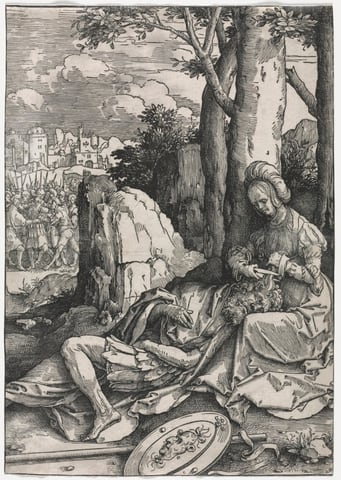
The Power of Women: Samson and Delilah, by Lucas van Leyden, c. 1512
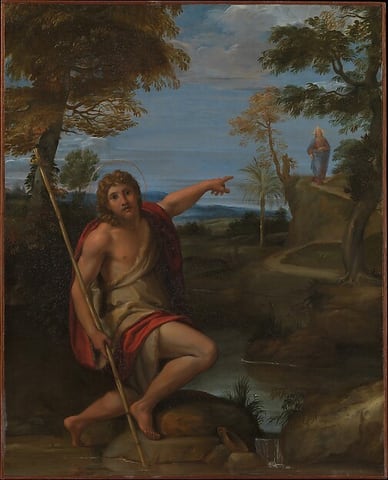
Saint John the Baptist Bearing Witness, by Annibale Carracci, ca. 1600
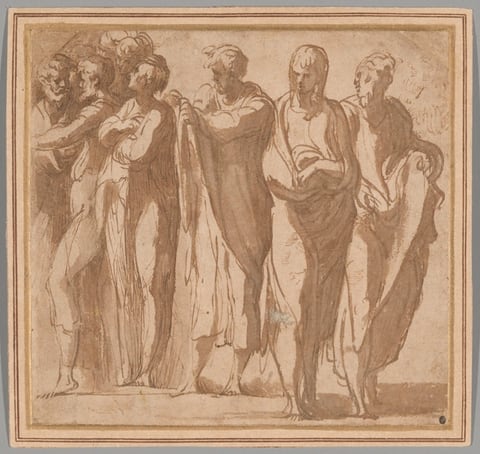
A work made of pen and brown ink and brush and brown wash, on tan laid paper, laid down on tan laid card.
Figure Mooring a Boat, by Kannan, mid-1500s
"Bahram Gur Pins the Coupling Onagers", Folio 568r from the Shahnama (Book of Kings) of Shah Tahmasp, by Abu'l Qasim Firdausi, ca. 1530–35
Hanging scroll
"A King Offers to Make Amends to a Bereaved Mother", Folio from a Khamsa (Quintet) of Amir Khusrau Dihlavi, by Amir Khusrau Dihlavi, 1597–98

The works in this room are listed below.

Works in this room

Works made in the 16th century, anywhere in the world.

First room, north wall

  1. Two women and a man support the gray, lifeless body of a nearly nude man along a stone ledge in this vertical painting. The people have pale skin, except for the dead man at the center, Jesus, who has ash-white skin with dark shadows around his closed eyes. He has a long straight nose, and his lips are slightly parted. He has a brown beard, and his long, wavy hair falls away from his face. A white cloth wraps across his hips, and blood trickles from a gash over his right ribs and holes in his feet. A woman and man prop him up on either side, each holding Jesus by a limp arm, and each has a faint, gold halo encircling their heads. To our left, the woman holds her face close to his, her brows deeply furrowed and her mouth wide open, teeth showing. Her forehead, chin, and neck are covered by a white veil, worn under navy-blue cloak that covers her head and body. The cloak falls open over one arm and a bent knee to reveal her long-sleeved, lighter blue dress. On Jesus’s other side, a cleanshaven man with curly brown hair holds Jesus’s arm with both hands. The man’s eyes squint with tears as he tips his head toward Jesus. His pink lips are parted, and the corner of the mouth we can see is pulled down. He wears an emerald-green, long-sleeved tunic under a vivid red cloth that wraps around his right arm, waist, and left leg. The fourth and final person is a woman sitting on the ground, her arms wrapped tightly around Jesus’s crossed ankles. She sits with one foot tucked under her body and the other leg out straight. Waist-length, wavy, auburn-brown hair falls freely over her shoulders and across her face, but we can see her downturned, open mouth and nearly closed eyes. She wears a rose-pink dress, cinched at the waist. A brown cloth wraps around her waist and right leg. A cylindrical, lidded, white jar sits on the dirt ground nearby. The group is arranged in front a thigh-high stone ledge, except for the man in green and red, who steps into what is presumably the coffin. A rocky outcropping to our right has a cave-like opening with grasses and growth along the top. The landscape beyond has a dirt path winding between pine-green hills dotted with trees. Two slate-blue buildings perch atop one hill. White clouds float across the blue sky above.
    PietàMoretto da Brescia, 1520sCourtesy National Gallery of Art, Washington
  2. The Power of Women: Samson and Delilah, by Lucas van Leyden, c. 1512
    The Power of Women: Samson and DelilahLucas van Leyden, c. 1512Courtesy of the Cleveland Museum of Art
  3. Saint John the Baptist Bearing Witness, by Annibale Carracci, ca. 1600
    Saint John the Baptist Bearing WitnessAnnibale Carracci, ca. 1600Courtesy of The Metropolitan Museum of Art
  4. A work made of pen and brown ink and brush and brown wash, on tan laid paper, laid down on tan laid card.
    Group of Nine Standing FiguresParmigianino, 1524/27Courtesy of the Art Institute of Chicago

First room, south wall

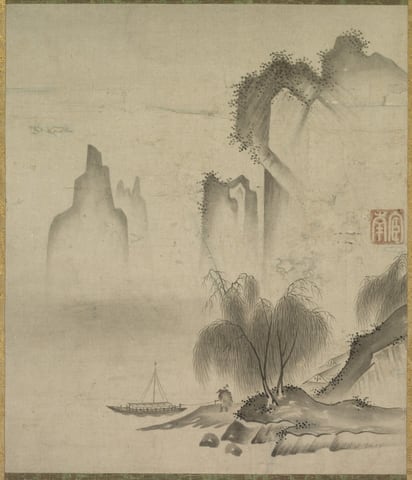
  1. Figure Mooring a Boat, by Kannan, mid-1500s
    Figure Mooring a BoatKannan, mid-1500sCourtesy of the Cleveland Museum of Art
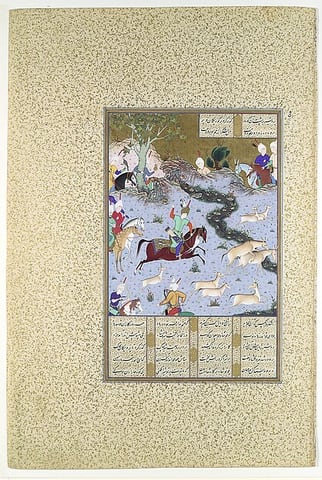
  2. "Bahram Gur Pins the Coupling Onagers", Folio 568r from the Shahnama (Book of Kings) of Shah Tahmasp, by Abu'l Qasim Firdausi, ca. 1530–35
    "Bahram Gur Pins the Coupling Onagers", Folio 568r from the Shahnama (Book of Kings) of Shah TahmaspAbu'l Qasim Firdausi, ca. 1530–35Courtesy of The Metropolitan Museum of Art
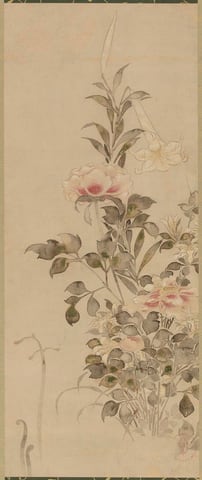
  3. Hanging scroll
    Peonies and lilies 芍薬と百合図Tawaraya Sotatsu, 1568-1615Courtesy of the National Museum of Asian Art, Smithsonian Institution
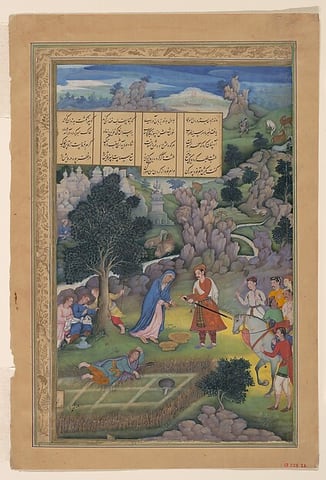
  4. "A King Offers to Make Amends to a Bereaved Mother", Folio from a Khamsa (Quintet) of Amir Khusrau Dihlavi, by Amir Khusrau Dihlavi, 1597–98
    "A King Offers to Make Amends to a Bereaved Mother", Folio from a Khamsa (Quintet) of Amir Khusrau DihlaviAmir Khusrau Dihlavi, 1597–98Courtesy of The Metropolitan Museum of Art

Second room, south wall
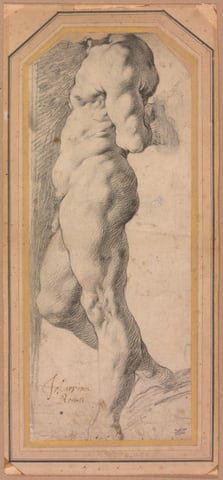
  1. A work made of black chalk on laid paper, laid down on tan laid pulp board.
    Study of a Standing Male NudeGiuseppe Cesari, called Cavaliere d'Arpino, 1595/96Courtesy of the Art Institute of Chicago
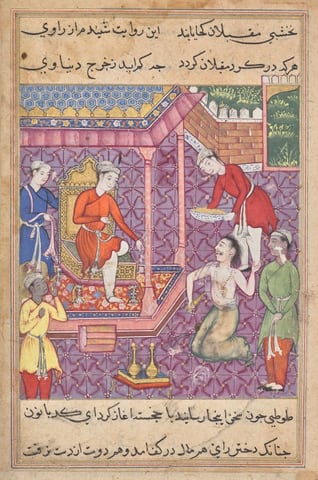
  2. The magician disguised as a Brahman returns to claim his “daughter-in-law,” from a Tuti-nama (Tales of a Parrot): Thirty-fifth Night, c. 1560
    The magician disguised as a Brahman returns to claim his “daughter-in-law,” from a Tuti-nama (Tales of a Parrot): Thirty-fifth NightUnrecorded Indian maker, c. 1560Courtesy of the Cleveland Museum of Art
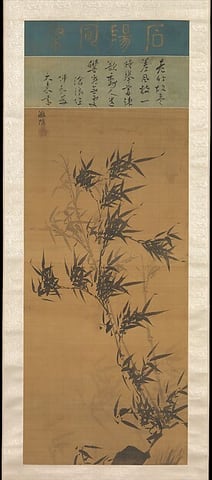
  3. Bamboo in the Wind, by Yi Jeong (artist name: Taneun), early 17th century
    Bamboo in the WindYi Jeong (artist name: Taneun), early 17th centuryCourtesy of The Metropolitan Museum of Art
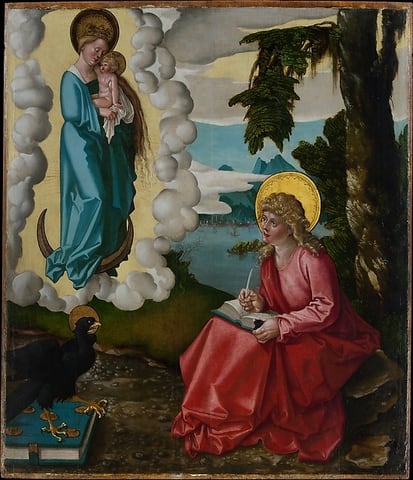
  4. Saint John on Patmos, by Hans Baldung (called Hans Baldung Grien), ca. 1511
    Saint John on PatmosHans Baldung (called Hans Baldung Grien), ca. 1511Courtesy of The Metropolitan Museum of Art

Second room, north wall
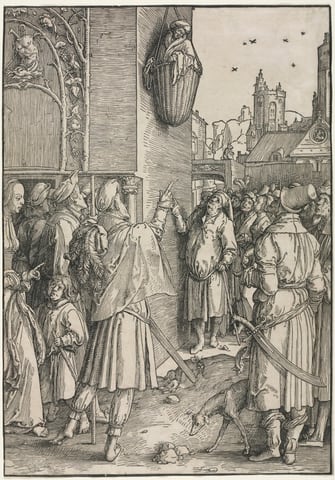
  1. The Power of Women: The Poet Virgil Suspended in a Basket, by Lucas van Leyden, c. 1512
    The Power of Women: The Poet Virgil Suspended in a BasketLucas van Leyden, c. 1512Courtesy of the Cleveland Museum of Art
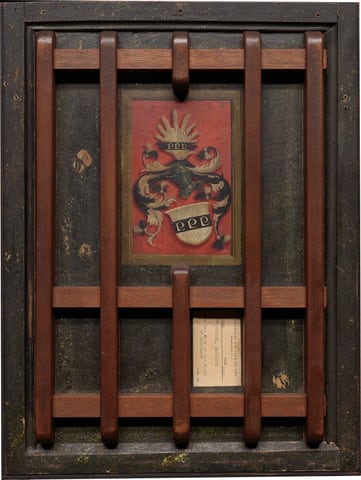
  2. The image shows a pattern of vertical and horizontal wooden bars forming a grid-like design. In the center, there is a rectangular panel with a decorative emblem against a red background. The emblem features swirling shapes. The structured wooden grid and ornate emblem suggest a vintage heraldic shield or coat of arms.
    Margarethe Vöhlin [reverse]Bernhard Strigel, 1527Courtesy National Gallery of Art, Washington

Third room, north wall
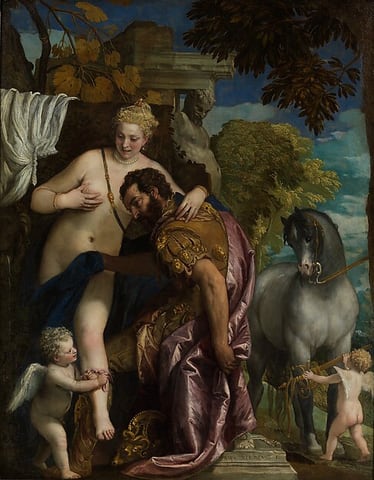
  1. Mars and Venus United by Love, by Paolo Veronese (Paolo Caliari), 1570s
    Mars and Venus United by LovePaolo Veronese (Paolo Caliari), 1570sCourtesy of The Metropolitan Museum of Art
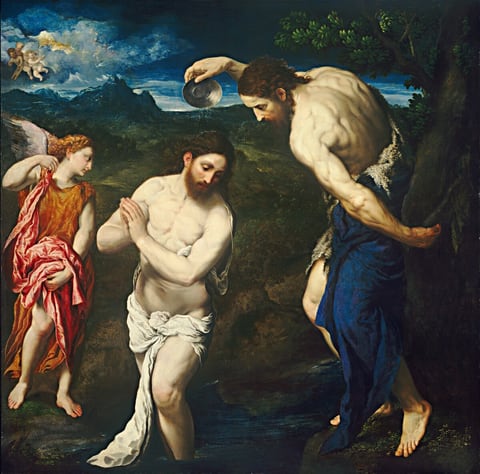
  2. Bright light from the upper left illuminates two muscular men and a winged angel against a dim landscape in this square painting. They all have pale skin, and the two men have dark brown hair and beards. One man, Jesus, stands ankle-deep in a rippling dark blue stream in the center of the composition facing us with downcast eyes. He is nude except for a white cloth that drapes over one shoulder and is tied around his hips. The other end of the cloth drops into the water. Jesus’s hands are pressed together in prayer at chest-height closer to his right shoulder, to our left. He leans his torso in the other direction and looks down at the water. The second man stands on the riverbank to our right. His body faces our left but his left shoulder, closer to us, dips down so his broad back is angled toward us. His lower body is wrapped in a cobalt-blue garment bordered with what looks like sheepskin. His near hand swings back to clutch the trunk of a tree growing immediately behind him. In his other hand, he holds up a pewter-grey dish that dribbles water onto Jesus’s head. On the left riverbank, the copper-haired angel looks on, facing our right in profile but the body faces us. The angel wears a sleeveless, pumpkin-orange robe with a shimmering salmon-pink mantle draped over the right shoulder, to our left. Petal-pink and dark grey wings extend from the shoulders, and the lower legs and feet are bare. The shadowy landscape has a dark green field stretching back to jagged, sapphire-blue mountains along the horizon, which comes four-fifths of the way up this composition. Pale blue clouds skim across the vivid blue sky, where three chubby, winged babies float. One holds a triangle and a rod with which to strike it, and another might hold a rectangular musical instrument. Blue clouds split nearby to show a sliver of golden yellow light, and possibly more angels.
    The Baptism of ChristParis Bordone, c. 1535/1540Courtesy National Gallery of Art, Washington