Floor plan

Time and place16th-century Italy

16th-century Italy

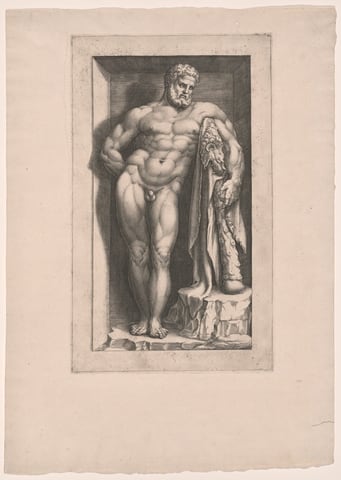
A work made of engraving in black on cream laid paper.
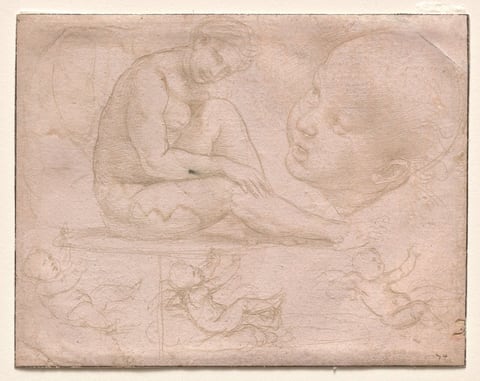
Studies of a Seated Female, Child's Head, and Three Studies of a Baby, by Raphael, c. 1507–8
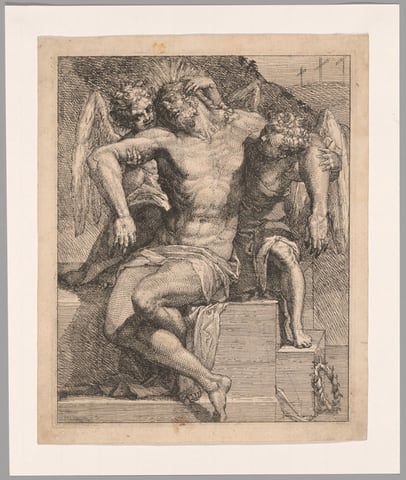
A work made of etching in black on cream laid paper.
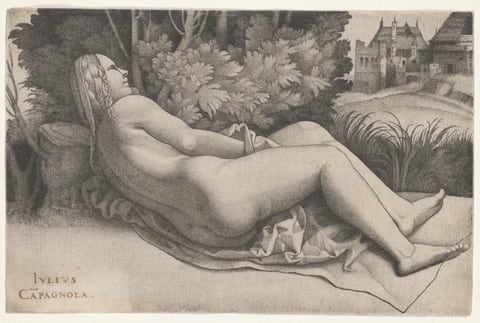
Venus Reclining in a Landscape, by Giulio Campagnola, c. 1508–9
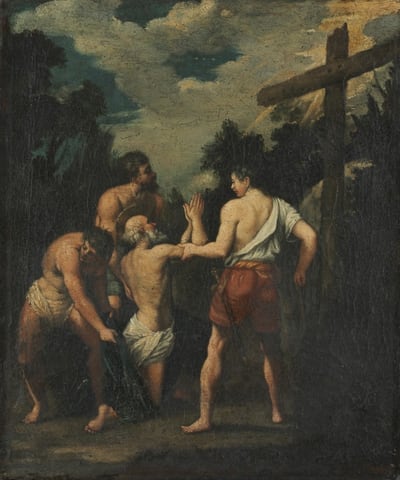
Martyrdom of Saint Andrew, by Guido Reni, 1600s
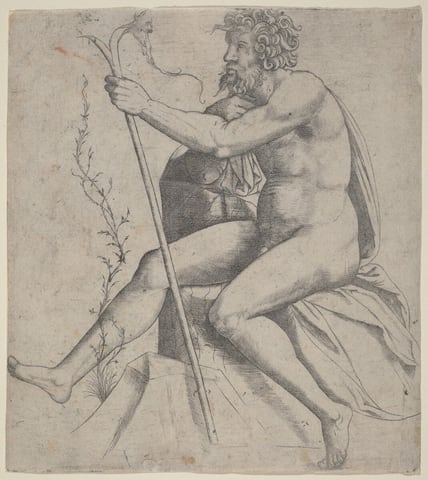
The image shows a man seated with a slight forward tilt. He is muscular, with one leg bent and the other extended. His head is turned to the left in profile, revealing his facial features, which include a large nose, full beard, and curly hair. He appears naked except for a fabric drape over his shoulders. In his left hand, he holds a staff, and there is a plant with twisting vines near him. The background is a shaded rocky surface with no other details.
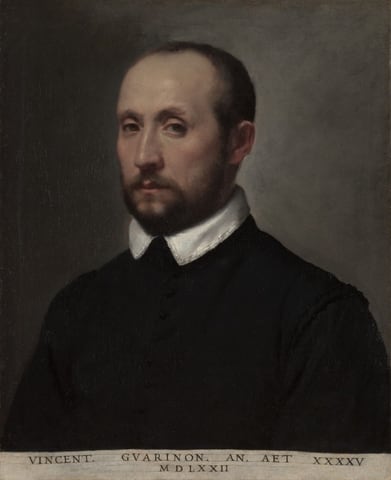
Portrait of Vincenzo Guarignoni, by Giovanni Battista Moroni, c. 1572
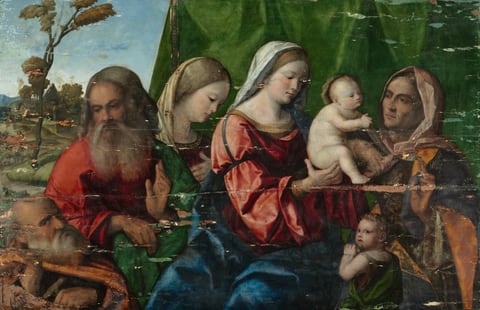
Virgin and Child with Saints, c. 1510

The works in this room are listed below.

Works in this room

Works made in Italy in the 16th century.

First room, north wall

  1. A work made of engraving in black on cream laid paper.
    The Farnese HerculesGiorgio Ghisi, c. 1577Courtesy of the Art Institute of Chicago
  2. Studies of a Seated Female, Child's Head, and Three Studies of a Baby, by Raphael, c. 1507–8
    Studies of a Seated Female, Child's Head, and Three Studies of a BabyRaphael, c. 1507–8Courtesy of the Cleveland Museum of Art
  3. A work made of etching in black on cream laid paper.
    Dead Christ Held by AngelsOrazio Samacchini, 1580/1620Courtesy of the Art Institute of Chicago
  4. Venus Reclining in a Landscape, by Giulio Campagnola, c. 1508–9
    Venus Reclining in a LandscapeGiulio Campagnola, c. 1508–9Courtesy of the Cleveland Museum of Art

First room, south wall

  1. Martyrdom of Saint Andrew, by Guido Reni, 1600s
    Martyrdom of Saint AndrewGuido Reni, 1600sCourtesy of the Cleveland Museum of Art
  2. The image shows a man seated with a slight forward tilt. He is muscular, with one leg bent and the other extended. His head is turned to the left in profile, revealing his facial features, which include a large nose, full beard, and curly hair. He appears naked except for a fabric drape over his shoulders. In his left hand, he holds a staff, and there is a plant with twisting vines near him. The background is a shaded rocky surface with no other details.
    Man Seated Holding a Forked StaffGiovanni Antonio da Brescia, c. 1514/1515Courtesy National Gallery of Art, Washington
  3. Portrait of Vincenzo Guarignoni, by Giovanni Battista Moroni, c. 1572
    Portrait of Vincenzo GuarignoniGiovanni Battista Moroni, c. 1572Courtesy of the Cleveland Museum of Art
  4. Virgin and Child with Saints, c. 1510
    Virgin and Child with SaintsUnrecorded Italian maker, c. 1510Courtesy of the Cleveland Museum of Art

Second room, south wall
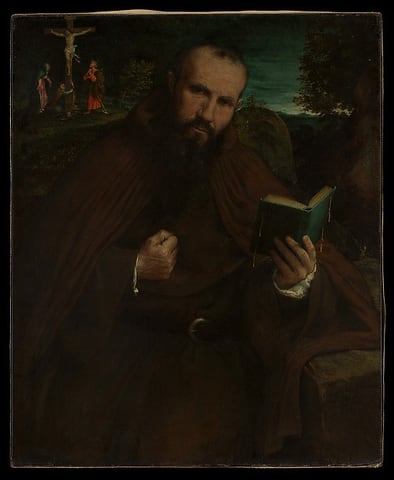
  1. Brother Gregorio Belo of Vicenza, by Lorenzo Lotto, 1547
    Brother Gregorio Belo of VicenzaLorenzo Lotto, 1547Courtesy of The Metropolitan Museum of Art
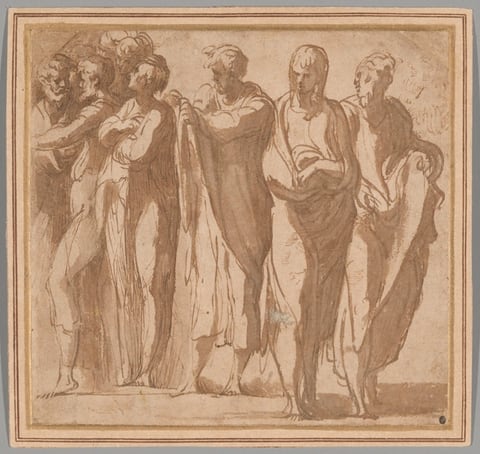
  2. A work made of pen and brown ink and brush and brown wash, on tan laid paper, laid down on tan laid card.
    Group of Nine Standing FiguresParmigianino, 1524/27Courtesy of the Art Institute of Chicago
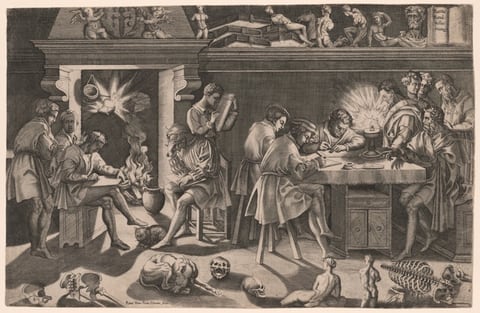
  3. A work made of engraving in black on cream laid paper.
    The Academy of Baccio BandinelliEnea Vico, 1544/50, printed c. 1560sCourtesy of the Art Institute of Chicago
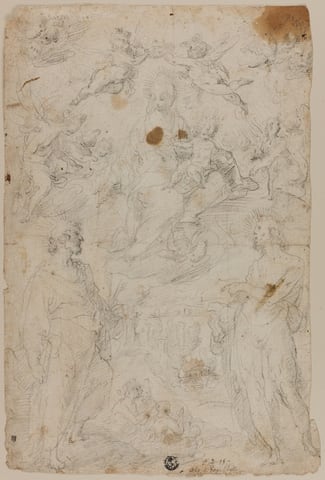
  4. A work made of black chalk (recto), and black chalk and pen and black ink (verso), on ivory laid paper.
    Virgin and Child with Saints Peter and John the Baptist (recto); Saint John the Baptist (verso)Pietro d' Asaro, n.d.Courtesy of the Art Institute of Chicago

Second room, north wall
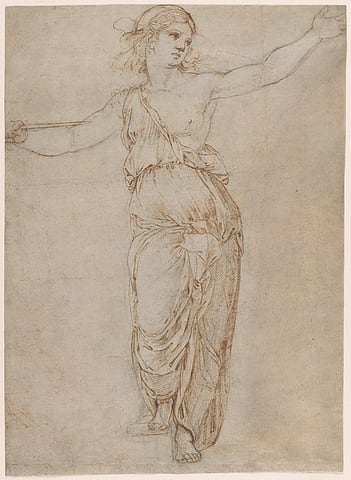
  1. Lucretia, by Raphael, 1508–10
    LucretiaRaphael, 1508–10Courtesy of The Metropolitan Museum of Art
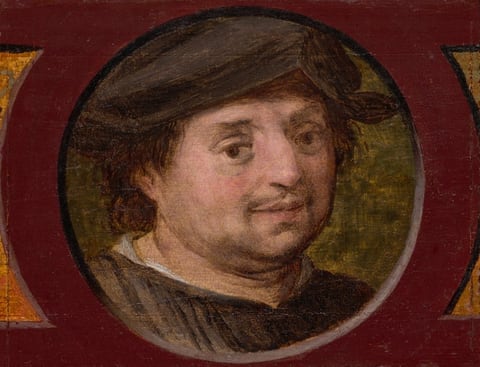
  2. A work made of oil on panel.
    Domenico da GambassiAndrea del Sarto, 1525–28Courtesy of the Art Institute of Chicago
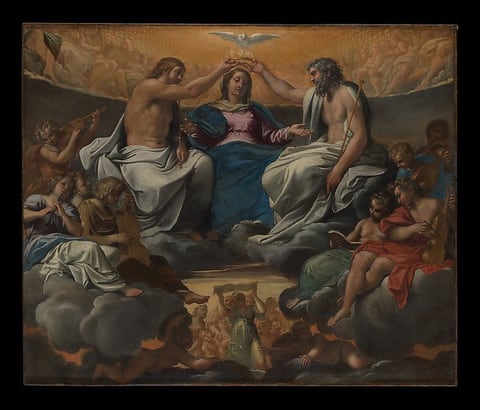
  3. The Coronation of the Virgin, by Annibale Carracci, after 1595
    The Coronation of the VirginAnnibale Carracci, after 1595Courtesy of The Metropolitan Museum of Art
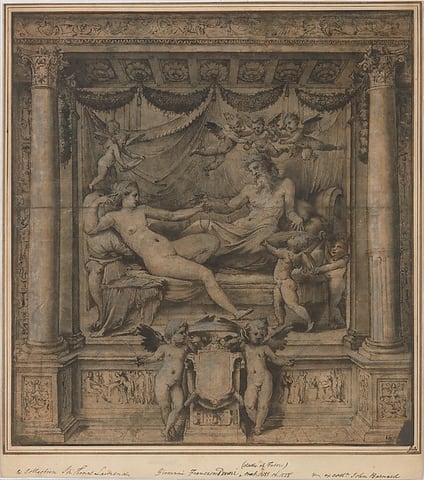
  4. Jupiter and Juno: Study for the "Furti di Giove" Tapestries, by Perino del Vaga (Pietro Buonaccorsi), ca. 1532–35
    Jupiter and Juno: Study for the "Furti di Giove" TapestriesPerino del Vaga (Pietro Buonaccorsi), ca. 1532–35Courtesy of The Metropolitan Museum of Art