Baroque and Rococo

Works in this room
Drama, movement and deep shadow in the 1600s, then the light, playful decoration of eighteenth-century Europe.
First room, north wall
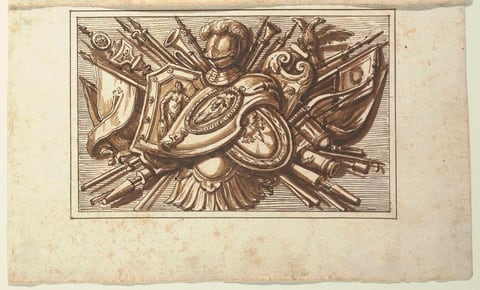
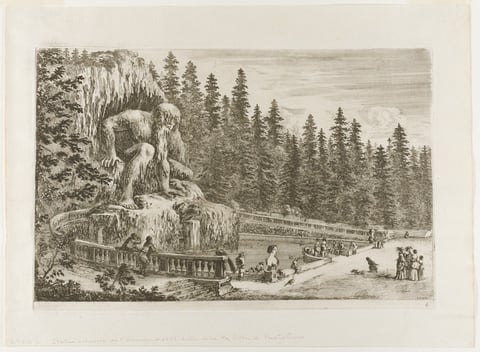
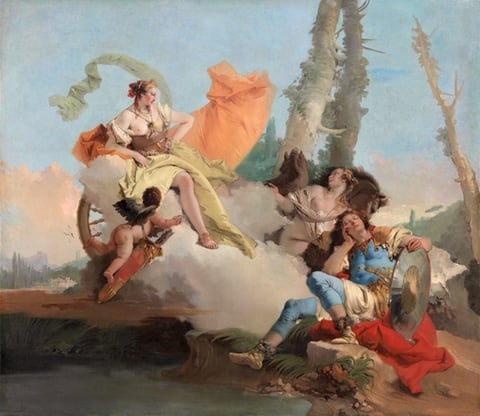
One of a set of trophies of weapons of war as a decoration of a horizontal panelFrancesco Bedeschini, Italian, 1675-1699Courtesy of Cooper Hewitt, Smithsonian Design Museum The Colossal Statue of the Apennines, from Views of Villa di PratolinoStefano della Bella, c. 1653Courtesy of the Art Institute of Chicago Armida Encounters the Sleeping RinaldoGiovanni Battista Tiepolo, c. 1742–45Courtesy of the Art Institute of Chicago
First room, south wall
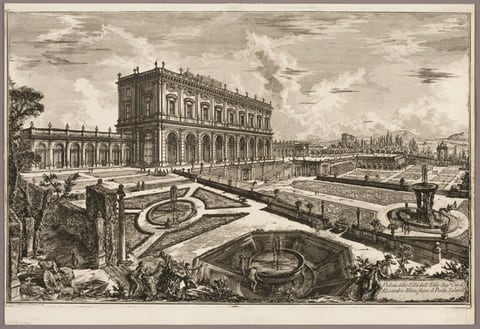
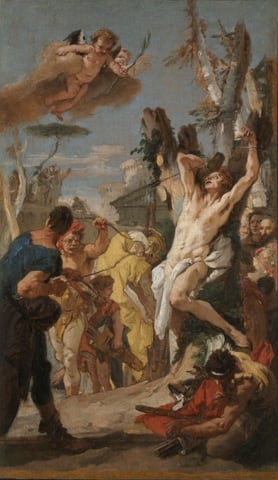
Jacopo ButeraFrancesco Solimena, c. 1695Courtesy of the Art Institute of Chicago View of the Villa of His Eminence Cardinal Alessandro Albani, outside Porta Salaria, from Views of RomeGiovanni Battista Piranesi, 1769, published 1800–07Courtesy of the Art Institute of Chicago Study for "The Martyrdom of Saint Sebastian" (for the Augustinian monastery at Diessen, Germany)Giovanni Battista Tiepolo, 1739Courtesy of the Cleveland Museum of Art
Second room, south wall
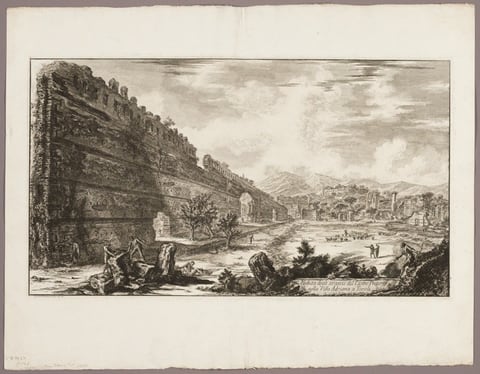
View of the Remains of the Praetorian Fort [the Poecile], Hadrian's Villa, Tivoli, from Views of RomeGiovanni Battista Piranesi, 1770Courtesy of the Art Institute of Chicago 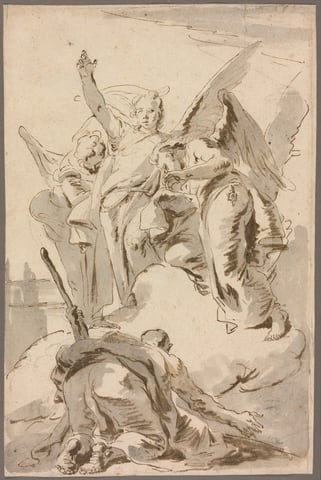
Three Angels Appearing to AbrahamGiovanni Battista Tiepolo, c. 1726Courtesy of the Art Institute of Chicago 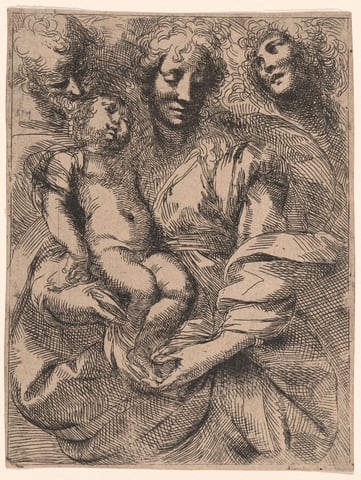
The Holy FamilyGiulio Cesare Procaccini, 1613/15Courtesy of the Art Institute of Chicago 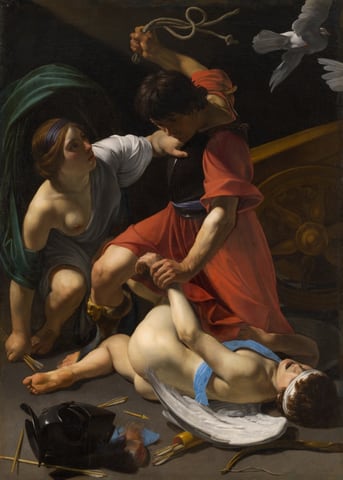
Cupid ChastisedBartolomeo Manfredi, 1613Courtesy of the Art Institute of Chicago
Second room, north wall
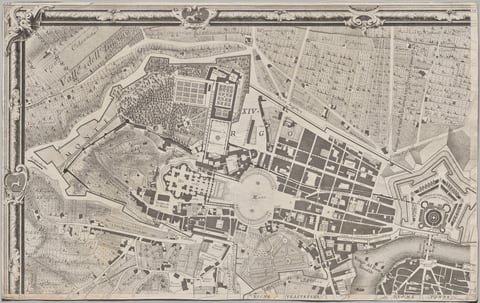
Nuova pianta di Roma data in luce da Giambattista Nolli l’anno MDCCXLVII, known as La Pianta Grande di RomaGiovanni Battista Nolli, 1748Courtesy of the Cleveland Museum of Art 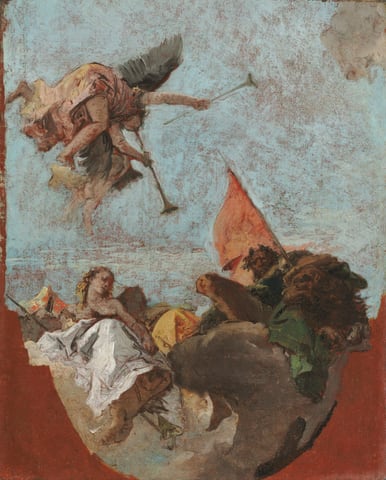
Sketch for a CeilingGiovanni Battista Tiepolo, 1750sCourtesy of the Cleveland Museum of Art 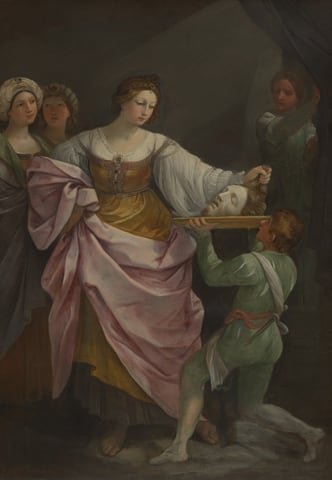
Salome with the Head of Saint John the BaptistGuido Reni, c. 1639–42Courtesy of the Art Institute of Chicago
Third room, north wall

The Supper at EmmausGiovanni Battista Piazzetta, c. 1720Courtesy of the Cleveland Museum of Art 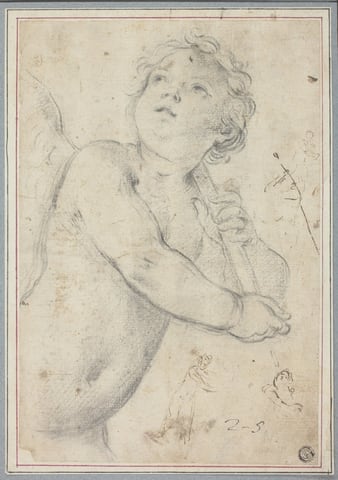
Putto Holding StaffGuido Reni, n.d.Courtesy of the Art Institute of Chicago 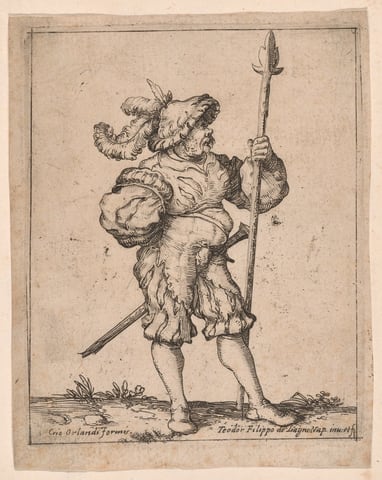
Soldier in Profile Holding a Pike, from Capricci e habiti militariFilippo Napoletano, 1610/29Courtesy of the Art Institute of Chicago