Floor plan

Artist galleriesUnrecorded makers

Unrecorded makers

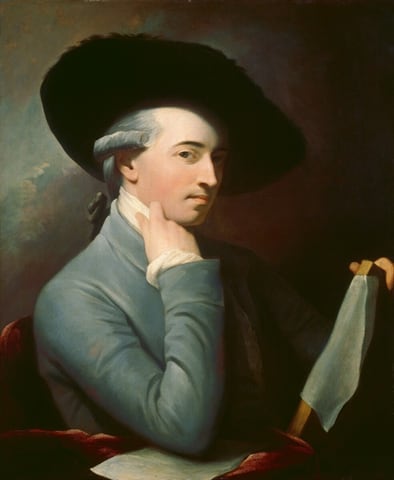
Shown from about the ribcage up, a cleanshaven man with pale skin sits with his elbow resting on the arm of his chair so the back of those fingers brush his chin in this vertical portrait painting. His body and face are angled to our right almost in profile so he looks at us from the corners of his brown eyes under dark, arched eyebrows. He has a straight nose, and his pale coral-pink lips are closed. His nickel-gray hair is curled along his ears and pulled back with an olive-green bow at the nape of his neck. His large hat is pushed back over his forehead, away from us, so its wide brim creates a dark circle around his face. The lapels of his steel-blue, tight-fitting jacket are folded back over a high, white collar. The edge of the white shirt also shows at the cuff of his right hand. The elbow closer to us rests on what might be a piece of light gray paper or piece of fabric, over a cranberry-red cloth or the arm of the upholstered chair. His left hand, farther from us, is propped on a wood frame or board, to which a small, white, square cloth appears to be affixed or draped. The light falls strongly from our upper left so his profile is brightly lit against the dark shadows on the far side of his face. The background darkens from light, slate blue to our left to coffee brown to our right.
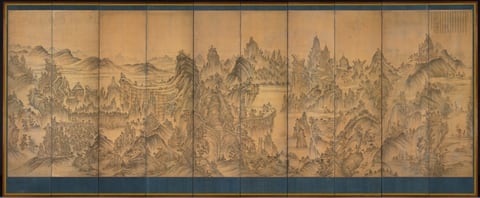
Seven Jeweled Mountain, late 1800s
A work made of opaque watercolor on paper.
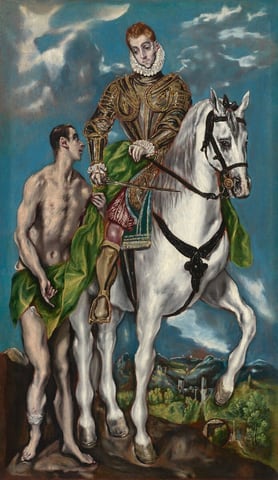
A nearly nude man with peachy skin stands next to and looks up at a man with ashen, ivory-colored skin, wearing armor and riding a bright white horse in this vertical painting. The horizon line comes less than a quarter of the way up the composition, and the sky behind the men and horse is vivid, aqua blue with a few silvery-gray and pale, yellow clouds floating along the top edge of the composition. The painting is created with long, blended brushstrokes, and the limbs and features of the two men and horse are elongated and have delicate, dark outlines. The horse’s body is angled to our right but it looks at us from the corners of its dark eyes. One front leg is raised. The rider looks down toward the man on foot at his side, to our left. The rider has dark, arched eyebrows, a long, straight nose, a pointed chin, and short, copper-orange hair. Wide ruffs pleated into figure-eights encircle his neck and wrists. His chest and arms are covered with plates of steel-gray armor edged and decorated with gold bands and medallions. He wears crimson-red pantaloons and stockings with mustard-yellow boots. With his right hand, to our left, he holds the gold hilt of a long, thin sword along the horse’s body. With his other hand, he holds a swath of lime-green fabric, which drapes down the side of the horse and across the hips of the man standing next to the rider. The sheen of the fabric is suggested with canary-yellow highlights where it catches the light. The standing man has short, dark brown hair and eyebrows. He looks to our right in profile, toward the rider, with pink lips parted. He holds the green fabric with his left hand, to our right, and he has a bandage around his leg near his right ankle. The horse and man stand on a spit of dark brown land, with a landscape of trees, buildings, and mountains deep in the distance beyond.
A work made of hanging scroll; ink, colors, and cut gold on silk.
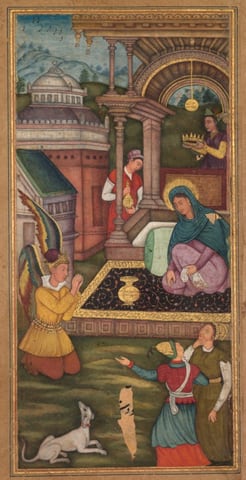
The Annunciation (folio 15 recto), from a Mirror of Holiness (Mir’at al-quds) of Father Jerome Xavier, 1602–4
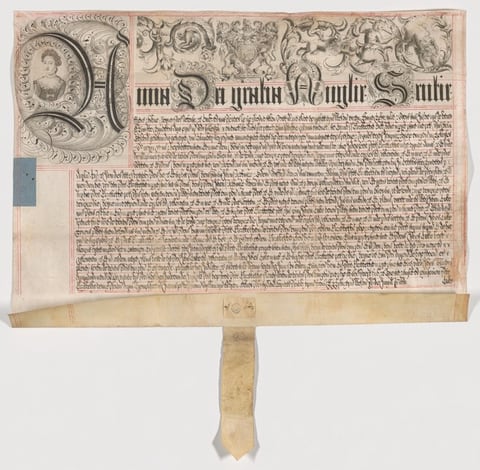
A work made of engraved letterhead, pen and ink calligraphy, and graphite ruling on parchment, folded with strap and (missing) seal.

The works in this room are listed below.

Works in this room

Works whose makers the museums don't name.

First room, north wall

  1. Shown from about the ribcage up, a cleanshaven man with pale skin sits with his elbow resting on the arm of his chair so the back of those fingers brush his chin in this vertical portrait painting. His body and face are angled to our right almost in profile so he looks at us from the corners of his brown eyes under dark, arched eyebrows. He has a straight nose, and his pale coral-pink lips are closed. His nickel-gray hair is curled along his ears and pulled back with an olive-green bow at the nape of his neck. His large hat is pushed back over his forehead, away from us, so its wide brim creates a dark circle around his face. The lapels of his steel-blue, tight-fitting jacket are folded back over a high, white collar. The edge of the white shirt also shows at the cuff of his right hand. The elbow closer to us rests on what might be a piece of light gray paper or piece of fabric, over a cranberry-red cloth or the arm of the upholstered chair. His left hand, farther from us, is propped on a wood frame or board, to which a small, white, square cloth appears to be affixed or draped. The light falls strongly from our upper left so his profile is brightly lit against the dark shadows on the far side of his face. The background darkens from light, slate blue to our left to coffee brown to our right.
    Benjamin WestUnrecorded maker, c. 1776Courtesy National Gallery of Art, Washington
  2. Seven Jeweled Mountain, late 1800s
    Seven Jeweled MountainUnrecorded Korean maker, late 1800sCourtesy of the Cleveland Museum of Art
  3. A work made of opaque watercolor on paper.
    The Infant Krishna Spirited Away by Vasudev, from a copy of the Dispersed Bhagavat PuranaUnrecorded Indian maker, c. 1520–1530Courtesy of the Art Institute of Chicago

First room, south wall

  1. A nearly nude man with peachy skin stands next to and looks up at a man with ashen, ivory-colored skin, wearing armor and riding a bright white horse in this vertical painting. The horizon line comes less than a quarter of the way up the composition, and the sky behind the men and horse is vivid, aqua blue with a few silvery-gray and pale, yellow clouds floating along the top edge of the composition. The painting is created with long, blended brushstrokes, and the limbs and features of the two men and horse are elongated and have delicate, dark outlines. The horse’s body is angled to our right but it looks at us from the corners of its dark eyes. One front leg is raised. The rider looks down toward the man on foot at his side, to our left. The rider has dark, arched eyebrows, a long, straight nose, a pointed chin, and short, copper-orange hair. Wide ruffs pleated into figure-eights encircle his neck and wrists. His chest and arms are covered with plates of steel-gray armor edged and decorated with gold bands and medallions. He wears crimson-red pantaloons and stockings with mustard-yellow boots. With his right hand, to our left, he holds the gold hilt of a long, thin sword along the horse’s body. With his other hand, he holds a swath of lime-green fabric, which drapes down the side of the horse and across the hips of the man standing next to the rider. The sheen of the fabric is suggested with canary-yellow highlights where it catches the light. The standing man has short, dark brown hair and eyebrows. He looks to our right in profile, toward the rider, with pink lips parted. He holds the green fabric with his left hand, to our right, and he has a bandage around his leg near his right ankle. The horse and man stand on a spit of dark brown land, with a landscape of trees, buildings, and mountains deep in the distance beyond.
    Saint Martin and the BeggarUnrecorded Greek maker, 1600/1614Courtesy National Gallery of Art, Washington
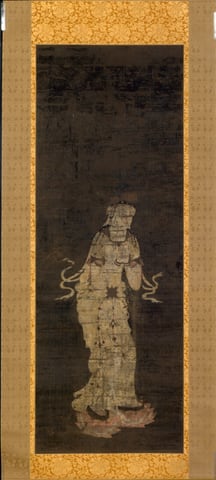
  2. A work made of hanging scroll; ink, colors, and cut gold on silk.
    The Bodhisattva Seishi, from the triptych Approach of the Amida TrinityUnrecorded Japanese maker, Kamakura Period, mid–13th centuryCourtesy of the Art Institute of Chicago
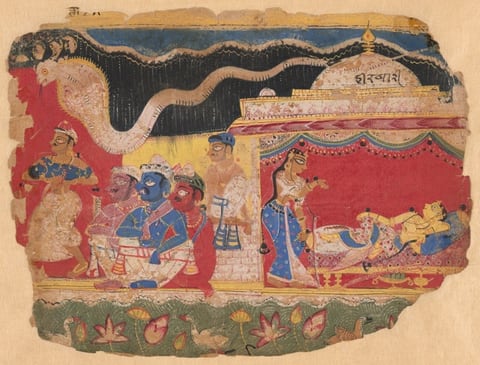
  3. The Annunciation (folio 15 recto), from a Mirror of Holiness (Mir’at al-quds) of Father Jerome Xavier, 1602–4
    The Annunciation (folio 15 recto), from a Mirror of Holiness (Mir’at al-quds) of Father Jerome XavierUnrecorded Indian maker, 1602–4Courtesy of the Cleveland Museum of Art
  4. A work made of engraved letterhead, pen and ink calligraphy, and graphite ruling on parchment, folded with strap and (missing) seal.
    Recovery Document (Land Title Grant)Unrecorded British maker, 1702/14 (Queen Anne period)Courtesy of the Art Institute of Chicago

Second room, south wall
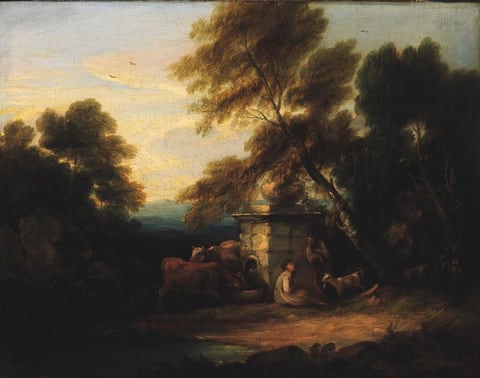
  1. Small Landscape, ca. 1750-1800
    Small LandscapeUnrecorded British maker, ca. 1750-1800Courtesy of the Smithsonian American Art Museum
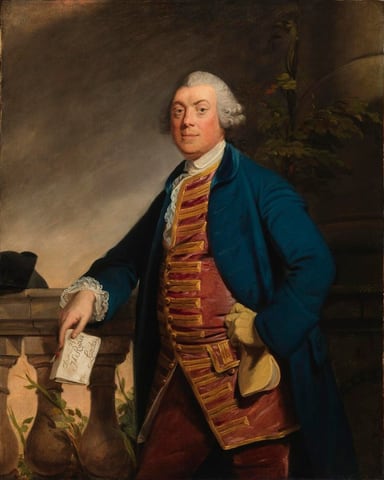
  2. Lord Rothes, 1768
    Lord RothesUnrecorded British maker, 1768Courtesy of the Smithsonian American Art Museum
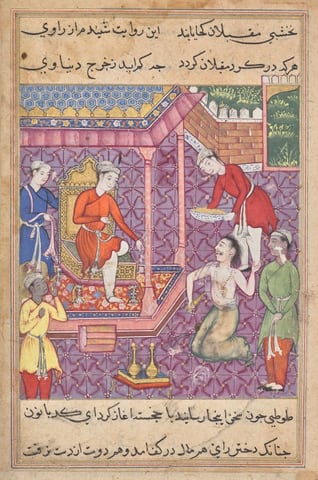
  3. The magician disguised as a Brahman returns to claim his “daughter-in-law,” from a Tuti-nama (Tales of a Parrot): Thirty-fifth Night, c. 1560
    The magician disguised as a Brahman returns to claim his “daughter-in-law,” from a Tuti-nama (Tales of a Parrot): Thirty-fifth NightUnrecorded Indian maker, c. 1560Courtesy of the Cleveland Museum of Art
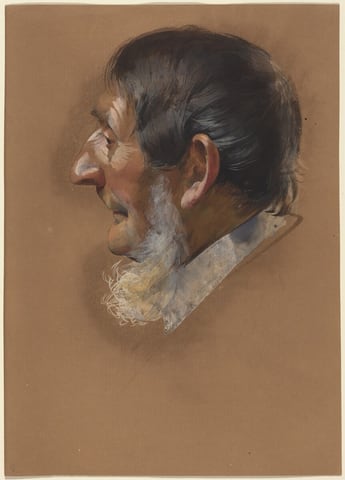
  4. The image shows a man's head and part of his neck in profile view. The man is looking to the left, showcasing his facial features. He has a prominent nose, cheekbones, dark hair with hints of gray at the sides, and a white beard under his chin. He is wearing a gray collar that is partially visible. The background is a plain, muted brown color. There are no objects or jewelry visible in the image.
    Profile of a Man with SidewhiskersUnrecorded German maker, c. 1850Courtesy National Gallery of Art, Washington

Second room, north wall
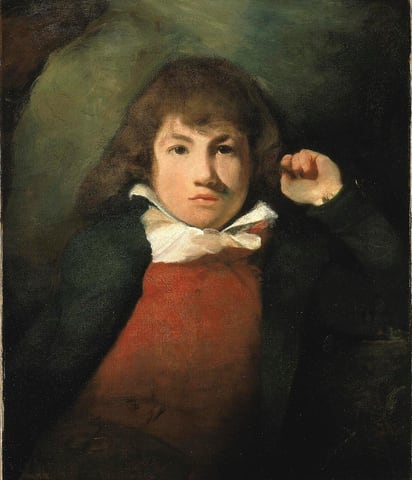
  1. Portrait of a Boy, ca. 1800
    Portrait of a BoyUnrecorded Italian maker, ca. 1800Courtesy of the Smithsonian American Art Museum
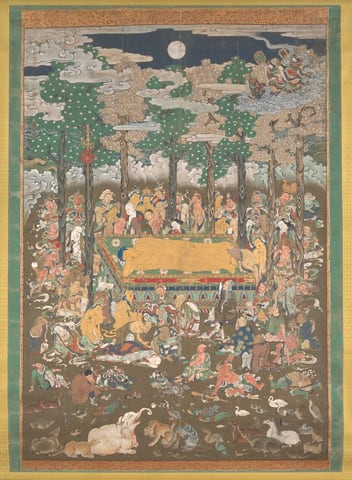
  2. A work made of hanging scroll; ink, colors, and gold on silk.
    Nehan: Death of the BuddhaUnrecorded Japanese maker, late 17th/early 18th centuryCourtesy of the Art Institute of Chicago

Third room, north wall
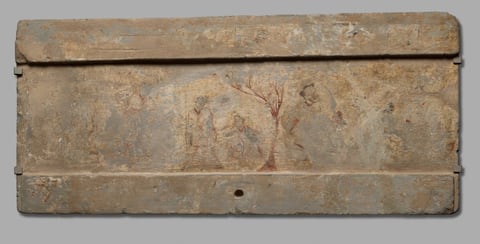
  1. The Killing of Three Warriors with Two Peaches, 202 BCE–220 CE
    The Killing of Three Warriors with Two PeachesUnrecorded Chinese maker, 202 BCE–220 CECourtesy of the Cleveland Museum of Art
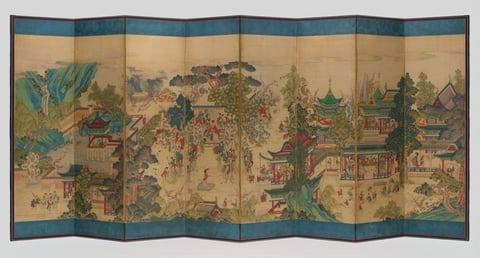
  2. A work made of ink and color on silk.
    Joyous Banquet of Guo Ziyi (곽분양행락도)Unrecorded Korean maker, Joseon dynasty (1392–1910), 19th centuryCourtesy of the Art Institute of Chicago
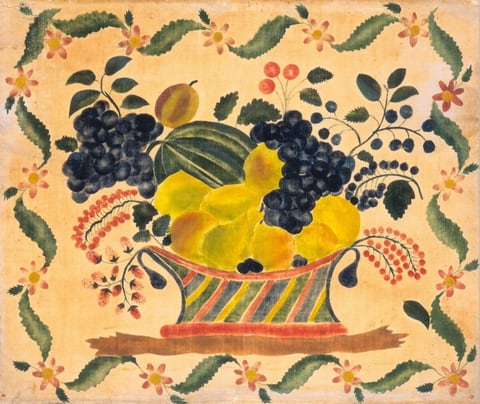
  3. Basket of Fruit, c. 1830
    Basket of FruitUnrecorded American maker, c. 1830Courtesy National Gallery of Art, Washington