Floor plan

Artist galleriesJules Breton's contemporaries
Jules Breton's contemporaries
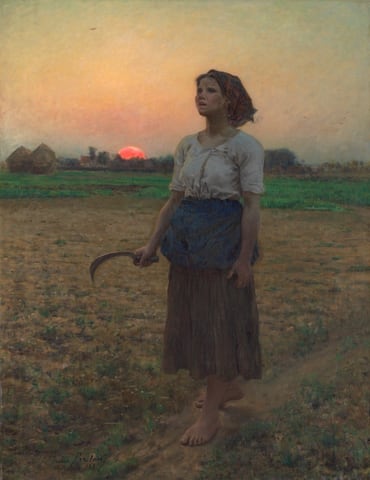
A work made of oil on canvas.
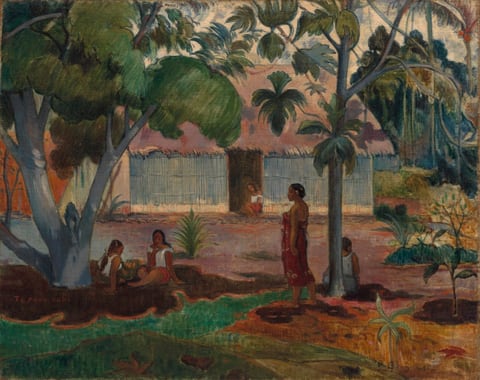
The Large Tree, by Paul Gauguin, 1891
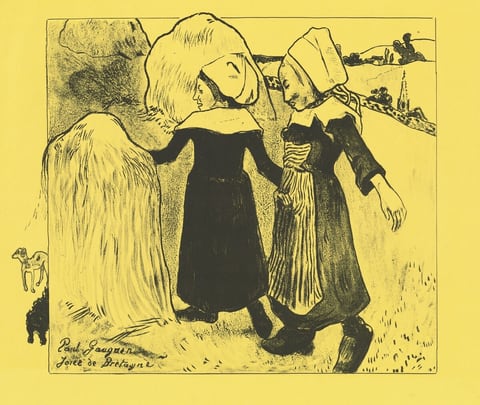
The image shows two women walking arm in arm, both in traditional attire. One woman is facing away with a slight profile, while the other is seen from the side. Their faces are stylized and simplistic with covered hair. They wear long dresses with aprons and collars, and one has a striped apron. Haystacks and greenery surround them. Faint figures are in the background, as well as a spire-like structure. A dog is seen near the haystack, with simple lines suggesting a landscape.
A work made of conté crayon on gray-blue wove paper.
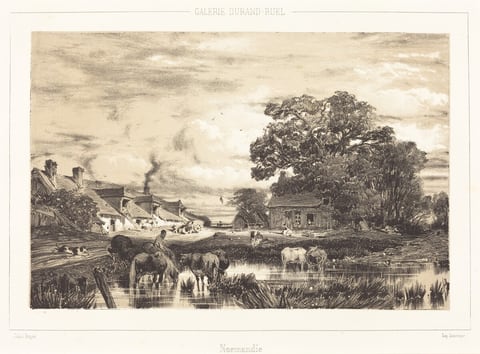
This image shows a rural landscape with a pond in the foreground where cattle are being herded by a person on horseback. There are low buildings with smoking chimneys in the middle ground. Trees on the horizon separate the land from the sky, which is filled with clouds. The painting is detailed with a consistent brushwork, capturing foliage and buildings. The color palette is primarily sepia, giving a vintage and serene feel to the scene.
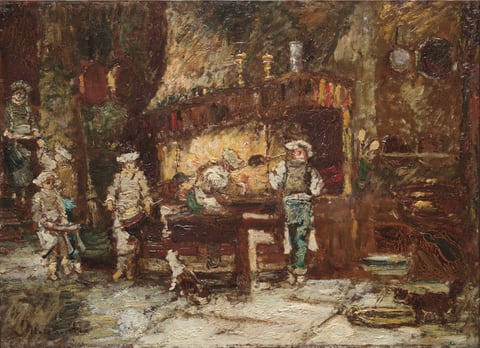
The Kitchen of the Rôtisserie des Deux Paons, by Adolphe Monticelli, c. 1875–1881

The works in this room are listed below.

Works in this room

A few works by Jules Breton, then their contemporaries: makers of the same nationality born within 25 years of them, then works from the same century and place.

With their contemporaries

  1. A work made of oil on canvas.
    The Song of the LarkJules Breton, 1884Courtesy of the Art Institute of Chicago
  2. The Large Tree, by Paul Gauguin, 1891
    The Large TreePaul Gauguin, 1891Courtesy of the Cleveland Museum of Art
  3. The image shows two women walking arm in arm, both in traditional attire. One woman is facing away with a slight profile, while the other is seen from the side. Their faces are stylized and simplistic with covered hair. They wear long dresses with aprons and collars, and one has a striped apron. Haystacks and greenery surround them. Faint figures are in the background, as well as a spire-like structure. A dog is seen near the haystack, with simple lines suggesting a landscape.
    Pleasures of Brittany (Joies de Bretagne)Paul Gauguin, 1889Courtesy National Gallery of Art, Washington

Their contemporaries

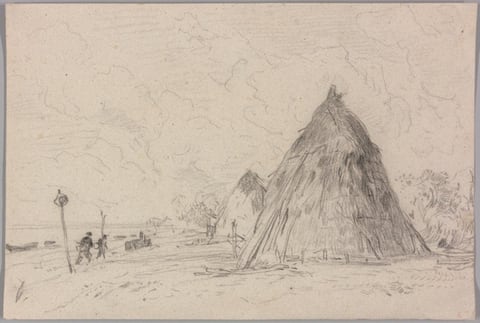
  1. A work made of conté crayon on gray-blue wove paper.
    Landscape with HaystacksConstant Troyon, n.d.Courtesy of the Art Institute of Chicago
  2. This image shows a rural landscape with a pond in the foreground where cattle are being herded by a person on horseback. There are low buildings with smoking chimneys in the middle ground. Trees on the horizon separate the land from the sky, which is filled with clouds. The painting is detailed with a consistent brushwork, capturing foliage and buildings. The color palette is primarily sepia, giving a vintage and serene feel to the scene.
    View in Normandy (Vue prise en Normandie)Jules Dupré, 1835Courtesy National Gallery of Art, Washington
  3. The Kitchen of the Rôtisserie des Deux Paons, by Adolphe Monticelli, c. 1875–1881
    The Kitchen of the Rôtisserie des Deux PaonsAdolphe Monticelli, c. 1875–1881Courtesy of the Cleveland Museum of Art

Their contemporaries, second
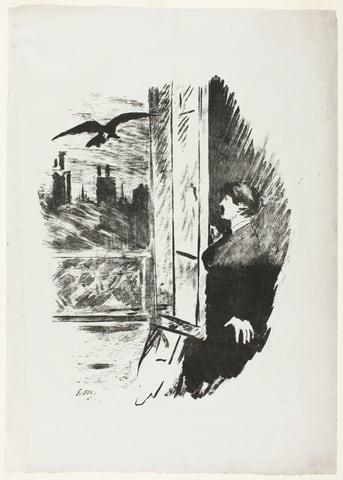
  1. A work made of transfer lithograph in black on gray china paper.
    At the window ("Open here I flung the shutter..."), from The Raven (Le Corbeau)Édouard Manet, 1875Courtesy of the Art Institute of Chicago
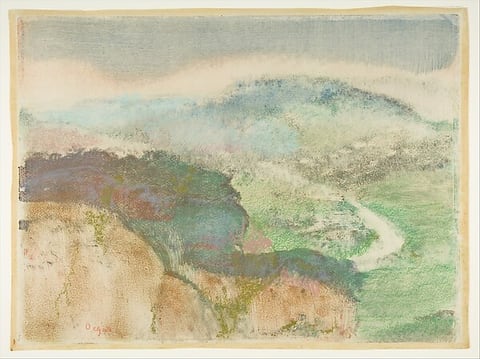
  2. Landscape, by Edgar Degas, 1892
    LandscapeEdgar Degas, 1892Courtesy of The Metropolitan Museum of Art