Ukiyo-e
Works in this room
Japanese woodblock prints of the floating world: actors, courtesans, landscapes and the sea.
Section 1, north wall
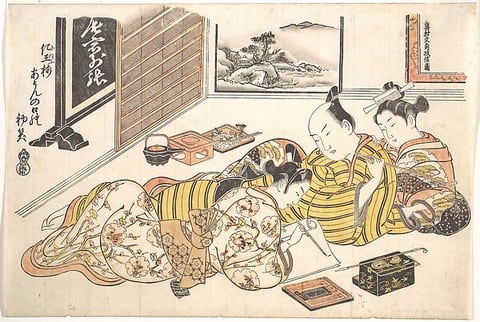
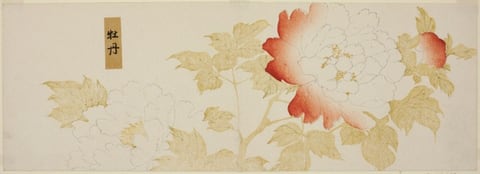
Plate from the Erotic Book Mounds of Dyed Colors: A Pattern Book for the Boudoir (Someiro no yama neya no hinagata), First MonthOkumura Masanobu, ca. 1736–44Courtesy of The Metropolitan Museum of Art PeoniesKitagawa Utamaro, n.d.Courtesy of the Art Institute of Chicago
Section 1, south wall
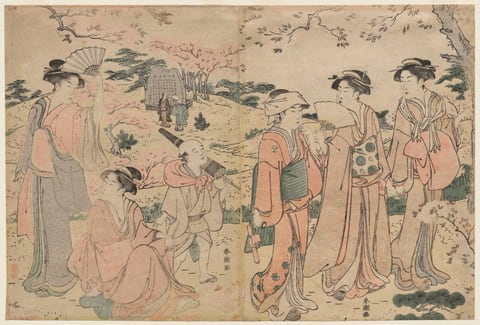
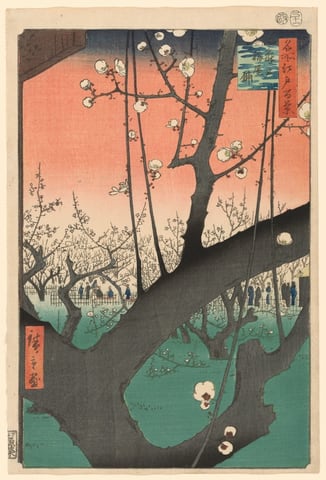
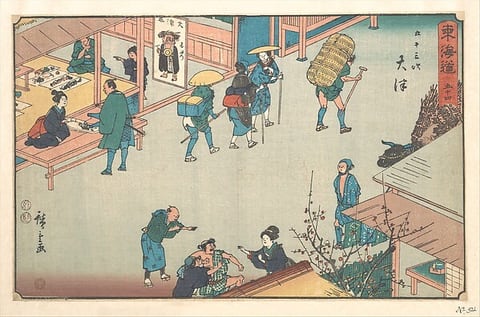
Women Viewing Cherry Blossoms at AsukayamaKatsukawa Shunchô, 1780sCourtesy of the Cleveland Museum of Art Plum Garden at Kameido (Kameido Umeyashiki), from the series "One Hundred Famous Views of Edo (Meisho Edo hyakkei)"Utagawa Hiroshige, 1857Courtesy of the Art Institute of Chicago Ōtsu, from the series The Fifty-Three Stations of the Tōkaidō Road (Tōkaidō gojūsan tsugi, Ōtsu)Unrecorded Japanese maker, 1847–52Courtesy of The Metropolitan Museum of Art
Section 2, south wall
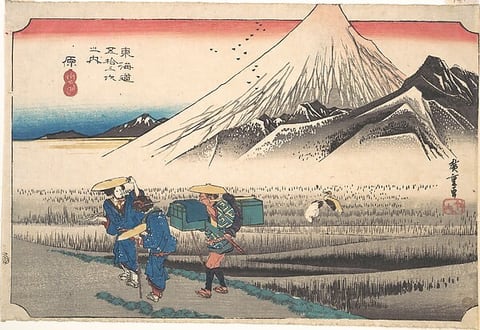
Hara: Mount Fuji in the Morning (Hara, Asa no Fuji), from the series Fifty-Three Stations of the Tōkaidō Road (Tōkaidō gojūsan tsugi), also known as the First Tōkaidō or Great TōkaidōUtagawa Hiroshige, ca. 1833–34Courtesy of The Metropolitan Museum of Art 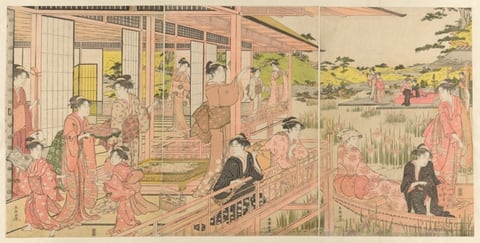
Iris GardenKatsukawa Shunchô, c. 1781/89Courtesy of the Art Institute of Chicago 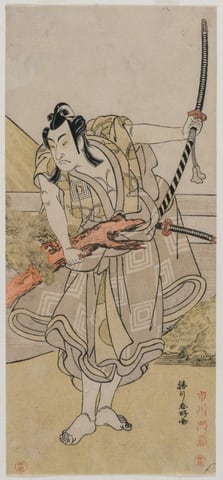
Ichikawa Monnosuke II as Soga no GorōKatsukawa Shunkō, 1779Courtesy of the Cleveland Museum of Art
Section 2, north wall
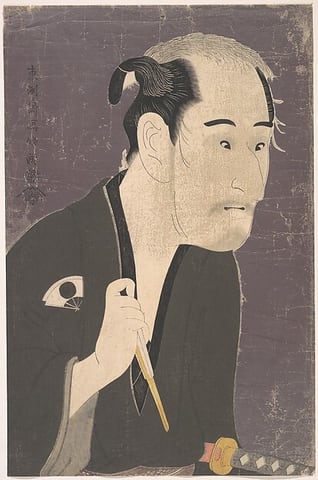
The Actor Onoye Matsusuke as a RoninTōshūsai SharakuCourtesy of The Metropolitan Museum of Art 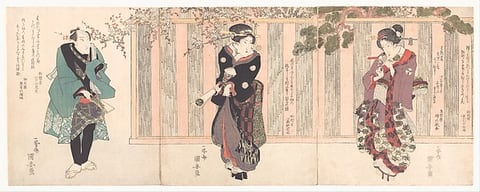
Three Kabuki Actors Playing HanetsukiUtagawa Kuniyasu, ca. 1823Courtesy of The Metropolitan Museum of Art 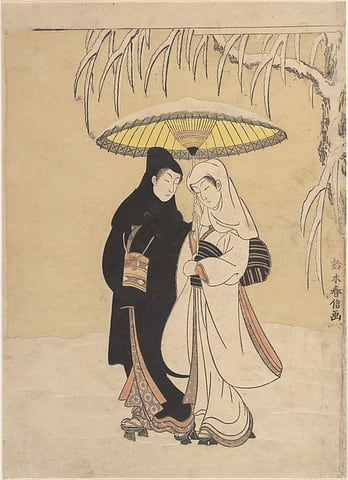
Lovers Walking in the Snow (Crow and Heron)Suzuki Harunobu, 1764–72Courtesy of The Metropolitan Museum of Art
Section 3, north wall
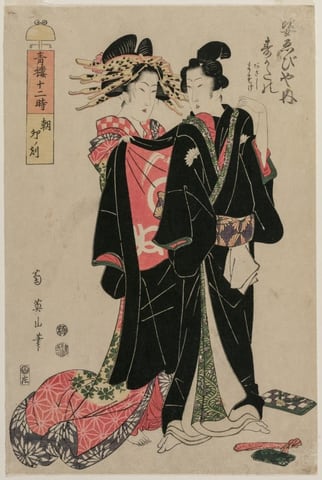
Sugatano of Sugata Ebisuya in the Morning, Hour of the Rabbit, from the series The Twelve Hours in the Pleasure QuartersKikukawa Eizan, 1812Courtesy of the Cleveland Museum of Art 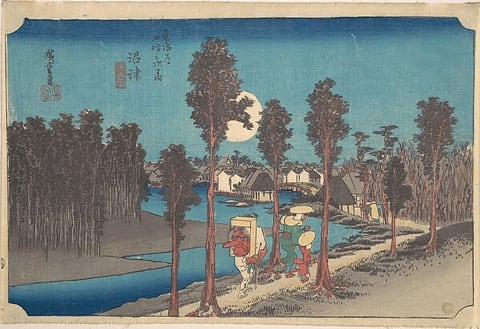
Numazu Ki KureUtagawa Hiroshige, ca. 1834Courtesy of The Metropolitan Museum of Art 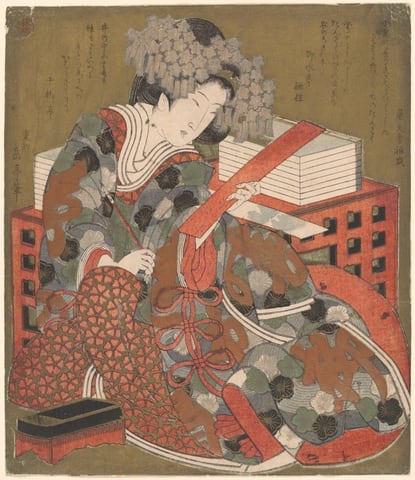
Woman About to Write a PoemYashima Gakutei, c. 1824Courtesy of the Art Institute of Chicago
Section 3, south wall
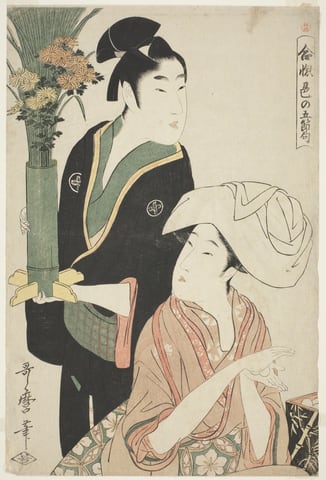
The Ninth Month, from the series Five Amorous Festivals of Love (Aibore iro no gosekku)Kitagawa Utamaro, 1801Courtesy of the Art Institute of Chicago 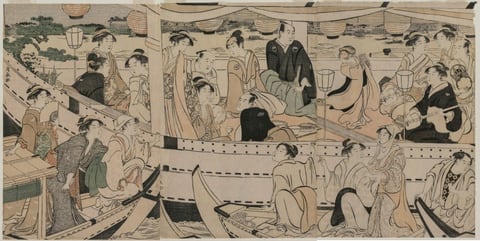
Boating Party on the Sumida RiverTorii Kiyonaga, 1789Courtesy of the Cleveland Museum of Art