Ukiyo-e
Works in this room
Japanese woodblock prints of the floating world: actors, courtesans, landscapes and the sea.
Section 1, north wall
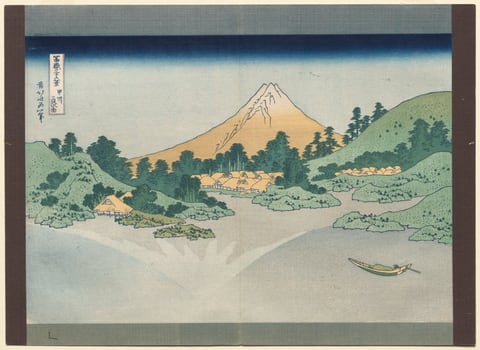
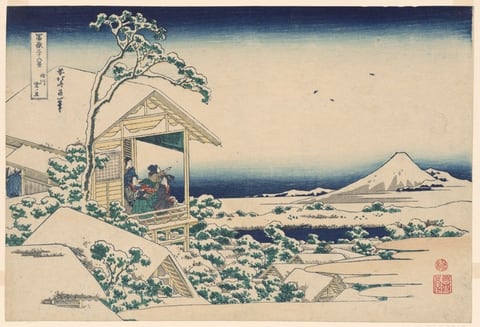
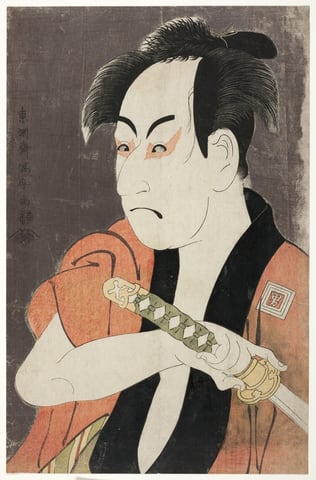
Thirty-Six Views of Mt. Fuji: The Surface of Lake Misaka in Kai ProvinceKatsushika Hokusai, early 1830sCourtesy of the Cleveland Museum of Art Snowy Morning from Koishikawa (Koishikawa yuki no ashita), from the series "Thirty-six Views of Mount Fuji (Fugaku sanjurokkei)"Katsushika Hokusai, c. 1830/33Courtesy of the Art Institute of Chicago The actor Ichikawa Omezo as the manservant IppeiTōshūsai Sharaku, 1794Courtesy of the Art Institute of Chicago
Section 1, south wall
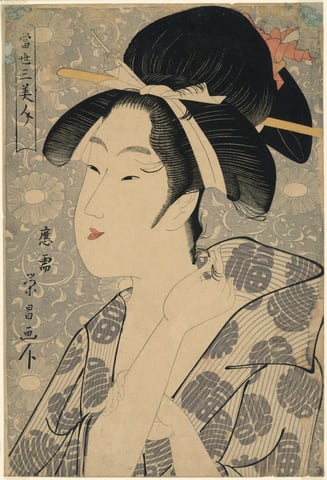
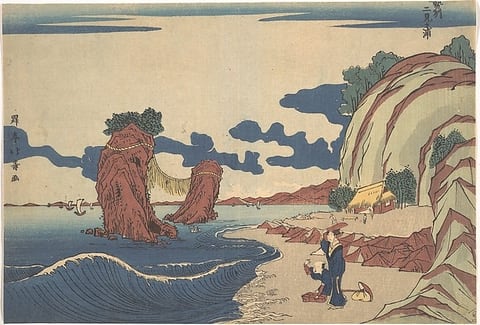
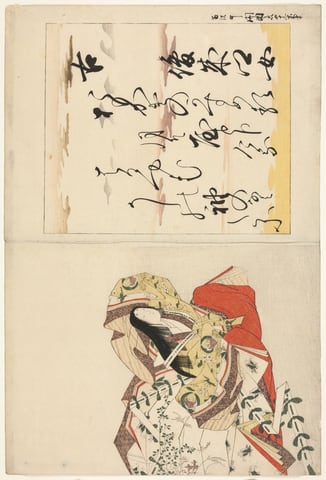
Three Beauties of Our Time (Tosei san bijin)Chokosai Eisho, n.d.Courtesy of the Art Institute of Chicago View of Futami Beach at IseShōtei Hokuju, ca. 1810–1820Courtesy of The Metropolitan Museum of Art The Poetess Shunzei no Musume, from the series The Thirty-six Immortal Women Poets (Nishikizuri onna sanjurokkasen)Chôbunsai Eishi, Edo period (1615–1868), 1801Courtesy of the Art Institute of Chicago
Section 2, south wall
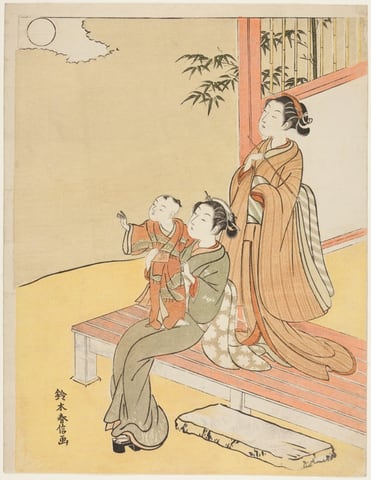
Viewing the MoonSuzuki Harunobu, c. 1767/68Courtesy of the Art Institute of Chicago 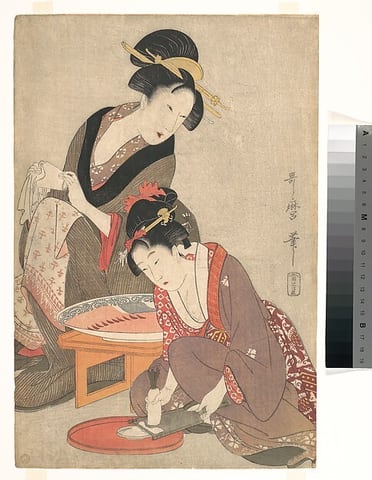
Women Grating Radish for SashimiKitagawa Utamaro, ca. 1798–99Courtesy of The Metropolitan Museum of Art
Section 2, north wall
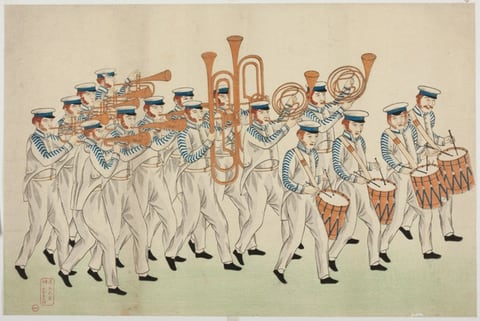
Procession of Russian Marching Band, from the Album of seven prints of Russian Army and Warship (Roshia seigi shashin kan), 1853Keiga, 1853Courtesy of the Art Institute of Chicago 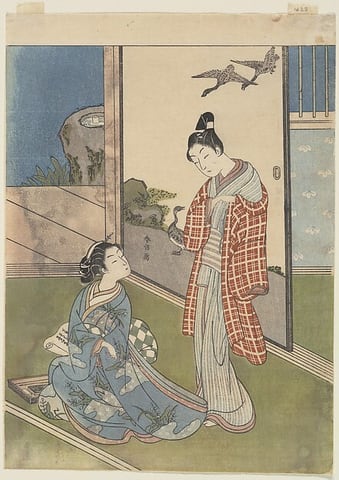
A Girl Writing a LetterSuzuki Harunobu, 18th centuryCourtesy of The Metropolitan Museum of Art 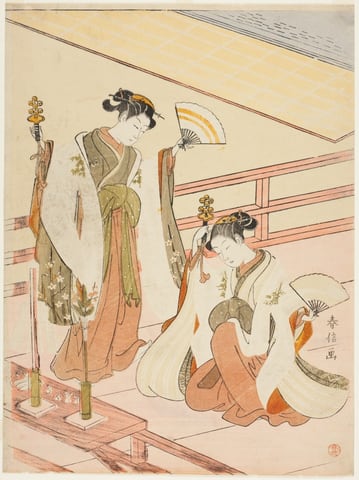
The Dance of the Shrine Maidens Ohatsu and OnamiSuzuki Harunobu, c. 1769Courtesy of the Art Institute of Chicago
Section 3, north wall
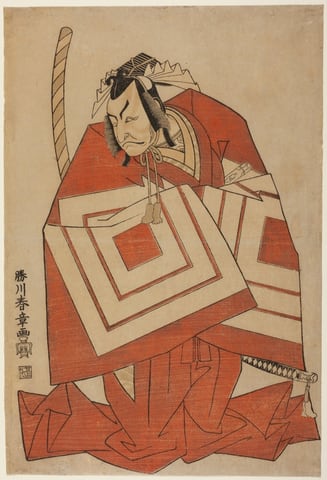
The Actor Ichikawa Danjuro IV in a "Shibaraku" Role, Possibly from the Play Ima o Sakari Suehiro Genji (The Genji Clan Now at Its Zenith), Performed at the Nakamura Theater from the First Day of the Eleventh Month, 1768Katsukawa Shunshō, c. 1768Courtesy of the Art Institute of Chicago 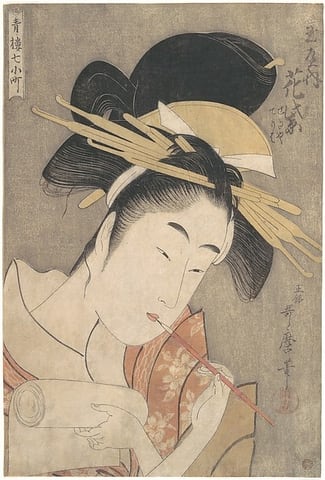
“Hanamurasaki of the Tamaya,” from the series Seven Komachi of the Pleasure Quarters (Seirō Nana Komachi)Kitagawa Utamaro, ca. 1790Courtesy of The Metropolitan Museum of Art 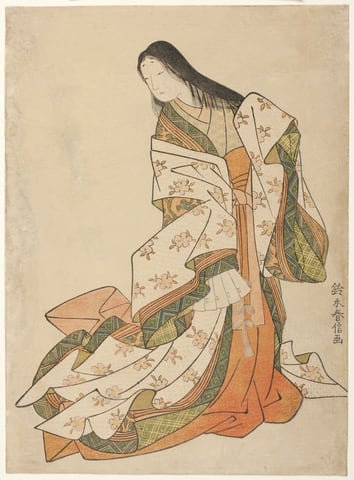
The Poetess Ono no KomachiSuzuki Harunobu, Edo period (1615–1868), 1767/68Courtesy of the Art Institute of Chicago
Section 3, south wall
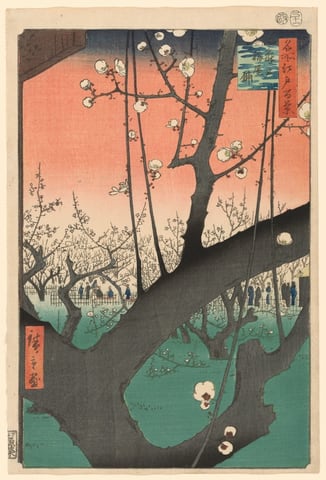
Plum Garden at Kameido (Kameido Umeyashiki), from the series "One Hundred Famous Views of Edo (Meisho Edo hyakkei)"Utagawa Hiroshige, 1857Courtesy of the Art Institute of Chicago 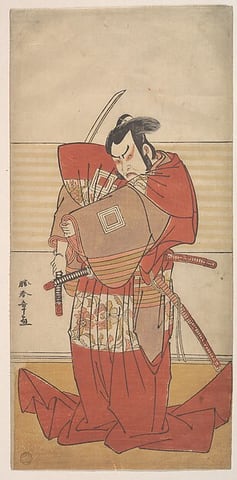
The Actor Ishikawa Danjuro V Performing a Shibaroku Act with a Drawn Sword in His HandKatsukawa Shunshō, ca. 1781Courtesy of The Metropolitan Museum of Art