Ukiyo-e
Works in this room
Japanese woodblock prints of the floating world: actors, courtesans, landscapes and the sea.
Section 1, north wall
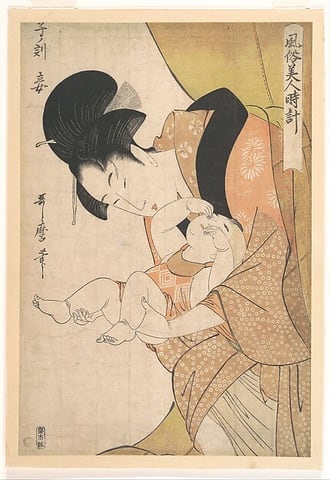
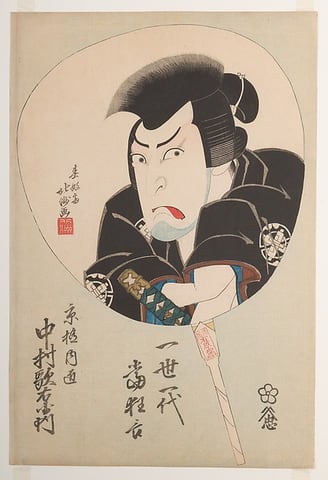
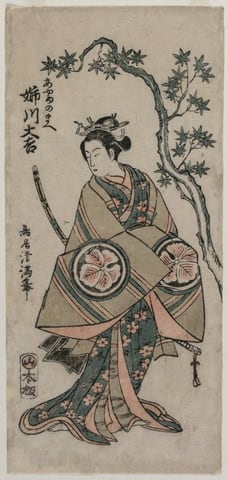
“Hour of the Rat: Mistress,” from the series Women’s Daily Customs (Fuzoku bijin tokei)Kitagawa Utamaro, 1790Courtesy of The Metropolitan Museum of Art Kabuki Actor Nakamura Utaemon III as the Sword Master Kyōgoku Takumi, from the series Issei ichidai atari Kyōgen (Hits of a Lifetime of Kyōgen)Shunkōsai Hokushū, 1825Courtesy of The Metropolitan Museum of Art Anekawa Daisuke as Ayame-no-maeTorii Kiyomitsu, 1760Courtesy of the Cleveland Museum of Art
Section 1, south wall
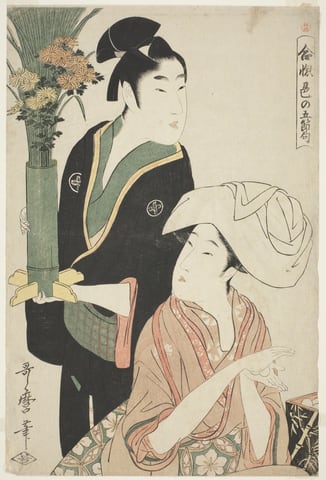
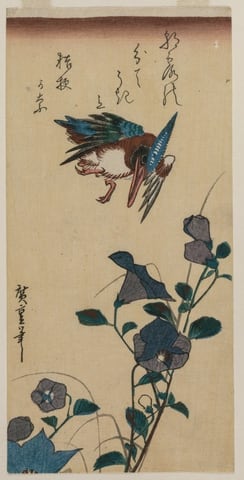
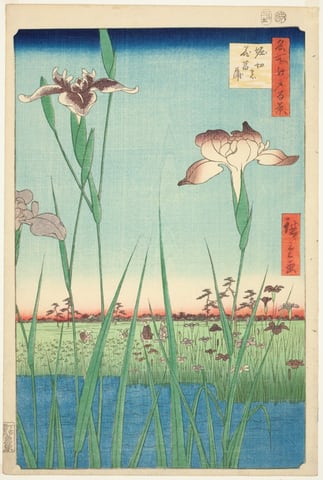
The Ninth Month, from the series Five Amorous Festivals of Love (Aibore iro no gosekku)Kitagawa Utamaro, 1801Courtesy of the Art Institute of Chicago Kingfisher and Chinese BellflowersUtagawa Hiroshige, early or mid-1830sCourtesy of the Cleveland Museum of Art Irises at Horikiri (Horikiri no hanashobu), from the series "One Hundred Famous Views of Edo (Meisho Edo hyakkei)"Utagawa Hiroshige, 1857Courtesy of the Art Institute of Chicago
Section 2, south wall
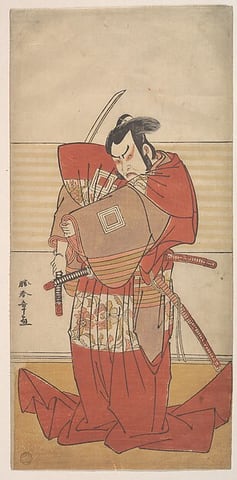
The Actor Ishikawa Danjuro V Performing a Shibaroku Act with a Drawn Sword in His HandKatsukawa Shunshō, ca. 1781Courtesy of The Metropolitan Museum of Art 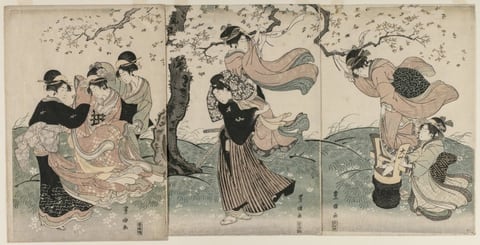
Cherry Blossoms in the WindUtagawa Toyokuni, late 1790sCourtesy of the Cleveland Museum of Art
Section 2, north wall
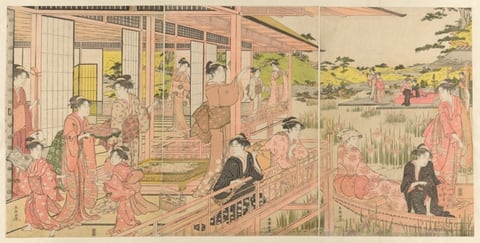
Iris GardenKatsukawa Shunchô, c. 1781/89Courtesy of the Art Institute of Chicago 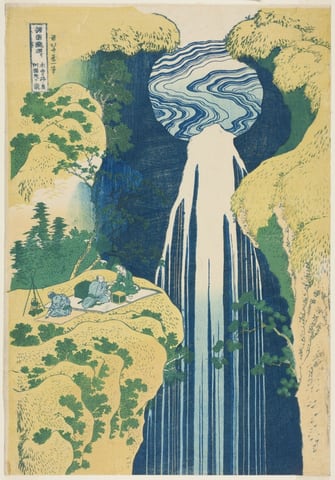
Amida Falls in the Far Reaches of the Kisokaido (Kisoji no oku Amidagataki), from the series "A Tour of Waterfalls in Various Provinces (Shokoku taki meguri)"Katsushika Hokusai, About 1833Courtesy of the Art Institute of Chicago
Section 3, north wall
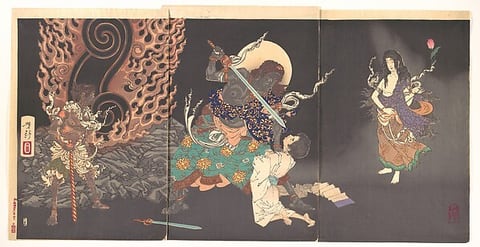
Fudō Myōō Threatening a NoviceTsukioka Yoshitoshi, 1885Courtesy of The Metropolitan Museum of Art 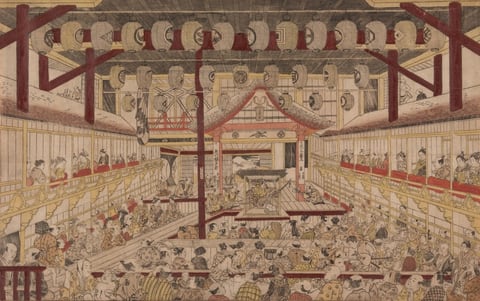
Perspective View of the Interior of the Nakamura Theater with Ichikawa Ebizo II as Yanone GoroOkumura Masanobu, 1740Courtesy of the Cleveland Museum of Art
Section 3, south wall
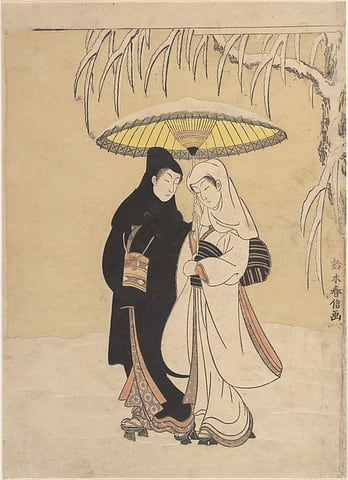
Lovers Walking in the Snow (Crow and Heron)Suzuki Harunobu, 1764–72Courtesy of The Metropolitan Museum of Art 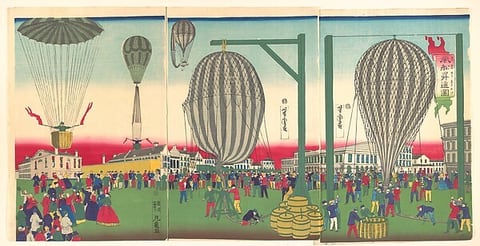
Illustration of a Balloon Ascending (Fūsen shōyō no zu)Utagawa Yoshitora, November, 1872Courtesy of The Metropolitan Museum of Art
Section 4, south wall
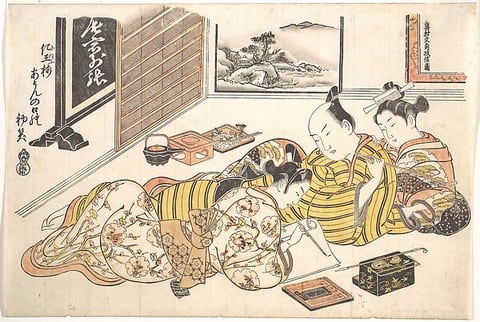
Plate from the Erotic Book Mounds of Dyed Colors: A Pattern Book for the Boudoir (Someiro no yama neya no hinagata), First MonthOkumura Masanobu, ca. 1736–44Courtesy of The Metropolitan Museum of Art 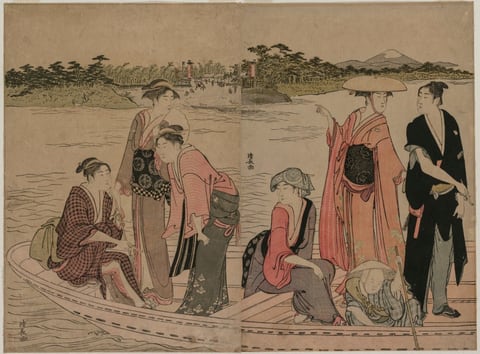
Passengers in a Ferry Boat on the Sumida RiverTorii Kiyonaga, 1784Courtesy of the Cleveland Museum of Art