Ukiyo-e
Works in this room
Japanese woodblock prints of the floating world: actors, courtesans, landscapes and the sea.
Section 1, north wall
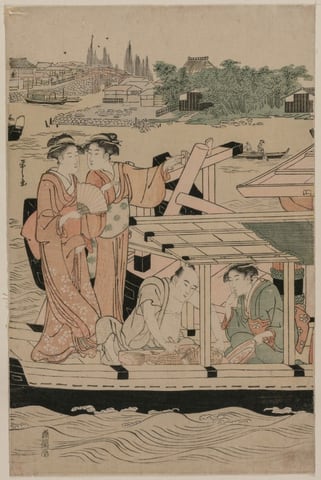
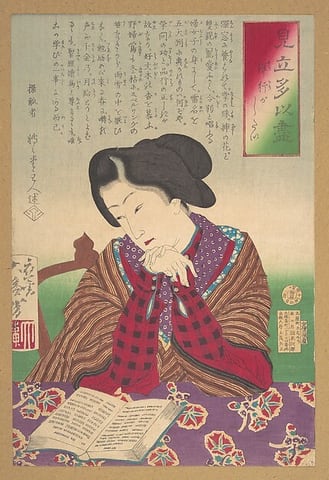
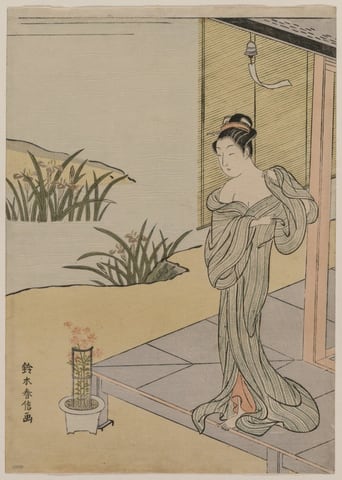
Leftmost Print from Pleasure Boats on the Sumida River beneath Shin-Ōhashi BridgeChôbunsai Eishi, c. 1792Courtesy of the Cleveland Museum of Art Collection of Desires, Wish for Foreign Travel (Mitate Tai zukushi-yōkō ga shitai)Tsukioka Yoshitoshi, January, 1878Courtesy of The Metropolitan Museum of Art Young Woman Looking at a Pot of PinksSuzuki Harunobu, c. 1767Courtesy of the Cleveland Museum of Art
Section 1, south wall
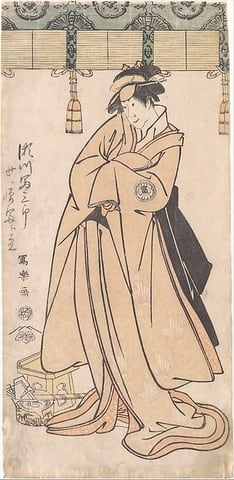
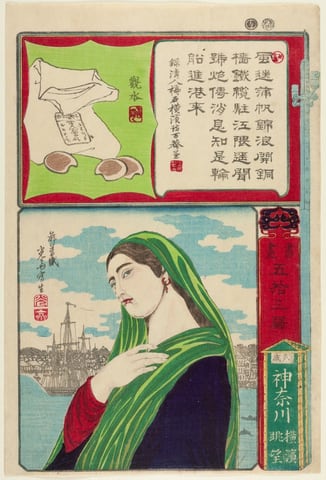
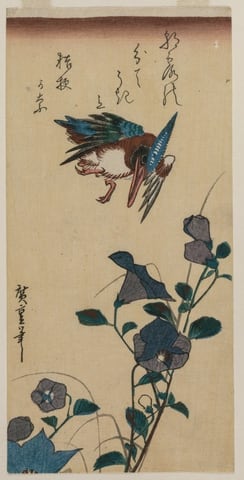
The Actor Segawa Tomisaburo II as the Otomos' Maid Wakakusa, Actually Prince KorehitoTōshūsai Sharaku, 1794–75Courtesy of The Metropolitan Museum of Art Kanagawa in Musashi Province: Distant View of Yokohama (Yokohama enbo), from the series Calligraphy and Pictures for the Fifty-three Stations of the Tokaido (Shoga gojusan eki)Utagawa Yoshimori, 1982Courtesy of the Art Institute of Chicago Kingfisher and Chinese BellflowersUtagawa Hiroshige, early or mid-1830sCourtesy of the Cleveland Museum of Art
Section 2, south wall
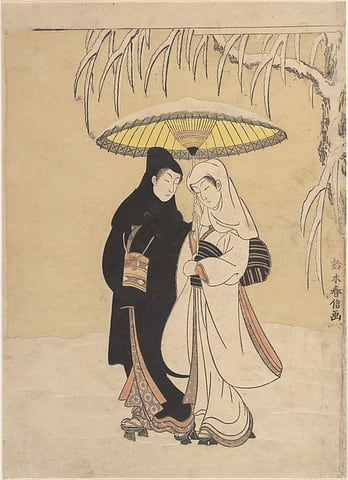
Lovers Walking in the Snow (Crow and Heron)Suzuki Harunobu, 1764–72Courtesy of The Metropolitan Museum of Art 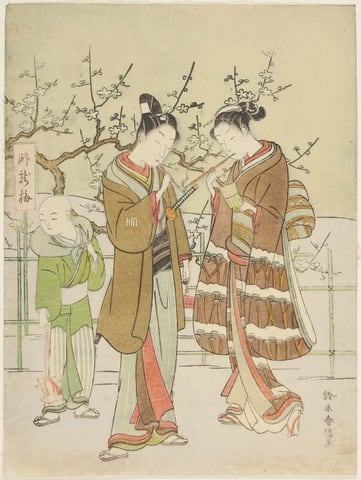
Giving a Light by the Garyubai Plum TreeSuzuki Harunobu, c. 1767/68Courtesy of the Art Institute of Chicago 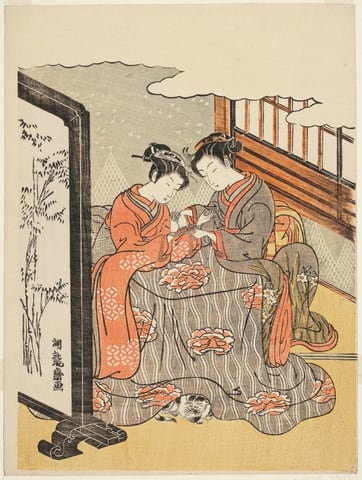
Two Young Women Playing Cat's CradleIsoda Koryusai, c. 1769Courtesy of the Art Institute of Chicago
Section 2, north wall
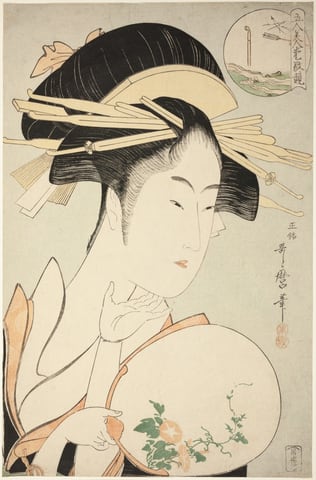
Kisegawa of the Matsubaya, from the series "Comparing the Charms of Five Beauties (Gonin bijin aikyo kurabe)"Kitagawa Utamaro, c. 1795/96Courtesy of the Art Institute of Chicago 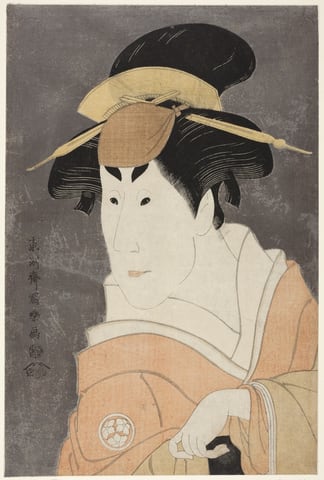
The actor Osagawa Tsuneyo II as Osan, Ippei’s elder sisterTōshūsai Sharaku, 1794Courtesy of the Art Institute of Chicago 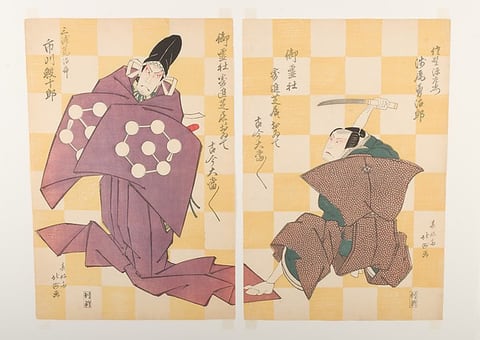
Kabuki Actors Asao Yūjirō as Sano Genzaemon and Ichikawa Ebijūrō I as Miura Arajirō, in the play Keisei Sano no FunabashiShunkōsai Hokushū, 1822Courtesy of The Metropolitan Museum of Art
Section 3, north wall
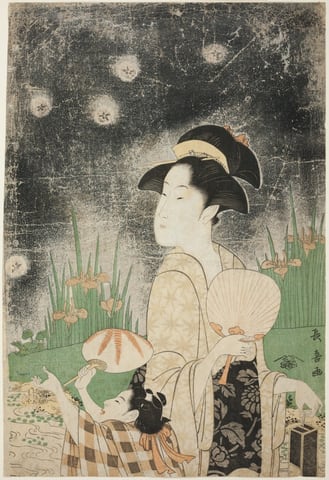
Catching FirefliesEishosai Choki, c.1790sCourtesy of the Art Institute of Chicago 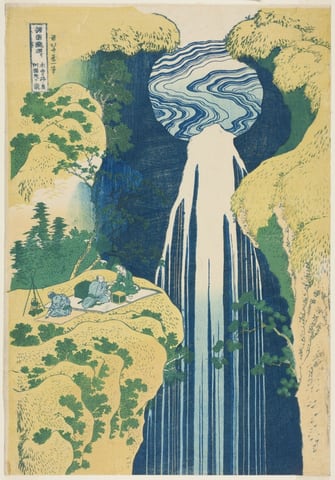
Amida Falls in the Far Reaches of the Kisokaido (Kisoji no oku Amidagataki), from the series "A Tour of Waterfalls in Various Provinces (Shokoku taki meguri)"Katsushika Hokusai, About 1833Courtesy of the Art Institute of Chicago
Section 3, south wall
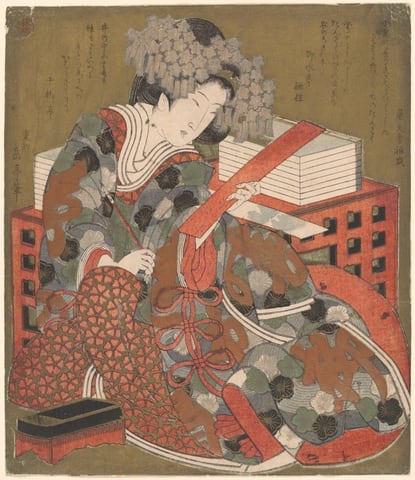
Woman About to Write a PoemYashima Gakutei, c. 1824Courtesy of the Art Institute of Chicago 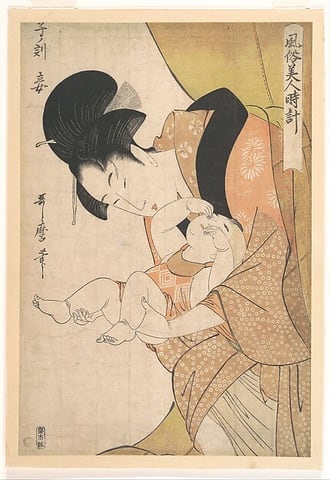
“Hour of the Rat: Mistress,” from the series Women’s Daily Customs (Fuzoku bijin tokei)Kitagawa Utamaro, 1790Courtesy of The Metropolitan Museum of Art