Ukiyo-e
Works in this room
Japanese woodblock prints of the floating world: actors, courtesans, landscapes and the sea.
Section 1, north wall
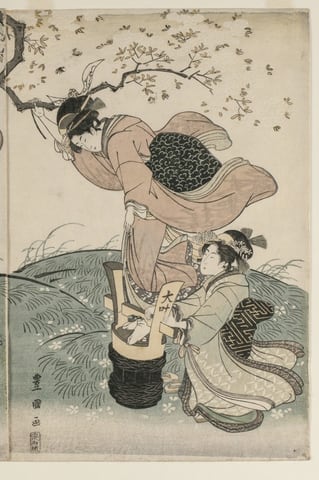
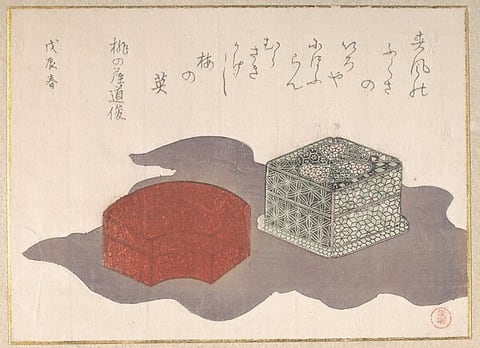
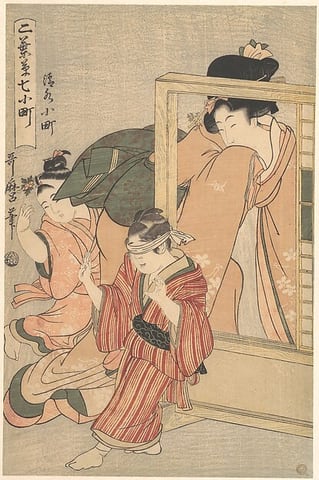
Cherry Blossoms in the WindUtagawa Toyokuni, late 1790sCourtesy of the Cleveland Museum of Art Incense Boxes with a Wrapping ClothKubo Shunman, 1808Courtesy of The Metropolitan Museum of Art Kiyomizu Komachi, from the series Futabagusa nana KomachiKitagawa Utamaro, 1790sCourtesy of The Metropolitan Museum of Art
Section 1, south wall
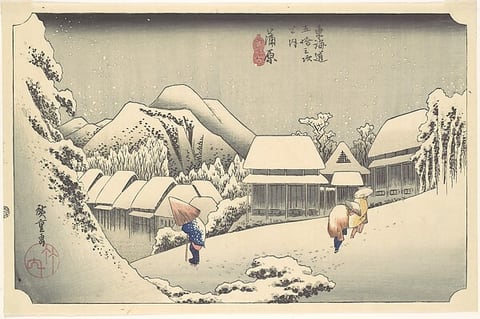
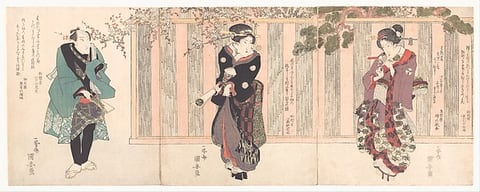
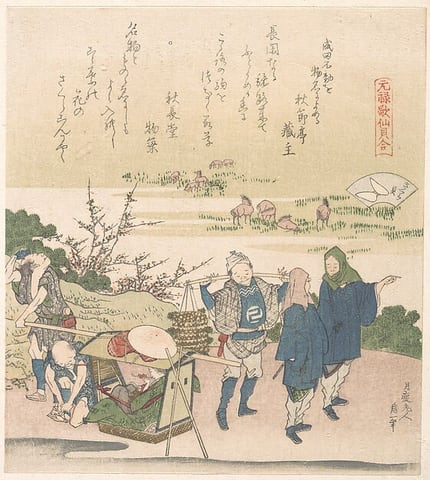
Evening Snow at Kanbara, from the series "Fifty-three Stations of the Tōkaidō"Utagawa Hiroshige, ca. 1833–34Courtesy of The Metropolitan Museum of Art Three Kabuki Actors Playing HanetsukiUtagawa Kuniyasu, ca. 1823Courtesy of The Metropolitan Museum of Art Cherry Shell, from the series Genroku Poetry Shell GamesKatsushika Hokusai, probably 1821Courtesy of The Metropolitan Museum of Art
Section 2, south wall
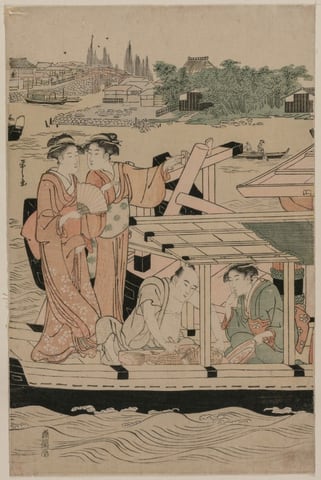
Leftmost Print from Pleasure Boats on the Sumida River beneath Shin-Ōhashi BridgeChôbunsai Eishi, c. 1792Courtesy of the Cleveland Museum of Art 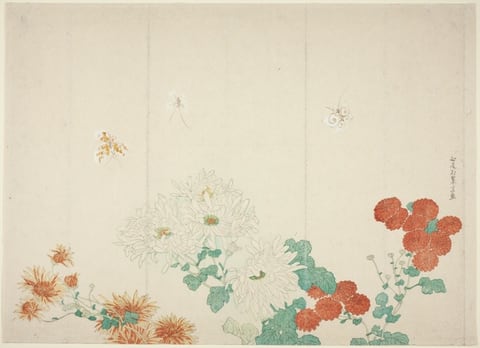
Three Types of ChrysanthemumsKitao Shigemasa, c. 1790Courtesy of the Art Institute of Chicago
Section 2, north wall
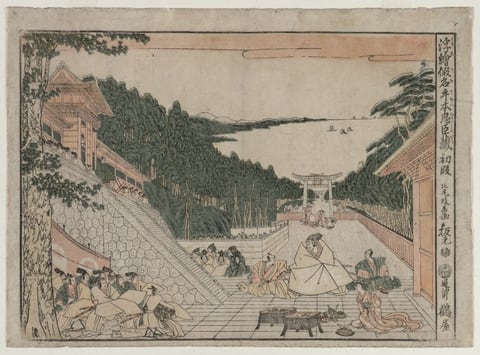
Chushingura: Act I (from the series Perspective Pictures for The Treasure House of Loyalty)Kitao Masayoshi, c. 1790sCourtesy of the Cleveland Museum of Art 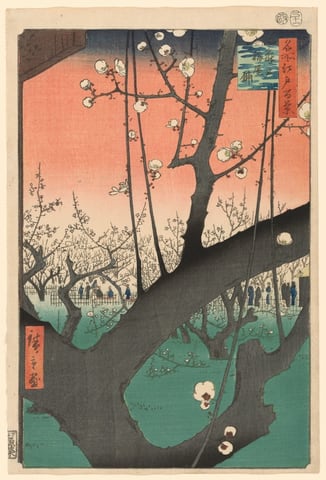
Plum Garden at Kameido (Kameido Umeyashiki), from the series "One Hundred Famous Views of Edo (Meisho Edo hyakkei)"Utagawa Hiroshige, 1857Courtesy of the Art Institute of Chicago
Section 3, north wall
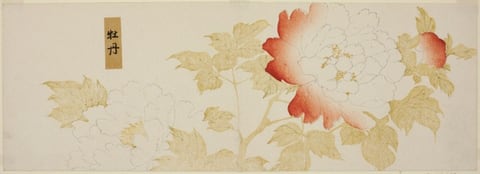
PeoniesKitagawa Utamaro, n.d.Courtesy of the Art Institute of Chicago 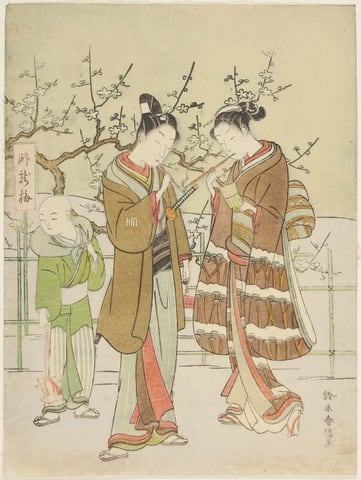
Giving a Light by the Garyubai Plum TreeSuzuki Harunobu, c. 1767/68Courtesy of the Art Institute of Chicago 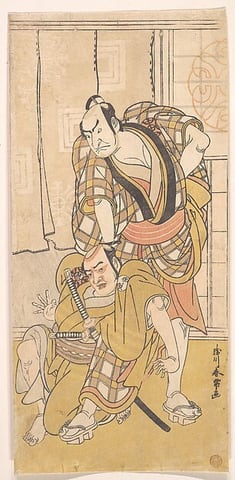
Scene from a PlayKatsukawa Shunjō, ca. 1780Courtesy of The Metropolitan Museum of Art
Section 3, south wall
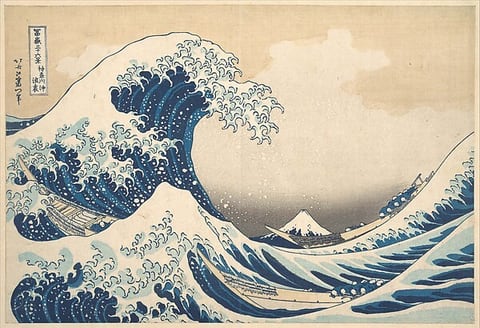
Under the Wave off Kanagawa (Kanagawa oki nami ura), or The Great Wave, from the series Thirty-six Views of Mount Fuji (Fugaku sanjūrokkei)Katsushika Hokusai, ca. 1830–32Courtesy of The Metropolitan Museum of Art 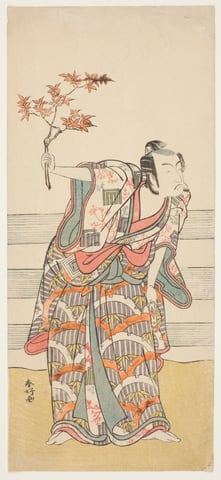
Actor Ichikawa Monnosuke II in an Unidentified RoleKatsukawa Shunkо̄, About 1785Courtesy of the Art Institute of Chicago 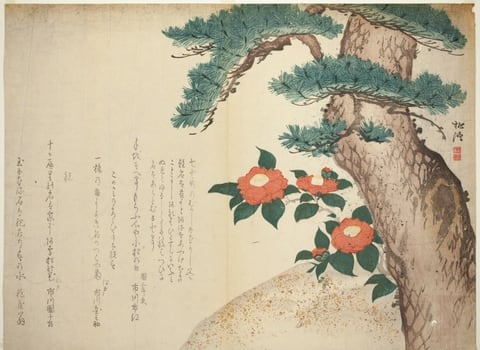
A Pine Tree and CamelliasNiwa Tokei, 1840Courtesy of the Art Institute of Chicago