Ukiyo-e
Works in this room
Japanese woodblock prints of the floating world: actors, courtesans, landscapes and the sea.
Section 1, north wall
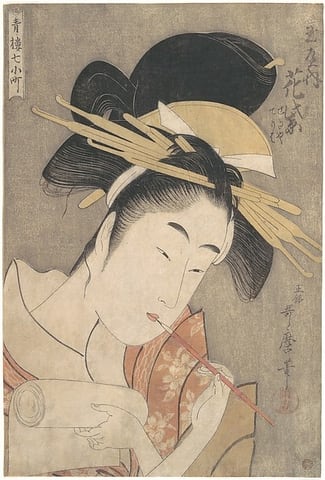
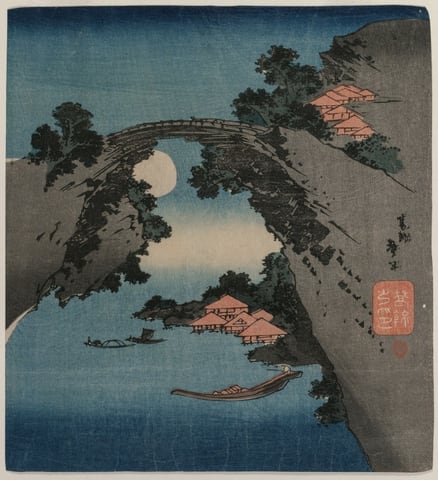
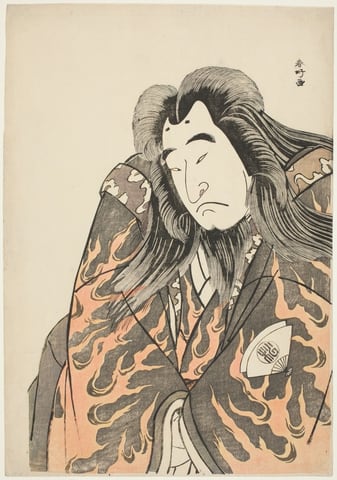
“Hanamurasaki of the Tamaya,” from the series Seven Komachi of the Pleasure Quarters (Seirō Nana Komachi)Kitagawa Utamaro, ca. 1790Courtesy of The Metropolitan Museum of Art The Monkey BridgeKatsushika Taito II, early 1830sCourtesy of the Cleveland Museum of Art Actor Onoe Matsusuke I as Retired Emperor SutokuKatsukawa Shunkо̄, About 1780Courtesy of the Art Institute of Chicago
Section 1, south wall
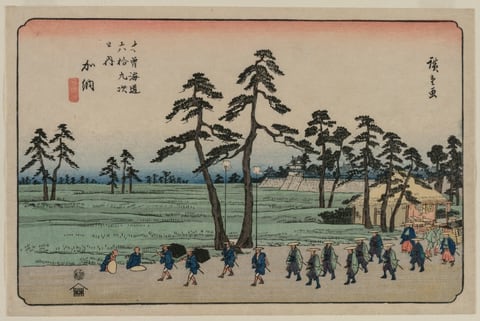
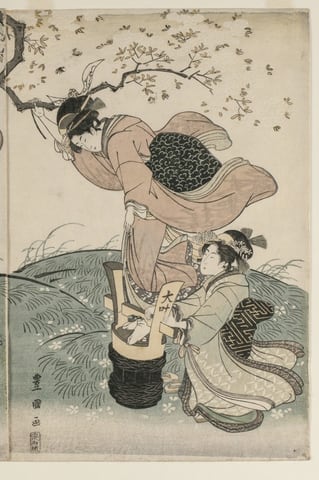
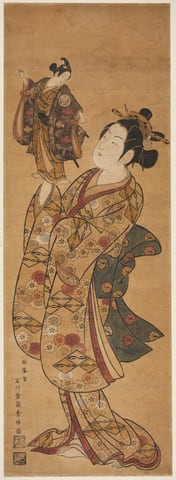
Kanō, from the series Sixty-nine Stations of the KisokaidōUtagawa Hiroshige, c. 1835–37Courtesy of the Cleveland Museum of Art Cherry Blossoms in the WindUtagawa Toyokuni, late 1790sCourtesy of the Cleveland Museum of Art The Actor Onoe Kikugoro I holding a puppet of the Actor Sanogawa Ichimatsu IIshikawa Toyonobu, c. 1740sCourtesy of the Art Institute of Chicago
Section 2, south wall
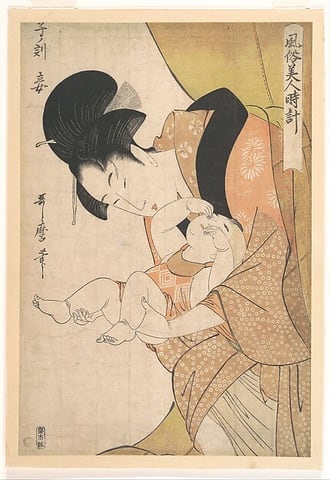
“Hour of the Rat: Mistress,” from the series Women’s Daily Customs (Fuzoku bijin tokei)Kitagawa Utamaro, 1790Courtesy of The Metropolitan Museum of Art 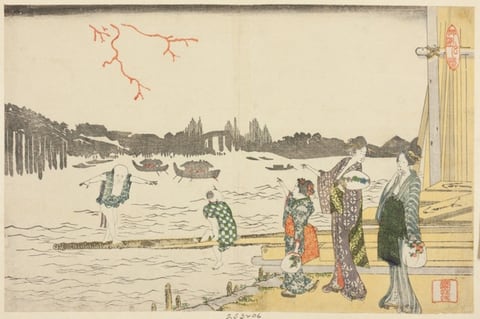
Women and Children Viewing the FireworksKatsushika Hokusai, c. 1798Courtesy of the Art Institute of Chicago 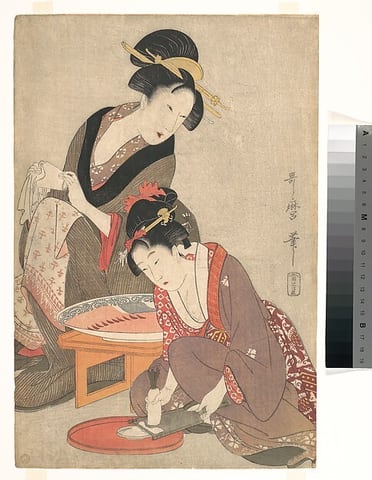
Women Grating Radish for SashimiKitagawa Utamaro, ca. 1798–99Courtesy of The Metropolitan Museum of Art
Section 2, north wall
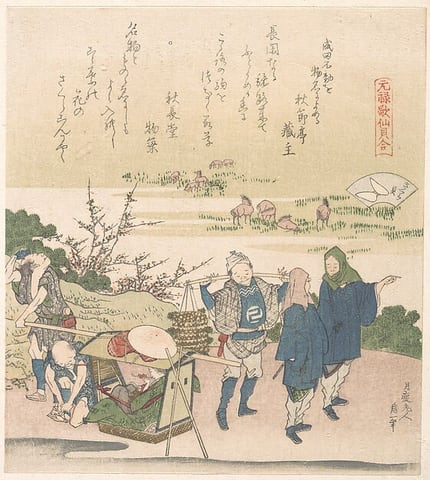
Cherry Shell, from the series Genroku Poetry Shell GamesKatsushika Hokusai, probably 1821Courtesy of The Metropolitan Museum of Art 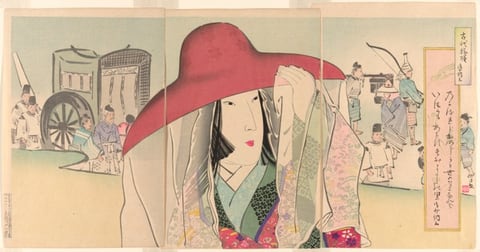
Sei Shonagon, from the series Ancient Patterns (Kodai moyo)Kobayashi Kiyochika, Meiji period (1896–1912), 1896Courtesy of the Art Institute of Chicago
Section 3, north wall
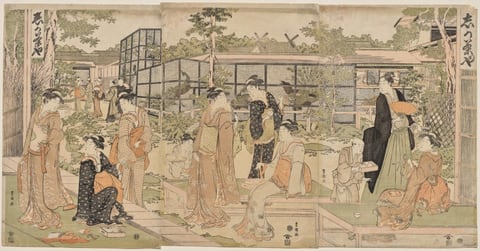
The Shika TeahouseUtagawa Toyokuni, early 1790sCourtesy of the Cleveland Museum of Art 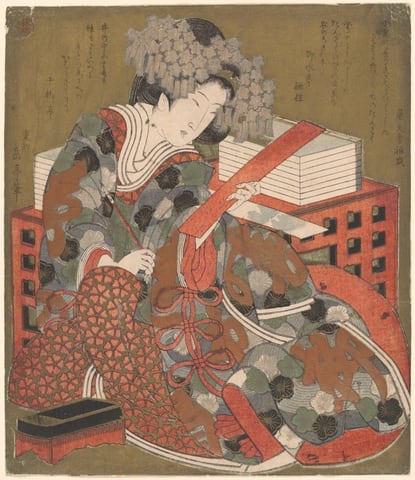
Woman About to Write a PoemYashima Gakutei, c. 1824Courtesy of the Art Institute of Chicago 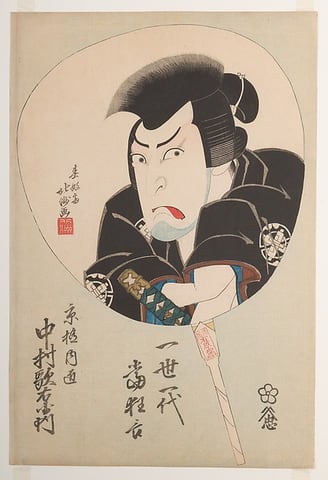
Kabuki Actor Nakamura Utaemon III as the Sword Master Kyōgoku Takumi, from the series Issei ichidai atari Kyōgen (Hits of a Lifetime of Kyōgen)Shunkōsai Hokushū, 1825Courtesy of The Metropolitan Museum of Art
Section 3, south wall
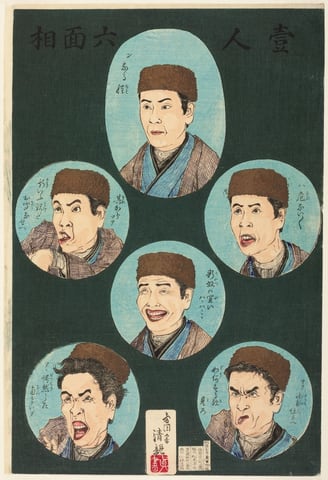
One Person, Six Expressions (Hitori rokumenso)Kobayashi Kiyochika, 1884Courtesy of the Art Institute of Chicago 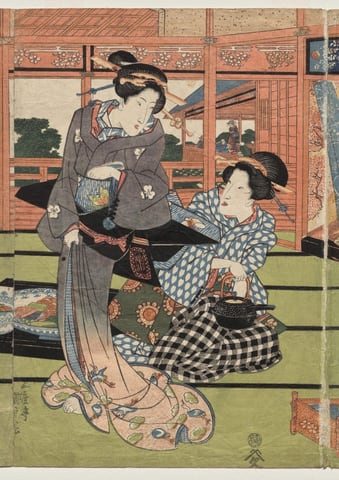
A View of the Large New Room at SakuraiUtagawa Kunisada, early or mid 1830sCourtesy of the Cleveland Museum of Art