Ukiyo-e
Works in this room
Japanese woodblock prints of the floating world: actors, courtesans, landscapes and the sea.
Section 1, north wall
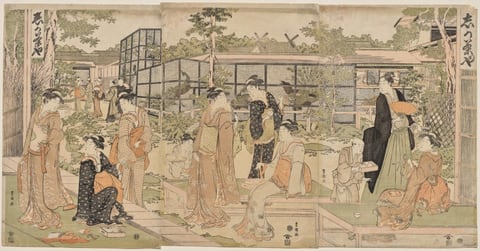
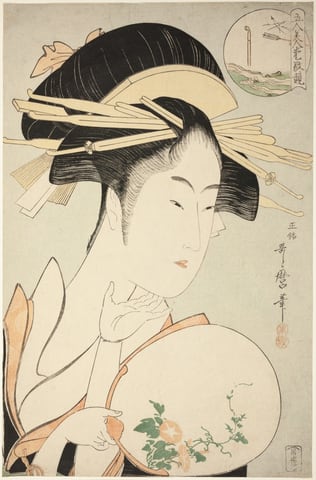
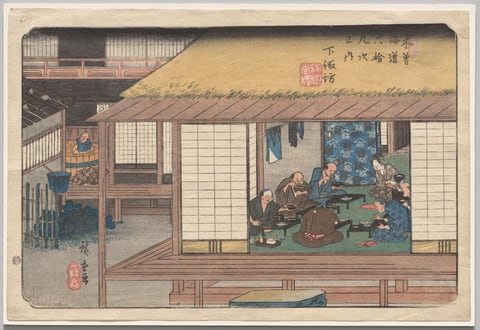
The Shika TeahouseUtagawa Toyokuni, early 1790sCourtesy of the Cleveland Museum of Art Kisegawa of the Matsubaya, from the series "Comparing the Charms of Five Beauties (Gonin bijin aikyo kurabe)"Kitagawa Utamaro, c. 1795/96Courtesy of the Art Institute of Chicago Shimosuwa, from Sixty-Nine Stations of the KisokaidōUtagawa Hiroshige, 1835–38Courtesy of the Cleveland Museum of Art
Section 1, south wall
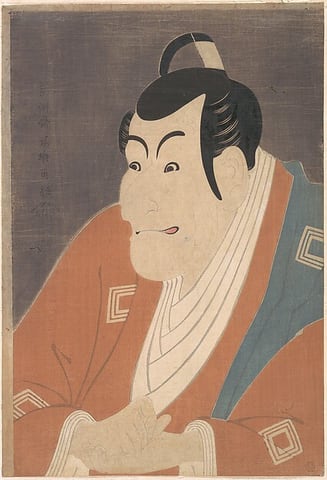
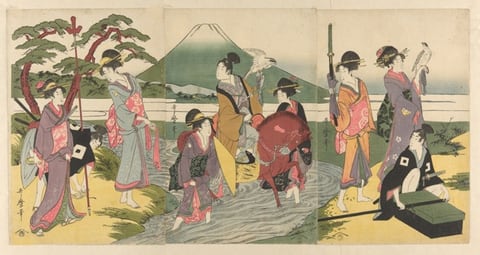
Ichikawa Ebizo IV in the role of Takemura SadanoshinTōshūsai Sharaku, Probably late 1880s or early 1890sCourtesy of The Metropolitan Museum of Art Young man and his party crossing a stream before Mt. FujiKitagawa Utamaro, c. 1798/1800Courtesy of the Art Institute of Chicago
Section 2, south wall
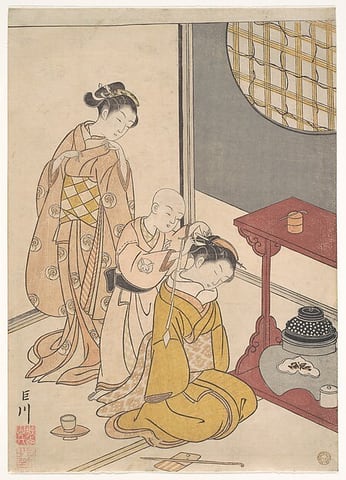
Night Rain at the Double-Shelf Stand, from the series Eight Parlor Views (Zashiki hakkei)Suzuki Harunobu, ca. 1766Courtesy of The Metropolitan Museum of Art 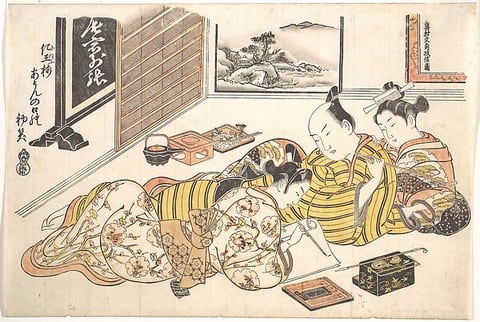
Plate from the Erotic Book Mounds of Dyed Colors: A Pattern Book for the Boudoir (Someiro no yama neya no hinagata), First MonthOkumura Masanobu, ca. 1736–44Courtesy of The Metropolitan Museum of Art 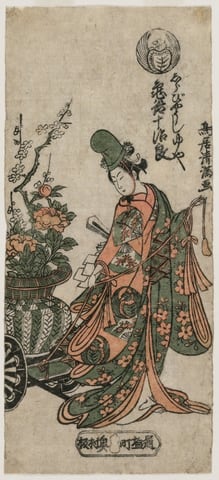
Kametani Jujiro as the Shirabyoshi Dancer YuyaTorii Kiyomitsu, c. early 1760sCourtesy of the Cleveland Museum of Art
Section 2, north wall
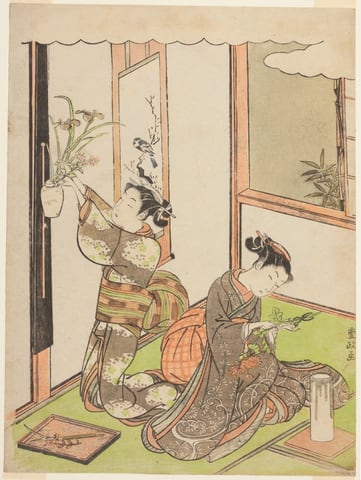
Flower ArrangingKitao Shigemasa, c. 1769Courtesy of the Art Institute of Chicago 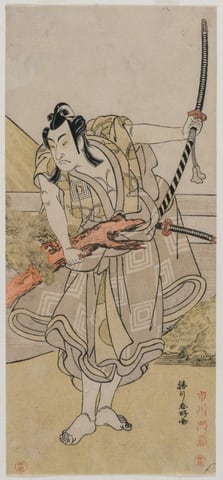
Ichikawa Monnosuke II as Soga no GorōKatsukawa Shunkō, 1779Courtesy of the Cleveland Museum of Art 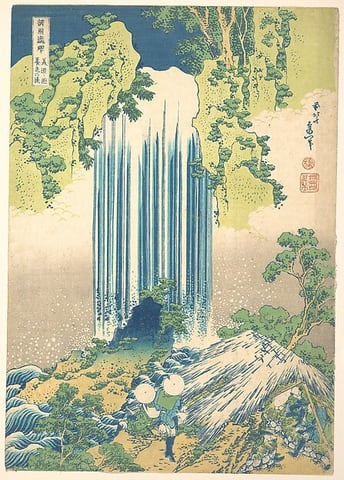
Yōrō Waterfall in Mino Province (Mino no Yōrō no taki), from the series A Tour of Waterfalls in Various Provinces (Shokoku taki meguri)Katsushika Hokusai, ca. 1832Courtesy of The Metropolitan Museum of Art
Section 3, north wall
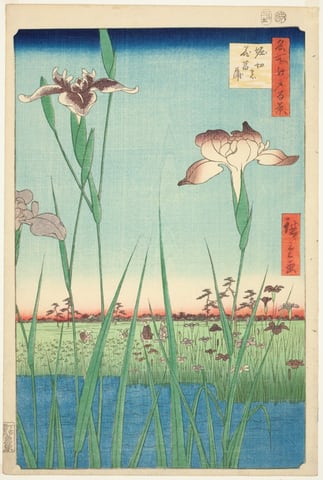
Irises at Horikiri (Horikiri no hanashobu), from the series "One Hundred Famous Views of Edo (Meisho Edo hyakkei)"Utagawa Hiroshige, 1857Courtesy of the Art Institute of Chicago 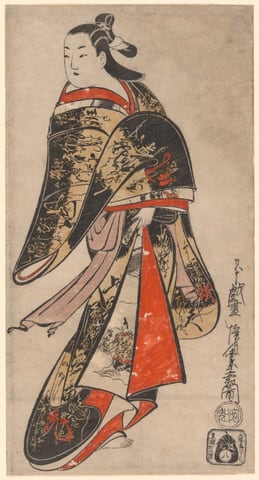
Courtesan WalkingKaigetsudo Anchi, c. 1714Courtesy of the Art Institute of Chicago 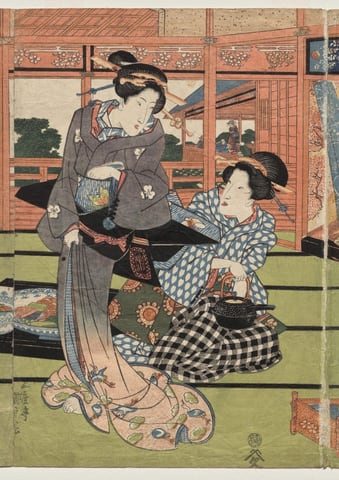
A View of the Large New Room at SakuraiUtagawa Kunisada, early or mid 1830sCourtesy of the Cleveland Museum of Art
Section 3, south wall
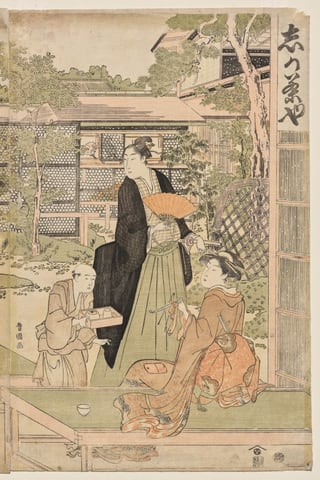
The Shika TeahouseUtagawa Toyokuni, early 1790sCourtesy of the Cleveland Museum of Art 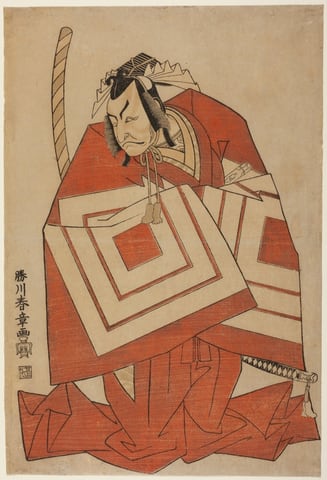
The Actor Ichikawa Danjuro IV in a "Shibaraku" Role, Possibly from the Play Ima o Sakari Suehiro Genji (The Genji Clan Now at Its Zenith), Performed at the Nakamura Theater from the First Day of the Eleventh Month, 1768Katsukawa Shunshō, c. 1768Courtesy of the Art Institute of Chicago