Floor plan

Style galleriesPrints of the 17th century
Prints of the 17th century
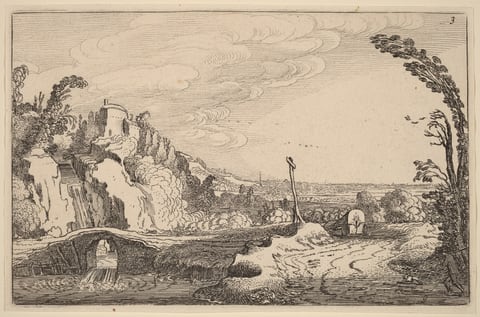
The image shows a pastoral scene in black and white with fine line work. A small bridge with a circular archway crosses a stream. A dirt path winds through the landscape flanked by grass and bushes. A rocky cliff ascends on the left with a tower-like structure partially obscured by vegetation. The horizon features a cloudy sky, with swirling lines indicating motion. In the distance, a tall, thin structure, possibly a spire or chimney, stands amid faint hills and trees. The scene conveys a serene atmosphere through hatching and cross-hatching techniques.
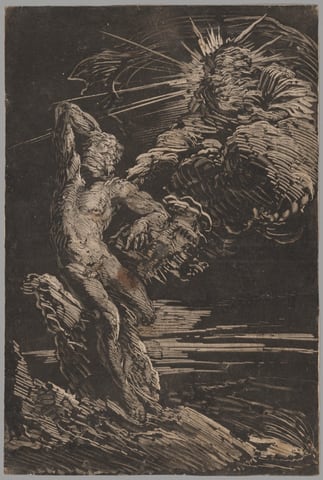
Drawing of god, radiating light, reaching down from clouds, touching male figure.
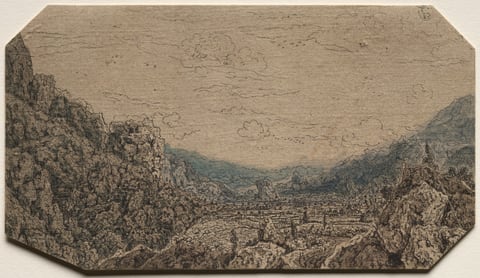
Enclosed Valley, by Hercules Seghers, c. 1623–30
A work made of etching in black on cream laid paper.
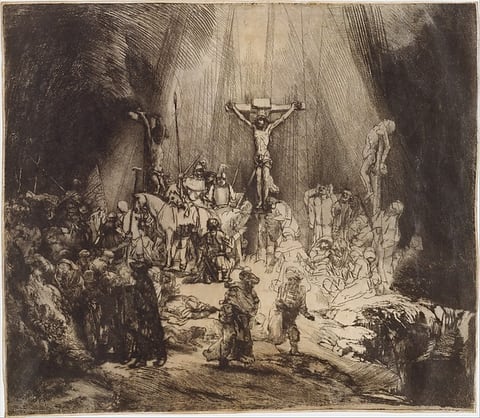
Christ Crucified between the Two Thieves: The Three Crosses, by Rembrandt van Rijn, 1653
A work made of etching on ivory laid paper.

The works in this room are listed below.

Works in this room

Prints made in the 17th century, from every museum.

Section 1, north wall

  1. The image shows a pastoral scene in black and white with fine line work. A small bridge with a circular archway crosses a stream. A dirt path winds through the landscape flanked by grass and bushes. A rocky cliff ascends on the left with a tower-like structure partially obscured by vegetation. The horizon features a cloudy sky, with swirling lines indicating motion. In the distance, a tall, thin structure, possibly a spire or chimney, stands amid faint hills and trees. The scene conveys a serene atmosphere through hatching and cross-hatching techniques.
    Cascade under a Stone BridgeJan van de Velde II, c. 1616Courtesy National Gallery of Art, Washington
  2. Drawing of god, radiating light, reaching down from clouds, touching male figure.
    The Creation of AdamGiovanni Benedetto Castiglione, c. 1645/50Courtesy of the Art Institute of Chicago
  3. Enclosed Valley, by Hercules Seghers, c. 1623–30
    Enclosed ValleyHercules Seghers, c. 1623–30Courtesy of the Cleveland Museum of Art

Section 1, south wall

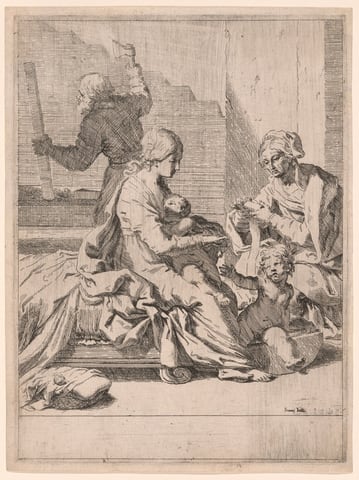
  1. A work made of etching in black on cream laid paper.
    Holy Family with Saint Elizabeth and Saint John the BaptistElisabetta Sirani, 1650/60Courtesy of the Art Institute of Chicago
  2. Christ Crucified between the Two Thieves: The Three Crosses, by Rembrandt van Rijn, 1653
    Christ Crucified between the Two Thieves: The Three CrossesRembrandt van Rijn, 1653Courtesy of The Metropolitan Museum of Art
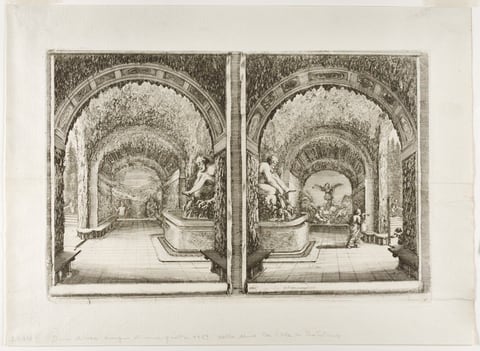
  3. A work made of etching on ivory laid paper.
    The Grotto of Pan and FameStefano della Bella, 1653/55Courtesy of the Art Institute of Chicago

Section 2, south wall
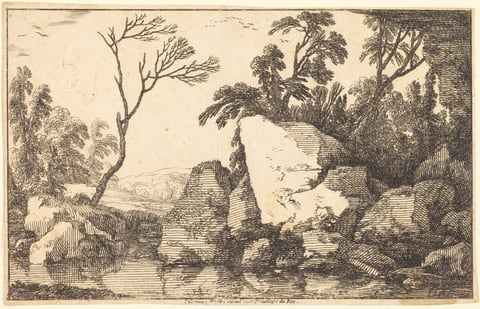
  1. The image is a landscape view with a natural scene depicted in fine etching. The horizon is situated towards the middle of the composition, where the land gently rises, and a subtle outline of distant hills is visible. Large rocks and foliage are depicted close to us, with a lone, barren tree extending upwards on the left side. The etching features intricate and well-defined brushstrokes, including thin lines and cross-hatching to create texture and depth. The color palette is monochromatic, with dark tones against a lighter background. In the distance, additional clusters of trees can be seen, rendered with similar linework to convey movement and detail.
    A Rocky PondLaurent de La Hyre, 1640Courtesy National Gallery of Art, Washington
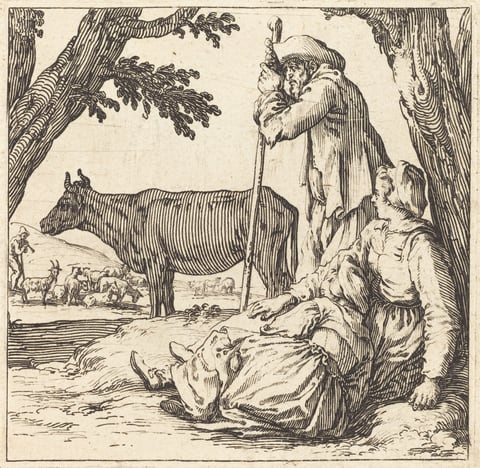
  2. The image has an elevated perspective showing two figures with animals in the scene. One person is leaning against a tree with a stick, while the other is seated on the ground. A cow is between them and other livestock in the middle distance. A person in the distance is tending to the animals. The horizon is low in the image, hidden by rolling hills. The artwork is in monochrome with fine linework, creating texture through hatching and cross-hatching, emphasizing depth and dimensionality.
    Peasant Couple with CowJacques Callot, c. 1621Courtesy National Gallery of Art, Washington
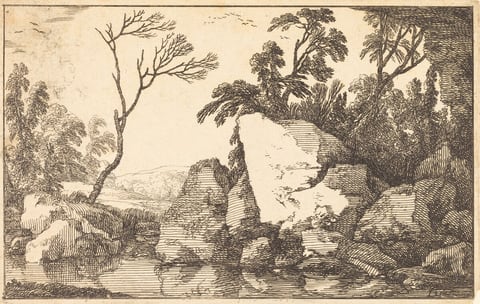
  3. The image shows a landscape with trees, rocks, and water. The perspective is slightly elevated. Rocks are prominent in the central area, with various shapes and textures. Trees and foliage are depicted with detailed brushstrokes. The color scheme is sepia, creating a warm and vintage atmosphere. The scene includes water reflecting rocks, distant hills, and faint cloud formations.
    A Rocky PondLaurent de La Hyre, 1640Courtesy National Gallery of Art, Washington

Section 2, north wall
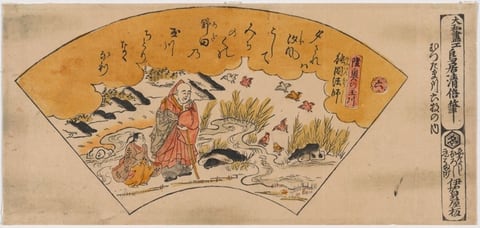
  1. A work made of woodblock print in black ink and watercolor on cream japanese paper.
    The Priest Kobo Daishi at the Tama River in Kii Province from the series The Six Tama RiversTorii Kiyomasu, c. 1725-1735Courtesy of the Art Institute of Chicago
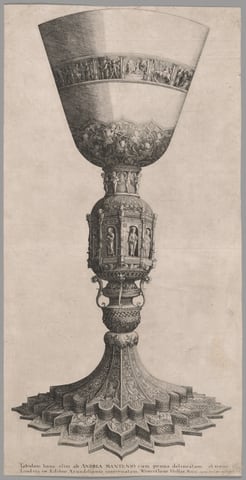
  2. A work made of etching on ivory laid paper.
    A ChaliceWenceslaus Hollar, 1640Courtesy of the Art Institute of Chicago
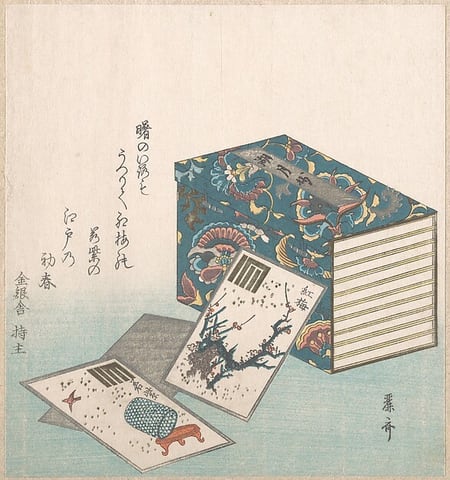
  3. Books and Cards, by Reisai, 18th–19th century
    Books and CardsReisai, 18th–19th centuryCourtesy of The Metropolitan Museum of Art

Section 3, north wall
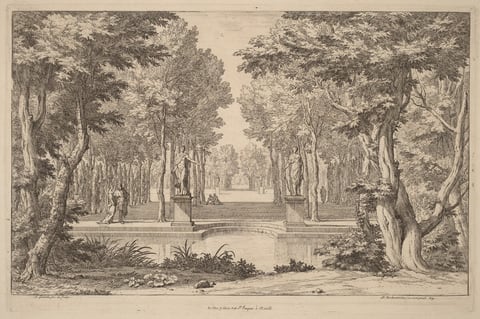
  1. The image shows a formal garden or park with a symmetrical view. It is taken from a slightly elevated position, revealing the vast space beyond a foreground of foliage and low-growing plants. The horizon line is positioned near the midpoint, where a tree-lined pathway extends into the distance. Flanking the pathway are two statues on pedestals under leafy trees. The scene is detailed with intricate line work emphasizing textures and forms. The color palette is monochromatic in various shades of brown, creating a classic appearance. Paved steps and a bridge over a small body of water add to the ordered elegance of the garden.
    The Two StatuesAbraham Genoels IICourtesy National Gallery of Art, Washington
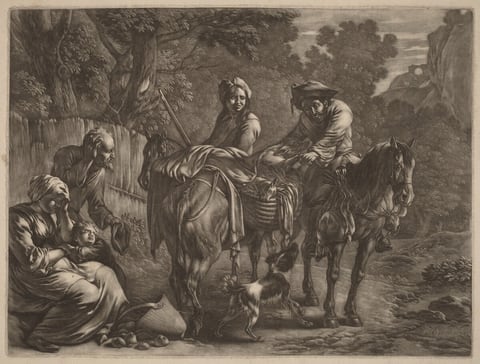
  2. This is a drawing of a rural scene with horses and figures. The image shows an interaction between several figures and two horses within a pastoral setting. In the foreground, two individuals are seated on the ground, accompanied by a small child. Nearby, a figure atop a horse reaches towards another figure who leads a laden horse. A dog is present, standing alert at the horse's hooves. The backdrop showcases lush trees and distant hills, suggesting a serene countryside environment. The attention to detail and shading creates a realistic depiction of this rustic scene.
    Robbers on HorsebackJan van Huchtenburgh, late 17th/early 18th centuryCourtesy National Gallery of Art, Washington

Section 3, south wall
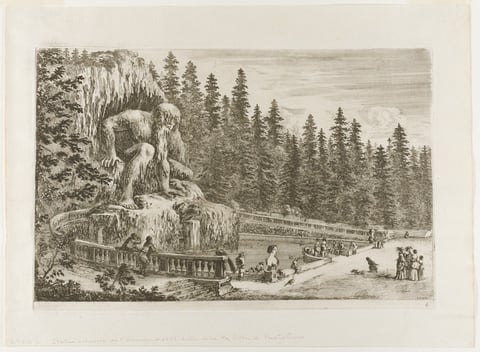
  1. A work made of etching in black on ivory laid paper.
    The Colossal Statue of the Apennines, from Views of Villa di PratolinoStefano della Bella, c. 1653Courtesy of the Art Institute of Chicago
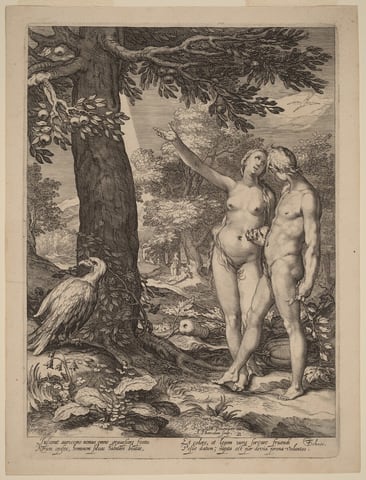
  2. This is a drawing of two nude figures standing beneath a fruit-bearing tree surrounded by elements of nature. The drawing depicts a scene in a lush outdoor setting, featuring intricately detailed branches and leaves of the large tree as well as an eagle-like bird perched nearby. In the background are additional trees extending into a forested area, and a winding path leading into the distance. The foreground includes various plants and the ground is littered with their leaves. The figures are positioned at the center, engaged in a gesture of pointing towards the fruit in the tree. The scene is rendered in fine details with attention to the texture and flow of the natural elements surrounding the figures.
    Adam and Eve before the Tree of KnowledgeJan Saenredam, 1604Courtesy National Gallery of Art, Washington