Floor plan

Style galleriesParis Salon painting
Paris Salon painting
A work made of oil on canvas.
The Kitchen of the Rôtisserie des Deux Paons, by Adolphe Monticelli, c. 1875–1881
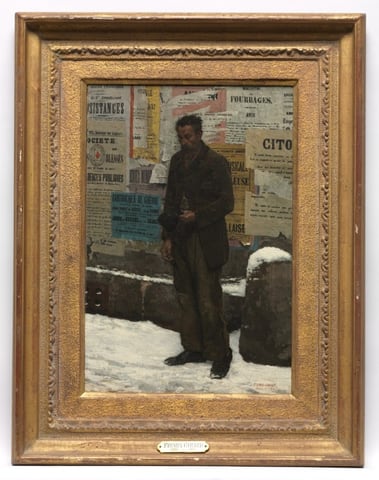
The Veteran, by Marie-François Firmin-Girard, 1870
Large, dark painting of Jesus sitting with three standing soldiers.
Joséphine-Éléonore-Marie-Pauline de Galard de Brassac de Béarn (1825–1860), Princesse de Broglie, by Jean Auguste Dominique Ingres, 1851–53

The works in this room are listed below.

Works in this room

Painting made for the great annual exhibition in Paris, and the realists who argued with it.

First room, north wall

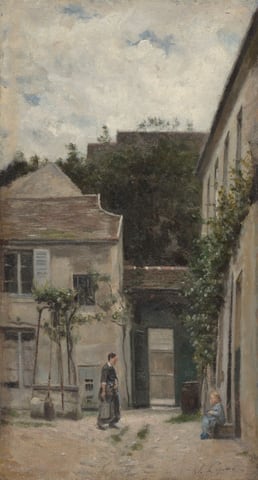
  1. A work made of oil on canvas.
    The CourtyardStanislas Lépine, c. 1880Courtesy of the Art Institute of Chicago
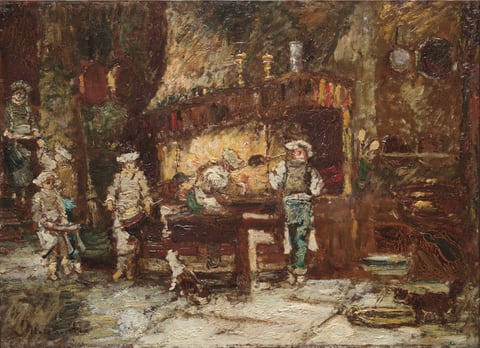
  2. The Kitchen of the Rôtisserie des Deux Paons, by Adolphe Monticelli, c. 1875–1881
    The Kitchen of the Rôtisserie des Deux PaonsAdolphe Monticelli, c. 1875–1881Courtesy of the Cleveland Museum of Art
  3. The Veteran, by Marie-François Firmin-Girard, 1870
    The VeteranMarie-François Firmin-Girard, 1870Courtesy of the Cleveland Museum of Art

First room, south wall

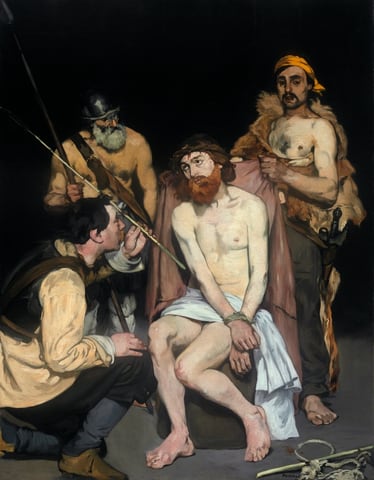
  1. Large, dark painting of Jesus sitting with three standing soldiers.
    Jesus Mocked by the SoldiersÉdouard Manet, 1865Courtesy of the Art Institute of Chicago
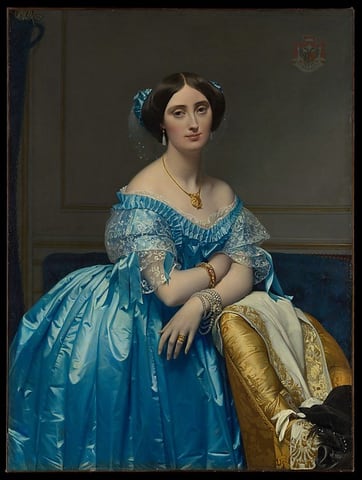
  2. Joséphine-Éléonore-Marie-Pauline de Galard de Brassac de Béarn (1825–1860), Princesse de Broglie, by Jean Auguste Dominique Ingres, 1851–53
    Joséphine-Éléonore-Marie-Pauline de Galard de Brassac de Béarn (1825–1860), Princesse de BroglieJean Auguste Dominique Ingres, 1851–53Courtesy of The Metropolitan Museum of Art

Second room, south wall
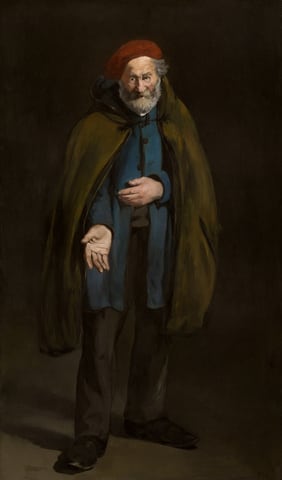
  1. A work made of oil on canvas.
    Beggar with a Duffle Coat (Philosopher)Édouard Manet, 1865–67Courtesy of the Art Institute of Chicago
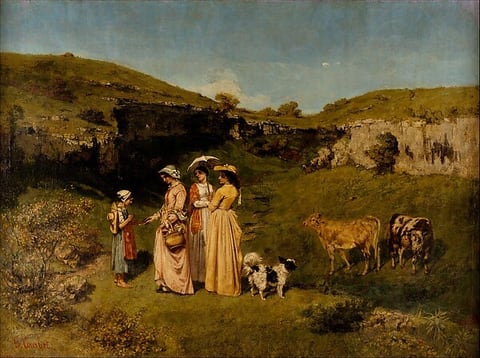
  2. Young Ladies of the Village, by Gustave Courbet, 1851–52
    Young Ladies of the VillageGustave Courbet, 1851–52Courtesy of The Metropolitan Museum of Art

Second room, north wall
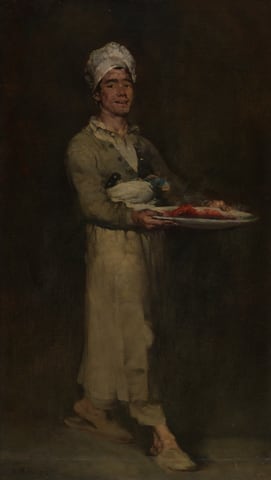
  1. A work made of oil on canvas.
    The ScullionAugustin Théodule Ribot, c. 1865Courtesy of the Art Institute of Chicago
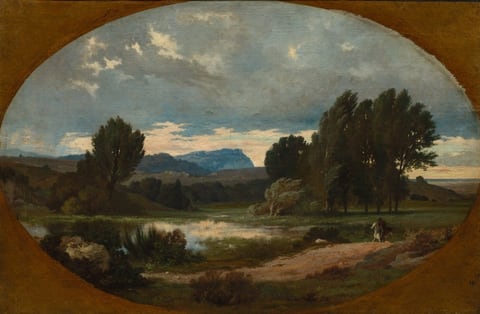
  2. Landscape with Rider on White Horse, by Jean Achille Benouville, 1846
    Landscape with Rider on White HorseJean Achille Benouville, 1846Courtesy of the Cleveland Museum of Art
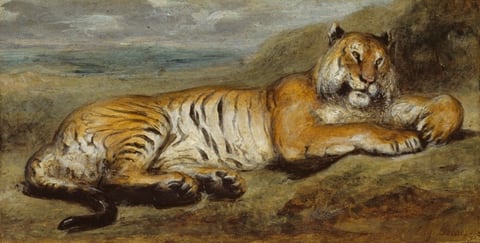
  3. A boldly painted orange tiger lies on brown, rocky ground, his body nearly filling the canvas, blue water and gray sky in the background.
    Tiger RestingPierre Andrieu, c. 1845Courtesy of the Art Institute of Chicago
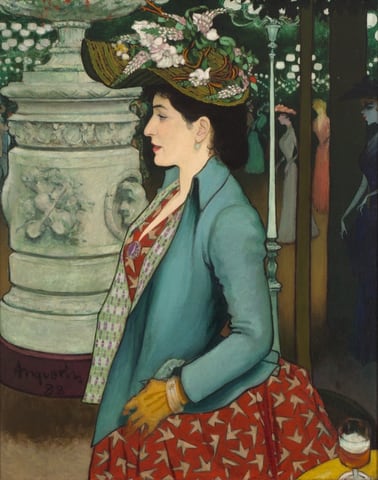
  4. A work made of oil on canvas.
    A Woman at the Élysée Montmartre (Femme à l’Élysée Montmartre)Louis Anquetin, 1888Courtesy of the Art Institute of Chicago

Third room, north wall
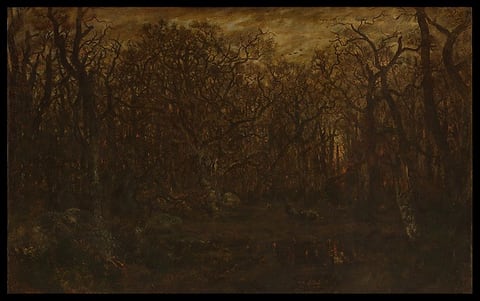
  1. The Forest in Winter at Sunset, by Théodore Rousseau, ca. 1846–67
    The Forest in Winter at SunsetThéodore Rousseau, ca. 1846–67Courtesy of The Metropolitan Museum of Art
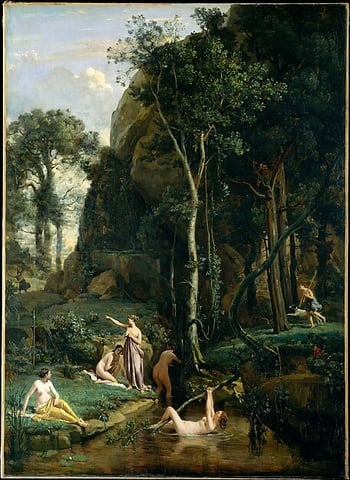
  2. Diana and Actaeon (Diana Surprised in Her Bath), by Jean Baptiste Camille Corot, 1836
    Diana and Actaeon (Diana Surprised in Her Bath)Jean Baptiste Camille Corot, 1836Courtesy of The Metropolitan Museum of Art

Third room, south wall
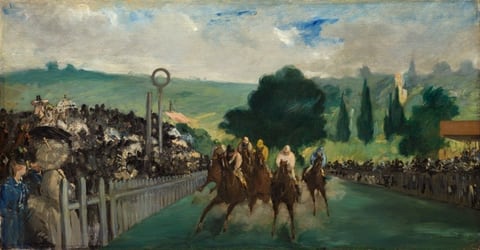
  1. A work made of oil on canvas.
    The Races at LongchampÉdouard Manet, 1866Courtesy of the Art Institute of Chicago
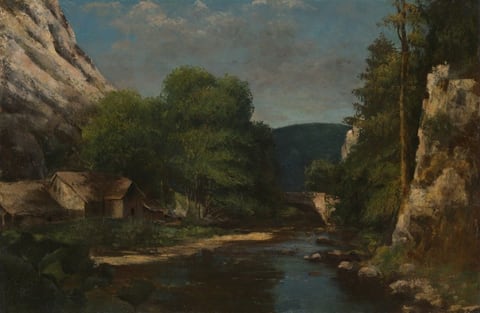
  2. A work made of oil on canvas.
    LandscapeMarcel Ordinaire, 1867Courtesy of the Art Institute of Chicago
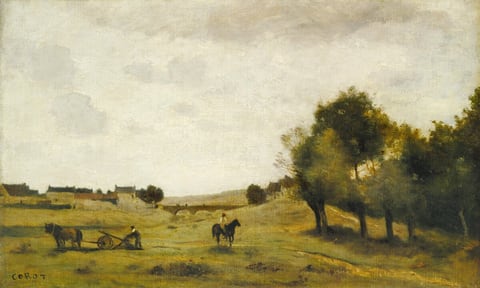
  3. A person at the center of this loosely painted horizontal landscape rides a dark horse across a field as a man to the left works the field behind a horse-drawn plow. The field is carpeted with muted and gold-shaded green, and a grove of trees in the right third of the composition are painted in fern, olive, and dark green. A patch of darker green near us and to left of center is dotted with red and yellow to suggest flowers. The men and horses are small in relation to the composition. The people have brown skin and are painted with a few strokes in dark gray and muted green for the man behind the plow to the left and pale yellow and white and a red cap for the person on horseback. A band of houses with tan or light yellow walls and gray or terracotta red roofs line the far side of the field to the left, and an arched bridge crosses what appears to be a shallow, grassy ravine near the center. The horizon comes about a third of the way up this composition and a few smoke-gray clouds line the upper edge of the otherwise milk-white sky. The artist signed the lower left corner, “COROT.”
    View near EpernonJean Baptiste Camille Corot, 1850/1860Courtesy National Gallery of Art, Washington